
Chef Lupita
Aceite de Chiltepin Bajacaliforniano
Baja California's wild chiltepin steeped in olive oil with garlic, orejon, and lime peel, until the oil turns ruby-amber and carries the slow, sneaky burn of the desert coast.
A cooking platform built around craft, culture, and the stories behind what we eat.

Created by
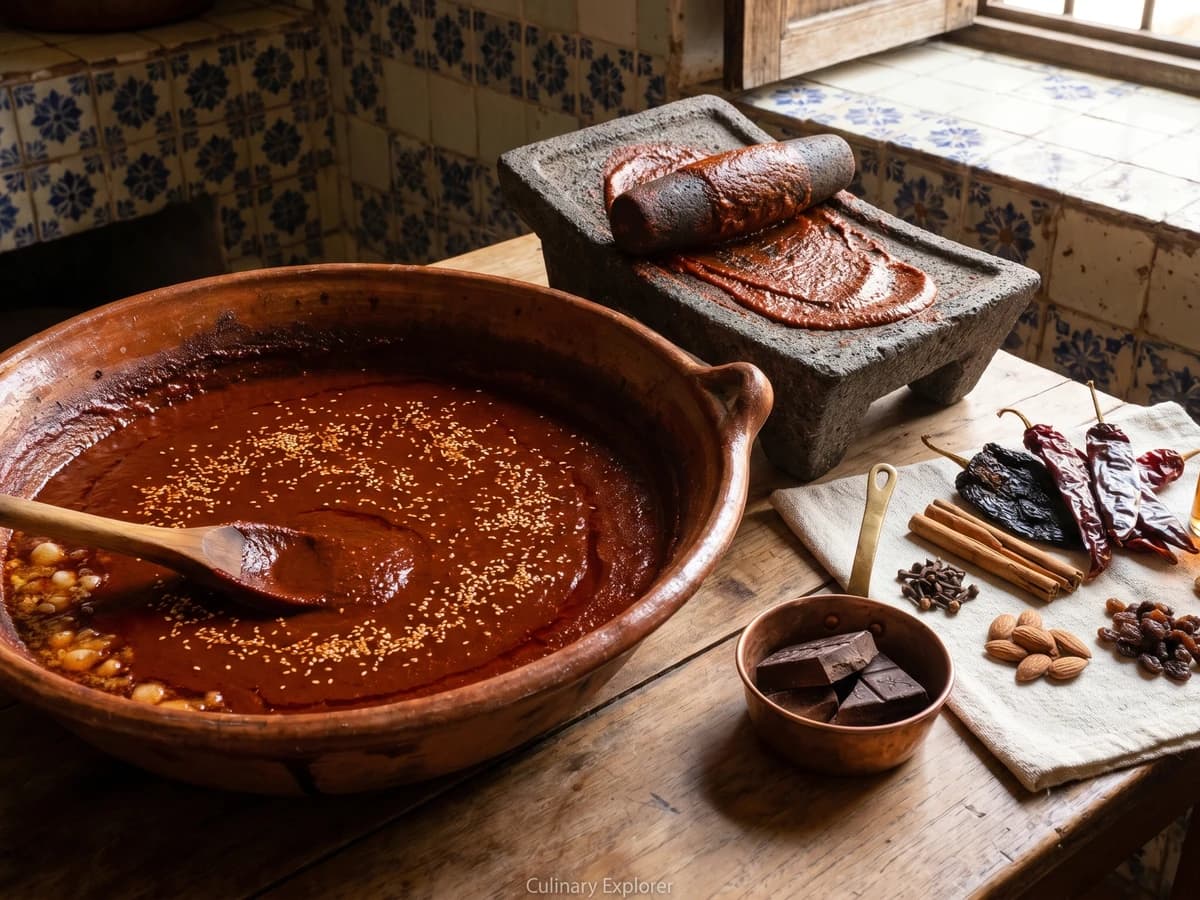
Oaxaca's Costa Chica mole costeño is a Pacific Afromestizo mother sauce of chile costeño, guajillo, toasted ajonjolí, clove, and lard, built without chocolate and meant to rest before it feeds the table.
Oaxaca's Costa Chica, especially around Santiago Pinotepa Nacional, Collantes, and the road toward Guerrero, is where this mole lives. It belongs to costeño and Afromestizo kitchens, not to the generic shelf where people file away anything with chile and call it Mexican. This is a 32-state cuisine. Cada estado, su propia cocina.
Chile costeño rojo is the spine. Guajillo gives red body, ajonjolí thickens, clove cuts through the richness, and manteca de cerdo carries the flavor. There is no chocolate here. Mole is not chocolate sauce. Say that twice if you learned mole from a jar.
I tasted versions of this sauce in the Pinotepa market and in home kitchens where the comal was black from years of work. The women who taught it did not talk about mystery. They talked about color, smell, and the moment the fat separates from the paste. That is how you know the mole has been fried enough. Pregúntale a las señoras del mercado. They will tell you before I do.
Make it a day ahead if you can. The chile, sesame, clove, and lard need time to stop shouting and start working together. This sauce can dress chicken, turkey, pork, tamales, or beans, but the sauce is the authority. Saber cocinar es saber vivir.
The Costa Chica runs along the Pacific between the Sierra Madre del Sur and the ocean, from Oaxaca's Pinotepa Nacional and Jamiltepec toward Guerrero's Cuajinicuilapa, a corridor with documented Afro-Mexican communities since the colonial cattle estancias and Pacific trade routes of Acapulco. Sesame reached New Spain in the 16th century through Spanish and transoceanic trade, and in the Costa Chica it became part of an Afromestizo sauce grammar built from ground seeds, chile, and fat. The relationship is not a single recipe copied from Africa; it is a diasporic logic that links West African mafé to Mexican encacahuatado and the peanut-sesame bases of salsa macha and pipián costeño.
Quantity
12
wiped clean, stemmed, and seeded
Quantity
5
wiped clean, stemmed, and seeded
Quantity
4 medium
Quantity
3
husked and rinsed
Quantity
1 small
cut into 1-inch thick rounds
Quantity
4
unpeeled
Quantity
1/2 cup, plus 1 tablespoon
extra tablespoon reserved for finishing
Quantity
1/4 cup
Quantity
1/2
peeled and sliced
Quantity
1
torn into pieces
Quantity
3
Quantity
6
Quantity
1/2 teaspoon
Quantity
1-inch piece
Quantity
1 teaspoon
crumbled between your palms
Quantity
3 tablespoons
divided
Quantity
4 cups, plus more as needed
Quantity
1 1/2 teaspoons, plus more to taste
| Ingredient | Quantity |
|---|---|
| dried chile costeño rojowiped clean, stemmed, and seeded | 12 |
| dried chile guajillowiped clean, stemmed, and seeded | 5 |
| Roma tomatoes (jitomate guaje) | 4 medium |
| small tomatillos (miltomates)husked and rinsed | 3 |
| white onioncut into 1-inch thick rounds | 1 small |
| garlic clovesunpeeled | 4 |
| white sesame seeds (ajonjolí)extra tablespoon reserved for finishing | 1/2 cup, plus 1 tablespoon |
| raw skinless peanuts (cacahuates crudos) | 1/4 cup |
| ripe plantain (plátano macho)peeled and sliced | 1/2 |
| day-old corn tortillatorn into pieces | 1 |
| whole cloves | 3 |
| black peppercorns | 6 |
| cumin seeds | 1/2 teaspoon |
| Mexican canela | 1-inch piece |
| dried Mexican oreganocrumbled between your palms | 1 teaspoon |
| pork lard (manteca de cerdo)divided | 3 tablespoons |
| warm chicken stock (caldo de gallina or caldo de pollo) | 4 cups, plus more as needed |
| kosher salt | 1 1/2 teaspoons, plus more to taste |
Heat a dry comal over medium. Toast the guajillo first, about 15 seconds per side, just until the skin shines and the chile bends. Toast the chile costeño rojo separately, 5 to 8 seconds per side. It is smaller and thinner, and it burns before a lazy cook finishes turning around. Put the toasted chiles in a bowl, cover with hot water, and soak 20 minutes. Hot water, not boiling. Boiling water pulls bitterness from the skins.
On the same comal, roast the tomatoes, tomatillos, onion rounds, and unpeeled garlic. Turn them until the tomatoes slump, the tomatillos turn olive-gold in patches, the onion chars at the edges, and the garlic skin is spotted. Pull the garlic off first if it softens before the tomatoes. Peel the garlic. The tomatillo sharpness keeps the sesame from making the sauce heavy.
Wipe the comal clean. Toast the 1/2 cup sesame seeds, stirring constantly, until they turn pale gold and smell nutty. Set aside. Toast the peanuts until they pick up a little color. Toast the cloves, peppercorns, cumin seeds, and canela for 20 to 30 seconds, only until fragrant. Clove is powerful. Use three. Do not empty the spice jar because you want to feel dramatic.
Melt 1 tablespoon of the lard in a small skillet over medium heat. Fry the plantain slices until golden on both sides, then fry the torn tortilla pieces until crisp and spotted. The plantain gives coastal roundness, not dessert sweetness. The tortilla gives the mole body so it coats the spoon instead of running like chile water.
Drain the soaked chiles. In batches, blend the chiles, roasted tomatoes, tomatillos, onion, peeled garlic, toasted sesame, peanuts, spices, fried plantain, fried tortilla, oregano, salt, and 2 cups of the warm stock. Blend each batch longer than you think, until the sesame is completely smooth. No me vengas con atajos. A gritty mole is unfinished work.
Push the blended paste through a medium or fine-mesh strainer into a bowl, pressing hard with a spoon. Scrape the underside of the strainer. This is not decoration. It changes the sauce from rough chile paste into mole. La cocina no es decoración, es trabajo.
Heat the remaining 2 tablespoons lard in a wide clay cazuela or heavy pot over medium. Pour in the strained paste carefully. It will sputter. Stir with a wooden spoon for 12 to 15 minutes, scraping the bottom, until the color deepens from brick red to burnished brown and tiny specks of fat appear at the edges. La manteca es el sabor. This frying is where the raw chile becomes sauce.
Stir in the remaining 2 cups warm stock, a little at a time, until the mole loosens into a thick sauce. Simmer 35 to 40 minutes, stirring often so the sesame does not catch on the bottom. Add more stock if it tightens too much. The finished mole should coat a spoon and fall back into the pot in slow sheets. Taste for salt after the simmer, not before.
Let the mole rest at least 30 minutes before serving, or refrigerate it overnight for better flavor. Spoon it into a rustic cazuela and scatter the reserved toasted sesame seeds over the top. Use it over poached chicken, turkey, pork, tamales de masa simple, or a pot of coastal beans. Serve with warm corn tortillas. Not flour tortillas. Those belong to the north, and this sauce is from Oaxaca's Costa Chica. Cada estado, su propia cocina.
1 serving (about 110g)
Culinary guides, cultural storytelling, and the editorial depth that makes cooking meaningful.
Discover Culinary ExplorerChef Lupita
Baja California's wild chiltepin steeped in olive oil with garlic, orejon, and lime peel, until the oil turns ruby-amber and carries the slow, sneaky burn of the desert coast.

Chef Lupita
Puebla's Lenten convent adobo, a brick-red vinegar chile paste of ancho, guajillo, garlic, oregano, and comino made to dress fish for the meatless calendar.
Chef Lupita
Zacatecas' wedding-table adobo, built from toasted guajillo and ancho, piloncillo, sour orange, chocolate, canela, clavo, almonds, sesame, and lard.

Chef Lupita
Puebla's convent kitchens built this adobo with ancho, guajillo, jerez, almonds, raisins, clove, and lard, a baroque marinade that stains pork loin and finishes as the sauce.