Chef Isabel
Acedías Fritas de Cádiz
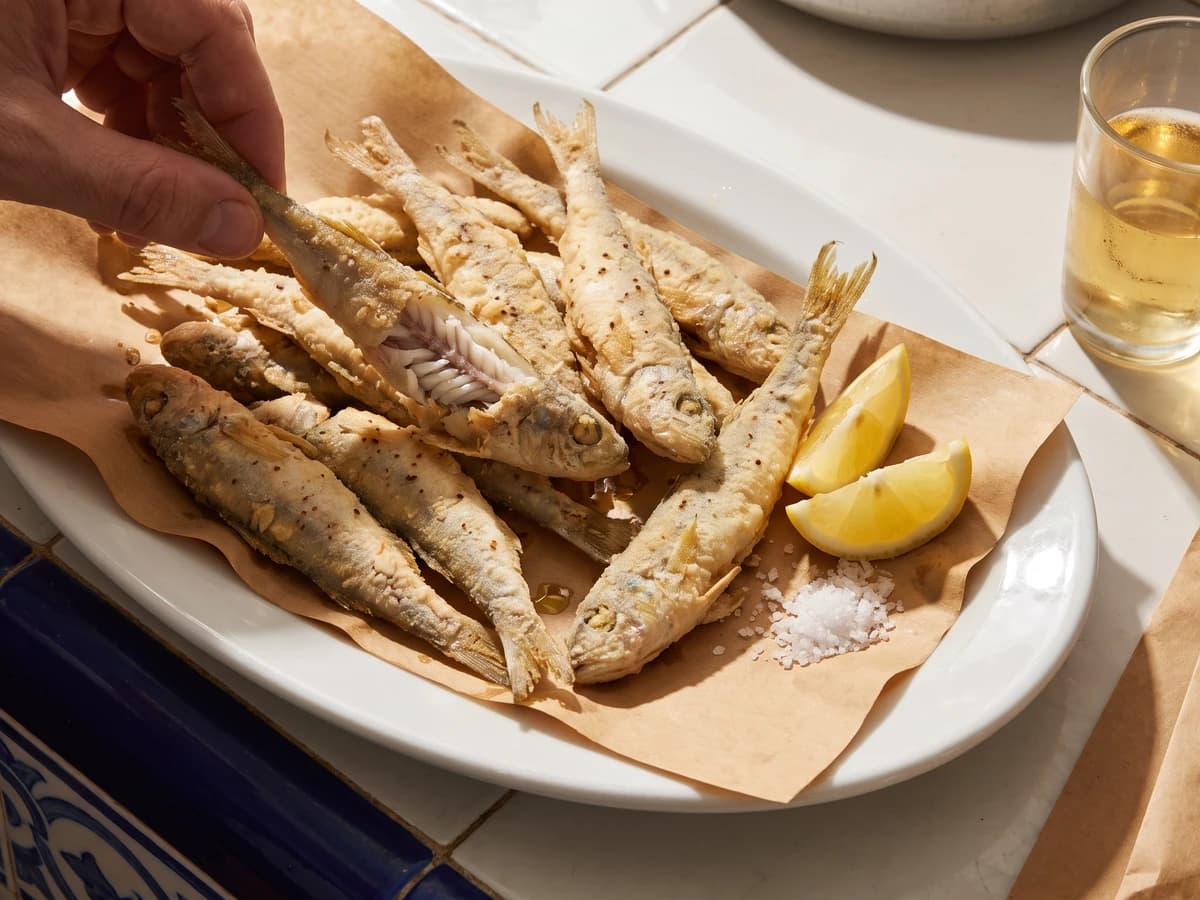
Acedías fritas belong to Cádiz: tiny wedge sole, salted, dusted in frying flour, and dropped into very hot olive oil so the rims crisp while the fish stays tender.
A cooking platform built around craft, culture, and the stories behind what we eat.

Created by
Salchichón de Vic is Catalan, from the cold plain around Vic: lean pork, firm fat, salt, and black pepper, dried slowly until the casing blooms white and the cut face shows clean marbling.
Salchichón de Vic is Catalan, from the plain around Vic in Osona, and it is a pale, peppered cured sausage, not a red one. Lean pork, firm back fat, salt, black pepper, and slow drying. No pimentón, the red paprika that belongs to chorizo. That is what makes it Vic and not another sausage wearing the wrong name.
The method that decides it is the dry cure. Keep the meat nearly freezing, weigh the salt and Cure #2, use a proper starter culture, then hang the filled sausages in cool, humid air until they lose 35 percent of their weight. Dry too fast and the outside hardens while the centre stays soft. I won't tell you to dry raw pork on a kitchen counter. That's not tradition. That's a risk.
If you're far from Catalonia, no hace falta haber pisado España. Buy llonganissa de Vic when you can, or a Catalan fuet or secallona if that is what you can find; they are thinner and drier, but they keep the same peppered family. Slice it thin on the bias, let it lose the refrigerator chill, and put it down with pa amb tomàquet, bread rubbed with tomato and oil. The margin in my notebook says, 'pésalo, no lo adivines,' because in curing, guessing is not romance. Siempre sale, si lo sigues.
Salchichón de Vic belongs to the Plana de Vic in Catalonia's Osona comarca, an inland basin whose cold air, fog, and patient drying rooms gave pork a reliable way through the year. Locally known as llonganissa de Vic, it comes from the matança, the household pig slaughter, when selected lean pork and hard fat were preserved with salt and black pepper rather than pimentón. Its pale slice, white casing bloom, and peppered scent mark it off from the red cured sausages of other regions.
Quantity
1.6kg
trimmed of sinew, cut into 2cm cubes
Quantity
400g
skin removed, cut into 2cm cubes
Quantity
54g
Quantity
5g
0.25% of the meat weight
Quantity
6g
Quantity
8g
Quantity
4g
Quantity
0.5g
dissolved in 30ml distilled water, or the maker's dose for 2kg meat
Quantity
2m
45-55mm, soaked and rinsed
Quantity
as directed for 2kg sausage
| Ingredient | Quantity |
|---|---|
| lean pork shoulder or hamtrimmed of sinew, cut into 2cm cubes | 1.6kg |
| firm pork back fatskin removed, cut into 2cm cubes | 400g |
| fine sea salt | 54g |
| Prague Powder #2 curing salt0.25% of the meat weight | 5g |
| dextrose or white sugar | 6g |
| coarsely cracked black pepper | 8g |
| finely ground black pepper | 4g |
| mild dry-sausage starter culturedissolved in 30ml distilled water, or the maker's dose for 2kg meat | 0.5g |
| natural beef middles or wide pork casings45-55mm, soaked and rinsed | 2m |
| Penicillium nalgiovense white-mold culture (optional) | as directed for 2kg sausage |
Clean the grinder, stuffer, table, hooks, and your hands properly before you begin. Set a curing chamber to 12-14C and 75-80% relative humidity a day before you start, and have a fermentation space ready at 20C and 90-95% relative humidity. If you cannot control those numbers or measure pH, stop here and buy llonganissa de Vic. That is not defeat. It is good judgment.
Spread the pork and back fat on separate trays and chill until the meat is firm, 0-2C, and the fat is nearly frozen. Cold fat cuts clean and stays white in the slice. Warm fat smears in the grinder, and then the sausage looks muddy and eats greasy.
In a small bowl, mix the sea salt, Cure #2, dextrose, cracked black pepper, and ground black pepper. Weigh to 0.1g, especially the curing salt. Pésalo, no lo adivines. Precision here is not fussing; it is what keeps the sausage safe and seasoned evenly.
Grind the chilled pork and back fat through a 6-8mm plate into a chilled bowl. Sprinkle over the cure mixture. Stir the starter culture into the distilled water, let it stand for 10 minutes, then pour it over the meat. Mix with gloved hands until tacky and bound, 2 to 3 minutes, keeping the mixture below 4C. The meat should cling to your palm; that bind gives you clean slices later.
Fit the soaked casing onto the stuffer and fill firmly, but not so hard that it bursts when tied. Make 30-35cm links, tie with butcher's twine, and prick only visible air pockets with a sterilized needle. Weigh each link and write its starting weight on a tag; your target finished weight is 65 percent of that number. Pack 30g of leftover mixture into a small covered cup to ferment beside the sausages for pH testing.
Hang the links at 20C and 90-95% relative humidity for 24 to 48 hours. Test the small meat sample until the pH reads 5.2-5.3, and do not go past 48 hours without reaching 5.3 or lower. It should smell clean, porky, and faintly tangy, never rotten or harsh. If it does not reach that mark, do not dry it.
Move the links to the curing chamber at 12-14C and 75-80% relative humidity with gentle airflow. If using white-mold culture, spray the casing lightly when the links go in. Dry for 4 to 6 weeks, checking weights weekly, until each link has lost 35-40% of its starting weight. The casing should feel dry, and the sausage should be firm through the centre, not hard outside and soft within.
When the target weight is reached, wrap the links in clean butcher paper and refrigerate for 3 to 7 days to equalise. Bring to cool room temperature for 20 minutes before serving. Slice thin on the bias, casing on or peeled as you like, and serve with pa amb tomàquet or plain bread. No pimentón dust, no oil slick, no dressing. The sausage has already done its work.
1 serving (about 72g)
Culinary guides, cultural storytelling, and the editorial depth that makes cooking meaningful.
Discover Culinary ExplorerChef Isabel
Acedías fritas belong to Cádiz: tiny wedge sole, salted, dusted in frying flour, and dropped into very hot olive oil so the rims crisp while the fish stays tender.
Chef Isabel
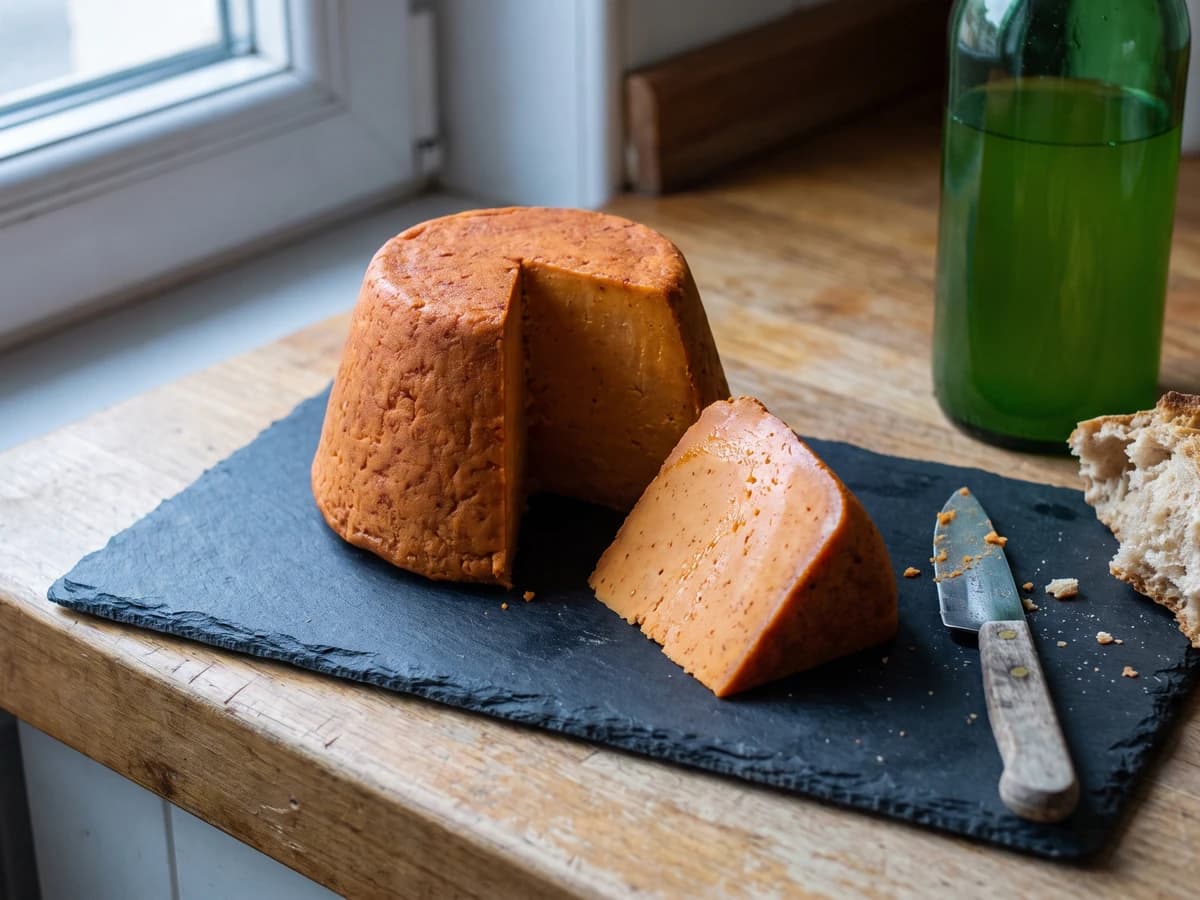
Afuega'l Pitu Roxu is Asturias in a small cheese: cow's milk set slowly to a dense curd, drained without squeezing, then kneaded with pimentón until it turns orange and grips the throat.
Chef Isabel
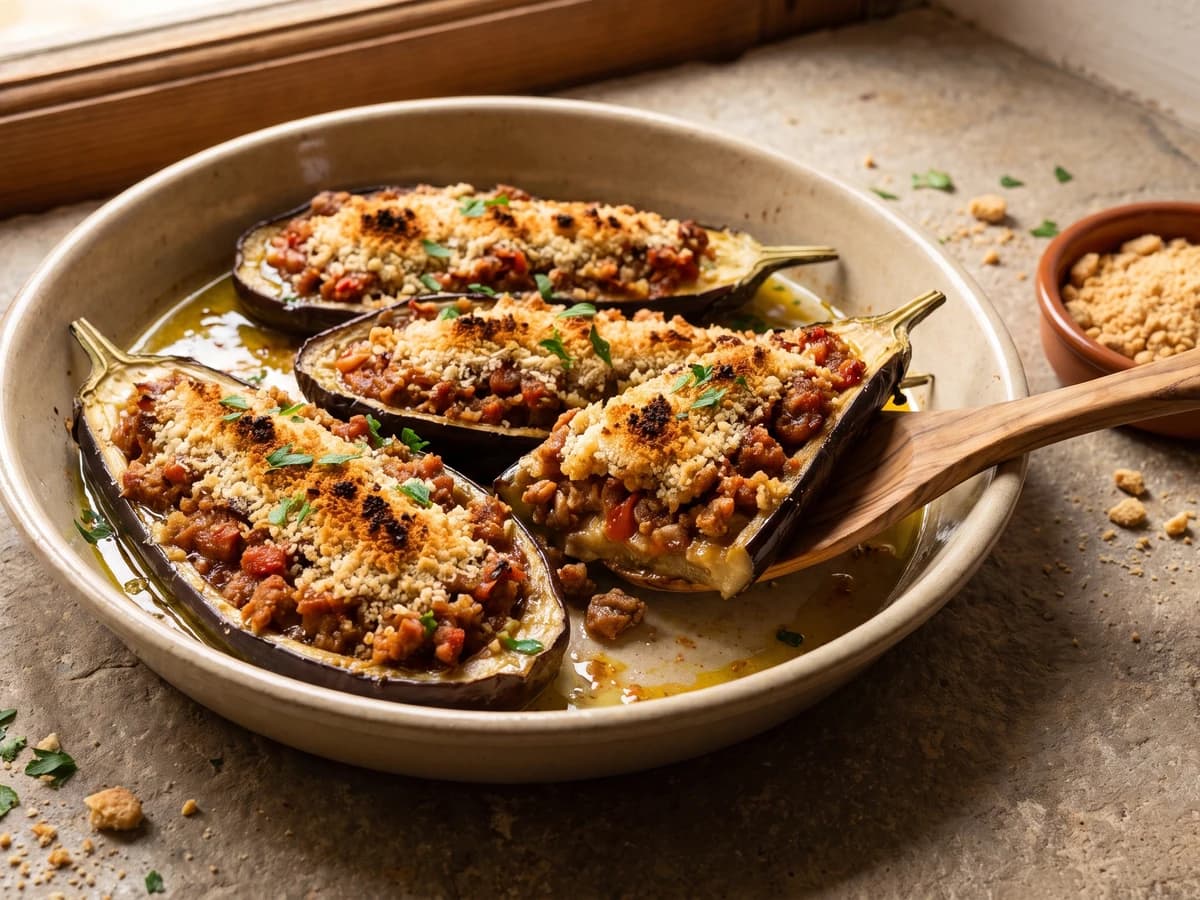
Albergínies farcides are Mallorca's summer stuffed aubergines: tender boiled shells, a slow pork sofrito with moraduix, and a plain breadcrumb cap baked until the top turns crisp and golden.

Chef Isabel
Carxofes farcides are Catalan stuffed artichokes: tender hearts filled with jamón, slow sweet onion, and breadcrumbs, then baked in a light creamy sauce until the tops turn golden.