Chef Isabel
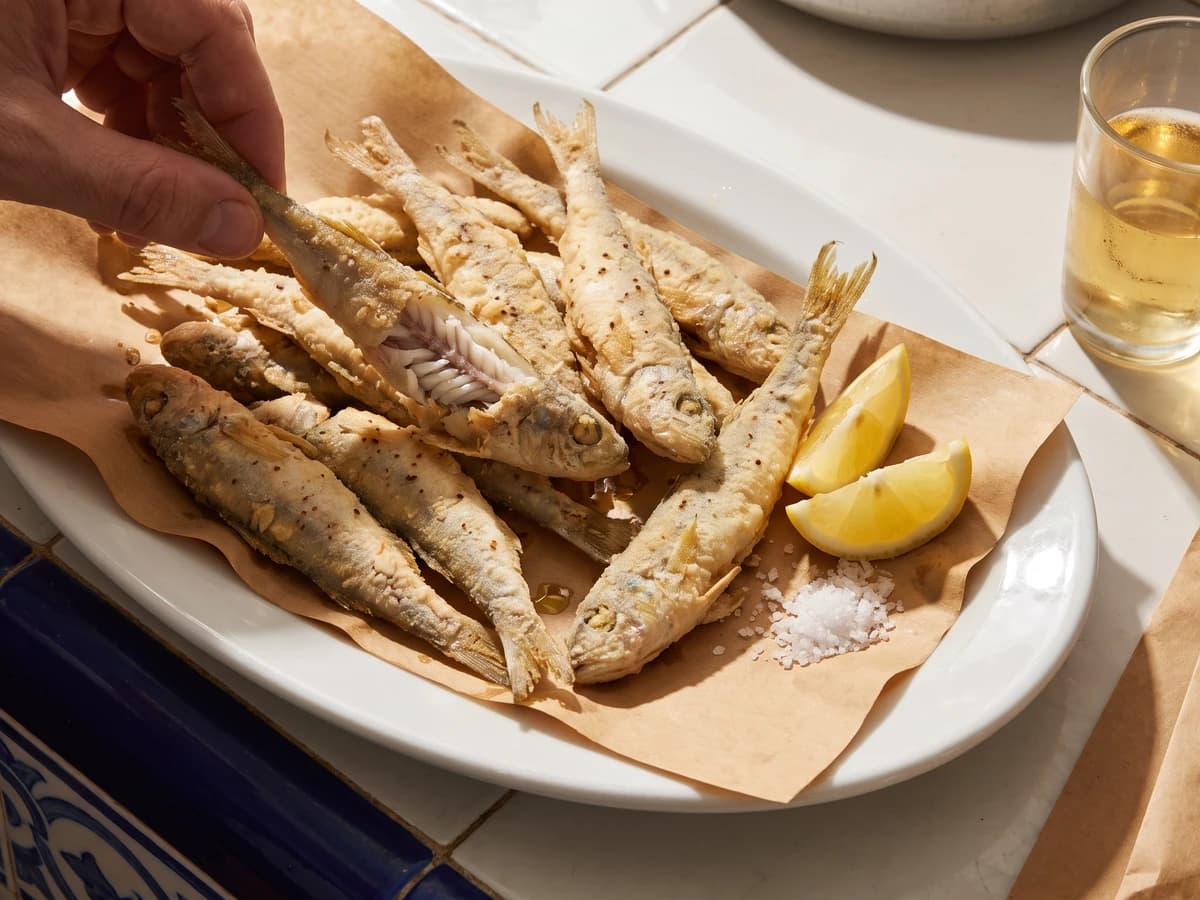
Acedías Fritas de Cádiz
Acedías fritas belong to Cádiz: tiny wedge sole, salted, dusted in frying flour, and dropped into very hot olive oil so the rims crisp while the fish stays tender.
A cooking platform built around craft, culture, and the stories behind what we eat.

Created by
Málaga's soft Andalusian salchichón is pork, fat, pepper, and nutmeg cured young, not dried hard. The trick is stopping at the tender stage and keeping it cold.
Salchichón de Málaga is Andaluz, from Málaga, and it is the soft one: pork and fat seasoned with salt, pepper, garlic, and nutmeg, cased and barely dried until it cuts in thick, tender coins. It is not chorizo, so no pimentón. It is not a hard salchichón from the interior, shaved thin enough to see through. This one is eaten young, while the cut face still shines a little.
The method that decides it is stopping in time, but only after a safe ferment. In a Málaga obrador, a small curing workshop, the room itself does half the teaching. At home you use a starter culture, Cure #1, a pH check, and a cool humid chamber. Pésalo, no lo adivines. Charcuterie is no place for guessing, especially when the sausage is going to be eaten without cooking.
Once the pH has dropped and the casing has dried enough to firm, you stop before it turns into salami. Fifteen to eighteen percent weight loss is the mark I use: the sausage should yield under your thumb and slice thick without crumbling. Siempre sale, si lo sigues, but here following it means the numbers too.
If you are far from Málaga and you can't cure safely, buy salchichón malagueño when you see it, or choose a mild salchichón semicurado with no pimentón. It will be firmer and less buttery, so slice it a little thicker and let it sit a few minutes out of the fridge. No hace falta haber pisado España, but you do need to respect a young raw sausage. My Margin says it plainly: soft is not the same as careless.
Salchichón de Málaga belongs to Málaga in Andalucía, where the humid coastal air favored a short-cured sausage that stayed tender instead of drying hard. Local tradition links it to an attempted Genovese salami whose curing did not behave as planned; Málaga kept the error and made it its own, a soft sausage sold young in charcuterías and market stalls. Its seasoning is deliberately pale and mild, pepper, garlic, and nutmeg rather than pimentón, which is why it sits apart from chorizo and from the firmer salchichones of the interior.
Quantity
700g
diced and well chilled
Quantity
300g
skin removed, diced and well chilled
Quantity
22g
Quantity
2.5g
Quantity
3g
Quantity
2g
Quantity
1g
Quantity
0.8g
Quantity
2g
grated to a paste
Quantity
0.3g, or the maker's dose for 1kg meat
Quantity
20ml
Quantity
2m
34-36mm, soaked and rinsed
Quantity
maker's dose
| Ingredient | Quantity |
|---|---|
| very fresh pork shoulderdiced and well chilled | 700g |
| pork back fat or unsmoked fresh pancetaskin removed, diced and well chilled | 300g |
| fine sea salt | 22g |
| Cure #1, 6.25% sodium nitrite | 2.5g |
| dextrose | 3g |
| freshly ground white pepper | 2g |
| cracked black pepper | 1g |
| freshly grated nutmeg | 0.8g |
| garlicgrated to a paste | 2g |
| mild fermented sausage starter culture | 0.3g, or the maker's dose for 1kg meat |
| cold non-chlorinated water | 20ml |
| natural hog casing34-36mm, soaked and rinsed | 2m |
| edible white sausage mold culture (optional) | maker's dose |
Put the grinder plate, knife, bowl, and stuffer parts in the freezer for 30 minutes. Cut the pork shoulder and fat into 2cm pieces, spread them on a tray, and chill until the edges are firm but not frozen solid, 20 to 30 minutes. Keep the meat under 4 C while you work; cold fat cuts cleanly and stays as little white flecks instead of smearing into paste.
Grind the chilled pork and fat together through a 6mm plate into a cold bowl. For the softer Málaga texture, pass half the mixture through the grinder a second time, then mix it back with the rest. You want a tender bind with visible fat, not a smooth paste.
Mix the salt, Cure #1, dextrose, white pepper, black pepper, nutmeg, and garlic in a small bowl. Dissolve the starter culture in the cold non-chlorinated water, then sprinkle both the liquid and the dry seasoning over the meat. Mix by hand or with a paddle for 2 to 3 minutes, until the meat turns tacky and clings to your glove in strands. The dextrose is not there to make it sweet; it feeds the culture so the pH drops.
Flush the soaked casing with cool water, then stuff the meat firmly into two short sausages, each about 28 to 30cm long. Tie both ends, prick any air pockets with a clean needle, and weigh each sausage. Write down the starting weight and the target weight: start weight x 0.85 for 15 percent loss, or start weight x 0.82 for 18 percent loss. If using edible white mold culture, mist the casing now according to the maker's dilution.
Hang the sausages at 20 to 22 C with 88 to 92 percent humidity for 24 to 36 hours, until the pH reaches 5.3 or lower. Test with a meat pH meter, or make a small sausage-and-distilled-water slurry for narrow-range pH strips. The smell should be clean, gently tangy, and seasoned. If the pH has not dropped by 48 hours, do not eat it raw. Discard it.
Move the sausages to a curing chamber at 11 to 13 C with 75 to 80 percent humidity. Dry for 5 to 7 days, weighing daily, until each sausage has lost 15 to 18 percent of its starting weight. This is the step that makes it salchichón de Málaga and not a hard salami: stop while it still yields under your thumb and slices thick without crumbling.
Wrap the finished sausages and refrigerate for 12 hours so the texture settles. Peel back the casing as you slice and cut thick coins, 5 to 8mm, not paper-thin. Serve cool but not fridge-cold, with good bread or picos. Keep leftovers refrigerated and eat within 5 days; this young salchichón is not shelf-stable.
1 serving (about 50g)
Culinary guides, cultural storytelling, and the editorial depth that makes cooking meaningful.
Discover Culinary ExplorerChef Isabel
Acedías fritas belong to Cádiz: tiny wedge sole, salted, dusted in frying flour, and dropped into very hot olive oil so the rims crisp while the fish stays tender.
Chef Isabel
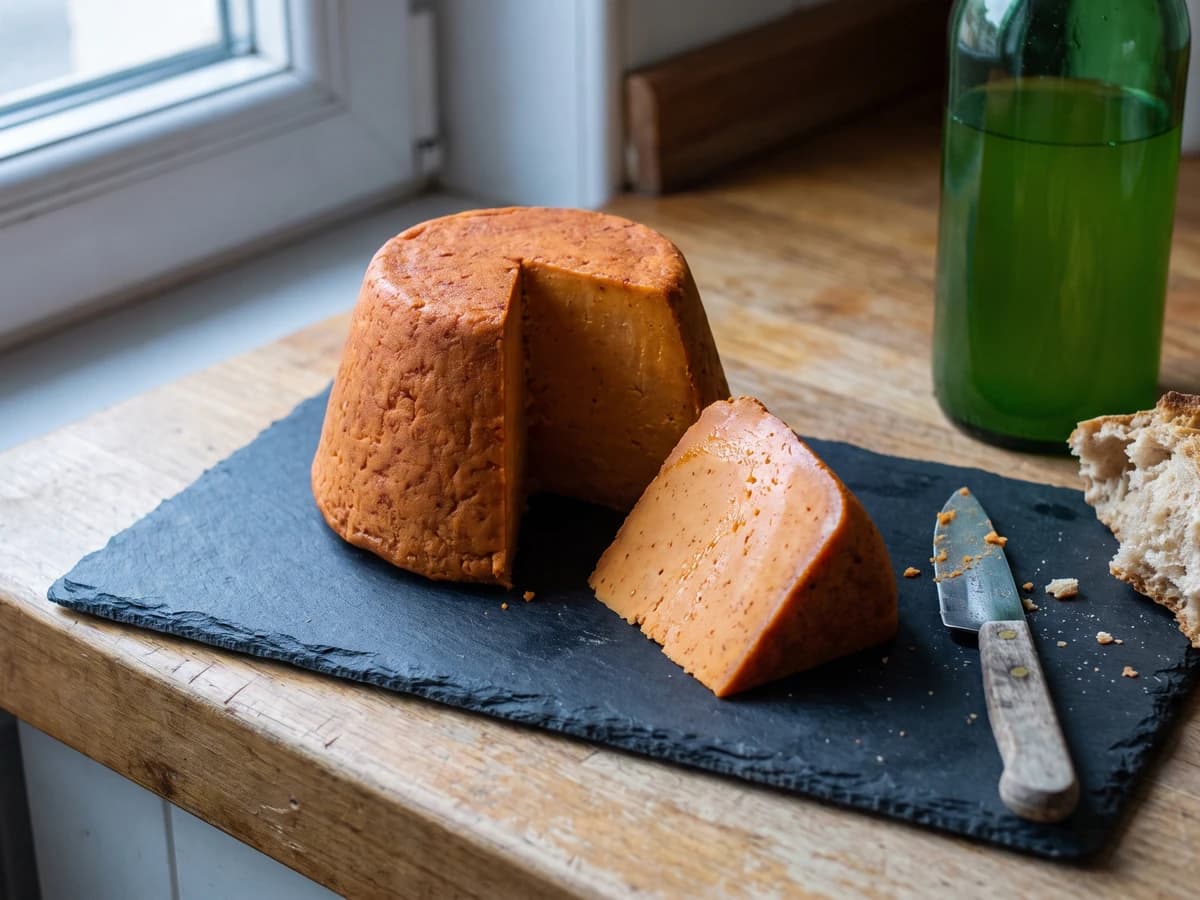
Afuega'l Pitu Roxu is Asturias in a small cheese: cow's milk set slowly to a dense curd, drained without squeezing, then kneaded with pimentón until it turns orange and grips the throat.
Chef Isabel
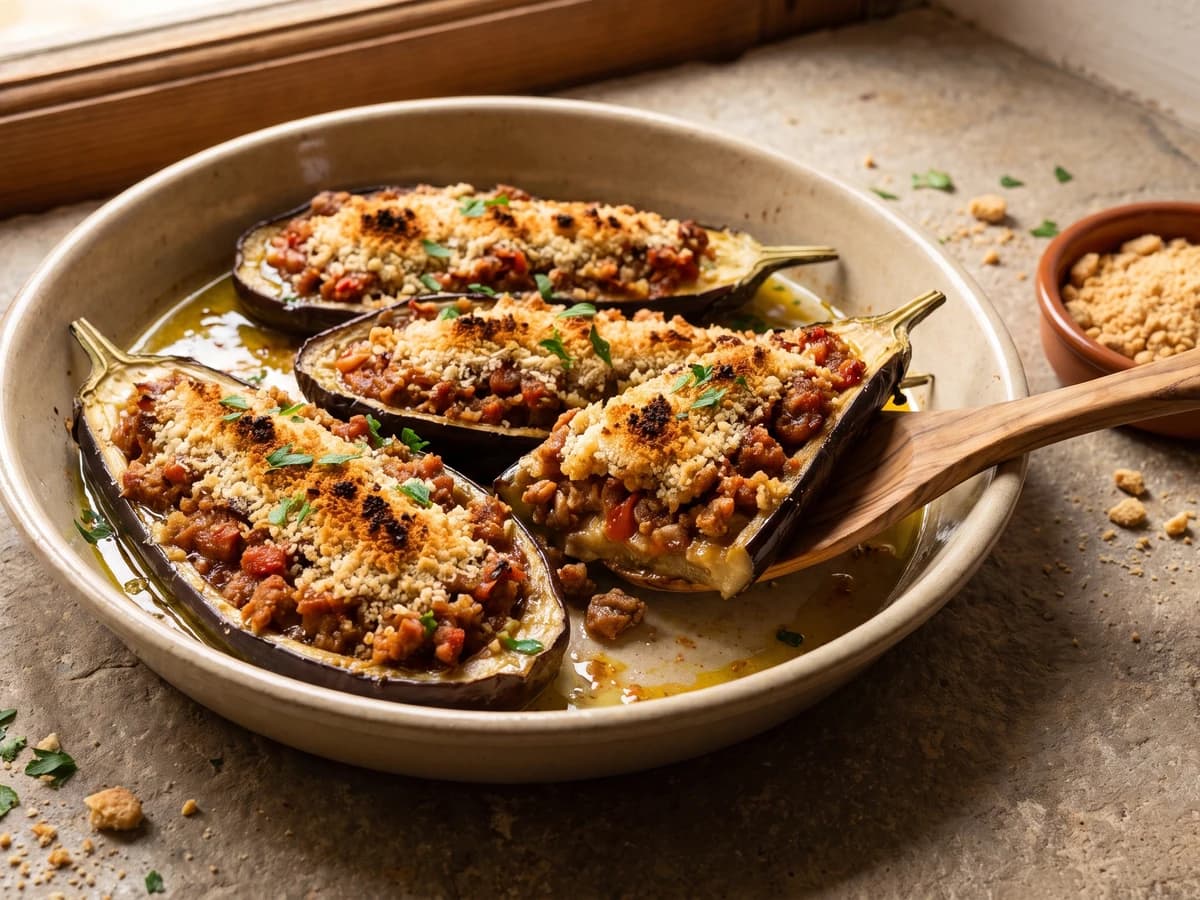
Albergínies farcides are Mallorca's summer stuffed aubergines: tender boiled shells, a slow pork sofrito with moraduix, and a plain breadcrumb cap baked until the top turns crisp and golden.

Chef Isabel
Carxofes farcides are Catalan stuffed artichokes: tender hearts filled with jamón, slow sweet onion, and breadcrumbs, then baked in a light creamy sauce until the tops turn golden.