
Chef Margarida
Cenouras à Algarvia
The marinated carrots of the Algarve, where garlic, paprika, and good azeite transform a humble root into something you'll make every week. Proof that the south knows how to treat vegetables.
A cooking platform built around craft, culture, and the stories behind what we eat.
Created by
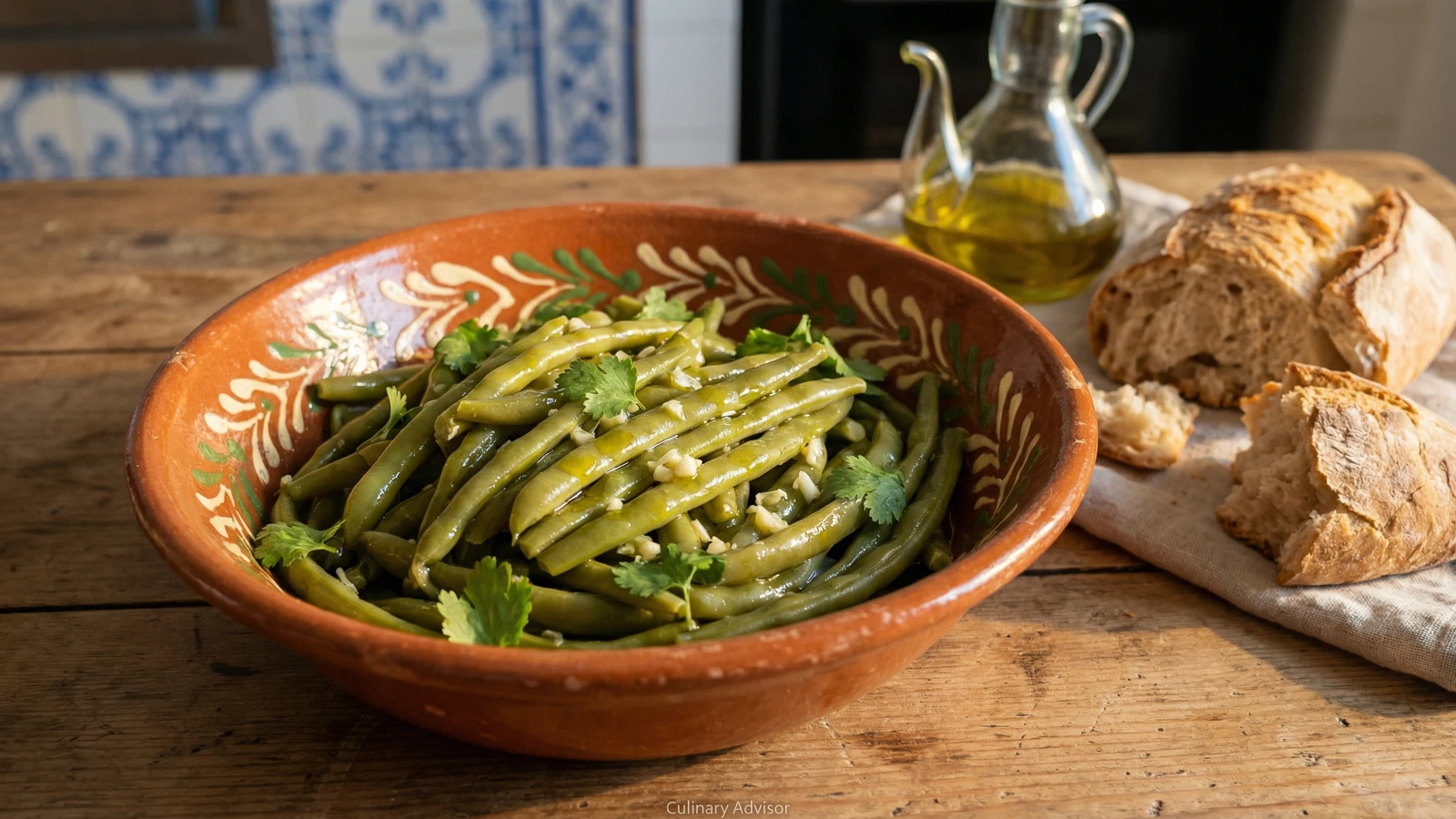
The green bean salad of Portuguese summers, dressed warm so the beans drink the garlic and azeite. Make it today, eat it tomorrow. The flavor only gets better.
This is the salad that appears on every Portuguese table in summer. At baptisms and communions, at Sunday lunches that stretch into evening, at tascas where they bring it without asking because they know you'll want it. Feijão verde, dressed simply, eaten at room temperature. Nothing fancy. Everything right.
Avó Leonor made this every week from June to September, when the beans came from the neighbor's garden and cost nothing but the promise to return the favor. She'd cook them until soft, not this modern nonsense about crisp vegetables. Portuguese beans are tender. They yield. That's how they absorb the dressing instead of just wearing it.
The trick is dressing them warm. Right out of the pot, still steaming, straight into the bowl with the garlic and azeite. The heat opens everything up. The beans drink the dressing while they cool. By the time they reach the table, the flavor is inside, not sitting on the surface waiting to slide off.
This is the kind of cooking that rewards patience. Made an hour ahead, it's good. Made the night before, it's better. The garlic mellows, the vinegar softens, everything marries together. At Mesa da Avó, we make it in the morning for the evening service. By dinner, it tastes like it's been that way forever.
Salada de feijão verde has roots in the hortas (vegetable gardens) that surrounded every Portuguese village, where green beans were a summer staple grown alongside tomatoes and peppers. The dish reflects the Portuguese philosophy of cooking vegetables until properly tender, a tradition that predates the modern preference for crisp-tender produce. Dressing vegetables warm with azeite and vinegar is a technique found across the Mediterranean, but the addition of coentros marks this version as distinctly southern Portuguese.
Quantity
750g
ends trimmed
Quantity
1/2 cup
Quantity
4 cloves
minced
Quantity
3 tablespoons
Quantity
1 small bunch
roughly chopped
Quantity
1 teaspoon, plus more for cooking water
Quantity
freshly ground, to taste
| Ingredient | Quantity |
|---|---|
| green beans (feijão verde)ends trimmed | 750g |
| extra virgin olive oil (azeite) | 1/2 cup |
| garlicminced | 4 cloves |
| red wine vinegar | 3 tablespoons |
| fresh cilantro (coentros)roughly chopped | 1 small bunch |
| flaky sea salt | 1 teaspoon, plus more for cooking water |
| black pepper | freshly ground, to taste |
Bring a large pot of generously salted water to a rolling boil. The water should taste like the sea. Add the green beans and cook until completely tender, about 8 to 10 minutes. Forget everything you've heard about crisp-tender vegetables. This is Portugal, not Italy. We cook our beans until they yield to a fork, soft enough to absorb the dressing but still holding their shape.
While the beans cook, combine the olive oil, minced garlic, and red wine vinegar in a large serving bowl. Add the salt and a generous grinding of black pepper. Whisk together. The garlic will mellow as it sits in the oil, losing its harsh edge but keeping its presence.
Drain the beans well, shaking off excess water. Add them immediately to the bowl with the dressing while they're still hot. Toss gently but thoroughly, coating every bean. This is the secret: warm beans drink the dressing. Cold beans just wear it. You want the flavor inside, not sitting on the surface.
Fold in most of the chopped coentros, reserving a small handful for garnish. Let the salad sit at room temperature for at least 30 minutes before serving, tossing once or twice. The flavor deepens as it rests. If making ahead, cover and refrigerate overnight, then bring to room temperature before serving and add fresh coentros on top.
1 serving (about 150g)
Culinary guides, cultural storytelling, and the editorial depth that makes cooking meaningful.
Discover Culinary ExplorerChef Margarida
The marinated carrots of the Algarve, where garlic, paprika, and good azeite transform a humble root into something you'll make every week. Proof that the south knows how to treat vegetables.

Chef Margarida
The dish that taught me Lisbon's tascas were universities of flavor. Salt cod and chickpeas, roughly tossed, never fussed over. The name means 'half undone' because that's exactly how you make it.

Chef Margarida
Pig's ears braised until silky, then dressed in garlic, vinegar, and bright handfuls of coentros. Alentejo's disappearing bar snack that deserves a place at your table.

Chef Margarida
The name comes from the action: vigorous mixing with your fists until raw bacalhau, onion, and olive oil become something silky and unified. Punchy, raw, utterly Portuguese.