
Chef Margarida
Cenouras à Algarvia
The marinated carrots of the Algarve, where garlic, paprika, and good azeite transform a humble root into something you'll make every week. Proof that the south knows how to treat vegetables.
A cooking platform built around craft, culture, and the stories behind what we eat.
Created by
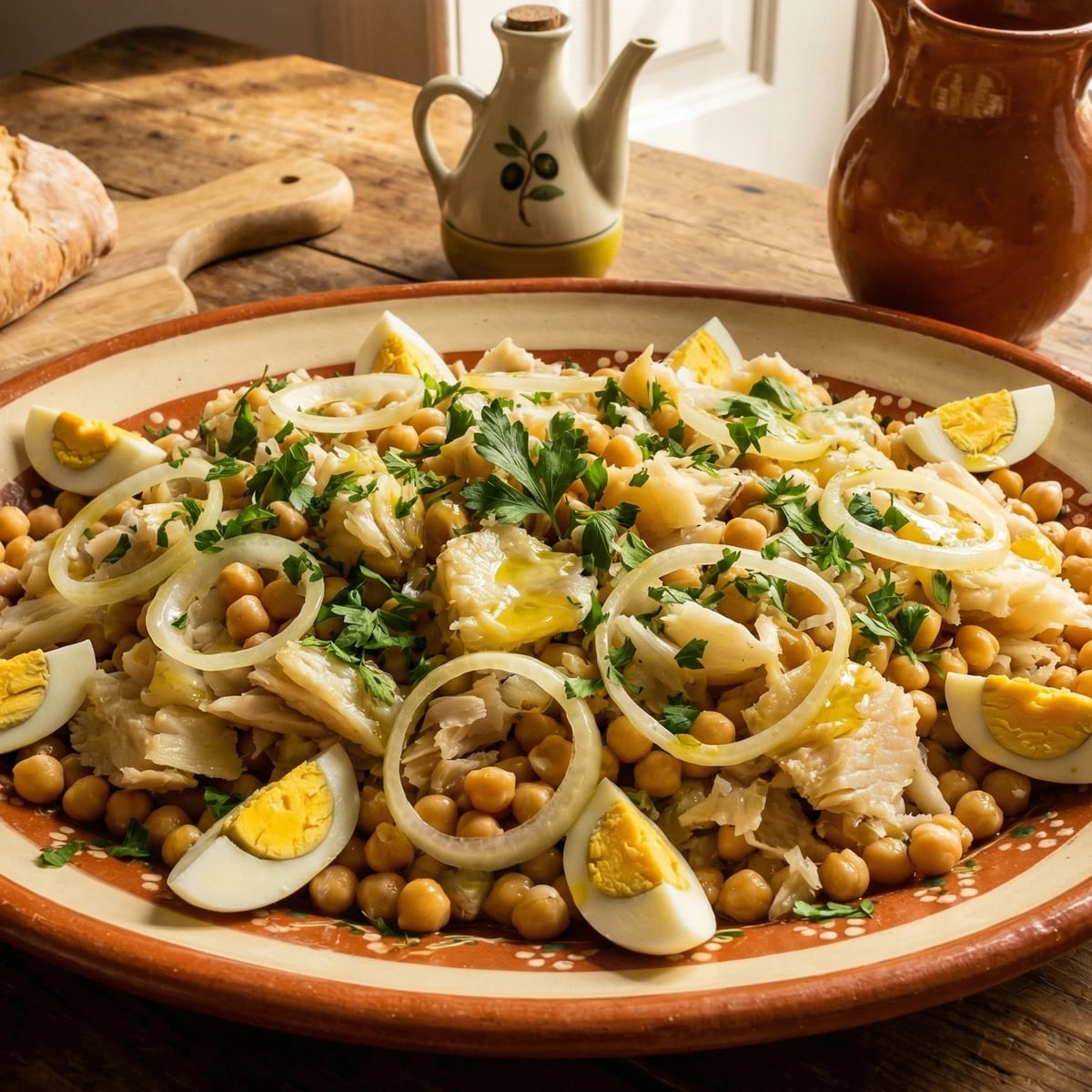
The dish that taught me Lisbon's tascas were universities of flavor. Salt cod and chickpeas, roughly tossed, never fussed over. The name means 'half undone' because that's exactly how you make it.
The first time I ate this was at a tiny tasca near Alfama, the kind of place with paper tablecloths and wine served in ceramic jugs. An old man at the next table told me the dish was called meia desfeita because you only half-unmake it. You don't mash it. You don't blend it. You leave it rough, imperfect, the cod in flakes, the chickpeas whole, everything just barely brought together. Half undone. The name is the recipe.
This is working-class food, the kind of lunch that sustained Lisbon's dockworkers and fishmongers. Cheap ingredients made noble through simplicity: salt cod that's been properly soaked, chickpeas cooked until creamy, raw onion for bite, and enough good azeite to make everything shine. Hard-boiled eggs on top if you want to make it a full meal. That's it. That's the whole thing.
Avó Leonor didn't make this often because we were Alentejo people, not Lisbon people. But when she did, she was fierce about the onion. "Tem de picar," she'd say. It has to sting. Raw, sliced thin, unapologetic. If you can't handle raw onion, this isn't your dish. The sharpness cuts through the richness of the cod and oil. Without it, the whole thing falls flat.
At Mesa da Avó, I serve this in the summer when it's too hot to cook anything complicated. People eat it with their hands, scooping it onto hunks of bread, arguing about whether it needs more vinegar. That's when I know I've got it right. A dish this simple should provoke opinions.
Meia desfeita emerged from Lisbon's tascas in the 19th century, where it became a staple of the petiscos tradition, small dishes meant for sharing over wine. The name, meaning 'half undone,' distinguishes it from fully mashed preparations like brandade. It remains a fixture on tasca menus throughout the capital, particularly in the old neighborhoods of Alfama, Mouraria, and Bairro Alto.
Quantity
500g
soaked 2 days, water changed 3 times
Quantity
300g
soaked overnight
Quantity
1
Quantity
1 large
halved and sliced paper-thin
Quantity
3 cloves
minced
Quantity
2/3 cup, plus more for drizzling
Quantity
3 tablespoons
Quantity
1 large bunch
roughly chopped
Quantity
4
quartered
Quantity
to taste
Quantity
to taste
freshly ground
| Ingredient | Quantity |
|---|---|
| dried salt cod (bacalhau)soaked 2 days, water changed 3 times | 500g |
| dried chickpeassoaked overnight | 300g |
| bay leaf | 1 |
| white onionhalved and sliced paper-thin | 1 large |
| garlicminced | 3 cloves |
| extra virgin olive oil (azeite) | 2/3 cup, plus more for drizzling |
| red wine vinegar | 3 tablespoons |
| flat-leaf parsley (salsa)roughly chopped | 1 large bunch |
| hard-boiled eggsquartered | 4 |
| flaky sea salt | to taste |
| black pepperfreshly ground | to taste |
If using dried chickpeas, drain them and place in a large pot with fresh cold water and the bay leaf. Bring to a boil, then reduce to a gentle simmer. Cook until completely tender and creamy inside, about 1 to 1.5 hours. They should crush easily between your fingers with no chalky center. Drain and let cool to room temperature. Discard the bay leaf. If using canned, simply drain and rinse.
Drain the soaked cod and place it in a wide pot. Cover with fresh cold water. Bring to just below a simmer over medium heat. The moment you see small bubbles forming at the bottom, remove from heat. Let the cod sit in the hot water for 10 minutes. It will cook gently from the residual heat. Drain and let cool until you can handle it.
Using your fingers, flake the cod into rough pieces, removing any skin and bones as you go. Keep the pieces substantial. This is meia desfeita, half undone. You're not shredding it into threads like you would for bacalhau à Brás. The flakes should be generous, irregular, showing that a human hand did this work.
In a small bowl, whisk together the olive oil, red wine vinegar, and minced garlic. Season with pepper. Go easy on salt until you taste the final dish. The cod still carries some salinity even after soaking.
In a large wide bowl, combine the chickpeas and flaked cod. Add the sliced onion. Pour over most of the dressing and toss gently. Don't overmix. The beauty of this dish is in its rough, imperfect composition. Some bites will be more cod, some more chickpea, some sharp with onion. That's correct.
Let the salad sit at room temperature for at least 20 minutes. This resting time is essential. The chickpeas drink the dressing, the onion softens just slightly, everything gets acquainted. Transfer to a serving platter. Scatter the parsley generously over the top. Arrange the quartered eggs around the edges. Drizzle with more olive oil. Taste and adjust salt if needed. Serve at room temperature with plenty of good bread.
1 serving (about 360g)
Culinary guides, cultural storytelling, and the editorial depth that makes cooking meaningful.
Discover Culinary Explorer
Chef Margarida
The marinated carrots of the Algarve, where garlic, paprika, and good azeite transform a humble root into something you'll make every week. Proof that the south knows how to treat vegetables.

Chef Margarida
Pig's ears braised until silky, then dressed in garlic, vinegar, and bright handfuls of coentros. Alentejo's disappearing bar snack that deserves a place at your table.

Chef Margarida
The name comes from the action: vigorous mixing with your fists until raw bacalhau, onion, and olive oil become something silky and unified. Punchy, raw, utterly Portuguese.

Chef Margarida
The salad that sits on every Portuguese table, at every meal, in every season. Four vegetables, oil, vinegar, salt. Nothing more, nothing less. This is how we eat.