
Chef Margarida
Cenouras à Algarvia
The marinated carrots of the Algarve, where garlic, paprika, and good azeite transform a humble root into something you'll make every week. Proof that the south knows how to treat vegetables.
A cooking platform built around craft, culture, and the stories behind what we eat.
Created by
The name comes from the action: vigorous mixing with your fists until raw bacalhau, onion, and olive oil become something silky and unified. Punchy, raw, utterly Portuguese.
Some dishes you don't explain at the table. You just serve them. This is one of those.
Punheta de bacalhau is raw salt cod, properly soaked until the sea leaves it, then shredded fine and beaten together with olive oil, garlic, and onion until everything becomes silky and inseparable. The name comes from punho, the fist. You're meant to really work this mixture. Nothing delicate about it.
I learned this from an old woman in Setúbal who laughed when I asked about the name. "It is what it is," she said. "Your grandmother made it. Her grandmother made it. We don't rename dishes because someone gets uncomfortable." She was right. The name tells you exactly what to do: punch it together until it becomes something new.
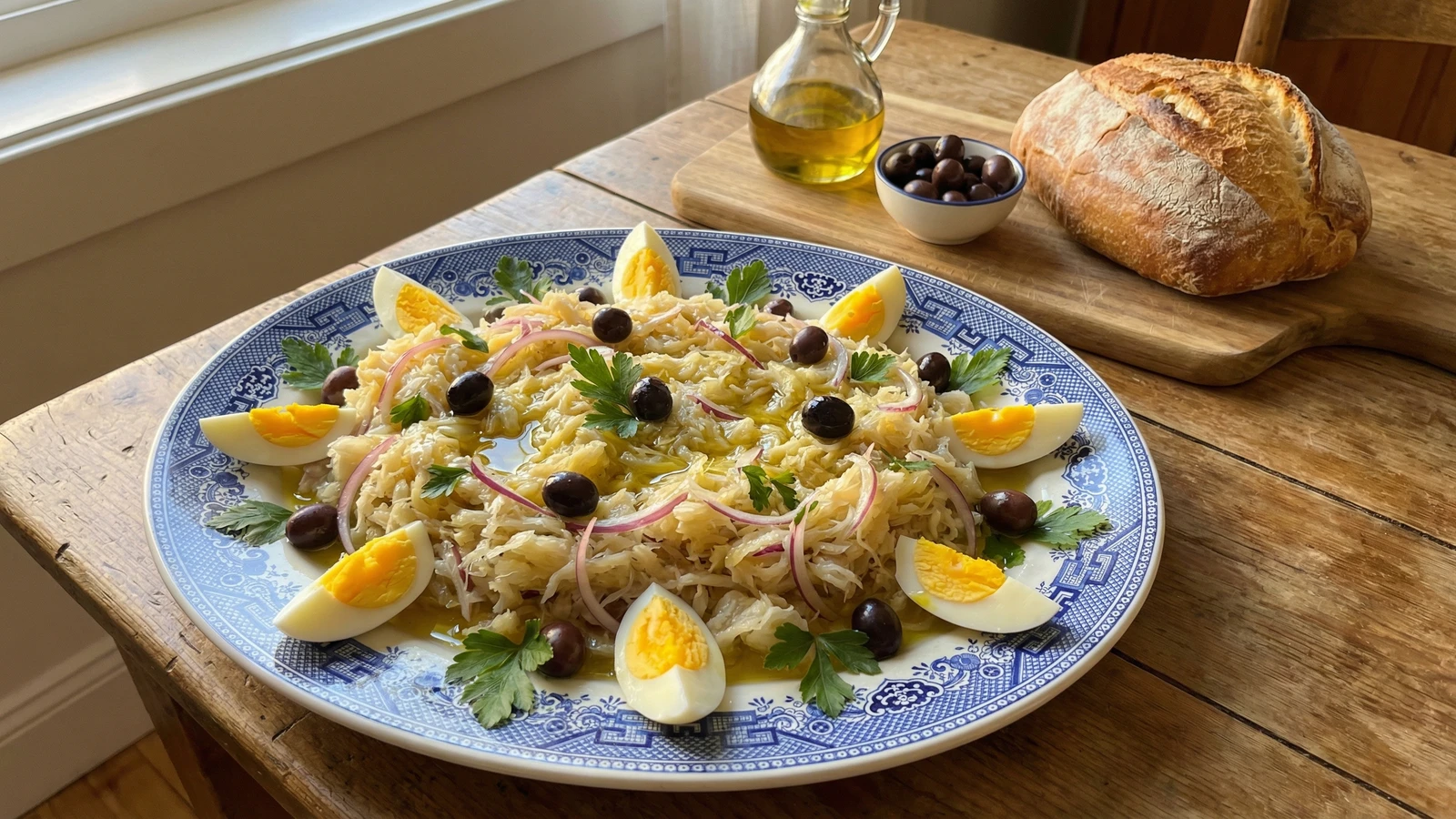
This is summer food, tasca food, the kind of thing you put in the middle of the table with olives and bread and let people serve themselves. It sits well. It travels well. It tastes better the longer the flavors marry. At Mesa da Avó, I serve it on hot afternoons when nobody wants to cook, with quartéis de ovos around the edges and a drizzle of the best azeite I can find. Pão, azeite, vinho, sempre. That's the complete meal.
Punheta de bacalhau predates refrigeration, born from the practical need to prepare salt cod without fire during Portugal's hot summers. The dish appears in recipe collections from the 18th century, though it was certainly made long before anyone wrote it down. Lisbon and the Estremadura coast claim it, but you'll find versions from Setúbal to Peniche.
Quantity
500g thick-cut
soaked 2-3 days, water changed 3 times
Quantity
1 large
sliced paper-thin
Quantity
3 cloves
minced
Quantity
3/4 cup
Quantity
3 tablespoons
Quantity
1/2 cup
Quantity
4 large
hard-boiled and quartered
Quantity
for garnish
roughly chopped
Quantity
freshly ground, to taste
| Ingredient | Quantity |
|---|---|
| dried salt cod (bacalhau)soaked 2-3 days, water changed 3 times | 500g thick-cut |
| white onionsliced paper-thin | 1 large |
| garlicminced | 3 cloves |
| extra virgin olive oil (azeite) | 3/4 cup |
| red wine vinegar | 3 tablespoons |
| black olives | 1/2 cup |
| eggshard-boiled and quartered | 4 large |
| flat-leaf parsleyroughly chopped | for garnish |
| black pepper | freshly ground, to taste |
After soaking for 2-3 days, taste a small piece of the cod. It should taste like mild, clean fish, not salt. If it's still too salty, soak another 12 hours with fresh water. This step isn't optional. The whole dish depends on properly desalted cod.
Drain the cod and pat it completely dry. Using your hands, shred it into thin, delicate fibers, removing all skin and bones as you go. This is meditation work. Take your time. The finer the shreds, the silkier your punheta will be. Place the shredded cod in a large wide bowl.
Slice the onion as thin as you possibly can. Paper-thin. If you can't see light through the slices, they're too thick. Soak the onion slices in ice water for 15 minutes to soften their bite, then drain and pat completely dry. Raw onion that bites back ruins this dish.
Add the drained onion and minced garlic to the bowl with the cod. Pour the olive oil and vinegar over everything. Now here's where the dish gets its name. Using your hands or two forks, mix vigorously. Really work it. You're not tossing a salad; you're punching the ingredients together until the oil emulsifies with the cod fibers and everything becomes silky and cohesive. This takes a good 2-3 minutes of aggressive mixing.
Cover the bowl and let it rest in the refrigerator for at least 30 minutes, or up to several hours. The flavors need time to marry. When ready to serve, taste and adjust the seasoning with pepper (you shouldn't need salt). Transfer to a serving platter. Arrange the hard-boiled egg quarters around the edges. Scatter the olives and parsley over top. Drizzle with a final thread of your best azeite.
1 serving (about 215g)
Culinary guides, cultural storytelling, and the editorial depth that makes cooking meaningful.
Discover Culinary ExplorerChef Margarida
The marinated carrots of the Algarve, where garlic, paprika, and good azeite transform a humble root into something you'll make every week. Proof that the south knows how to treat vegetables.

Chef Margarida
The dish that taught me Lisbon's tascas were universities of flavor. Salt cod and chickpeas, roughly tossed, never fussed over. The name means 'half undone' because that's exactly how you make it.

Chef Margarida
Pig's ears braised until silky, then dressed in garlic, vinegar, and bright handfuls of coentros. Alentejo's disappearing bar snack that deserves a place at your table.

Chef Margarida
The salad that sits on every Portuguese table, at every meal, in every season. Four vegetables, oil, vinegar, salt. Nothing more, nothing less. This is how we eat.