
Chef Margarida
Cenouras à Algarvia
The marinated carrots of the Algarve, where garlic, paprika, and good azeite transform a humble root into something you'll make every week. Proof that the south knows how to treat vegetables.
A cooking platform built around craft, culture, and the stories behind what we eat.
Created by
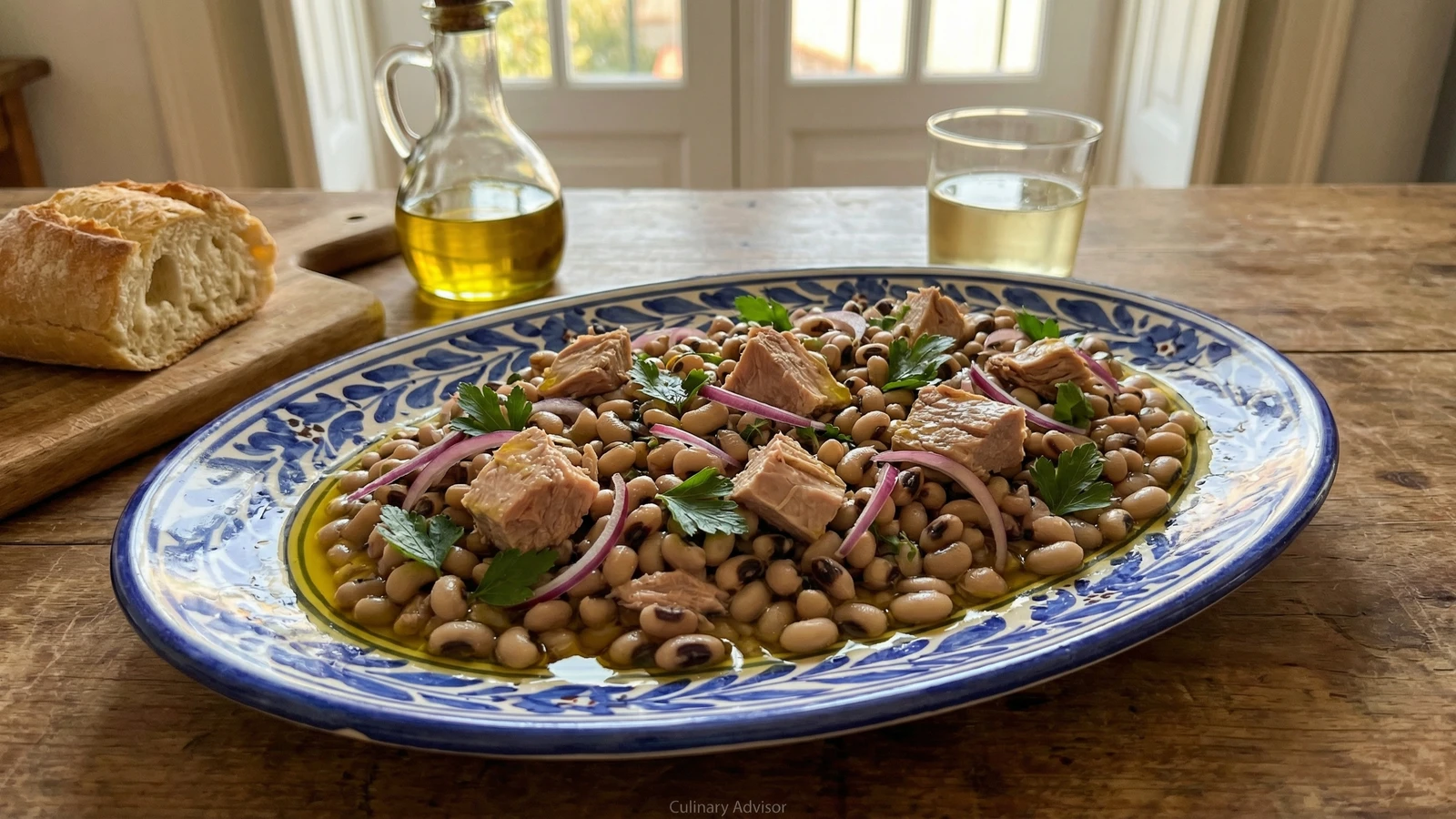
The salad that lives in every Portuguese pantry, proof that genius cooking doesn't require fresh markets or fancy ingredients. Just feijão frade, good tuna, and the generosity to use enough azeite.
This is the dish I make when the cupboard looks empty but I know better. Feijão frade. A can of tuna. An onion. Salsa. Azeite. Vinegar. That's a meal. That's summer on a plate.
Every Portuguese grandmother has made this salad. Every tasca serves it. It appears on tables from the Minho to the Algarve, and nobody argues about whose version is best because the dish is so simple there's barely room for variation. Beans, tuna, onion, parsley, olive oil, vinegar. Done.
Avó Leonor kept cans of feijão frade lined up in her cupboard like little soldiers. She could feed anyone who showed up unannounced. "Uma salada de feijão frade resolve tudo," she'd say. A black-eyed pea salad fixes everything. Hungry? Salada de feijão frade. Too hot to cook? Salada de feijão frade. Unexpected guests? You know what's coming.
This isn't cooking that impresses at dinner parties. This is cooking that sustains families. The kind that asks nothing of you except decent ingredients and the patience to let them shine. The tuna should be good, packed in olive oil if you can find it. The azeite should be generous, more than you think you need. The onion should be sliced thin and given time to soften in the dressing. That's it. That's the whole secret.
Black-eyed peas arrived in Portugal via North Africa centuries ago and became a staple of the southern diet, particularly in Alentejo. The combination with preserved tuna reflects Portugal's long tradition of canned fish, an industry that flourished in the early 20th century. This salad represents the Portuguese genius for turning pantry staples into something worth eating.
Quantity
400g cooked
drained and rinsed if canned
Quantity
2 cans (about 240g total)
drained
Quantity
1 small
halved and sliced paper-thin
Quantity
1/4 cup, plus more for finishing
Quantity
2 tablespoons
Quantity
1 small bunch
roughly chopped
Quantity
to taste
Quantity
to taste
freshly ground
| Ingredient | Quantity |
|---|---|
| black-eyed peas (feijão frade)drained and rinsed if canned | 400g cooked |
| tuna in olive oildrained | 2 cans (about 240g total) |
| white onionhalved and sliced paper-thin | 1 small |
| extra virgin olive oil (azeite) | 1/4 cup, plus more for finishing |
| red wine vinegar | 2 tablespoons |
| flat-leaf parsley (salsa)roughly chopped | 1 small bunch |
| flaky sea salt | to taste |
| black pepperfreshly ground | to taste |
Place the thinly sliced onion in a small bowl. Add a pinch of salt and the red wine vinegar. Toss gently and let sit for at least 10 minutes while you prepare everything else. This softens the raw bite and turns the onion silky instead of sharp.
Place the drained black-eyed peas in a wide serving bowl. Break the tuna into large flakes with a fork and scatter over the beans. You want chunks, not shreds. The texture matters.
Add the pickled onions along with their vinegar to the bowl. Drizzle generously with olive oil. The azeite should pool slightly at the bottom. If you're being stingy with the oil, you're doing it wrong. Toss gently, keeping those tuna chunks intact.
Add most of the parsley and fold through. Season with salt and pepper. Taste. Adjust. Transfer to a serving platter or leave in the bowl. Scatter the remaining parsley on top and finish with one more drizzle of your best olive oil. Serve at room temperature with crusty bread for mopping up the juices.
1 serving (about 210g)
Culinary guides, cultural storytelling, and the editorial depth that makes cooking meaningful.
Discover Culinary ExplorerChef Margarida
The marinated carrots of the Algarve, where garlic, paprika, and good azeite transform a humble root into something you'll make every week. Proof that the south knows how to treat vegetables.

Chef Margarida
The dish that taught me Lisbon's tascas were universities of flavor. Salt cod and chickpeas, roughly tossed, never fussed over. The name means 'half undone' because that's exactly how you make it.

Chef Margarida
Pig's ears braised until silky, then dressed in garlic, vinegar, and bright handfuls of coentros. Alentejo's disappearing bar snack that deserves a place at your table.

Chef Margarida
The name comes from the action: vigorous mixing with your fists until raw bacalhau, onion, and olive oil become something silky and unified. Punchy, raw, utterly Portuguese.