
Chef Margarida
Cenouras à Algarvia
The marinated carrots of the Algarve, where garlic, paprika, and good azeite transform a humble root into something you'll make every week. Proof that the south knows how to treat vegetables.
A cooking platform built around craft, culture, and the stories behind what we eat.
Created by
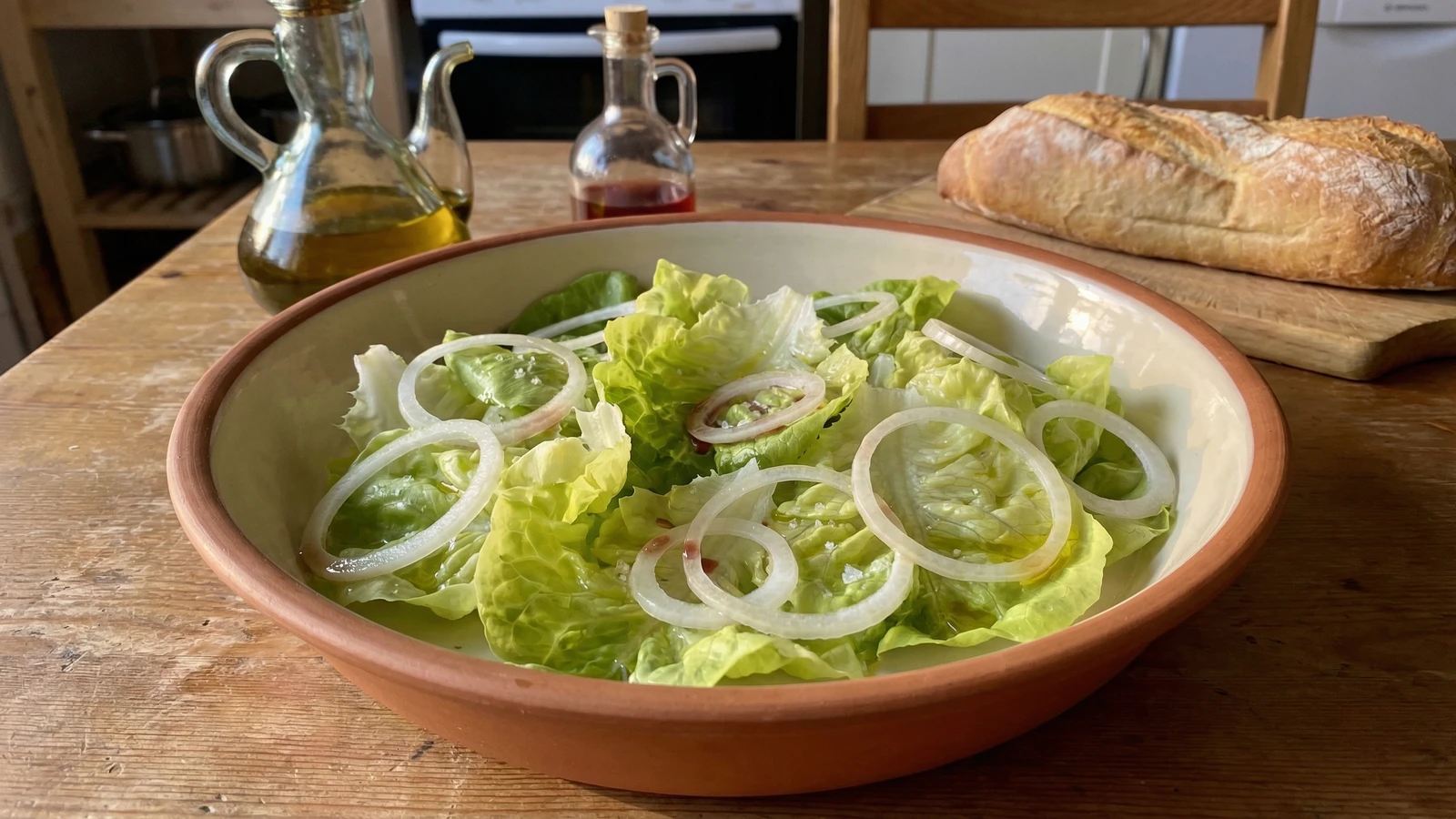
The salad that appears on every Portuguese table, dressed at the last moment with good azeite and vinegar. Four ingredients. No recipe needed. This is how we've always eaten.
This isn't really a recipe. It's a habit. A reflex. The salad that appears beside every meal in Portugal, from the humblest tasca to the Sunday table.
Avó Leonor made this salad every single day. Lunch and dinner, without fail. Lettuce from the garden when she had it, from the market when she didn't. Onion sliced so thin you could read through it. Azeite from the cooperative in Moura. Red wine vinegar from the barrel in the cellar. Salt. Nothing else.
I've watched tourists in Lisbon look confused when this arrives at their table. Where's the dressing? Where are the toppings? They don't understand that this is the dressing. This is the salad. The simplicity is the point. When your olive oil is good and your lettuce is fresh, you don't need anything else.
At my Mesa da Avó dinners, I always serve this alongside the main course. People ask for the recipe and I have to explain: there is no recipe. There's just technique. Dry your lettuce. Slice your onion thin. Dress it at the table. Eat it immediately. A cozinha é memória, and this salad is the memory of every Portuguese meal I've ever eaten.
This simple preparation represents the oldest form of salad dressing in the Mediterranean, unchanged since Roman times when olive oil and vinegar were the only condiments available. In Portugal, salada de alface appears on virtually every table as a palate cleanser and digestive aid. The tradition of dressing at the table rather than in the kitchen ensures the leaves stay crisp until the moment of eating.
Quantity
1 large head
leaves separated and washed
Quantity
1 small
sliced into paper-thin rings
Quantity
1/4 cup
Quantity
2 tablespoons
Quantity
to taste
| Ingredient | Quantity |
|---|---|
| butter lettuce or alface frisadaleaves separated and washed | 1 large head |
| white onionsliced into paper-thin rings | 1 small |
| extra virgin olive oil (azeite) | 1/4 cup |
| red wine vinegar | 2 tablespoons |
| flaky sea salt | to taste |
Wash the lettuce leaves in cold water and dry them thoroughly. This matters. Wet lettuce dilutes the dressing and turns soggy within minutes. Tear the leaves into bite-sized pieces by hand. Never cut lettuce with a knife. The bruised edges brown and taste of metal.
Cut the onion in half through the root, then slice into the thinnest rings you can manage. Thin as paper. Thin enough to see through. Thick onion overwhelms. You want just enough bite to remind you it's there.
Place the lettuce in a wide shallow bowl. Scatter the onion rings over the top. Don't toss yet. The dressing happens at the table.
Bring the salad to the table with the olive oil, vinegar, and salt alongside. Drizzle the azeite generously over the leaves, then the vinegar. Sprinkle with salt. Toss gently with your hands or two spoons. Serve immediately. This salad waits for no one.
1 serving (about 90g)
Culinary guides, cultural storytelling, and the editorial depth that makes cooking meaningful.
Discover Culinary ExplorerChef Margarida
The marinated carrots of the Algarve, where garlic, paprika, and good azeite transform a humble root into something you'll make every week. Proof that the south knows how to treat vegetables.

Chef Margarida
The dish that taught me Lisbon's tascas were universities of flavor. Salt cod and chickpeas, roughly tossed, never fussed over. The name means 'half undone' because that's exactly how you make it.

Chef Margarida
Pig's ears braised until silky, then dressed in garlic, vinegar, and bright handfuls of coentros. Alentejo's disappearing bar snack that deserves a place at your table.

Chef Margarida
The name comes from the action: vigorous mixing with your fists until raw bacalhau, onion, and olive oil become something silky and unified. Punchy, raw, utterly Portuguese.