
Chef Lupita
Aceite de Chiltepin Bajacaliforniano
Baja California's wild chiltepin steeped in olive oil with garlic, orejon, and lime peel, until the oil turns ruby-amber and carries the slow, sneaky burn of the desert coast.
A cooking platform built around craft, culture, and the stories behind what we eat.
Created by
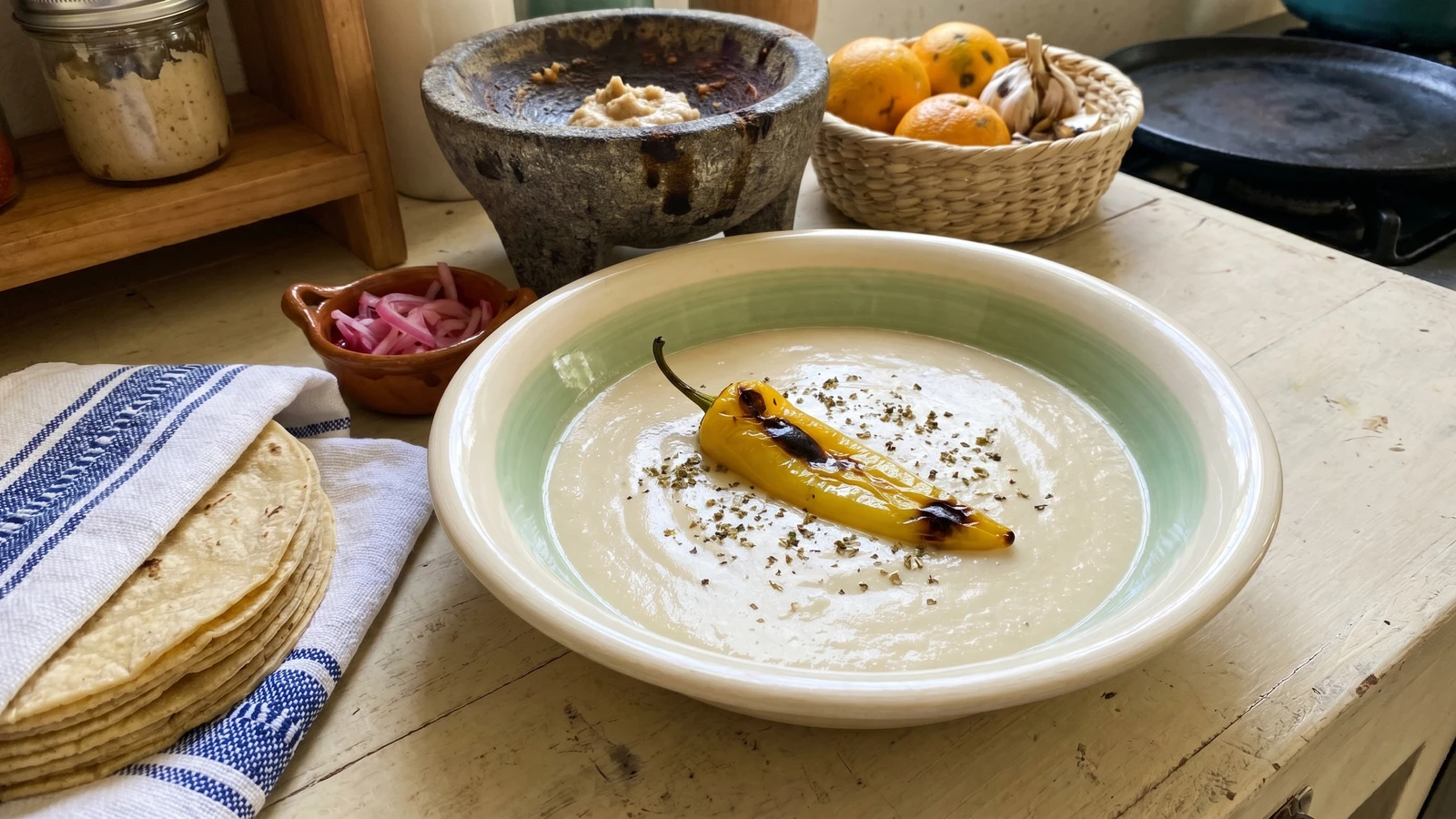
The white k'óol of Yucatán's Maya kitchen, chicken broth bound by strained masa and a recado blanco of toasted spices, charred garlic, and sour orange. Glossy, velvet, ancient, no achiote in sight.
This is from Yucatán. From the Maya kitchens of the peninsula, where the recados are ground by color, rojo with achiote, negro burnt black, and blanco with no achiote at all. Sak k'óol is the white one. The name itself is Yucatec Maya: sak means white, k'óol means thickened broth. Call it pebre yucateco if you grew up calling it that. Call it sak k'óol if you are paying respect to the language the dish was born in.
The Maya cuisine of Yucatán is not Mexican food the way most people understand Mexican food. There is no chile ancho here. No guajillo. No mole. Instead there is the recado, a ground spice paste that does the work the dried chiles do in central Mexico, and the naranja agria, sour orange, that does the work the lime does everywhere else. The chile of choice is habanero or xcatic, the long pale yellow chile of the peninsula. A xcatic charred whole and dropped into the pot gives a slow yellow warmth without turning the gravy red or hot. That restraint is the peninsular signature.
What makes this a k'óol and not a sauce is the masa. The corn flour, hydrated in cold water and strained into hot broth while you whisk, thickens the liquid into something glossy and almost velvet. It is the Maya answer to a flour roux, older than any French technique, and it tastes of corn the way a roux never can. The k'óol is most often served over pollo en kool, simmered chicken, or as the base of a tamal colado wrapped in banana leaf. My notebook has three versions of this gravy collected from señoras in Maní, Valladolid, and a small town outside Tizimín. They argue about the canela. They agree about the strainer. Saber cocinar es saber vivir.
The k'óol technique, thickening broth with strained nixtamalized corn, is one of the oldest preparations in Mesoamerican cooking, predating Spanish contact by more than a thousand years and recorded in colonial-era Maya texts including the Ritual of the Bacabs. Recado blanco is the senior member of the Yucatecan recado family, older than recado rojo, which only became dominant after achiote cultivation expanded in the post-conquest peninsula. The dish's continued presence on Maya home tables, particularly for ceremonial occasions and the traditional offerings of Hanal Pixán in early November, marks it as one of the most direct surviving links between contemporary Yucatecan cooking and its pre-Columbian roots.
Quantity
6 cups
preferably from a hen simmered with onion, garlic, and epazote
Quantity
1 cup
preferably Maseca or Bob's Red Mill
Quantity
1 1/2 cups
Quantity
2 tablespoons
Quantity
1 medium
finely diced
Quantity
4
finely minced
Quantity
1
charred whole on a comal and left whole
Quantity
1 sprig
Quantity
1 teaspoon
toasted and crumbled
Quantity
1 1/2 teaspoons, plus more to taste
Quantity
10
Quantity
4
Quantity
1 teaspoon
Quantity
1 small piece, about 1/2 inch
Quantity
1 teaspoon
Quantity
4
charred whole on a comal until blackened in spots
Quantity
1 tablespoon
or substitute mix, see chef tips
Quantity
1/2 teaspoon
| Ingredient | Quantity |
|---|---|
| rich chicken brothpreferably from a hen simmered with onion, garlic, and epazote | 6 cups |
| masa harina (nixtamalized corn flour)preferably Maseca or Bob's Red Mill | 1 cup |
| cold water | 1 1/2 cups |
| manteca de cerdo (pork lard) | 2 tablespoons |
| white onionfinely diced | 1 medium |
| garlic clovesfinely minced | 4 |
| chile xcaticcharred whole on a comal and left whole | 1 |
| fresh epazote | 1 sprig |
| Yucatecan oreganotoasted and crumbled | 1 teaspoon |
| kosher salt | 1 1/2 teaspoons, plus more to taste |
| black peppercorns (for recado) | 10 |
| whole cloves (for recado) | 4 |
| cumin seeds (for recado) | 1 teaspoon |
| canela (Mexican cinnamon) (for recado) | 1 small piece, about 1/2 inch |
| Yucatecan oregano (for recado) | 1 teaspoon |
| garlic cloves (for recado)charred whole on a comal until blackened in spots | 4 |
| naranja agria (sour orange juice)or substitute mix, see chef tips | 1 tablespoon |
| kosher salt (for recado) | 1/2 teaspoon |
Heat a dry comal or heavy skillet over medium-low. Add the peppercorns, cloves, cumin, canela, and oregano. Toast for two to three minutes, shaking the pan, until the spices are fragrant and the cumin darkens by one shade. Pull them off the heat the moment you smell them. Burned spices turn a recado bitter and there is no fixing it later.
On the same comal, char the four garlic cloves in their skins until blackened in spots and soft inside, about five minutes. Peel them. Grind the toasted spices in a molcajete or spice mill to a fine powder. Add the charred garlic and the salt and work everything into a thick paste, then add the naranja agria a few drops at a time until you have a smooth, slightly damp paste. This is recado blanco. It should smell like a Yucatecan market: peppery, warm, faintly sweet from the canela. No achiote. White recado does not get red. That is the whole point.
In a bowl, whisk the masa harina with the cold water until it is completely smooth and looks like thin pancake batter. No lumps. Lumps in the masa become lumps in the k'óol and there is no rescuing a lumpy gravy. Let it sit for ten minutes so the masa hydrates fully. The texture should be pourable, like heavy cream.
Melt the lard in a heavy pot or clay cazuela over medium heat. La manteca es el sabor and in a k'óol it carries the recado. Add the onion and cook for five minutes until soft and translucent but not browned. Add the minced garlic and cook another minute. Stir in two tablespoons of the recado blanco. Cook for two minutes, stirring constantly, until the paste loosens into the fat and the kitchen smells like a Mérida market stall.
Pour in the chicken broth all at once. Add the charred chile xcatic whole, the epazote sprig, the crumbled oregano, and the salt. Do not break the chile. The xcatic perfumes the broth with a slow yellow heat without making the k'óol picante. That is its job in Yucatán. Bring everything to a gentle simmer.
Whisk the slaked masa one more time. Pour it through a fine-mesh sieve directly into the simmering broth, whisking the broth constantly with your other hand. Strain, do not dump. This is the step that separates a velvet k'óol from a gummy one. The sieve catches any unhydrated masa and the constant whisking prevents the masa from clumping the moment it hits the heat.
Lower the heat to medium-low and cook the k'óol for 25 to 30 minutes, stirring often with a wooden spoon, scraping the bottom and the corners of the pot so nothing sticks. The gravy will thicken slowly and turn glossy. It is ready when it coats the back of the spoon and a finger drawn across leaves a clean line that holds for a moment before closing. The raw corn taste should be gone, replaced by something round and quietly sweet. Taste and adjust the salt now.
Pull the epazote sprig and the chile xcatic out of the pot. The chile can be set on the platter for the diner who wants the heat. Ladle the k'óol generously over poached chicken pieces (pollo en kool), or over rice, or as the base of a tamal colado. Serve in a deep talavera bowl or a Yucatecan slipware platter, with hand-pressed corn tortillas and pickled red onion on the side. Así se hace y punto.
1 serving (about 300g)
Culinary guides, cultural storytelling, and the editorial depth that makes cooking meaningful.
Discover Culinary ExplorerChef Lupita
Baja California's wild chiltepin steeped in olive oil with garlic, orejon, and lime peel, until the oil turns ruby-amber and carries the slow, sneaky burn of the desert coast.

Chef Lupita
Puebla's Lenten convent adobo, a brick-red vinegar chile paste of ancho, guajillo, garlic, oregano, and comino made to dress fish for the meatless calendar.
Chef Lupita
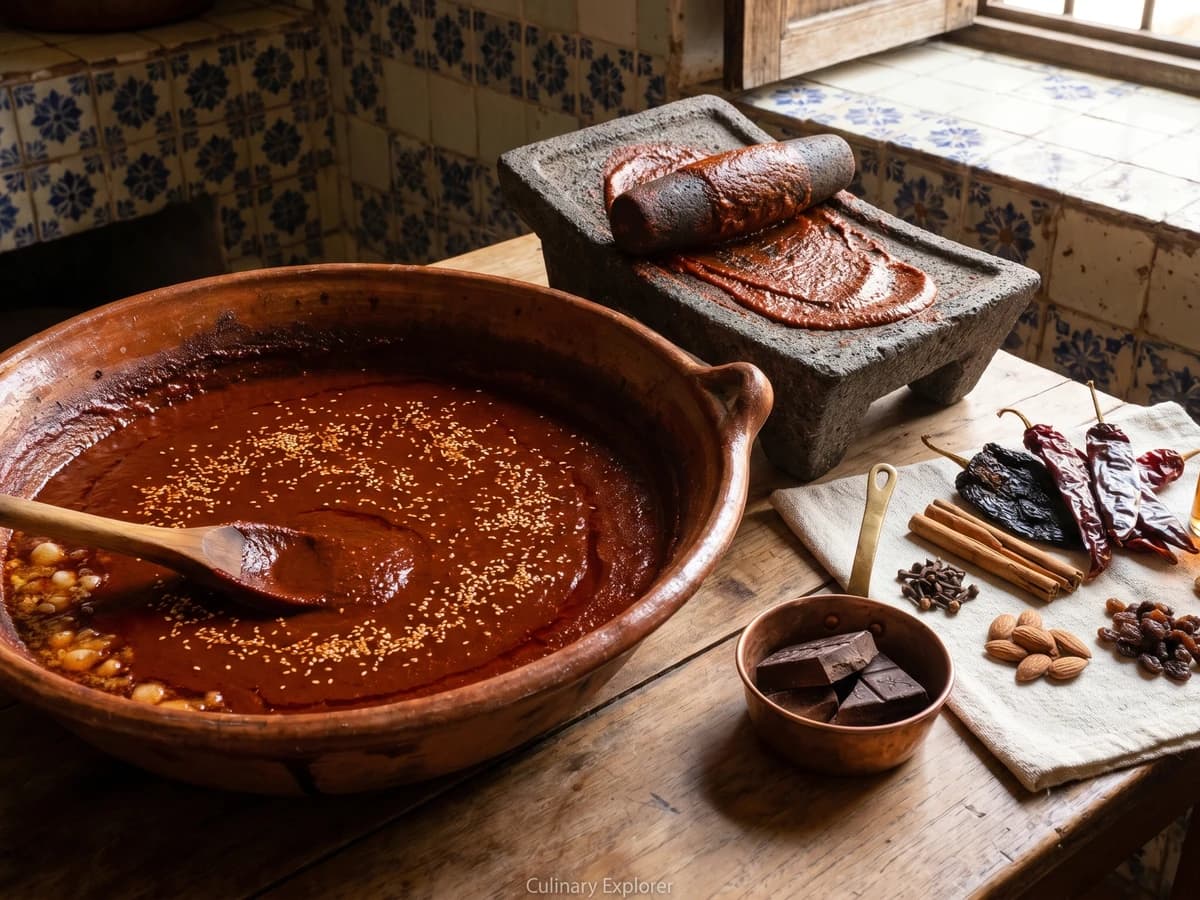
Zacatecas' wedding-table adobo, built from toasted guajillo and ancho, piloncillo, sour orange, chocolate, canela, clavo, almonds, sesame, and lard.

Chef Lupita
Puebla's convent kitchens built this adobo with ancho, guajillo, jerez, almonds, raisins, clove, and lard, a baroque marinade that stains pork loin and finishes as the sauce.