
Chef Lupita
Aceite de Chiltepin Bajacaliforniano
Baja California's wild chiltepin steeped in olive oil with garlic, orejon, and lime peel, until the oil turns ruby-amber and carries the slow, sneaky burn of the desert coast.
A cooking platform built around craft, culture, and the stories behind what we eat.
Created by
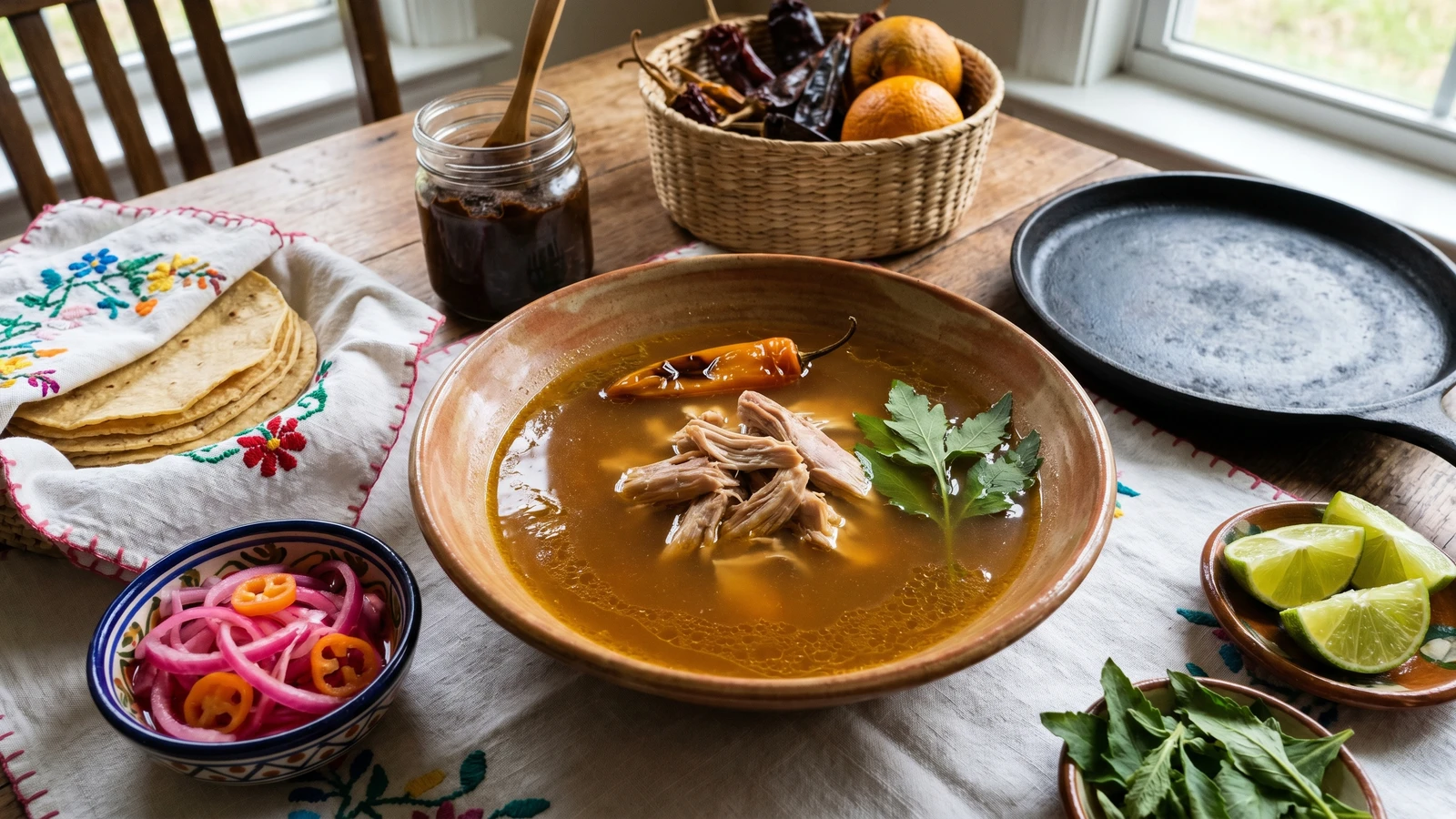
Yucatán's foundational turkey broth, built on recado blanco, charred onion and garlic, chile xcatik, and a final lift of naranja agria. The base for escabeche oriental, sopa de lima, and relleno blanco.
This is from Yucatán. Not from Mexico. From Yucatán. The peninsula has its own grammar of cooking, its own chiles, its own citrus, its own oregano, and pavo, turkey, is the meat at the center of all of it. The Maya domesticated turkey centuries before Europeans arrived. When you make this caldo, you are working in a tradition older than the conquest.
The caldo de pavo is the mother broth of Yucatecan cuisine. Out of this single pot come escabeche oriental, sopa de lima, relleno blanco, and a dozen other dishes that anchor the table in Mérida and Valladolid. The recado blanco gives it its perfume: toasted black peppercorns, allspice, clove, cinnamon, oregano yucateco, ground together on a metate. Not paprika. Not Italian oregano. Yucatecan oregano, which is sharper, lemony, almost minty, and grows wild on the peninsula. Naranja agria, sour orange, lifts the finish. If you cannot find naranja agria, I will give you a substitute, but you should know what you are losing. The sour orange of Yucatán is bitter, floral, and bright in a way that lime alone cannot copy.
The chile xcatik is a pale yellow chile from the peninsula, slim and curved, with a clean grassy heat. It goes in whole, charred on the comal, never minced. Its job is to perfume the broth, not to season it. If you cannot find xcatik, a yellow guero chile is the closest cousin, but ask at any Yucatecan mercado and you will see them piled in baskets next to the habaneros.
My mother did not cook Yucatecan food. She was from Jalisco. But the notebook had a page from a woman she met in Mérida in 1991 at a wedding, a recipe for caldo de pavo written on the back of a hotel receipt in pencil. The note in the margin read: tatemar la cebolla y el ajo, no se brinquen ese paso. Char the onion and the garlic, do not skip that step. She was right. Cada estado, su propia cocina, and the cocina yucateca starts here.
The domesticated turkey (Meleagris gallopavo, called pavo or guajolote in modern Mexico and ulum in Yucatec Maya) was raised by the Maya of the Yucatán Peninsula for at least 1,500 years before Spanish contact, and the bird remains central to Peninsular ceremonial and festival cooking in ways it never became in the Mexican interior. The recados, ground spice pastes that distinguish Yucatecan cooking from other regional Mexican cuisines, reflect the colonial trade networks of the 17th and 18th centuries, when Mérida's port at Sisal received cinnamon, peppercorns, cloves, and cumin from across the Spanish maritime empire and Peninsular cooks ground these imports into the indigenous practice of seasoning pastes already used for achiote. Caldo de pavo is the parent stock for escabeche oriental, the Valladolid-region specialty whose name comes from the eastern (oriente) part of the state where it originated, distinct from the western, Mérida-anchored relleno blanco and sopa de lima.
Quantity
1 (8 to 10 pounds)
cut into pieces, or use 6 pounds bone-in legs, thighs, and wings
Quantity
1 large
halved with the skin on, to be charred
Quantity
1 whole
halved crosswise with the skin on, to be charred
Quantity
4
left whole, lightly charred on the comal
Quantity
2 tablespoons
Quantity
1 tablespoon
lightly toasted on a comal
Quantity
6
Quantity
4
Quantity
2
Quantity
1 large sprig
Quantity
2
Quantity
1 tablespoon, plus more to taste
Quantity
1/2 cup
or substitute (see chef tips)
Quantity
1 tablespoon
Quantity
5 quarts
| Ingredient | Quantity |
|---|---|
| whole turkeycut into pieces, or use 6 pounds bone-in legs, thighs, and wings | 1 (8 to 10 pounds) |
| white onionhalved with the skin on, to be charred | 1 large |
| head of garlichalved crosswise with the skin on, to be charred | 1 whole |
| chile xcatikleft whole, lightly charred on the comal | 4 |
| recado blanco (Yucatecan white spice paste) | 2 tablespoons |
| Yucatecan oregano (oregano yucateco)lightly toasted on a comal | 1 tablespoon |
| whole black peppercorns | 6 |
| whole allspice berries (pimienta gorda) | 4 |
| whole cloves | 2 |
| fresh epazote (optional) | 1 large sprig |
| bay leaves | 2 |
| kosher salt | 1 tablespoon, plus more to taste |
| naranja agria (sour orange) juiceor substitute (see chef tips) | 1/2 cup |
| manteca de cerdo (pork lard) | 1 tablespoon |
| cold water | 5 quarts |
Heat a dry comal or heavy cast iron skillet over medium-high until it smokes lightly. Place the onion halves cut-side down, the garlic halves cut-side down, and the whole chiles xcatik on the surface. Let them blacken in patches, about 6 to 8 minutes for the onion and garlic, 2 to 3 minutes per side for the chiles. You want dark spots on the skin, not full carbon. The char is the smoke of the broth. In Yucatán they call this tatemado. Skip it and your caldo tastes washed out.
On the same comal, toast the peppercorns, allspice, cloves, and Yucatecan oregano for about 30 to 45 seconds, just until fragrant. The kitchen will smell like a Mérida spice stall on a Saturday morning. Pull them off the heat the moment you smell them. Burned spices turn the broth bitter and there is no walking that back.
In a small bowl, work the recado blanco together with the toasted spices and oregano using the back of a spoon. Add the naranja agria juice a tablespoon at a time, mashing until you have a loose, fragrant paste the color of bone. This is the grammar of Yucatecan cooking. The recado does not get blended into a smoothie. It gets worked by hand until it knows the spices.
In your stockpot, melt the lard over medium heat. Add the recado paste and cook it for 2 to 3 minutes, stirring constantly, until it darkens slightly and the fat starts to separate at the edges. La manteca es el sabor. This is where the spices go from raw to integrated. The kitchen should smell of allspice and pepper, not of a wet pantry.
Add the turkey pieces to the pot, turning each one to coat it in the recado. Pour in the cold water, 5 quarts, enough to cover the turkey by two inches. Add the charred onion, charred garlic, charred chiles xcatik, bay leaves, epazote if you have it, and the salt. Cold water, never hot. Cold water draws the flavor out slowly. Hot water locks the proteins and you end up with cloudy broth and dry meat.
Heat the pot over medium until the water reaches a bare simmer, about 25 minutes. As it climbs, gray foam will rise to the top. Skim it patiently with a shallow spoon every few minutes for the first 20 minutes. A clean broth is a Yucatecan broth. The señoras in the mercados of Mérida skim the foam like they are pulling weeds from a garden. Take the time.
Once the foam has stopped rising and the liquid is clean, reduce the heat to low. You want lazy bubbles breaking the surface every few seconds, never a rolling boil. Cover partially and cook for 2 hours, until the turkey is tender enough to pull from the bone with a fork but still has structure. A rolling boil clouds the broth and shreds the meat into rags before it has given up its flavor.
Lift the turkey out with tongs and set it aside to cool until you can handle it. Pull the meat from the bones in large pieces, cover, and reserve. Strain the broth through a fine-mesh sieve into a clean pot, pressing on the solids to release every drop. Discard the spent aromatics. Taste the broth. It should be deeply savory, faintly tangy from the naranja agria, with the warm whisper of allspice and clove. Adjust salt now, not later. The broth seasons the dishes you build on it, so it has to be assertive on its own.
If you are making escabeche oriental, sopa de lima, or relleno blanco, the broth and the shredded turkey are now your foundation. If you are holding it, cool the broth in the pot in an ice bath until it is below room temperature, then refrigerate. The fat will rise and set. Leave it there. That layer protects the broth and gets stirred back in when you reheat. Recetas probadas y garantizadas.
1 serving (about 600g)
Culinary guides, cultural storytelling, and the editorial depth that makes cooking meaningful.
Discover Culinary ExplorerChef Lupita
Baja California's wild chiltepin steeped in olive oil with garlic, orejon, and lime peel, until the oil turns ruby-amber and carries the slow, sneaky burn of the desert coast.

Chef Lupita
Puebla's Lenten convent adobo, a brick-red vinegar chile paste of ancho, guajillo, garlic, oregano, and comino made to dress fish for the meatless calendar.
Chef Lupita
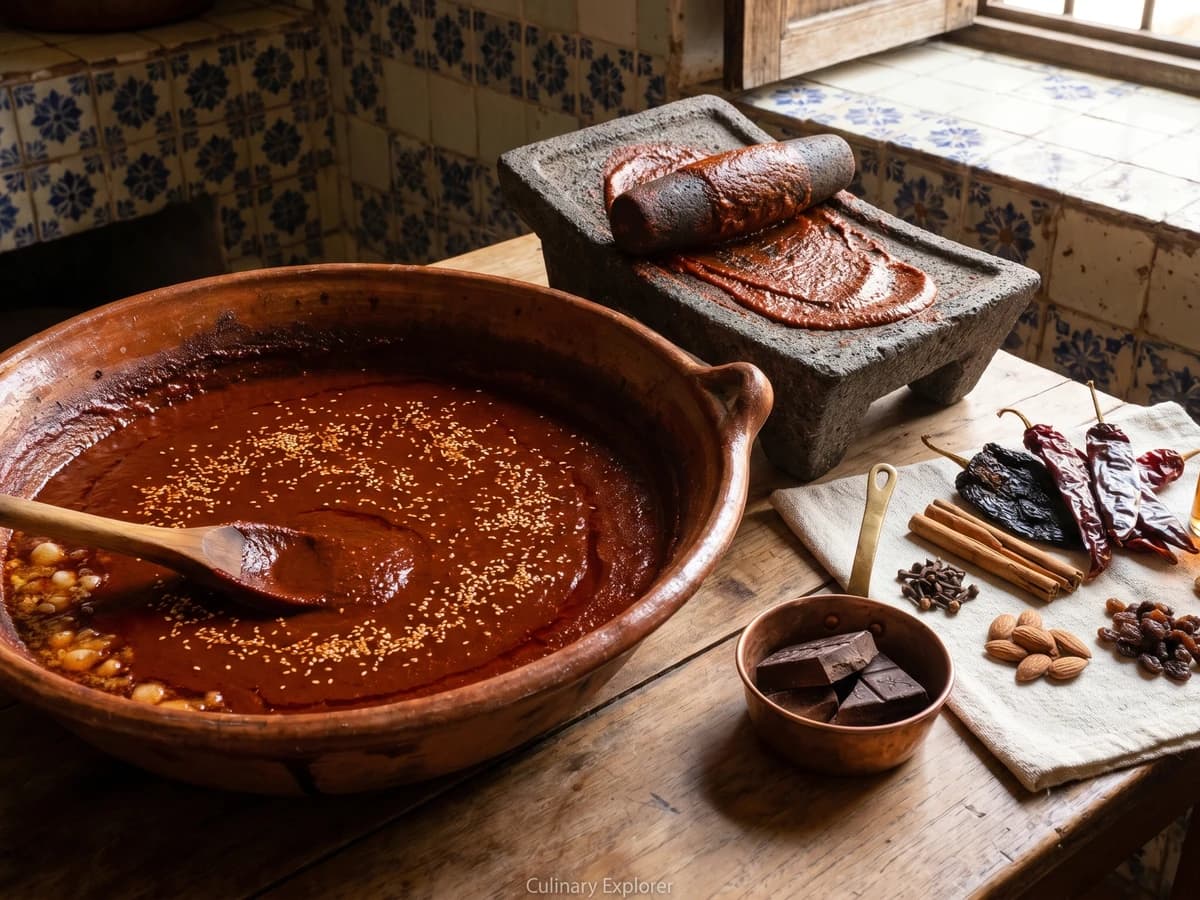
Zacatecas' wedding-table adobo, built from toasted guajillo and ancho, piloncillo, sour orange, chocolate, canela, clavo, almonds, sesame, and lard.

Chef Lupita
Puebla's convent kitchens built this adobo with ancho, guajillo, jerez, almonds, raisins, clove, and lard, a baroque marinade that stains pork loin and finishes as the sauce.