
Chef Lupita
Aceite de Chiltepin Bajacaliforniano
Baja California's wild chiltepin steeped in olive oil with garlic, orejon, and lime peel, until the oil turns ruby-amber and carries the slow, sneaky burn of the desert coast.
A cooking platform built around craft, culture, and the stories behind what we eat.
Created by
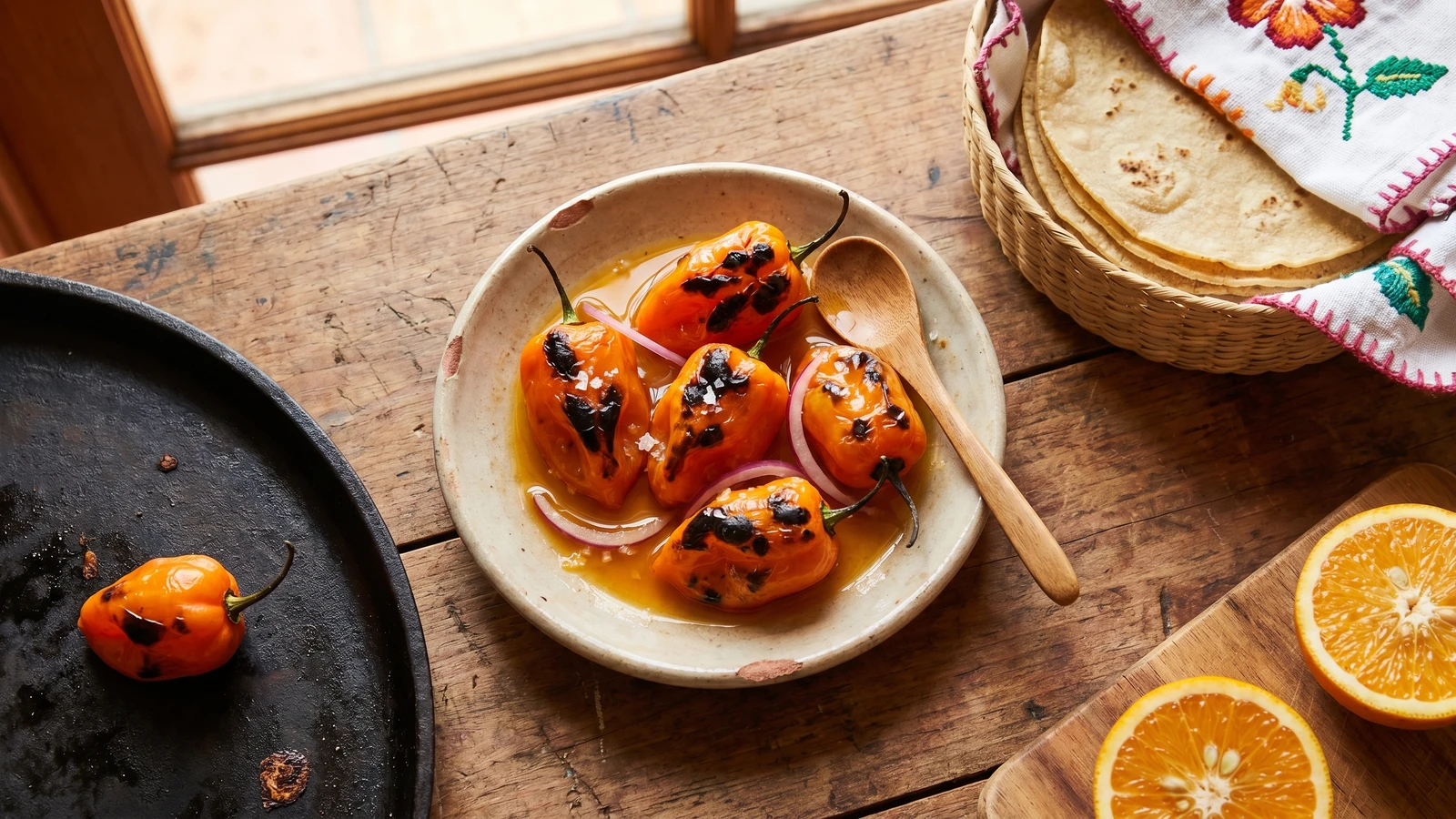
The Yucatecan table salsa of whole habaneros charred black on a comal, dropped into a saucer with naranja agria and salt, and mashed by each diner to the heat they want.
This is from the Peninsula. Yucatán, Campeche, Quintana Roo. The cuisine that the rest of Mexico does not entirely understand, because the Peninsula has its own chile, its own citrus, its own recados, and its own grammar at the table. Chile habanero asado is the salsa that sits in the middle of every Peninsula meal worth eating.
The chile is non-negotiable. It is habanero, grown in the limestone soil of the Peninsula and protected by denominacion de origen since 2010. Not jalapeño charred and called a substitute. Not serrano. Habanero. The whole chile goes on a dry comal, stems and all, and gets blackened in patches until the skin blisters and the flesh inside collapses. You do not stem it. You do not seed it. You do not blend it. This is not a salsa for the molcajete and not a salsa for the blender. The chile stays whole until the diner picks up a spoon and mashes one against the side of the saucer.
The other ingredient is naranja agria, the sour orange that grows in every Yucatecan backyard and that defines the citrus of the Peninsula. It is not lime. It tastes like a bitter floral version of orange with the acidity of lemon, and it is the acid that dresses cochinita pibil, poc chuc, and every important pibil in the Peninsula. If you cannot find it, mix lime and orange and grapefruit with a splash of white vinegar, but understand that you are working with a compromise.
My mother did not cook Yucateca. She was jalisciense. But I spent six weeks in Mérida and Valladolid collecting recipes from señoras who would set a small clay saucer of habanero asado in the middle of the table without comment, because in their kitchens it is as automatic as salt. I learned then that the Peninsula does not dress its food with heat. It hands you the heat and lets you dress yourself. Cada estado, su propia cocina.
The chile habanero (Capsicum chinense) is native to the Amazon basin but found its modern home on the Yucatán Peninsula, where it has been cultivated for centuries and where the soil, climate, and Mayan agricultural traditions produce the distinctive fruity, floral heat that defines the variety. In 2010 Mexico granted the Yucatán habanero a Denominación de Origen, restricting the name to chiles grown in the three Peninsula states. The practice of charring chiles whole on a comal and dressing them with naranja agria is a domestic Mayan tradition that predates the Spanish introduction of bitter orange in the 16th century; before sour orange arrived, Peninsula cooks used native acidic fruits like the chaya and the wild jocote to dress the same charred chile.
Quantity
8 to 10
whole, stems intact
Quantity
1/3 cup, fresh
Quantity
1 teaspoon, plus more to taste
Quantity
1/2
sliced into very thin half-moons
Quantity
as noted above
| Ingredient | Quantity |
|---|---|
| fresh chile habanerowhole, stems intact | 8 to 10 |
| naranja agria juice (sour orange) | 1/3 cup, fresh |
| flaky sea salt | 1 teaspoon, plus more to taste |
| small red onion (optional)sliced into very thin half-moons | 1/2 |
| substitute for naranja agria (lime juice + orange juice + grapefruit juice + a splash of white vinegar) (optional) | as noted above |
Before you put a habanero on the comal, open every window in the kitchen and turn on the hood fan. Charring habaneros throws capsaicin into the air. It will get in your eyes and your throat. This is not optional. In Yucatecan kitchens the comal sits near a louvered window for exactly this reason.
Set a heavy cast iron comal or a clay comal over medium heat. Let it heat for four or five minutes until you can hold your hand an inch above the surface for only a second or two. No oil. No fat. The comal must be dry. La manteca no va aqui.
Place the habaneros on the hot comal in a single layer, stems and all. Do not stem them. Do not slit them. Whole chiles char evenly and the skin blisters cleanly. Turn each one with tongs as the side facing the comal blackens and blisters, about two minutes per side. You want patches of true black on the orange skin, not a uniform burn. The chile should soften but still hold its shape. Total time is six to eight minutes. The kitchen will smell like Mérida at lunch hour.
Lift the charred habaneros off the comal with tongs and drop them straight into a small clay saucer or a shallow talavera dish. Do not peel them. The blackened skin is part of the salsa. Let them sit for two or three minutes so the residual heat continues to soften the flesh.
Pour the sour orange juice over the warm chiles. Sprinkle the salt across the top. If you are using the red onion, tuck the half-moons in around the chiles so they pick up the juice and soften slightly. That is the entire salsa. No garlic. No tomato. No blender. This is chile habanero asado the way they make it in homes from Mérida to Valladolid. Así se hace y punto.
Set the saucer in the middle of the table with a small wooden or bone spoon. Each diner takes one charred chile, mashes it against the side of the saucer with the back of the spoon, and stirs it into the naranja agria to the heat they want. One chile for the cautious. Two for the brave. The salsa is built individually, bite by bite, plate by plate. This is how cochinita pibil, poc chuc, salbutes, and panuchos get dressed in the Peninsula. The cook does not decide your heat. You do.
1 serving (about 42g)
Culinary guides, cultural storytelling, and the editorial depth that makes cooking meaningful.
Discover Culinary ExplorerChef Lupita
Baja California's wild chiltepin steeped in olive oil with garlic, orejon, and lime peel, until the oil turns ruby-amber and carries the slow, sneaky burn of the desert coast.

Chef Lupita
Puebla's Lenten convent adobo, a brick-red vinegar chile paste of ancho, guajillo, garlic, oregano, and comino made to dress fish for the meatless calendar.
Chef Lupita
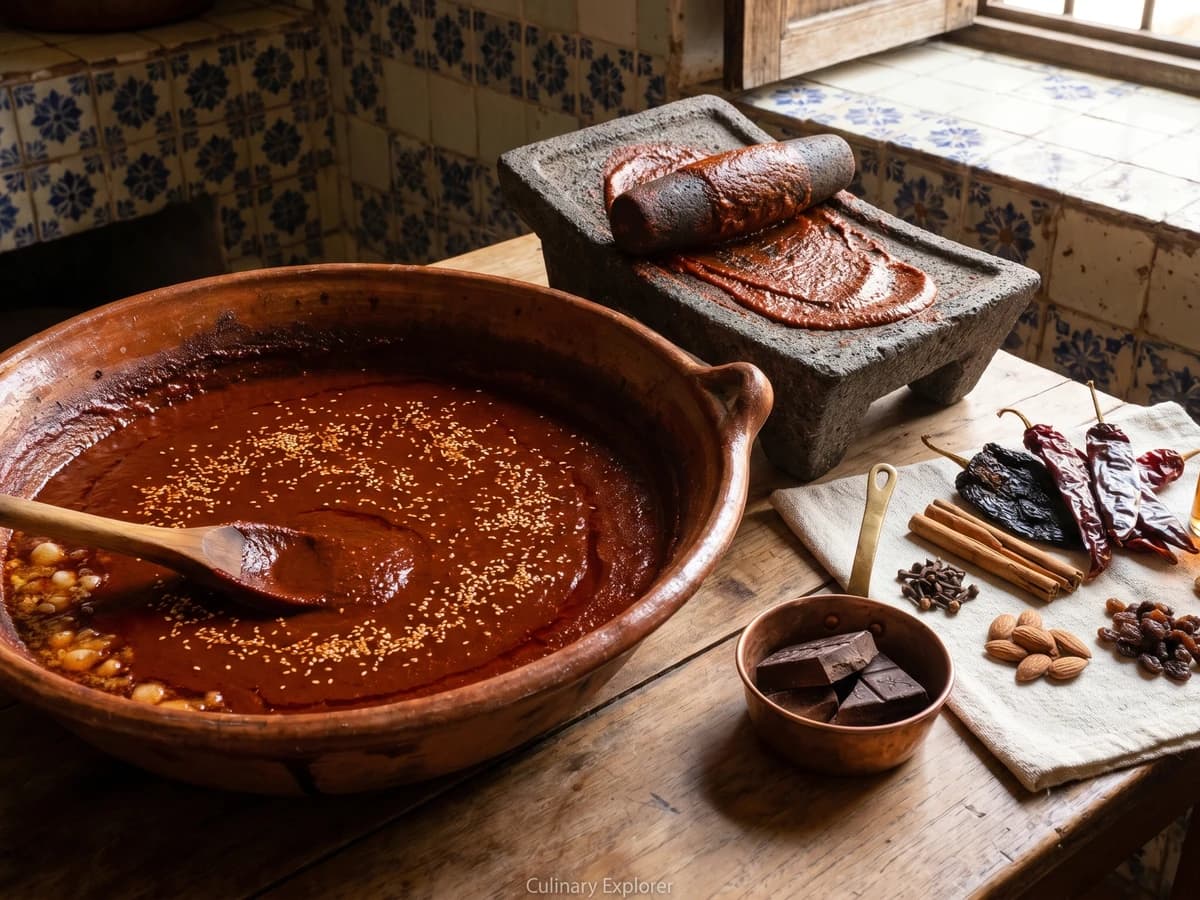
Zacatecas' wedding-table adobo, built from toasted guajillo and ancho, piloncillo, sour orange, chocolate, canela, clavo, almonds, sesame, and lard.

Chef Lupita
Puebla's convent kitchens built this adobo with ancho, guajillo, jerez, almonds, raisins, clove, and lard, a baroque marinade that stains pork loin and finishes as the sauce.