
Chef Thomas
Baked Onions with Cream and Thyme
Whole onions surrendered to a low oven with cream and thyme until they collapse into something golden, sweet and yielding, the kind of side dish that quietly upstages everything else on the table.
A cooking platform built around craft, culture, and the stories behind what we eat.
Created by Chef Thomas
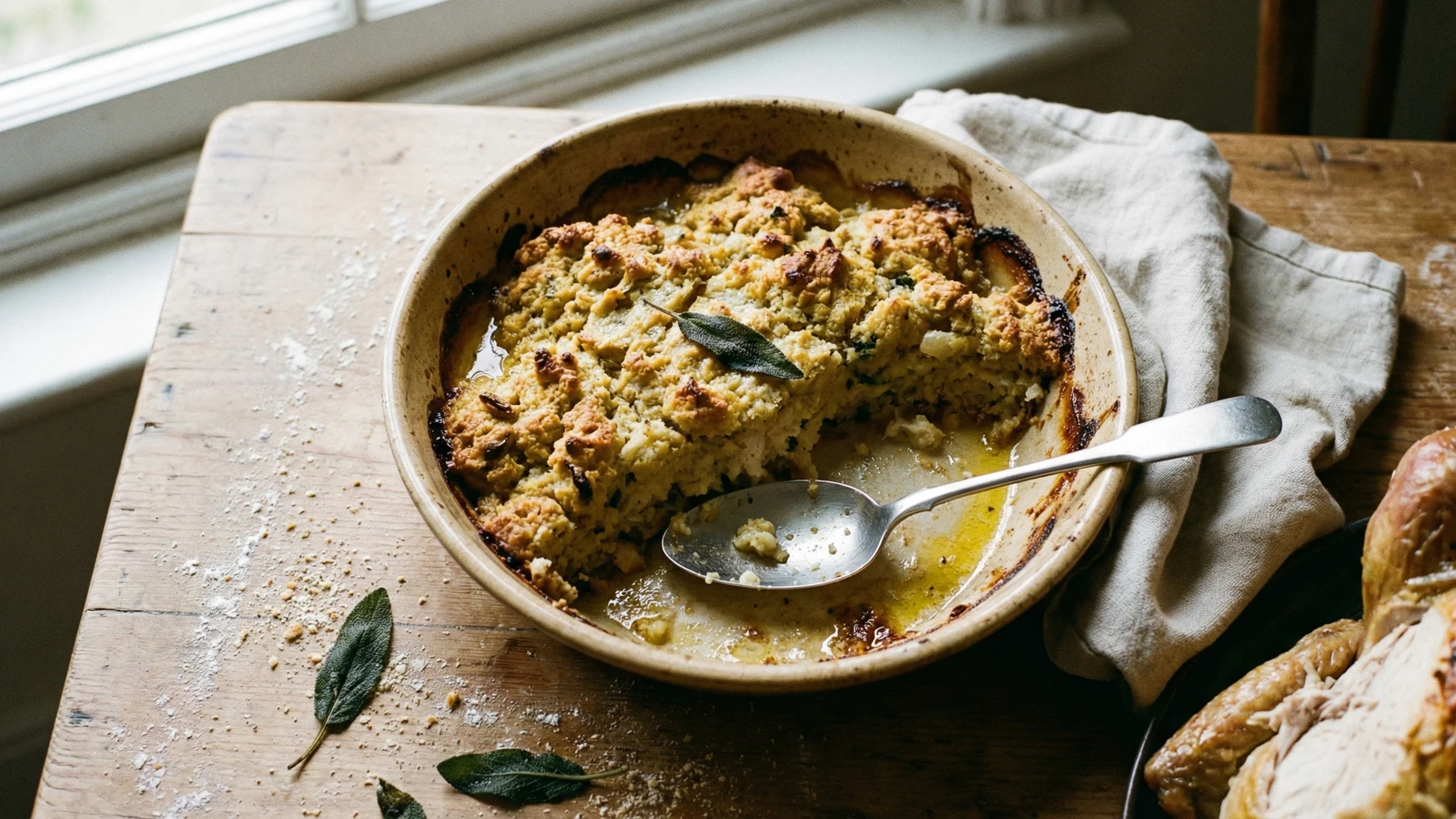
Real sage and onion stuffing made with good bread, softened onions, and enough butter to remind you why it belongs beside every roast bird that matters.
There is a smell that belongs to December and no other month. Butter in a pan, onions going slowly sweet, and sage, green and peppery and faintly medicinal, curling through the kitchen. That smell is stuffing. It means a bird is in the oven or about to go in. It means the table is set or nearly. It means someone is paying attention.
I will not pretend this is complicated. It's bread, onion, sage, and butter. A recipe is a conversation, not a contract, and this one barely needs writing down. The only thing that matters is the quality of what goes in and the care you take with the onions. Cook them slowly, properly slowly, until they're soft and sweet and have lost all trace of sharpness. Everything builds from there.
I don't understand packet stuffing. I've tried to, and I can't. The real thing takes twenty minutes of work and ingredients you already have. Stale bread, an onion, sage from the garden or the greengrocer, butter. The breadcrumbs should be rough, torn from a proper loaf, not the fine dust from a bag. You want texture, not paste. You want something that crisps on top and stays soft underneath, something that soaks up the juices from the bird and becomes the best thing on the plate.
I wrote it down in the notebook years ago: sage, onion, butter, lemon. Sunday. And then underneath, in smaller writing: the smell is the whole point.
Quantity
2 large
finely chopped
Quantity
50g
plus extra for the dish
Quantity
200g
a day or two old, torn into rough crumbs
Quantity
small bunch, about 15-20 leaves
finely chopped
Quantity
1 lemon
finely grated
Quantity
1 large
beaten
Quantity
to taste
Quantity
to taste
| Ingredient | Quantity |
|---|---|
| onionsfinely chopped | 2 large |
| unsalted butterplus extra for the dish | 50g |
| good white breada day or two old, torn into rough crumbs | 200g |
| fresh sagefinely chopped | small bunch, about 15-20 leaves |
| lemon zestfinely grated | 1 lemon |
| eggbeaten | 1 large |
| fine sea salt | to taste |
| black pepper | to taste |
Melt the butter in a wide pan over a low, steady heat. Add the onions and a pinch of salt. Let them cook gently, stirring now and then, for a good fifteen minutes. You're not browning them. You want them completely soft, translucent, sweet. They should look like they've given up all their fight. If they start to colour, turn the heat down. Patience here is the whole recipe.
Scatter the chopped sage into the softened onions and stir it through. Let it cook for a minute or so until the kitchen smells green and warm and peppery, like December should. Take the pan off the heat and let it cool for a few minutes.
Tip the breadcrumbs into a large bowl. Scrape the buttery onion and sage mixture over the top, making sure you get all the butter from the pan. Add the lemon zest. Season generously with salt and pepper. Toss everything together with your hands. It should look rough and generous, not uniform. Pour in the beaten egg and mix until the crumbs hold together loosely when you press a handful. Not a paste. Just enough that it clings.
Butter a baking dish, something that holds the stuffing about three centimetres deep. Spoon the mixture in and press it down lightly, but don't pack it. Dot the surface with a few extra pieces of butter. Bake at 190C/170C fan for thirty to thirty-five minutes, until the top has gone golden and crisp and the edges are catching. The middle should still be soft underneath the crust. That contrast, the crunchy top and the tender centre, is exactly what you want.
1 serving (about 90g)
Culinary guides, cultural storytelling, and the editorial depth that makes cooking meaningful.
Discover Culinary ExplorerChef Thomas
Whole onions surrendered to a low oven with cream and thyme until they collapse into something golden, sweet and yielding, the kind of side dish that quietly upstages everything else on the table.

Chef Thomas
Celery braised long and slow in butter and good stock until it turns soft, silky, and almost sweet, the kind of quiet side dish that makes people ask what you did to it.

Chef Thomas
Leeks surrendered to butter and cream until they turn silky, sweet and yielding, the kind of side dish that quietly becomes the reason you sat down to dinner in the first place.

Chef Thomas
Peas braised in butter with wilted lettuce and spring onions, a dish that is entirely French in spirit and entirely at home on an English table in late May when the garden finally delivers.