
Chef Thomas
Baked Onions with Cream and Thyme
Whole onions surrendered to a low oven with cream and thyme until they collapse into something golden, sweet and yielding, the kind of side dish that quietly upstages everything else on the table.
A cooking platform built around craft, culture, and the stories behind what we eat.
Created by Chef Thomas
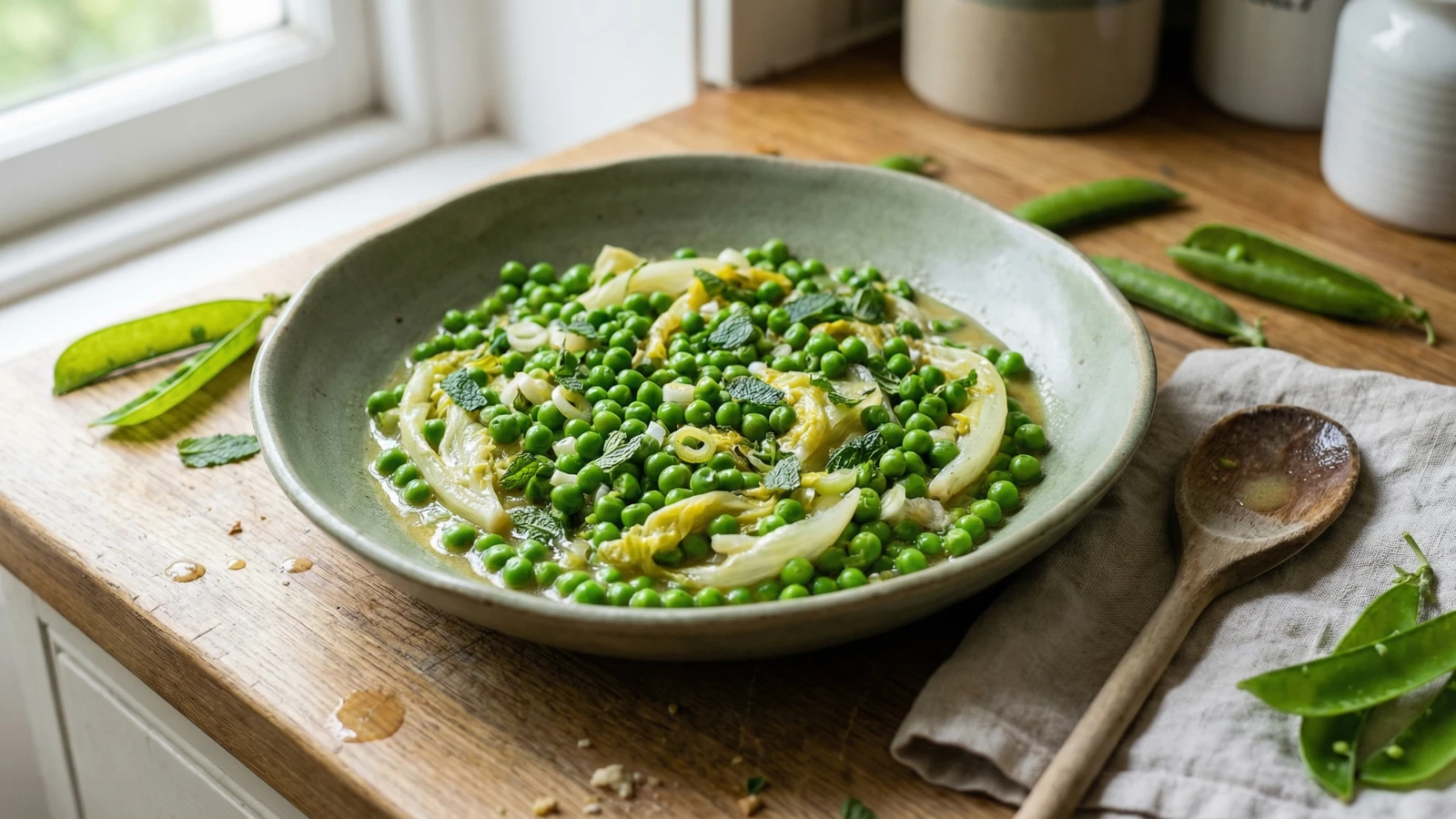
Peas braised in butter with wilted lettuce and spring onions, a dish that is entirely French in spirit and entirely at home on an English table in late May when the garden finally delivers.
The first proper peas of the year arrived at the market on Saturday. Small, bright, tightly packed in their pods. I stood there shelling one into my hand and eating it raw, which is the only honest way to test a pea. Sweet. Green in the way that only things picked that morning taste green. I bought a bag and walked home with no plan beyond butter and a pan.
This is a very old way of cooking peas. French, originally, though it has lived in English kitchens for so long it feels like ours. The idea is simple: braise the peas with butter, a few spring onions, and some shredded lettuce, which melts into the dish and gives it a silky, almost savoury sweetness. The lettuce sounds strange until you try it. Then it sounds obvious. A recipe is a conversation, not a contract. This one has been saying the same thing for centuries: good peas, some butter, a little patience. That's all.
I make this when the evenings are long enough to eat with the back door open and the light still warm. It wants to sit beside a piece of fish, or some cold roast chicken, or honestly nothing at all. A bowl of these peas with good bread and a glass of something cold is a meal I'd be happy to eat three nights running. I wrote it down in the notebook last May: peas, lettuce, butter, first warm evening. That was enough.
Quantity
500g (about 200g podded)
podded
Quantity
1 (Little Gem or butterhead)
shredded
Quantity
1 bunch
trimmed and sliced
Quantity
40g
Quantity
100ml
Quantity
1 teaspoon
Quantity
to taste
Quantity
a few sprigs
leaves picked and torn
Quantity
a squeeze
| Ingredient | Quantity |
|---|---|
| fresh peas in the podpodded | 500g (about 200g podded) |
| round lettuceshredded | 1 (Little Gem or butterhead) |
| spring onionstrimmed and sliced | 1 bunch |
| unsalted butter | 40g |
| vegetable or light chicken stock | 100ml |
| caster sugar | 1 teaspoon |
| fine sea salt | to taste |
| fresh mintleaves picked and torn | a few sprigs |
| lemon juice (optional) | a squeeze |
Melt the butter in a wide, shallow pan over a gentle heat. When it foams, add the spring onions and a pinch of salt. Let them soften for two or three minutes, stirring once. You want them tender and sweet, not coloured. The kitchen will start to smell green and buttery, which is exactly right.
Tip in the peas and pour over the stock. Add the sugar. It sounds odd in a savoury dish, but a pinch of sugar does for peas what salt does for everything else: it reminds them what they're supposed to taste like. Bring to a gentle simmer. Not a boil. A murmur.
Scatter the shredded lettuce over the peas and press it down gently into the liquid. Put a lid on, or a plate if your pan hasn't got one, and let everything braise together for five to eight minutes. The lettuce will collapse into the peas, turning silky and giving up its water. When the peas are tender and the lettuce has lost all resistance, you're there.
Take the lid off. If there's more liquid than you want, let it bubble away for a minute until you have a glossy, buttery sauce coating everything rather than a pool at the bottom. Tear the mint leaves and fold them through. A squeeze of lemon, barely there, just enough to lift the sweetness. Season and taste. Then taste again. Serve straight from the pan.
1 serving (about 130g)
Culinary guides, cultural storytelling, and the editorial depth that makes cooking meaningful.
Discover Culinary ExplorerChef Thomas
Whole onions surrendered to a low oven with cream and thyme until they collapse into something golden, sweet and yielding, the kind of side dish that quietly upstages everything else on the table.

Chef Thomas
Celery braised long and slow in butter and good stock until it turns soft, silky, and almost sweet, the kind of quiet side dish that makes people ask what you did to it.

Chef Thomas
Leeks surrendered to butter and cream until they turn silky, sweet and yielding, the kind of side dish that quietly becomes the reason you sat down to dinner in the first place.

Chef Thomas
Red cabbage braised with Bramley apple, vinegar, and warm spice until it turns soft and glossy and the kitchen smells like the kind of cold evening you want to come home to.