
Chef Thomas
Braised Celery with Butter
Celery braised long and slow in butter and good stock until it turns soft, silky, and almost sweet, the kind of quiet side dish that makes people ask what you did to it.
A cooking platform built around craft, culture, and the stories behind what we eat.
Created by Chef Thomas
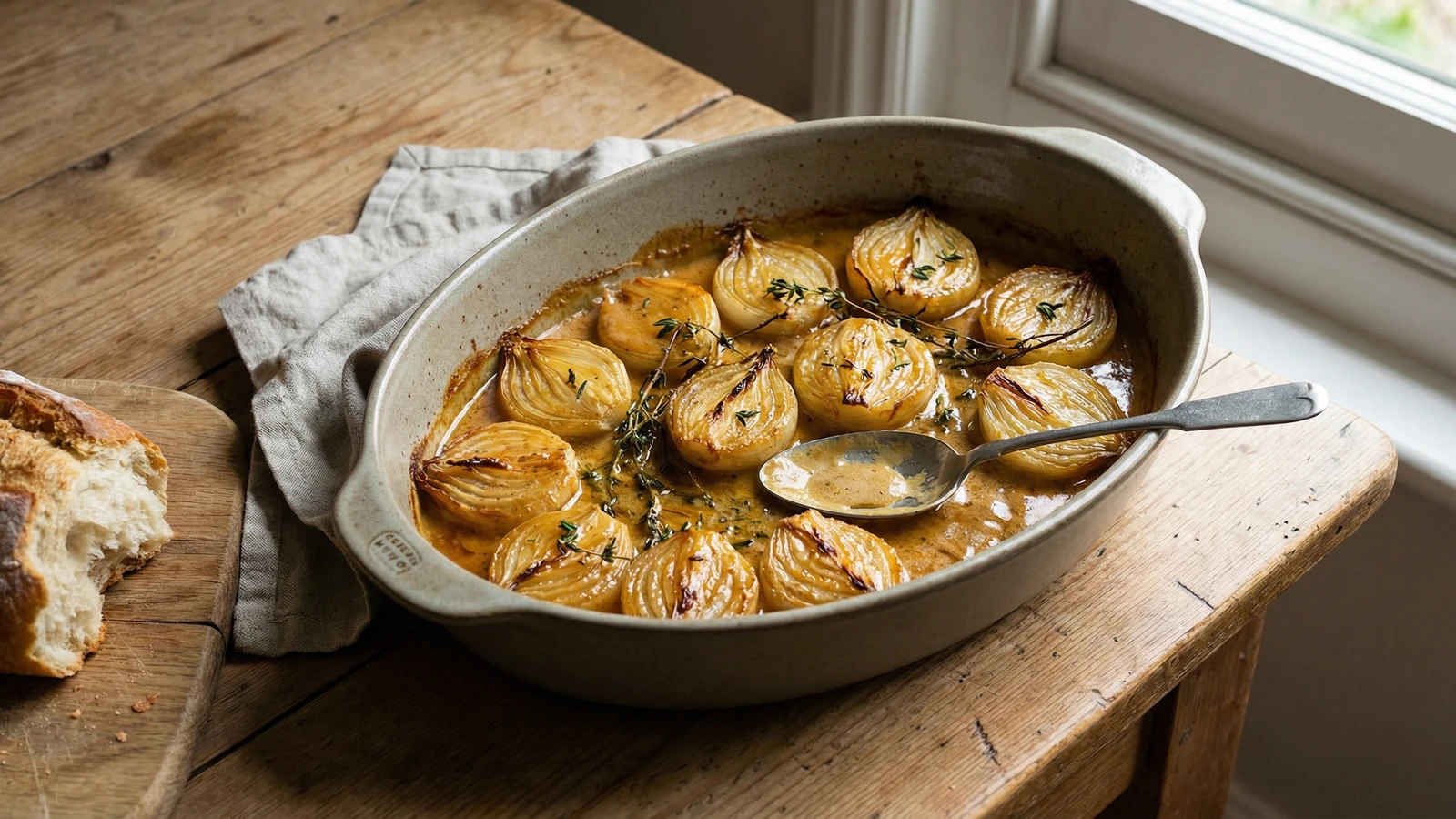
Whole onions surrendered to a low oven with cream and thyme until they collapse into something golden, sweet and yielding, the kind of side dish that quietly upstages everything else on the table.
There's a dish my mother used to make in the cold months that I'd forgotten about for years, until I found a line in the notebook: onions, cream, thyme, slow oven, Tuesday. That was enough. The smell came back before the method did.
Whole onions, peeled and halved, laid cut-side down in a dish with cream poured around them and a few sprigs of thyme tucked in between. Then a low oven and the better part of an hour. That's it. The cream reduces and thickens around the onions as they soften, catching the edges with gold. The thyme gives up its oils into the cream. The kitchen smells like the kind of evening where nobody is in a rush to leave the table.
This is a dish that has fallen out of fashion, which is a shame, because it belongs beside a roast chicken or a piece of simply cooked fish, or, honestly, on its own with good bread to mop up the cream. The onions go from sharp and firm to sweet and yielding, almost jammy at their centres, and the cream around them is somewhere between a sauce and a gratin. It asks very little of you. An hour of patience. A few good onions. The willingness to believe that something this simple can be worth the plate it sits on.
I've been making it again every few weeks since I rediscovered it. I wrote it down properly this time. Some things shouldn't be forgotten twice.
Quantity
6 medium
peeled and halved through the root
Quantity
30g
Quantity
250ml
Quantity
150ml
Quantity
6-8 sprigs
Quantity
2
Quantity
1 fat clove
lightly crushed
Quantity
to taste
Quantity
to taste
Quantity
a grating
| Ingredient | Quantity |
|---|---|
| onionspeeled and halved through the root | 6 medium |
| unsalted butter | 30g |
| double cream | 250ml |
| chicken or vegetable stock | 150ml |
| fresh thyme | 6-8 sprigs |
| bay leaves | 2 |
| garliclightly crushed | 1 fat clove |
| fine sea salt | to taste |
| black pepper | to taste |
| nutmeg (optional) | a grating |
Set the oven to 170C/150C fan. Melt the butter in a wide ovenproof dish or skillet over a medium heat. When it foams, lay the onion halves cut-side down in the pan. Leave them alone. You want a proper golden crust on the flat side, which takes five to seven minutes, sometimes longer depending on your hob. Don't move them. Don't peek. When you can smell caramelisation, a toasty sweetness rising from the pan, they're ready to turn. Flip them over gently.
Tuck the thyme sprigs and bay leaves between the onions. Drop the crushed garlic clove in somewhere it won't be lost. Pour the cream and stock around the onions, not over them. You want the cut, golden tops still exposed. Season generously with salt, pepper, and a grating of nutmeg. The liquid should come about halfway up the onions. If it doesn't, your dish is too large, or you need a splash more stock. Trust your eye.
Cover the dish loosely with foil and slide it into the oven. Bake for forty-five minutes. The onions will start to soften and slump into the cream, and the kitchen will begin to smell like thyme and warm butter. After forty-five minutes, remove the foil. The cream will have reduced slightly and started to take on colour at the edges.
Return the dish to the oven, uncovered, for another twenty-five to thirty minutes. Spoon some of the cream over the onion tops once or twice during this time. You're looking for the cream to reduce to something thick and golden, almost sauce-like, clinging to the onions rather than pooling. The onion edges should be catching colour and the centres should yield completely to a knife, no resistance at all. If they're still firm, give them more time. There's no hurrying this.
Let the dish sit for five minutes out of the oven. The cream will settle and thicken a fraction more. Serve the onions straight from the dish, spooning the thyme-scented cream over and around them. A few leaves of fresh thyme scattered on top if you like, but it doesn't need much. The onions have done the work. We're only making dinner.
1 serving (about 250g)
Culinary guides, cultural storytelling, and the editorial depth that makes cooking meaningful.
Discover Culinary ExplorerChef Thomas
Celery braised long and slow in butter and good stock until it turns soft, silky, and almost sweet, the kind of quiet side dish that makes people ask what you did to it.

Chef Thomas
Leeks surrendered to butter and cream until they turn silky, sweet and yielding, the kind of side dish that quietly becomes the reason you sat down to dinner in the first place.

Chef Thomas
Peas braised in butter with wilted lettuce and spring onions, a dish that is entirely French in spirit and entirely at home on an English table in late May when the garden finally delivers.

Chef Thomas
Red cabbage braised with Bramley apple, vinegar, and warm spice until it turns soft and glossy and the kitchen smells like the kind of cold evening you want to come home to.