Chef Jeong-sun
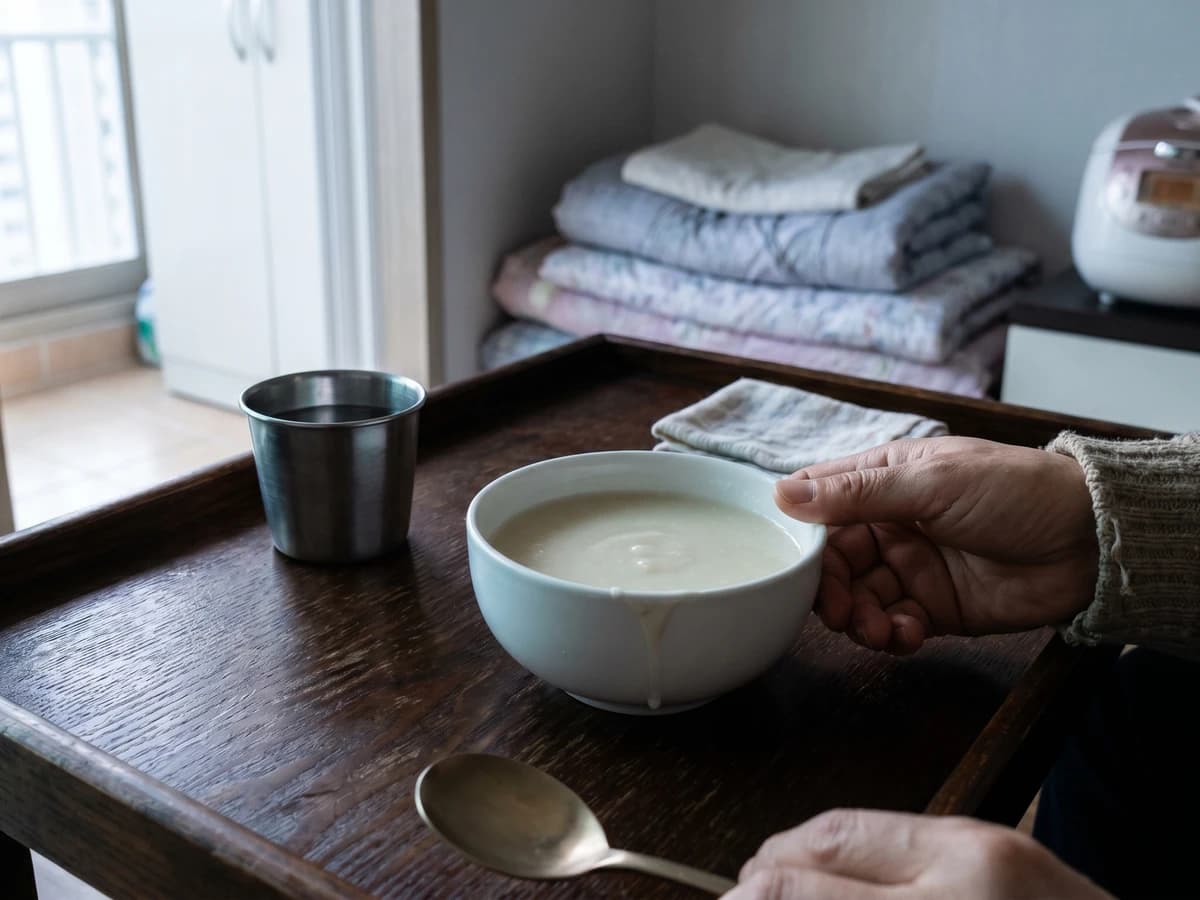
Amjuk (Dried-Grain Weaning Porridge)
Powdered rice or dried baekseolgi cooked thin in cloudy rice water, an old Korean first-spoon porridge that asks for patience at the sieve and gentleness at the stove.
A cooking platform built around craft, culture, and the stories behind what we eat.

Created by
A gentle Korean rice porridge built from shrimp shells, soaked rice, and patient stirring, sweet from the sea and finished simply with sesame oil and scallion.
Shrimp porridge lives or dies before the rice goes in. People throw away the shells, then wonder why the bowl tastes thin. Boil the shells first. Ten minutes is enough to pull out their sweetness, and too much longer makes the stock rough. That is the small coastal thrift my mother respected: use the whole shrimp, then let the rice carry it.
Saeu-juk (shrimp porridge) is breakfast food, sick-day food, and a quiet bowl for someone whose stomach doesn't want a fight. It should not taste like a seafood stew. The shrimp stays sweet and clean, the rice soft enough to give itself up, and the sesame oil comes at the end so it perfumes instead of turning heavy. Let it taste like itself.
What this asks of you tonight is patience, not strength. Soak the rice. Stir often enough that it doesn't catch. Add the chopped shrimp late so it stays tender. 손맛 is real. I measure it anyway, because the next person at your table should be able to make the same gentle bowl without guessing.
Juk (rice porridge) has been part of Korean eating for centuries, used as breakfast, recovery food, and a way to stretch grain into something nourishing and easy to digest. Saeu-juk belongs naturally to coastal home cooking, where shrimp shells could be boiled into stock so even a modest handful of seafood flavored the whole pot. The modern juk shop boom in South Korea in the early 2000s made shrimp porridge a common purchased comfort food, but the older home method remains simple: rice, stock, restraint, and time.
Quantity
1 cup
rinsed until the water runs mostly clear
Quantity
250g
peeled and deveined, shells reserved
Quantity
5 cups
Quantity
1 piece, about 3 inches square
Quantity
1 tablespoon
Quantity
1/2 small
finely minced
Quantity
1 small
finely diced
Quantity
1 teaspoon
minced
Quantity
1 tablespoon
Quantity
1/2 teaspoon, plus more only if needed
Quantity
1 tablespoon
divided
Quantity
1
thinly sliced
Quantity
1 teaspoon
Quantity
to serve
crumbled
| Ingredient | Quantity |
|---|---|
| short-grain white ricerinsed until the water runs mostly clear | 1 cup |
| shell-on shrimppeeled and deveined, shells reserved | 250g |
| water | 5 cups |
| dried kelp (dasima) | 1 piece, about 3 inches square |
| neutral oil | 1 tablespoon |
| onionfinely minced | 1/2 small |
| carrot (optional)finely diced | 1 small |
| garlicminced | 1 teaspoon |
| soup soy sauce (guk-ganjang) | 1 tablespoon |
| kosher salt | 1/2 teaspoon, plus more only if needed |
| toasted sesame oildivided | 1 tablespoon |
| scallionthinly sliced | 1 |
| toasted sesame seeds | 1 teaspoon |
| gim (roasted seaweed) (optional)crumbled | to serve |
Rinse the rice in several changes of water, rubbing it gently with your fingers, until the water runs mostly clear. Cover with fresh water and soak 30 minutes, then drain well. Soaked rice softens evenly and releases starch without needing to be punished in the pot.
Put the reserved shrimp shells, 5 cups water, and kelp in a pot. Bring just to a simmer over medium heat, then pull the kelp out right away so it does not turn slick or bitter. Simmer the shells 10 minutes, pressing them once or twice with a spoon, then strain. You should have about 4 cups pale shrimp stock.
Set aside 6 shrimp whole for the top if you want a prettier bowl. Chop the rest into small, rough pieces, about 1/2 inch. Do not mince them to paste. Small pieces season the porridge evenly, while a few whole shrimp tell the eye what the bowl is.
Warm a heavy pot over medium heat. Add the neutral oil and 2 teaspoons of the sesame oil, then add the drained rice, onion, carrot if using, and garlic. Stir 3 to 4 minutes, until the grains look glossy and the onion softens. This light toasting keeps the porridge from tasting flat before the long simmer begins.
Pour in the shrimp stock and stir well, scraping the bottom of the pot. Bring to a gentle boil, then lower the heat so the porridge murmurs rather than jumps. Cook 22 to 25 minutes, stirring every few minutes, until the rice grains bloom and begin to break at the edges. If the pot thickens too fast, add hot water 1/4 cup at a time.
Stir in the soup soy sauce and 1/2 teaspoon salt. Taste the liquid before adding more salt. Shrimp brings sweetness, not much salt, and soup soy sauce gives depth without darkening the bowl too much. The seasoning should be quiet enough that the rice and shrimp still read clearly.
Add the chopped shrimp and any reserved whole shrimp. Cook 3 to 4 minutes, stirring gently, until the shrimp turns pink and just firm. Add it late because shrimp overcooks quickly, and a rubbery shrimp in soft porridge is a small disappointment you can prevent.
Turn off the heat and stir in the remaining 1 teaspoon sesame oil. Ladle into bowls and finish with sliced scallion, toasted sesame seeds, and crumbled gim if you like. Serve with baechu-kimchi (napa cabbage kimchi) or a small dish of dongchimi (radish water kimchi), something bright enough to wake the rice.
1 serving (about 470g)
Culinary guides, cultural storytelling, and the editorial depth that makes cooking meaningful.
Discover Culinary ExplorerChef Jeong-sun
Powdered rice or dried baekseolgi cooked thin in cloudy rice water, an old Korean first-spoon porridge that asks for patience at the sieve and gentleness at the stove.

Chef Jeong-sun
A soft summer rice porridge of kneaded mallow greens, dried shrimp, and careful doenjang broth, plain enough for breakfast and exact enough to keep the grit and bitterness out.
Chef Jeong-sun
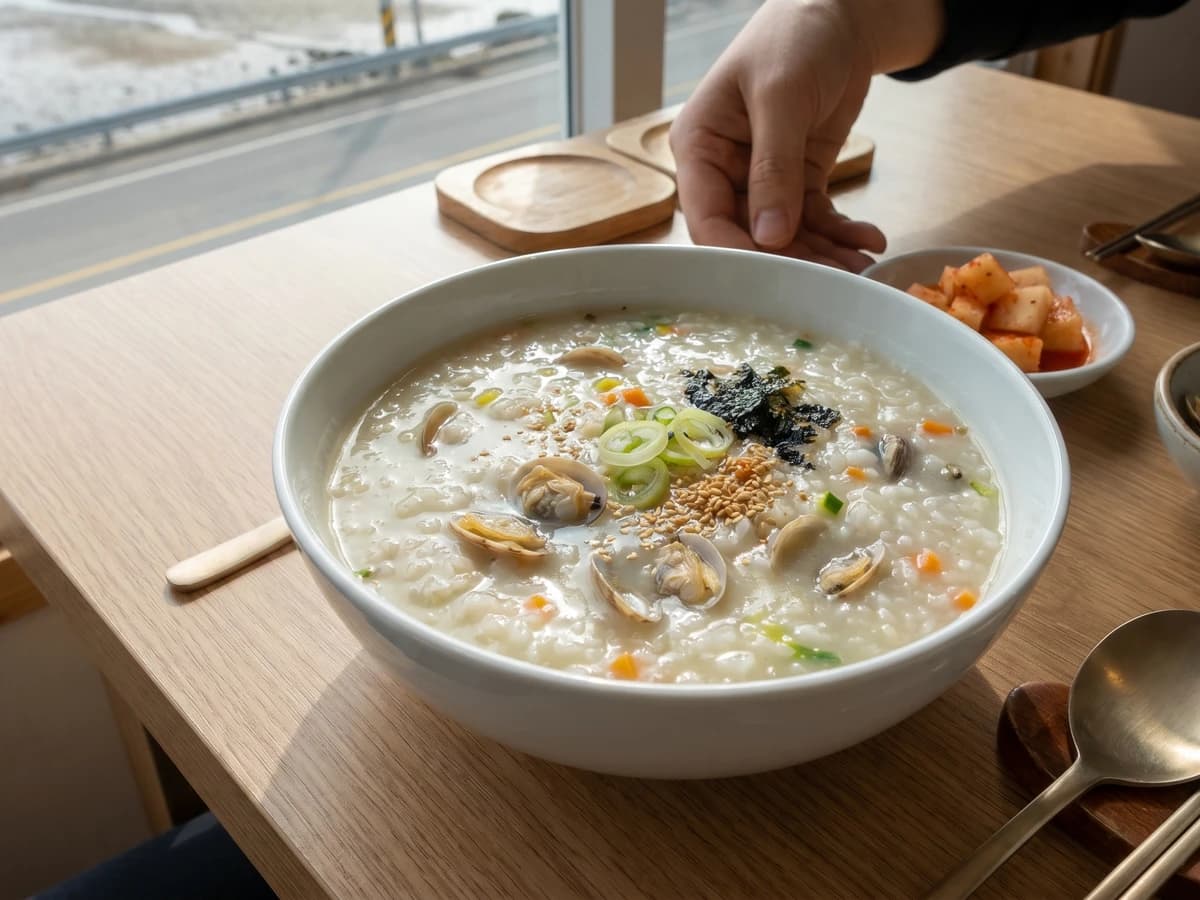
A west-coast clam porridge from Buan's tidal flats: live bajirak opened for their liquor, sesame-slicked rice toasted in the pot, and vegetables cut small enough to comfort without hiding the clams.

Chef Jeong-sun
An autumn juk of boiled chestnuts and soaked short-grain rice, simmered low until smooth and softly sweet, the kind of bowl you set before an elder, a child, or yourself.