Chef Klaus
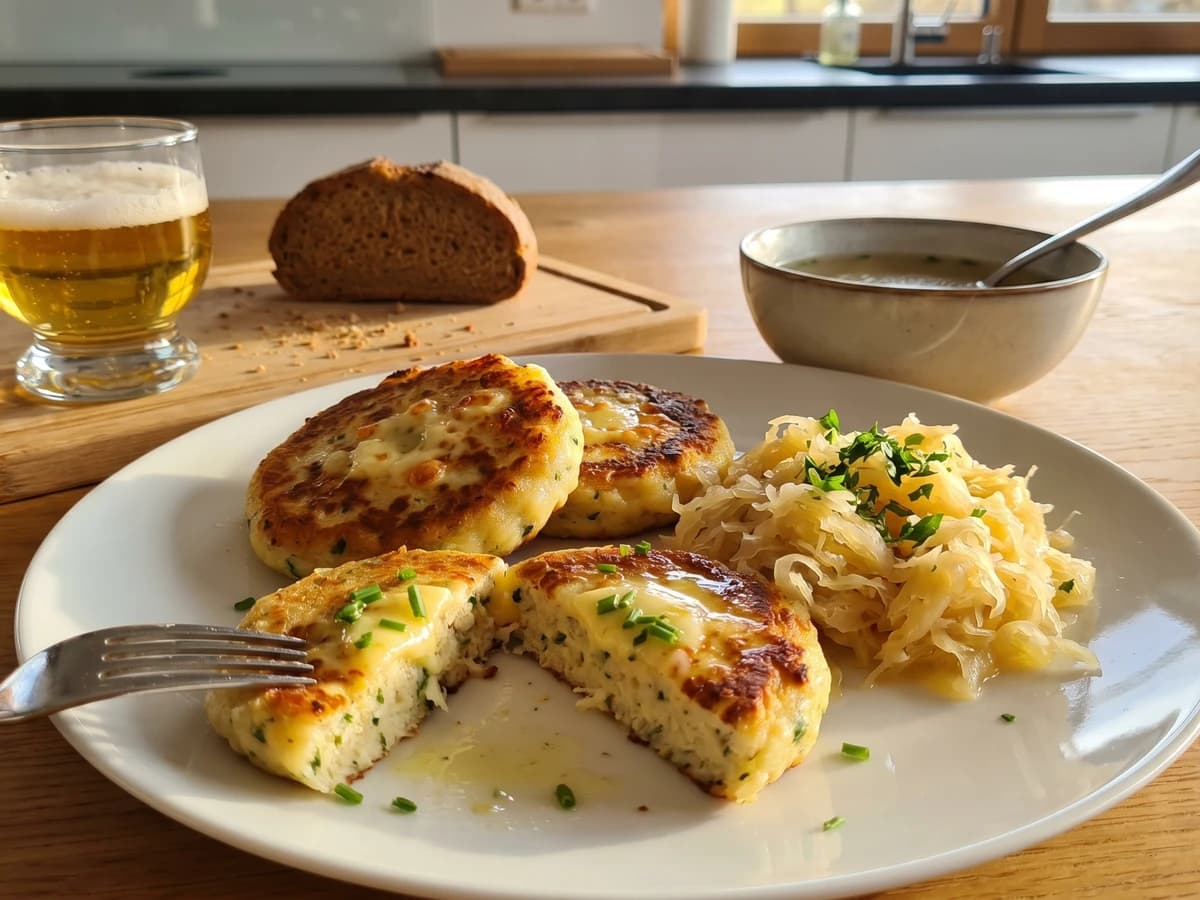
Allgäuer Kaspressknödel
Pressed bread dumplings from the Alpine south, fried until the cheese catches at the edges and the middle stays soft enough for broth, kraut, or a weekday plate.
A cooking platform built around craft, culture, and the stories behind what we eat.
Created by
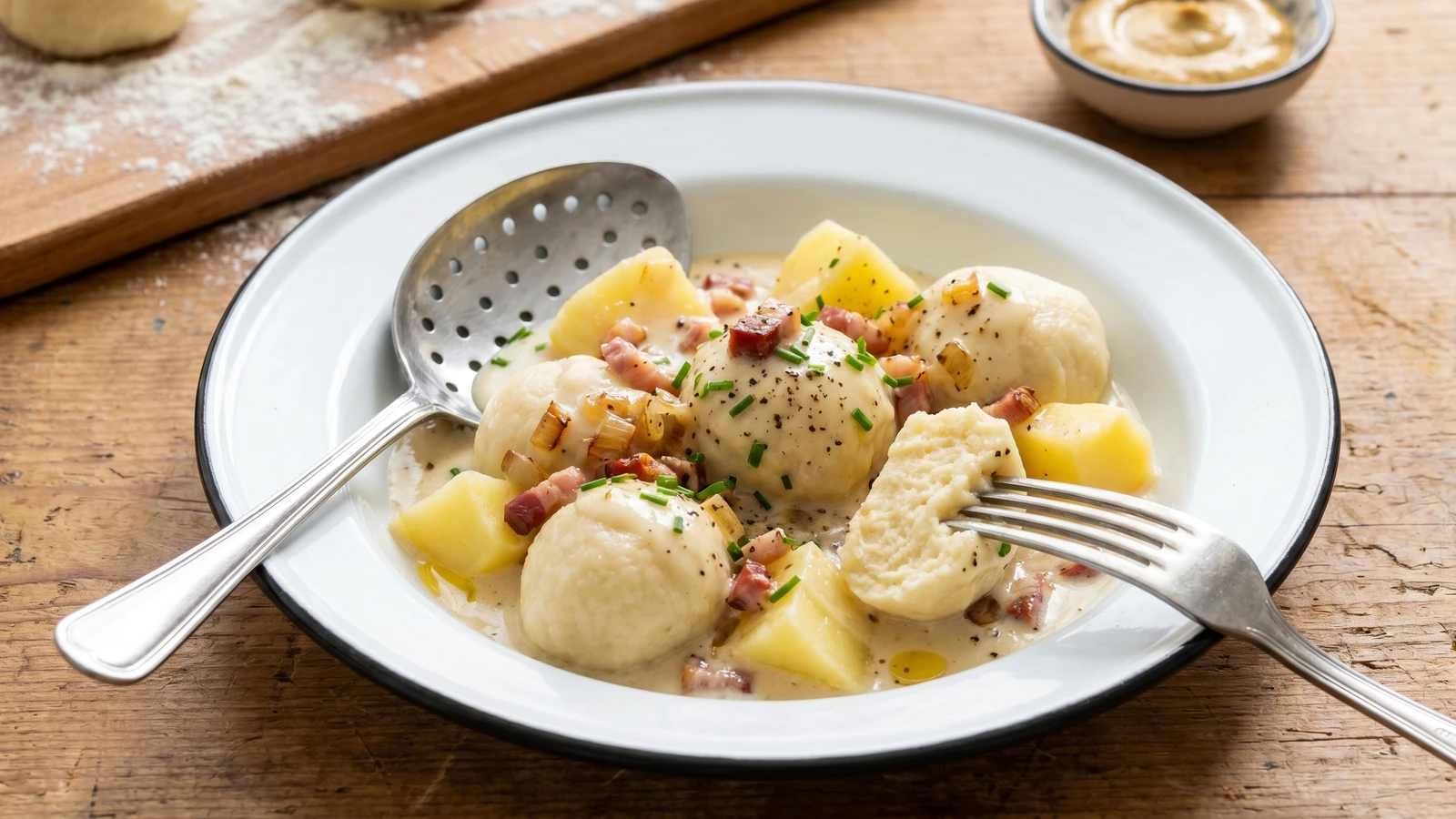
Saarland Mehlknepp are flour dumplings for the weekday table: soft, sturdy spoon-dropped Knepp, boiled with potatoes and finished under a smoky bacon cream sauce.
Mehlknepp belong to the Saarland table, especially the old coalfield kitchens where flour, eggs, potatoes, milk, and a strip of smoked bacon had to feed a family well. This is Hausmannskost, honest home cooking, not a Sunday roast, though I won't complain if you set it down on Sunday. In Saarland you often meet them as Verheiratete, the married ones, because the flour dumplings and boiled potatoes share the plate under Specksoße, bacon sauce.
The region argues in the useful way. In the Saarland the Knepp are often spoon-dropped into salted water and served with potatoes; in the Palatinate they may be firmer, cut from a thicker dough, and in Lorraine the same border kitchen leans toward richer milk and cream. Im Norden anders, im Süden anders, and here the west has its own answer.
The technique is the batter. Stir until it is thick enough to pull in heavy ribbons from the spoon, then stop and let it rest ten minutes. Beat it too long and the flour tightens; make it too loose and the dumplings spread into ragged scraps. The water must tremble, not boil hard, because a rolling boil tears a soft flour dumpling before the egg has set it.
The sauce is bacon fat, onion, cream, and starchy cooking water, not a packet. Nicht aus dem Glas. The water from the Knepp carries flour and salt, so it loosens the sauce and gives it body. Weggeworfen wird nichts. Spoon the sauce over while the dumplings are still tender, then check the salt at the end because the bacon has already spoken.
Mehlknepp sit in the border cooking of Saarland, the Palatinate, and Lorraine, a mining and farm region where wheat flour dumplings stretched eggs, milk, potatoes, and preserved pork into a full meal. The Saarland name Verheiratete, the married ones, refers to the pairing of Mehlknepp with boiled potatoes on the same plate, a local habit that turns a dumpling side into a main dish. Saarland's nineteenth and twentieth century coalfield households kept dishes like this in circulation because smoked bacon and stored potatoes survived the working week better than fresh meat.
Quantity
500g
Quantity
4
Quantity
250ml
Quantity
100ml
plus more if needed
Quantity
1 teaspoon
plus more for the pot
Quantity
1/4 teaspoon
Quantity
800g
peeled and cut into large chunks
Quantity
200g
diced
Quantity
1
finely chopped
Quantity
1 tablespoon
only if the bacon is lean
Quantity
200ml
Quantity
100ml
plus more as needed
Quantity
to taste
Quantity
2 tablespoons
chopped
| Ingredient | Quantity |
|---|---|
| all-purpose flour | 500g |
| large eggs | 4 |
| whole milk | 250ml |
| cold waterplus more if needed | 100ml |
| fine saltplus more for the pot | 1 teaspoon |
| freshly grated nutmeg | 1/4 teaspoon |
| waxy potatoespeeled and cut into large chunks | 800g |
| smoked bacon or Bauchspeckdiced | 200g |
| medium onionfinely chopped | 1 |
| butter (optional)only if the bacon is lean | 1 tablespoon |
| cream | 200ml |
| reserved dumpling cooking waterplus more as needed | 100ml |
| freshly ground black pepper | to taste |
| chiveschopped | 2 tablespoons |
Put the flour, salt, and nutmeg in a bowl and make a well in the middle. Beat the eggs with the milk and cold water, then stir the liquid into the flour until you have a thick batter that drops from a spoon in heavy ribbons. Stop there. If you beat it like bread dough, the flour tightens and the Knepp turn rubbery.
Cover the bowl and let the batter rest for ten minutes while you bring the pot to heat. The rest lets the flour hydrate, so the dumplings hold together without needing extra flour. Extra flour makes them heavy. Das braucht seine Zeit, even when the time is only ten minutes.
Put the potatoes in a wide pot of well-salted water and bring them to a steady simmer. Start them before the dumplings because potatoes need longer, and the finished plate works best when both are ready together. Cook until a knife slides in but the chunks still hold their corners, about 15 minutes.
Bring a second wide pot of salted water to a tremble, not a hard boil. Dip two tablespoons in the hot water, scoop oval spoonfuls of batter, and slide them into the pot. The hot spoon releases the batter cleanly, and the gentle water sets the egg before the dumpling can tear apart. Work in batches so the Knepp have room to rise.
Let the Knepp simmer until they float, then give them another 3 to 4 minutes so the centre cooks through. Cut one open if you're unsure; it should be tender and even, with no wet flour streak in the middle. Lift them out with a slotted spoon and keep 250ml of the cooking water. That cloudy water belongs in the sauce.
Cook the diced bacon in a wide pan over medium heat until the fat has rendered and the edges are browned. Add the onion and cook until soft and golden, adding the butter only if the pan is dry. Pour in the cream and 100ml of the reserved cooking water, then simmer until glossy and lightly thickened. The starch in the water binds the cream to the bacon fat, so the sauce tastes made, not greasy.
Drain the potatoes and add them to a warm serving bowl with the Knepp. Spoon the bacon sauce over, loosen with another splash of cooking water if it sits too thick, and finish with black pepper and chives. Taste before salting because smoked bacon can carry the whole pot. Würzen, Fett, Salz zum Schluss. Serve at once.
1 serving (about 610g)
Culinary guides, cultural storytelling, and the editorial depth that makes cooking meaningful.
Discover Culinary ExplorerChef Klaus
Pressed bread dumplings from the Alpine south, fried until the cheese catches at the edges and the middle stays soft enough for broth, kraut, or a weekday plate.

Chef Klaus
The Bavarian potato salad that works because warm waxy slices drink hot broth first, then oil last, until the bowl turns glossy without mayonnaise.

Chef Klaus
White cabbage shaved thin, wilted with hot caraway vinegar, and finished with crisp Speck fat: the Bavarian salad that belongs beside bread, sausages, and roast pork.

Chef Klaus
The south's sweet-sour white cabbage, cooked from fresh Kraut rather than sauerkraut, soft enough for roast pork and sharp enough to wake the plate.