Chef Lesia
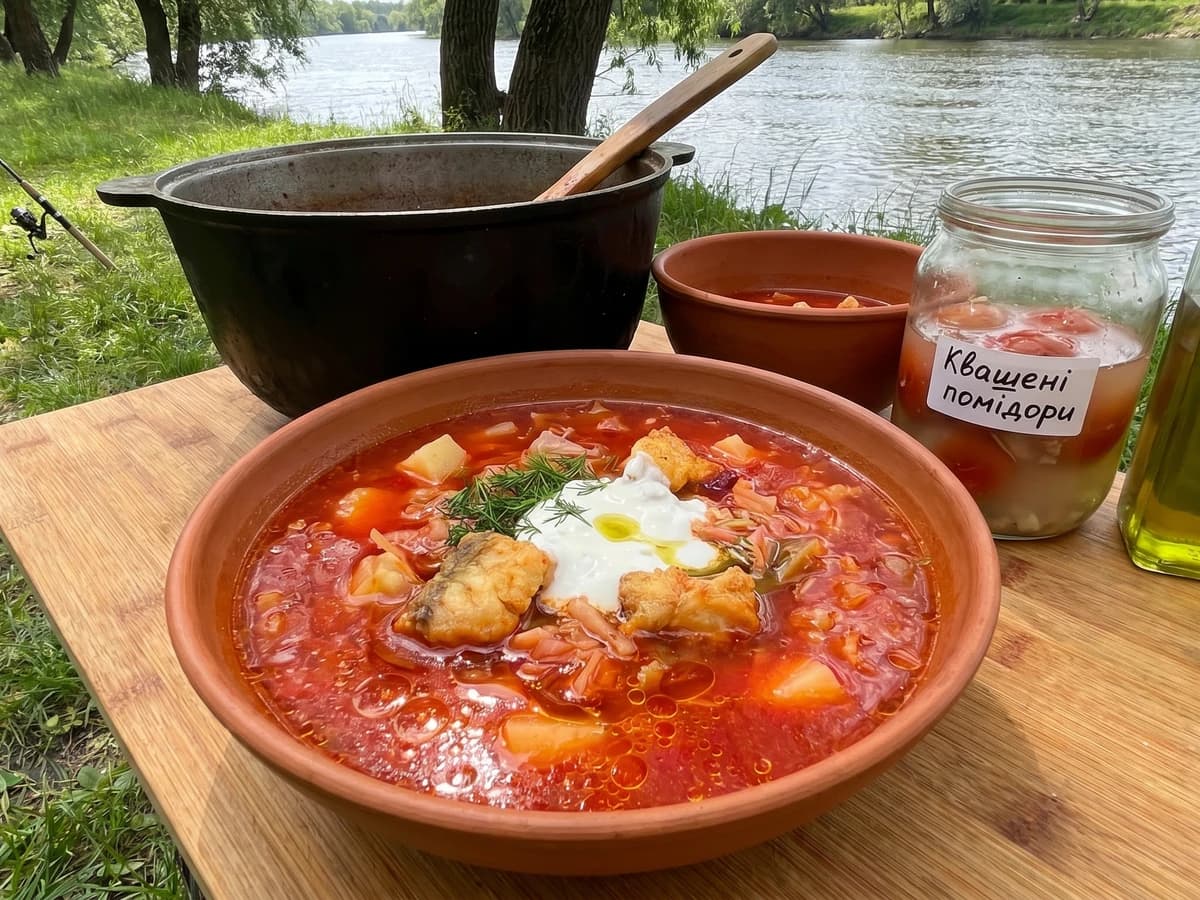
Bessarabskyi Borshch (бессарабський борщ, fish borshch)
The catch goes into the pan before it ever meets the pot, so Danube fish stays whole in a tomato-red broth sour enough to wake the table.
A cooking platform built around craft, culture, and the stories behind what we eat.
Created by
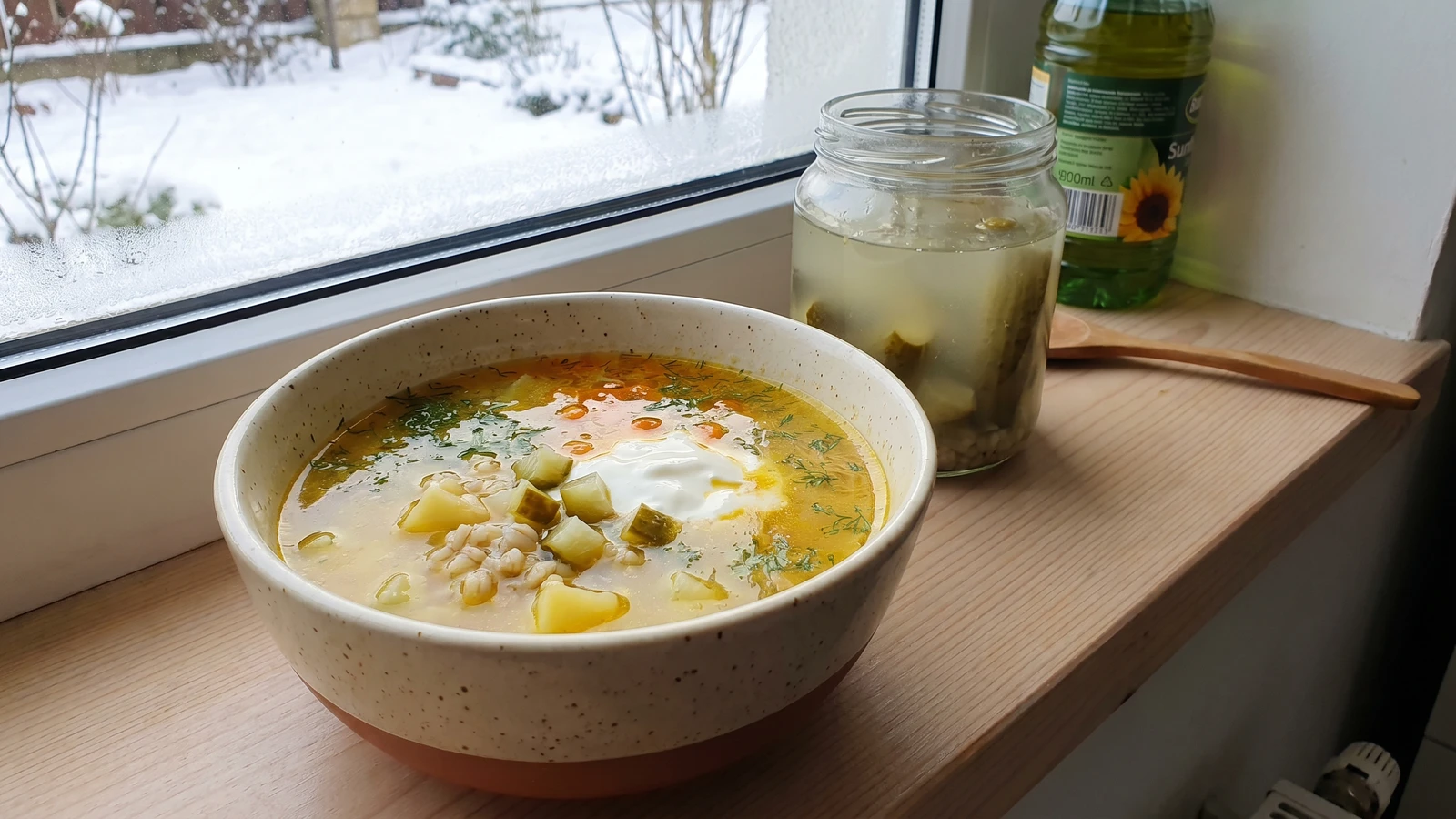
The sharpest ingredient in this soup is the liquid you nearly poured down the sink: cucumber rozsil, cloudy, salty, alive, and ready to wake up a whole pot.
The sharpest ingredient in this soup is the liquid you nearly poured down the sink. Cucumber rozsil, the cloudy brine from salt-fermented cucumbers, is not a leftover. It is the souring, the seasoning, the memory of summer cucumbers packed under dill heads in the litnya kuhnia, the summer kitchen, and it wakes up a plain pot of barley and potatoes like someone opening a cold window.
Rozsolnyk is winter food with a summer jar inside it. The broth can be beefy, chickeny, mushroomy if you're keeping it lean, but the soul is always the same: pearl barley swollen soft, potatoes just giving at the edge, chopped salt cucumbers carrying their crunch, and enough dill to make the bowl look alive. Aunt Nadia once wrote only, "add brine until it sounds right," which is comedy until you hear the pot change from flat bubbling to a sharper, brighter simmer.
The one thing that decides the soup is the zasmazhka, the slow-sweated onion and carrot. Add it near the end so its sweetness sits brightly on the broth and answers the brine; add it at the start and it disappears into the stock. Then rest the pot. Barley keeps drinking, cucumbers keep speaking, and tomorrow's bowl will be better.
Rozsolnyk takes its name from rozsil, cucumber brine, and belongs to the wide Ukrainian household habit of souring soups from the pantry rather than from a bottle of vinegar. Nineteenth-century city versions often used beef, barley, and sometimes kidneys, while village and fasting versions leaned on mushrooms, beans, or potatoes, proving the same practical idea could travel through very different Ukrainian kitchens.
Quantity
700g
Quantity
2.5 litres
Quantity
120g
rinsed
Quantity
3 medium
peeled and diced
Quantity
4
diced
Quantity
250ml, plus more to taste
Quantity
2 tablespoons
Quantity
1 large
finely diced
Quantity
1 large
coarsely grated
Quantity
1 small
diced
Quantity
1
Quantity
6
Quantity
3 cloves
crushed
Quantity
1 large bunch
chopped
Quantity
to serve
Quantity
to taste
| Ingredient | Quantity |
|---|---|
| beef short ribs or beef shin on the bone | 700g |
| cold water | 2.5 litres |
| pearl barleyrinsed | 120g |
| potatoespeeled and diced | 3 medium |
| salt-fermented cucumbersdiced | 4 |
| cucumber brine (rozsil) | 250ml, plus more to taste |
| unrefined sunflower oil | 2 tablespoons |
| onionfinely diced | 1 large |
| carrotcoarsely grated | 1 large |
| parsnip or parsley root (optional)diced | 1 small |
| bay leaf | 1 |
| black peppercorns | 6 |
| garliccrushed | 3 cloves |
| dillchopped | 1 large bunch |
| smetana (sour cream) (optional) | to serve |
| sea salt and black pepper | to taste |
Put the beef in a big pot with the cold water and bring it up slowly. Skim the grey foam as it rises, then add the bay leaf and peppercorns and keep the pot at a gentle tremble, not a hard boil, until the meat gives easily when pressed with a spoon. Salt lightly for now. The cucumbers and brine will bring their own voice later.
Lift out the meat when it is tender and keep it aside. Stir the rinsed barley into the broth and let it simmer until the grains swell and lose their hard white centres. They should still have a little chew. Barley keeps drinking as it sits, so don't cook it into porridge.
Add the potatoes and the parsnip or parsley root if you're using it. Simmer until the potato edges soften but the cubes still hold their shape. Pull the meat from the bones, tear it into spoonful pieces, and return it to the pot.
Warm the sunflower oil in a wide pan and sweat the onion slowly until translucent and sweet-smelling. Add the grated carrot and cook until it softens, stains the oil gold, and the raw smell changes into something rounder. You're not browning. You're coaxing.
Stir the diced salt cucumbers into the pot, then pour in the cucumber brine a little at a time. Let the soup murmur for a few minutes between additions and taste. You want sharp, salty, rounded sourness, not a slap in the face. If your brine is very strong, use less and add a splash of water.
Add the zasmazhka, crushed garlic, and most of the dill. Taste again for salt, pepper, and brine. Turn off the heat and let the pot stand so the barley, cucumber, and broth settle into each other. Serve with smetana and the last of the dill. Make a big pot. There is no tradition of a small one.
1 serving (about 420g)
Culinary guides, cultural storytelling, and the editorial depth that makes cooking meaningful.
Discover Culinary ExplorerChef Lesia
The catch goes into the pan before it ever meets the pot, so Danube fish stays whole in a tomato-red broth sour enough to wake the table.

Chef Lesia
The fish leaves the pot before the soup reaches the table: broth in the bowl, river fish on a platter, garlic salamur waiting to wake both.

Chef Lesia
Brick-red paprika blooms in bacon fat, beef darkens at the edges, and potatoes thicken the cauldron until it stands between soup and stew. This is comfort with a fire under it.
Chef Lesia
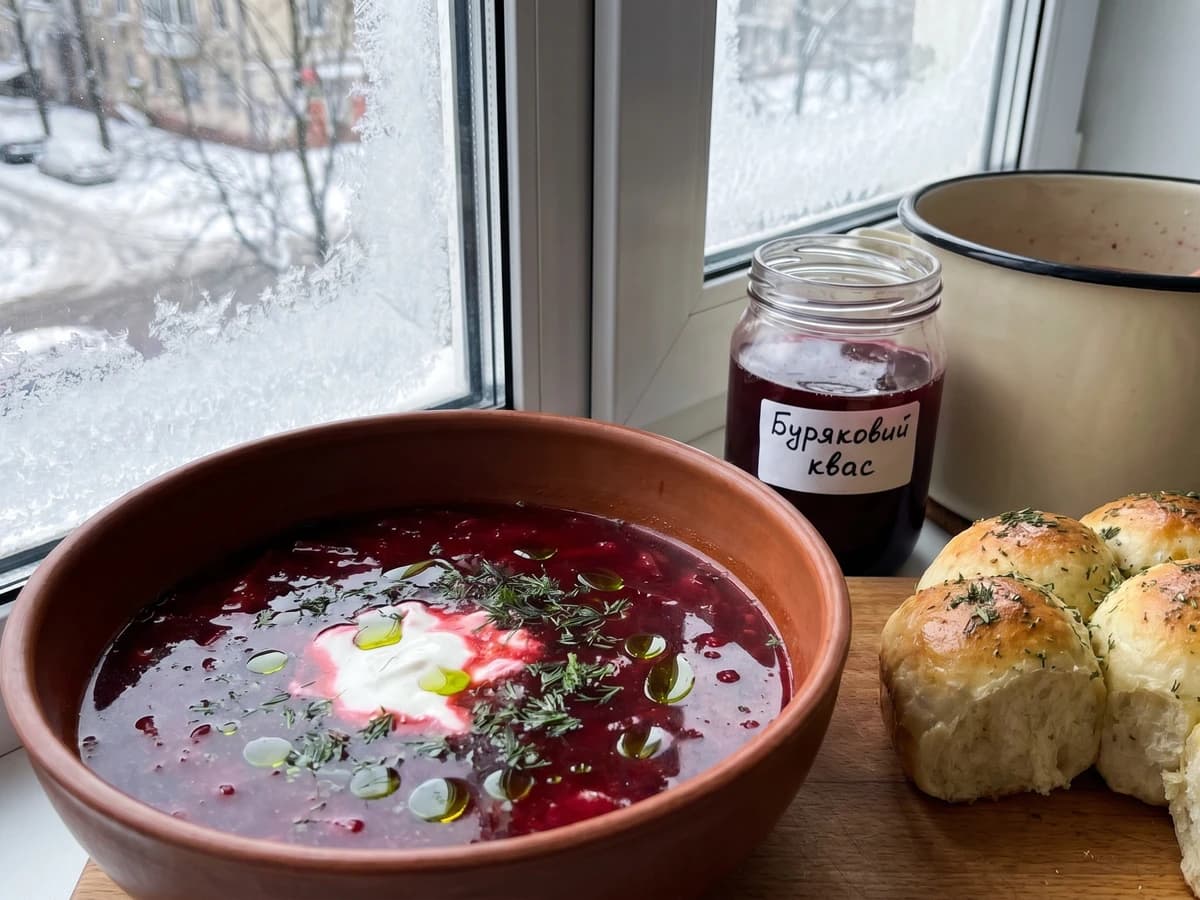
Beets hit slow-sweated zasmazhka and the broth goes dark ruby, sour from beet zakwas, sweet from bone and garden, thick enough for the spoon to stand up straight.