Chef Lesia
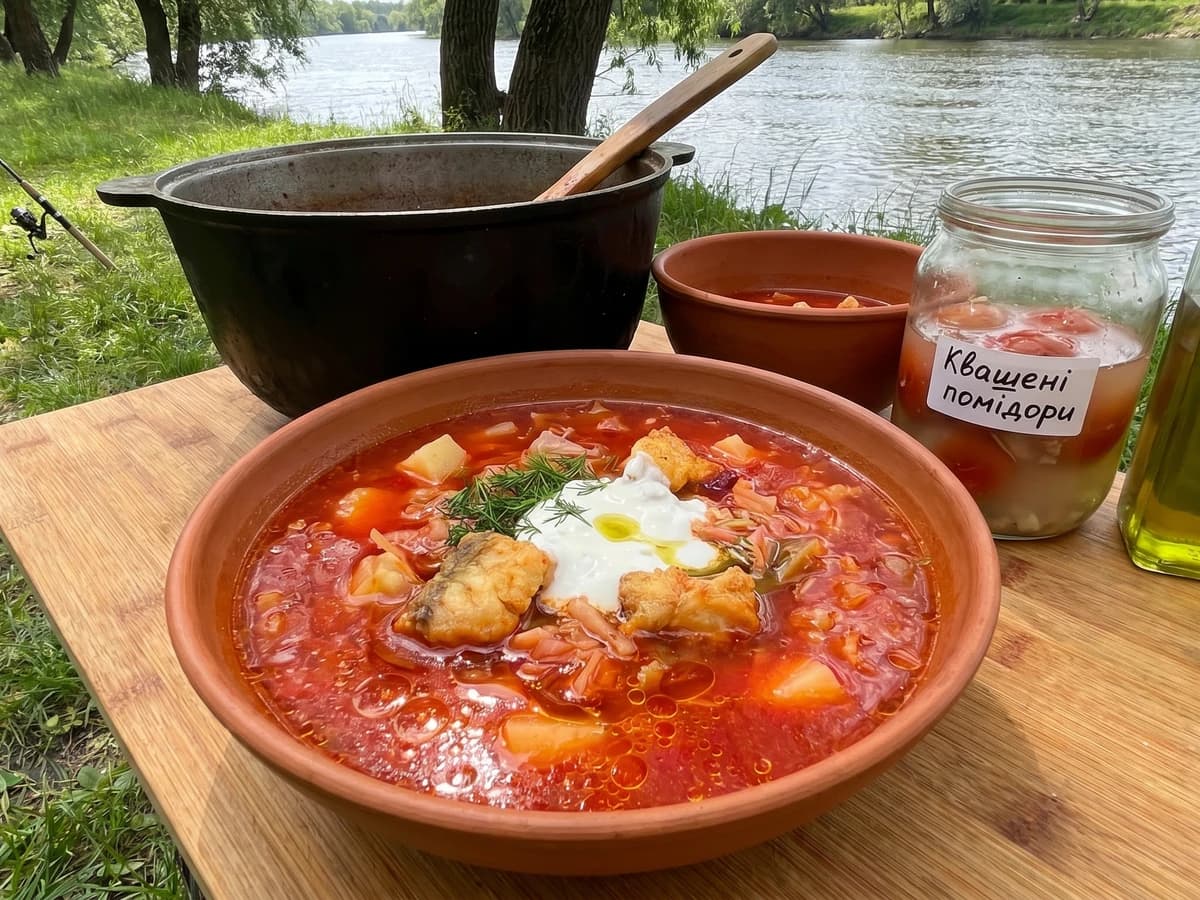
Bessarabskyi Borshch (бессарабський борщ, fish borshch)
The catch goes into the pan before it ever meets the pot, so Danube fish stays whole in a tomato-red broth sour enough to wake the table.
A cooking platform built around craft, culture, and the stories behind what we eat.

Created by
The peas collapse into velvet before your eyes, yellow and thick and just barely pourable, while smoked salo gives the pot that old kitchen smell of winter being made bearable.
Yellow peas do a quiet trick in the pot: they begin as hard little stones and end as velvet, thick enough to drag the spoon through, pale gold under the green scatter of dill. This is the soup for the end of the week, when the market bag is light and the jar of smoked salo still has a few good pieces hiding in the back. Enough for eight guests or one hungry Ukrainian.
In the south, where my family cooked through long dry summers and sharp bare winters, dried peas were not sad food. They were insurance. A handful could feed a table if you gave them time, a smoked bone or a strip of salo, and the patience to let the boil soften from clatter into that low thick blip-blip Aunt Nadia called "until it sounds right."
The thing that decides the soup is not the peas, though they must cook until they give up completely. It is the zasmazhka, the slow-sweated onion and carrot, added at the end so its sweetness sits brightly on the broth instead of flattening into the stock. Do that and the whole pot wakes up. Skip meat if you need to; mushrooms and sunflower oil will carry you. Just make a big pot. There is no tradition of a small one.
Yushka is one of the older Ukrainian words for a broth or everyday soup, used long before modern menu language tidied soups into neat categories. Dried peas were common in the southern steppe because they stored through winter and drought, and cooks stretched them with smoked salo, pork bones, mushrooms, or only sunflower oil depending on the household calendar. Soviet canteens made pea soup seem flat and institutional, but the home version is regional, fragrant with dill and onion, and built around the same thrift that kept village tables generous.
Quantity
500g
rinsed until the water runs mostly clear
Quantity
2.5 litres
Quantity
200g
diced small
Quantity
1
Quantity
2
Quantity
1 large
finely diced
Quantity
2 medium
coarsely grated
Quantity
2 tablespoons, plus more if needed
Quantity
2 medium
peeled and diced
Quantity
3 cloves
crushed
Quantity
1 teaspoon
Quantity
1/2 teaspoon
Quantity
to taste
Quantity
1 large bunch
chopped
Quantity
to serve
Quantity
to serve
| Ingredient | Quantity |
|---|---|
| yellow split peasrinsed until the water runs mostly clear | 500g |
| cold water or light pork broth | 2.5 litres |
| smoked salo or smoked pork bellydiced small | 200g |
| smoked pork rib or ham bone (optional) | 1 |
| bay leaves | 2 |
| onionfinely diced | 1 large |
| carrotscoarsely grated | 2 medium |
| unrefined sunflower oil | 2 tablespoons, plus more if needed |
| potatoespeeled and diced | 2 medium |
| garliccrushed | 3 cloves |
| sweet paprika | 1 teaspoon |
| freshly ground black pepper | 1/2 teaspoon |
| sea salt | to taste |
| dillchopped | 1 large bunch |
| smetana (sour cream) (optional) | to serve |
| rye bread or garlic pampushky (optional) | to serve |
Rinse the split peas in several changes of cold water until the cloudiness eases. Pick out any hard dark bits. You don't need to soak split peas overnight, but if yours are old and stubborn, give them an hour in warm water while you get on with life.
Put the peas, water or light broth, bay leaves, and the smoked rib or ham bone if using into a big pot. Bring it slowly to a simmer and skim the foam as it rises. Keep the heat gentle. A hard boil makes peas spit at you and catch on the bottom, and nobody needs that comedy.
Set the diced smoked salo in a wide pan over low heat and let the fat melt out slowly. The pieces should shrink and turn golden at the edges, not burn. When the kitchen smells smoky and sweet, lift a few crisp pieces out for finishing and leave the fat in the pan.
Add the onion to the salo fat with a pinch of salt and cook until soft and translucent. Add the grated carrot and sunflower oil if the pan looks dry, then sweat everything slowly until the carrot relaxes, the fat turns orange, and the smell changes from raw onion to something round and sweet. Stir in the paprika for the last minute, just long enough to wake it.
When the peas are mostly soft and starting to break at the edges, add the diced potatoes. Keep simmering, stirring along the bottom now and then, until the peas collapse and the soup turns thick, yellow, and just barely pourable. Listen for it: the sound changes from watery bubbling to slow heavy plops. That is the pot telling you it is close.
Remove the bone if you used one, pulling off any meat and returning it to the pot. Stir in the zasmazhka, crushed garlic, black pepper, and most of the dill. Salt carefully at the end because smoked salo brings its own salt. If the soup stands too stiff, loosen it with hot water; if it runs like broth, simmer it a little longer. The spoon should not fall over immediately.
Let the soup sit off the heat for at least fifteen minutes so the peas settle and the smoked fat comes into soft golden beads on top. Serve in deep bowls with the saved crisp salo, more dill, a spoon of smetana if you like, and rye bread or pampushky for dragging through the last of it.
1 serving (about 430g)
Culinary guides, cultural storytelling, and the editorial depth that makes cooking meaningful.
Discover Culinary ExplorerChef Lesia
The catch goes into the pan before it ever meets the pot, so Danube fish stays whole in a tomato-red broth sour enough to wake the table.

Chef Lesia
The fish leaves the pot before the soup reaches the table: broth in the bowl, river fish on a platter, garlic salamur waiting to wake both.

Chef Lesia
Brick-red paprika blooms in bacon fat, beef darkens at the edges, and potatoes thicken the cauldron until it stands between soup and stew. This is comfort with a fire under it.
Chef Lesia
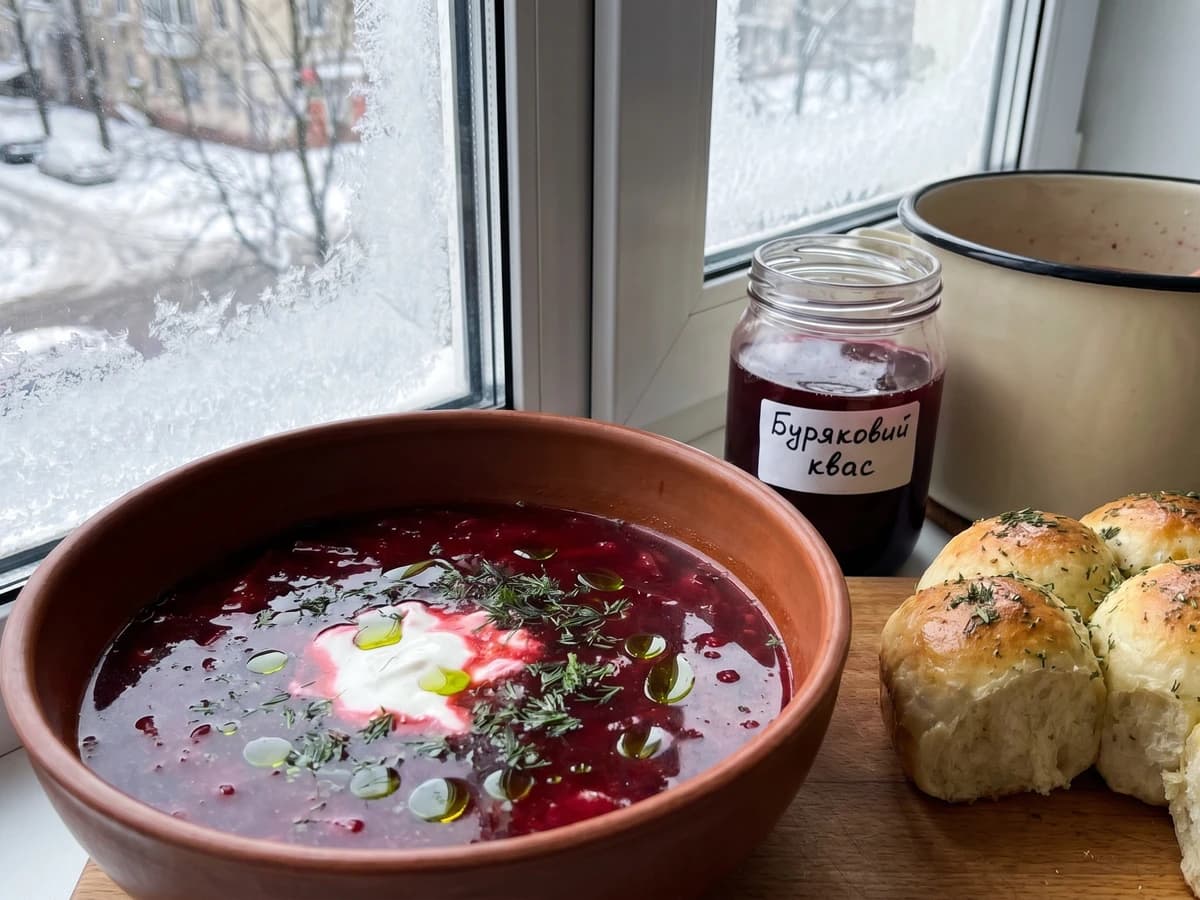
Beets hit slow-sweated zasmazhka and the broth goes dark ruby, sour from beet zakwas, sweet from bone and garden, thick enough for the spoon to stand up straight.