Chef Lesia
Bessarabskyi Borshch (бессарабський борщ, fish borshch)
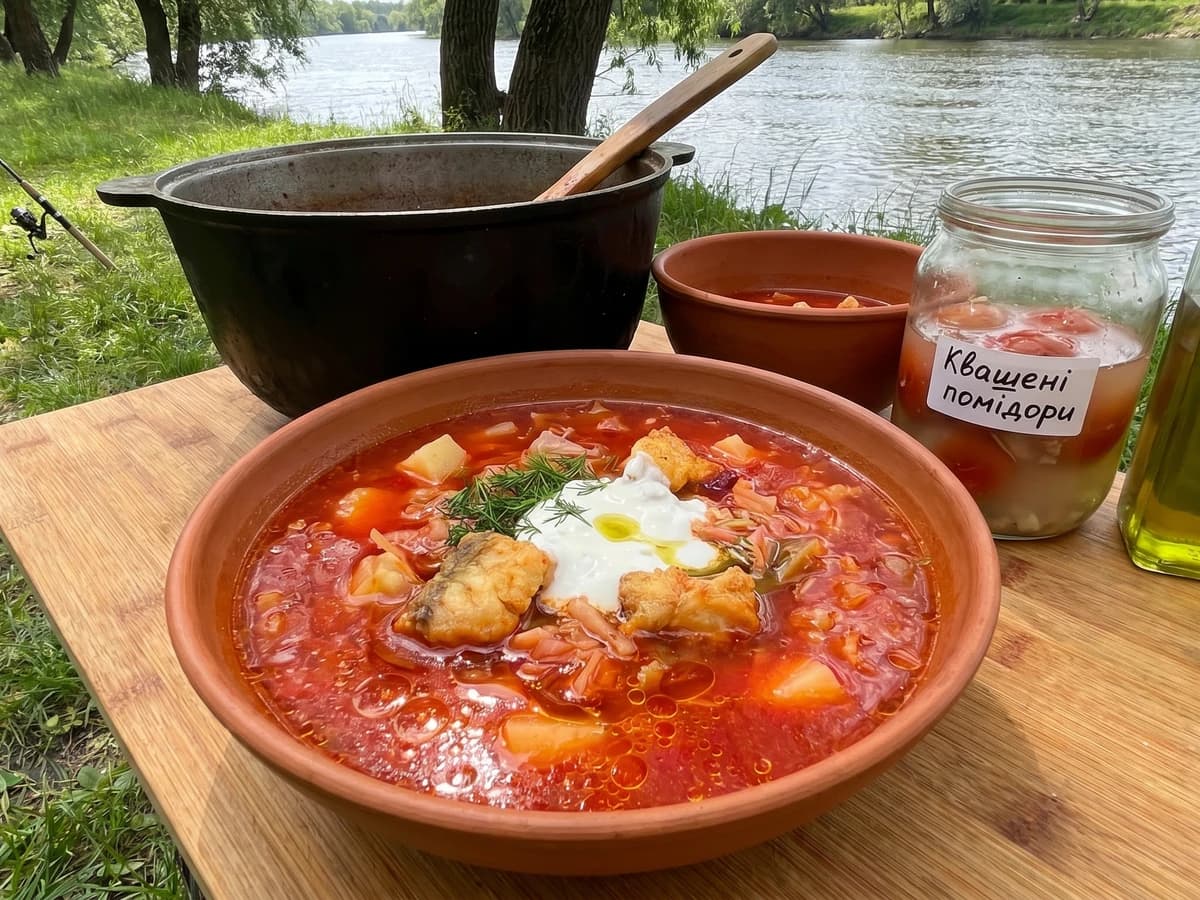
The catch goes into the pan before it ever meets the pot, so Danube fish stays whole in a tomato-red broth sour enough to wake the table.
A cooking platform built around craft, culture, and the stories behind what we eat.

Created by
The kitchen goes sharp before it goes sweet: sauerkraut hissing in pork broth, millet swelling soft, smoked meat giving the pot its backbone.
The first smell is the kraut. Sharp, bright, almost rude, the kind that clears the room of any idea that cabbage soup must be pale and apologetic. Then the millet softens, the smoked pork loosens from the bone, and the whole pot turns rounder, sour against fat, grain against broth, dill waiting at the end like a green slap on the table.
Kapusniak is winter food, yes, but not heavy in the dead way people imagine. It lives from fermentation. In August we'd be drowning in cabbages; in January we open the jar instead, and that jar is not a substitute. That's the actual tradition. My Aunt Nadia wrote only, "rinse if it bites too hard," which took me three attempts and one heroic sour pot to understand.
The dish turns on the finish. The zasmazhka, the slow-sweated onion and carrot, goes in near the end so its sweetness sits brightly on the broth instead of flattening into the stock. Let the soup rest before you serve it. The spoon needn't stand up like borshch, but it should move through the bowl with purpose.
Kapusniak is strongly associated with central and southern Ukrainian cooking, especially the Zaporizhian Cossack version made with sauerkraut, pork, and millet, a field-pot grain that thickened soup without needing much flour or fuss. The dish belongs to Ukraine's old fermentation culture, where winter cabbage was soured in barrels beside cucumbers, tomatoes, and sometimes whole watermelons in the litnya kuhnia, the summer kitchen. Soviet canteen versions often thinned and standardized it, but village pots still argue properly: more kraut in one region, more millet in another, beans in some homes, smoked ribs if the cook is feeling generous.
Quantity
700g
Quantity
2.5 litres
Quantity
600g
drained, brine reserved
Quantity
1 large
finely diced
Quantity
2
coarsely grated
Quantity
2 tablespoons
Quantity
3 medium
peeled and diced
Quantity
80g
rinsed until the water runs clear
Quantity
2
Quantity
6
Quantity
2 cloves
smashed
Quantity
1 small bunch
chopped
Quantity
to taste
Quantity
to serve
| Ingredient | Quantity |
|---|---|
| smoked pork ribs or smoked pork hock | 700g |
| cold water | 2.5 litres |
| sauerkrautdrained, brine reserved | 600g |
| onionfinely diced | 1 large |
| carrotscoarsely grated | 2 |
| unrefined sunflower oil or pork fat | 2 tablespoons |
| potatoespeeled and diced | 3 medium |
| milletrinsed until the water runs clear | 80g |
| bay leaves | 2 |
| black peppercorns | 6 |
| garlicsmashed | 2 cloves |
| dillchopped | 1 small bunch |
| sea salt and black pepper | to taste |
| smetana (sour cream) (optional) | to serve |
Put the smoked pork in a big pot with the cold water, bay leaves, and peppercorns. Bring it slowly to a quiet simmer, skimming anything grey that rises. Keep it gentle until the meat loosens and the broth smells smoky and full, about an hour, but listen to the pot more than the clock.
Taste the sauerkraut. If it is cleanly sour, use it as it is. If it bites like a winter wind, rinse only half under cold water and keep the rest sharp. Chop any long strands so they sit easily on the spoon, and save the brine for adjusting the pot at the end.
Lift the pork from the pot and set it aside until cool enough to handle. Add the potatoes and rinsed millet to the broth and simmer until the potatoes begin to give at the edges and the millet blooms soft and pale. The sound changes here, from watery tapping to a thicker, quieter bubble.
Stir in the sauerkraut and return the picked pork meat to the pot. Let everything simmer until the kraut softens but still keeps a little chew, and the broth tastes sour, smoky, and grain-thickened. If it tastes flat, add a spoon or two of reserved brine. If it tastes too fierce, let it cook a little longer and soften itself.
Warm the sunflower oil or skimmed pork fat in a wide pan and add the onion. Cook it low and slow until translucent, then add the carrot and keep going until the carrot softens and the fat turns orange-gold. You're not browning. You're coaxing sweetness.
Scrape the zasmazhka into the soup with the smashed garlic and most of the dill. Simmer a few minutes more, then taste for salt, pepper, and sourness. Pull it off the heat and let it rest until the surface glows with small orange beads and the smell has settled from sharp kraut to something rounder.
Ladle big bowls, scatter over the remaining dill, and put cold smetana on the table so each person can round the sourness to their own mouth. Rye bread is good here. Pampushky are never unwelcome.
1 serving (about 525g)
Culinary guides, cultural storytelling, and the editorial depth that makes cooking meaningful.
Discover Culinary ExplorerChef Lesia
The catch goes into the pan before it ever meets the pot, so Danube fish stays whole in a tomato-red broth sour enough to wake the table.

Chef Lesia
The fish leaves the pot before the soup reaches the table: broth in the bowl, river fish on a platter, garlic salamur waiting to wake both.

Chef Lesia
Brick-red paprika blooms in bacon fat, beef darkens at the edges, and potatoes thicken the cauldron until it stands between soup and stew. This is comfort with a fire under it.
Chef Lesia
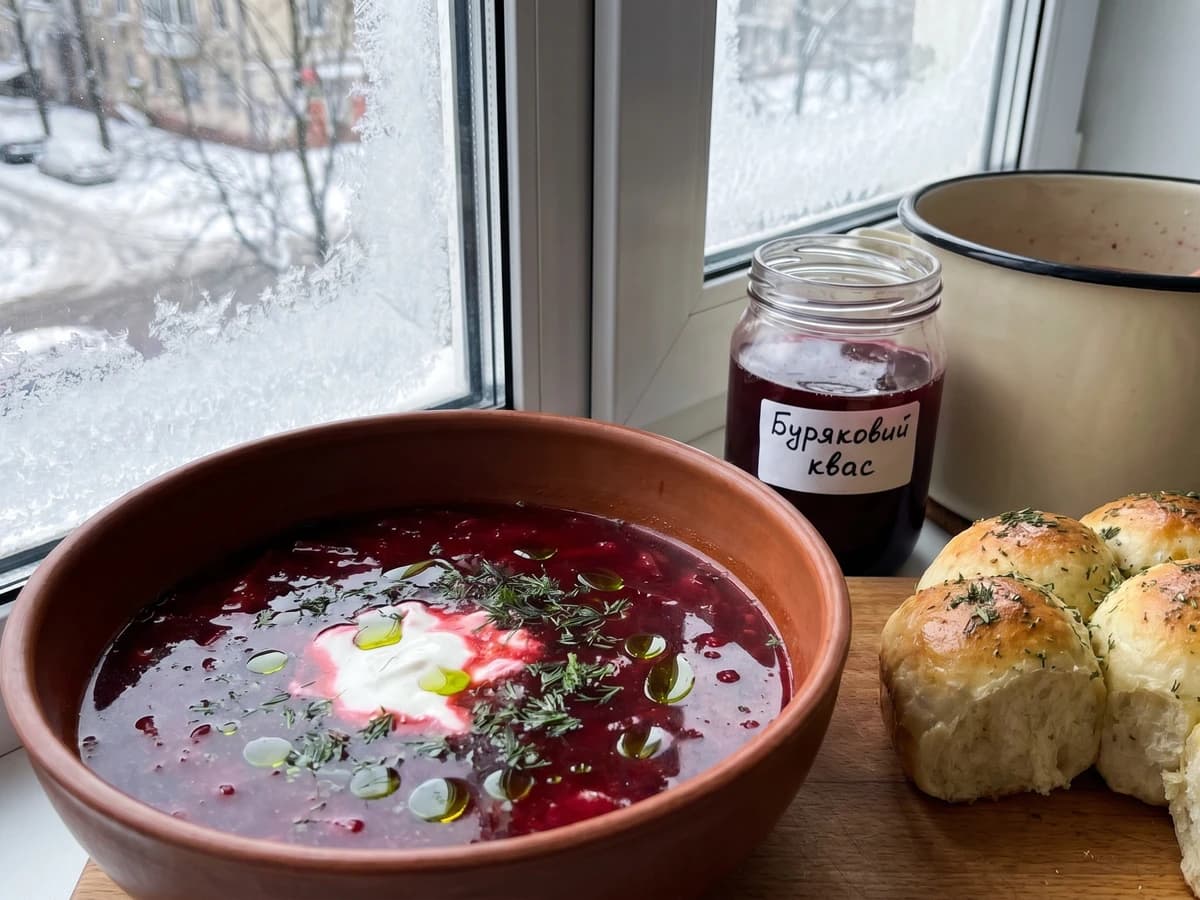
Beets hit slow-sweated zasmazhka and the broth goes dark ruby, sour from beet zakwas, sweet from bone and garden, thick enough for the spoon to stand up straight.