Chef Lesia
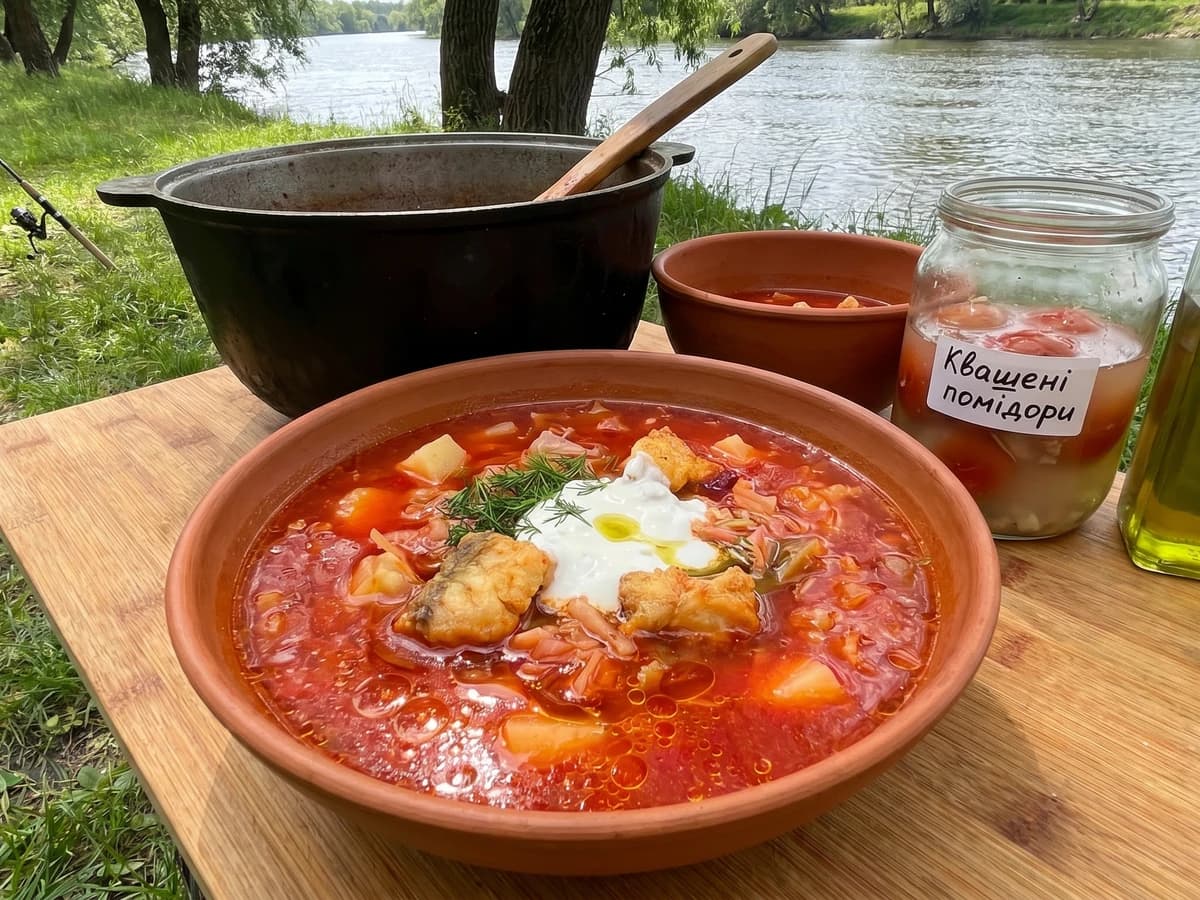
Bessarabskyi Borshch (бессарабський борщ, fish borshch)
The catch goes into the pan before it ever meets the pot, so Danube fish stays whole in a tomato-red broth sour enough to wake the table.
A cooking platform built around craft, culture, and the stories behind what we eat.
Created by
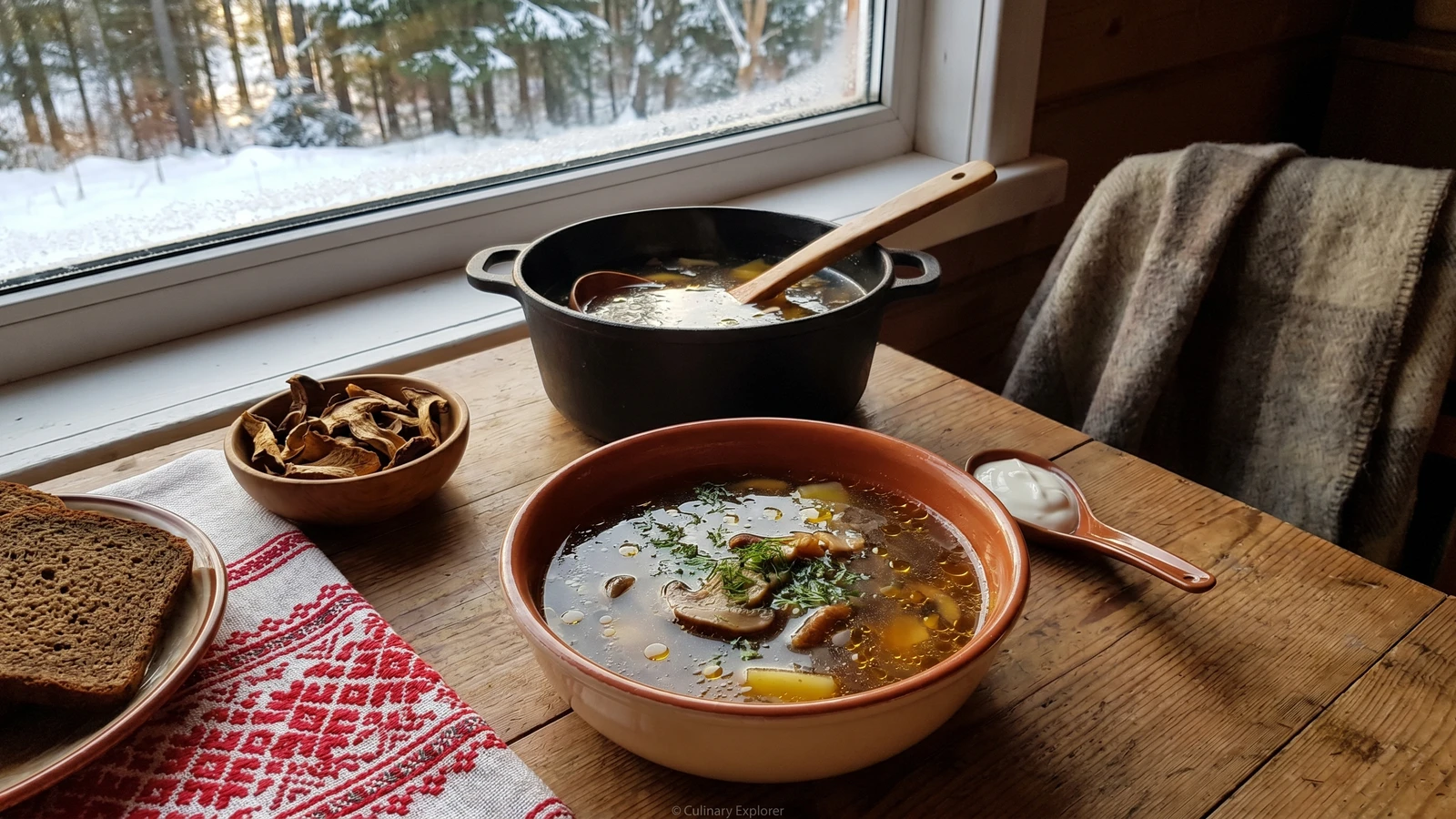
The black soaking water is the whole soup: dried porcini give up the forest first, then the pot turns dark, woody, and sweet from a late zasmazhka.
The most precious part of this soup looks like something you should throw away. That black mushroom soaking water, dark as walnut skin and smelling of wet leaves, is the whole point. Pour it carefully, leave the grit behind, and you have the Carpathian forest in the pot before a flame has done much work.
Hrybna yushka is a Christmas soup in many western Ukrainian homes, especially in the mountains, but don't wait for a holiday to make it. Dried porcini are pantry food. They sit quietly for months, then wake up louder than fresh mushrooms ever do, woody, deep, almost smoky without smoke. Aunt Nadia wrote once, maddeningly, "boil until it sounds right," and with mushrooms I know what she meant: the pot softens from a sharp splutter to a low, round murmur, and the smell changes from raw forest floor to broth.
The one why that decides the dish is the zasmazhka, the slow-sweated onion and carrot. Add it at the end so its sweetness sits brightly on top of the mushroom broth instead of flattening into the stock. This is a plain soup, yes, but plain is not poor. Plain means every careless step shows.
Make a big pot. It reheats beautifully, and the second day is darker, quieter, better.
Hrybna yushka is strongly tied to the Carpathians, where dried white mushrooms, especially porcini gathered in beech and spruce forests, became winter pantry wealth and Christmas Eve food. In many western Ukrainian households it belongs to Sviata Vecheria, the meatless holy supper, sometimes served clear with tiny vushka dumplings or stretched with potatoes, buckwheat, or homemade noodles. Soviet-era public cooking often softened regional soups into generic mushroom broth, but village versions kept their mountain logic: the dried mushroom liquor is not an ingredient, it is the foundation.
Quantity
60g
Quantity
1.5 litres
for soaking
Quantity
1.5 litres
Quantity
2
Quantity
8
Quantity
1 large
finely diced
Quantity
1 large
coarsely grated
Quantity
2 tablespoons
Quantity
500g
peeled and cut into small chunks
Quantity
250g
sliced
Quantity
2 cloves
finely grated
Quantity
1 tablespoon
for a slightly thicker yushka
Quantity
to taste
Quantity
to taste
Quantity
1 small bunch
finely chopped
Quantity
to serve
| Ingredient | Quantity |
|---|---|
| dried porcini or other dried wild mushrooms | 60g |
| boiling waterfor soaking | 1.5 litres |
| fresh water or light vegetable stock | 1.5 litres |
| bay leaves | 2 |
| black peppercorns | 8 |
| onionfinely diced | 1 large |
| carrotcoarsely grated | 1 large |
| unrefined sunflower oil | 2 tablespoons |
| waxy potatoespeeled and cut into small chunks | 500g |
| fresh mushrooms (optional)sliced | 250g |
| garlicfinely grated | 2 cloves |
| flour (optional)for a slightly thicker yushka | 1 tablespoon |
| sea salt | to taste |
| black pepper | to taste |
| dillfinely chopped | 1 small bunch |
| smetana (optional) | to serve |
Put the dried mushrooms in a heatproof bowl and pour over the boiling water. Press them under the surface and leave them until they swell, soften, and stain the water almost black. Lift the mushrooms out with your fingers, then pour the soaking liquor through a fine sieve lined with clean cloth, stopping before the gritty last spoonfuls.
Slice the soaked mushrooms into bite-size pieces and put them in a big pot with the strained soaking liquor, fresh water or stock, bay leaves, and peppercorns. Bring it up slowly, then keep it at a low murmur until the broth smells rounded and woody instead of sharp and damp.
Add the potatoes and a cautious pinch of salt. Let them cook until they give way cleanly to a spoon but still hold their corners. If you're using fresh mushrooms, add them here too; they bring body, but the dried mushrooms are the voice of the soup.
Warm the sunflower oil in a wide pan and soften the onion gently until translucent, then add the carrot and cook until it slumps, sweetens, and turns the oil gold. If you want the yushka a little thicker, stir the flour into this pan and cook it until the raw flour smell disappears. You're not browning hard; you're coaxing sweetness.
Scrape the zasmazhka into the soup and stir well, letting the pot settle back into its low murmur. Add the garlic, taste for salt and black pepper, and cook until the broth tastes joined rather than watery at the edges. Pull out the bay leaves if you see them.
Turn off the heat and let the yushka stand before serving, because mushroom broth needs a little quiet. Stir in most of the dill at the end, then ladle into deep bowls with more dill on top. Add smetana if it is an ordinary winter supper; leave it off for a strict Christmas Eve table.
1 serving (about 360g)
Culinary guides, cultural storytelling, and the editorial depth that makes cooking meaningful.
Discover Culinary ExplorerChef Lesia
The catch goes into the pan before it ever meets the pot, so Danube fish stays whole in a tomato-red broth sour enough to wake the table.

Chef Lesia
The fish leaves the pot before the soup reaches the table: broth in the bowl, river fish on a platter, garlic salamur waiting to wake both.

Chef Lesia
Brick-red paprika blooms in bacon fat, beef darkens at the edges, and potatoes thicken the cauldron until it stands between soup and stew. This is comfort with a fire under it.
Chef Lesia
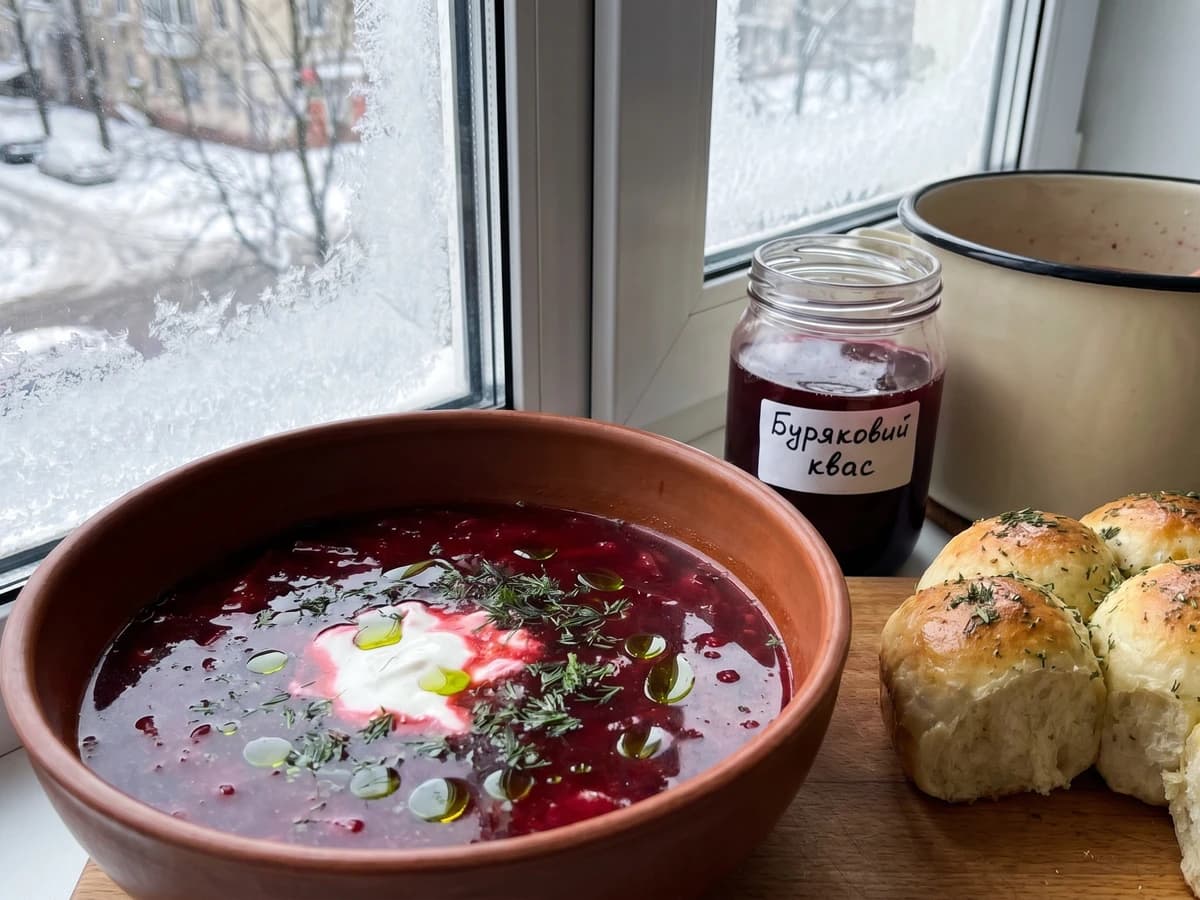
Beets hit slow-sweated zasmazhka and the broth goes dark ruby, sour from beet zakwas, sweet from bone and garden, thick enough for the spoon to stand up straight.