
Chef Dimitra
Aegean Island Katsiki sti Souvla (Κατσίκι στη Σούβλα)
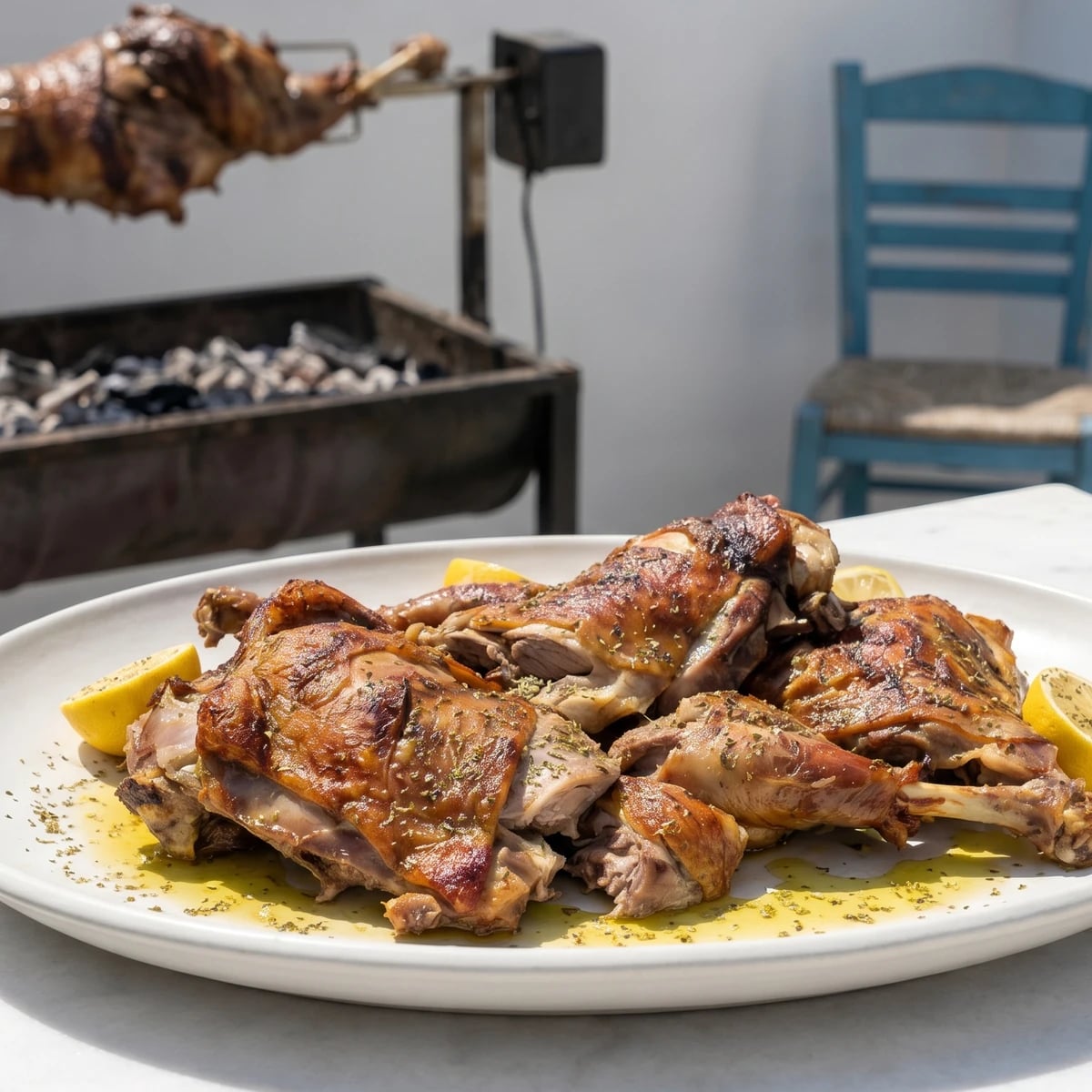
Aegean Easter goat on the spit, lean and full-flavored, turned slowly over charcoal and basted with lemon, oregano, garlic, and good olive oil.
A cooking platform built around craft, culture, and the stories behind what we eat.
Created by
Roumeli's whole Easter lamb turns for hours over quiet coals, seasoned simply with salt, oregano, lemon, and olive oil, until the skin crisps and the meat pulls cleanly from the bone.
Arni sti souvla is Roumeli's Easter lamb, the whole animal turning over coals in the yard until the skin goes crisp and brown and the meat underneath stays juicy. It is not a tray roast and it is not a quick grill. The spit, the fire, and the slow turning are the dish, as much as the lamb itself.
The one method that decides it is the fire: low, steady, and fed from the sides. Big flames blacken the skin before the shoulder and leg have time to soften, so you begin with the lamb high over a quiet bed of coals and bring it lower only near the end. Good olive oil, oregano, lemon, salt, and patience. Λίγα και καλά.
I write this version for a home cook with a motorized souvla, because the courtyard feast still has to come out right the first time. Your grandfather may have judged the heat with his palm and a coffee in the other hand. Here are the numbers until you have that hand.
Arni sti souvla is a mainland Easter custom, strongest in Roumeli, Epirus, Thessaly, and the Peloponnese, where the whole lamb turns outdoors after the Resurrection liturgy and the long Lenten fast. It should not be confused with Cypriot souvla, which usually means large pieces of meat cooked on skewers rather than a whole animal. In island kitchens and poorer households, Easter lamb was often baked in a wood oven or cooked in a pot, so the spit is a mainland signal rather than a single national rule.
Quantity
1, 10-12kg dressed
cleaned and patted dry
Quantity
170g
Quantity
25g
Quantity
30g
rubbed between your palms
Quantity
12
peeled and slivered
Quantity
4
juiced, about 180ml, divided
Quantity
150ml
divided
Quantity
2
cut into wedges, for serving
Quantity
as needed
for serving
Quantity
12-15kg
burned down to a glowing coal bed
| Ingredient | Quantity |
|---|---|
| whole young lamb (arni)cleaned and patted dry | 1, 10-12kg dressed |
| fine sea salt | 170g |
| freshly ground black pepper | 25g |
| dried Greek oreganorubbed between your palms | 30g |
| garlic clovespeeled and slivered | 12 |
| lemonsjuiced, about 180ml, divided | 4 |
| extra virgin Koroneiki olive oildivided | 150ml |
| lemonscut into wedges, for serving | 2 |
| extra dried Greek oregano (optional)for serving | as needed |
| hardwood charcoal or well-seasoned olive woodburned down to a glowing coal bed | 12-15kg |
Order a whole young lamb, 10 to 12kg dressed, from a butcher who will clean it well and leave enough neck and legs to fasten to the spit. Ask that the carcass be dry, not sitting in water. Keep it cold until you season it, and bring it out only when you are ready to work.
Pat the lamb dry inside and out. Mix the salt, pepper, and oregano, then rub it into the cavity, the shoulders, the legs, and along the backbone. Make small slits in the thickest parts of the legs and shoulders and tuck in the garlic slivers. Rub with 80ml lemon juice and 50ml olive oil. Refrigerate 12 to 24 hours, uncovered or loosely covered, so the salt seasons the meat and the skin dries enough to crisp.
Take the lamb out of the cold 45 minutes before cooking, just long enough to mount it. Slide the spit through the body, keeping it close to the spine, and fasten the backbone at the hips, ribs, and neck with wire or clamps. Lock the fork clamps into the shoulders and haunches, tie the legs firmly to the spit, and stitch the cavity closed. The lamb must turn with the spit as one piece; if it slips, it tears and cooks unevenly.
Light 12 to 15kg hardwood charcoal or seasoned olive wood early, then wait until the bed is glowing and ashed over. Spread a long, narrow fire, heavier beneath the shoulders and haunches and lighter beneath the belly. Keep a reserve of coals at one side so you can feed the bed without throwing flame under the lamb.
Set the spit 60 to 70cm above the coals and start a steady slow turn. The lamb should color gradually, not roar brown. At lamb height, your palm should last about 6 seconds before you pull it away. That quiet heat is what lets the leg and shoulder cook before the skin gets too dark.
After the first hour, lower the spit to 45 to 55cm. Mix the remaining 100ml olive oil with the remaining 100ml lemon juice, and brush the lamb lightly every 30 to 40 minutes. Add coals in small amounts, mainly under the shoulders and haunches. If the belly browns too fast, rake heat away from the center.
After 3 and a half hours, begin checking the meat. For a 10 to 12kg lamb, expect 4 and a half to 5 and a half hours total. Lower the spit to 30 to 40cm for the last 30 to 45 minutes so the skin crisps. The leg and shoulder should read 75 to 80 C, the joints should loosen, and a knife at the thigh should release clear juices. Greek Easter lamb is cooked through; pink meat is not the aim here.
Lift the spit onto a clean table or large tray and rest the lamb for 25 to 30 minutes. Cut the wire, open the cavity carefully, and remove the lamb from the spit. Carve into ribs, shoulder, leg, and belly pieces. Finish with lemon wedges, a little oregano, and salt if needed. Serve while the skin still has bite.
1 serving (about 450g)
Culinary guides, cultural storytelling, and the editorial depth that makes cooking meaningful.
Discover Culinary Explorer
Chef Dimitra
Aegean Easter goat on the spit, lean and full-flavored, turned slowly over charcoal and basted with lemon, oregano, garlic, and good olive oil.

Chef Dimitra
Attica taverna biftekia are grilled beef and lamb patties with grated onion, oregano, and soaked bread, charred outside and tender inside.

Chef Dimitra
Attica's beef steak belongs to the hasapotaverna grill: thick-cut beef, fierce charcoal, no marinade, and a clean finish of oregano, lemon, salt, and olive oil.

Chef Dimitra
Crete's mountain shepherd roast is lamb or goat salted only, staked in a ring facing the embers until the fat melts slowly and the meat turns brown at the edges.