
Chef Elsa
Dillfisolen
Tender Austrian green beans folded into a silky, dill-bright cream sauce built on a proper Einbrenn. The Gasthaus side dish that quietly steals the whole meal.
A cooking platform built around craft, culture, and the stories behind what we eat.
Created by
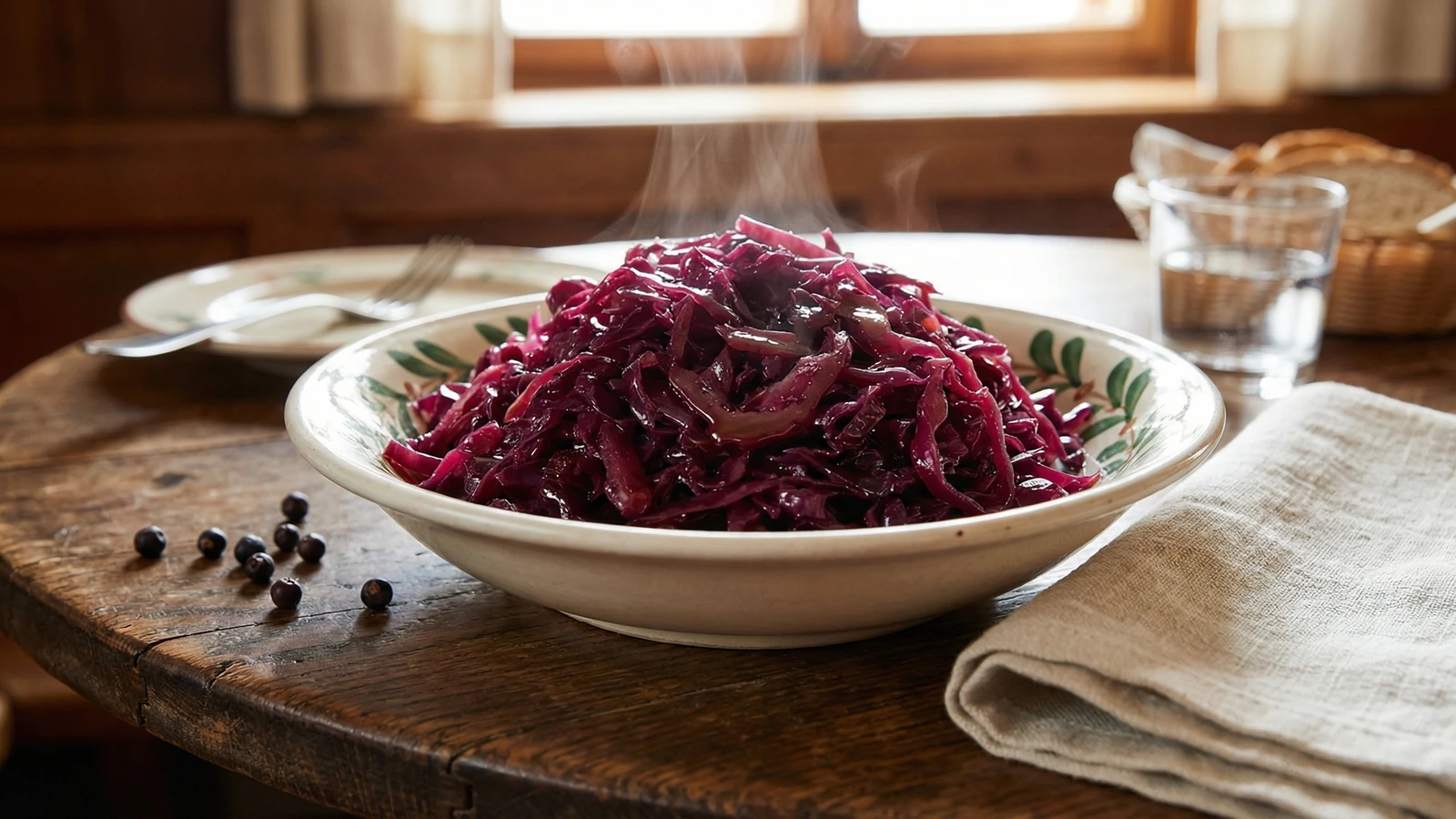
Red cabbage braised low and slow with tart apples, cloves, and red wine until it turns glossy and jewel-dark. The side dish that makes a Christmas roast feel like Christmas.
Every Christmas in my grandmother Eva's kitchen, the Rotkraut went on the stove before anything else. Before the goose was seasoned, before the Knodel dough was started, before the good tablecloth came out. The cabbage needed time, and Eva gave it time. The whole house in Deal would fill with that smell: cloves, red wine, apples softening into something you could barely see anymore but could taste in every bite.
Rotkraut is one of those dishes that people think they know until they taste one made properly. What most people have had is cabbage boiled into submission and stained purple. Real Rotkraut, braised slowly with tart apples and a careful hand with the vinegar, is nothing like that. It's glossy and tender, sweet and sharp at the same time, with a depth that comes from patience and good ingredients. The cabbage holds its texture but gives up its stubbornness. The apples disappear into the mixture entirely, leaving behind a gentle fruitiness you can't quite place if nobody tells you it's there.
This is the dish that belongs next to a golden roast goose or a crisp-skinned duck on a December table. It sits beside Serviettenknodel or Erdapfelknodel and ties the whole plate together. Without Rotkraut, an Austrian Christmas roast is just meat. With it, the meal makes sense. The sweet-sour cabbage cuts through the richness of the fat, wakes up your palate, and makes you reach for another forkful of everything.
Rotkraut has been a fixture of Austrian winter cooking since at least the 18th century, when red cabbage cultivation spread across the cooler Alpine and Danubian regions. The dish reflects a characteristically Austrian approach to preserving and flavoring: acid (vinegar) for color and bite, sugar for warmth, and spices like cloves and juniper that arrived through Habsburg trade routes. In Austria, the name Rotkraut (red herb) is standard, while across the border in parts of Germany the same dish is called Blaukraut (blue herb). Austrians will tell you the names describe two different dishes, though the distinction has more to do with national pride than the contents of the pot.
Quantity
1 medium head (about 1 kg)
Quantity
2 tablespoons
Quantity
1 medium
finely diced
Quantity
2
peeled, cored, and sliced
Quantity
3 tablespoons
Quantity
2 tablespoons
Quantity
150ml
Quantity
150ml
Quantity
3
Quantity
1
Quantity
1 small
Quantity
3
lightly crushed
Quantity
1 tablespoon
Quantity
to taste
| Ingredient | Quantity |
|---|---|
| red cabbage | 1 medium head (about 1 kg) |
| lard or unsalted butter | 2 tablespoons |
| onionfinely diced | 1 medium |
| tart apples (Boskoop or Bramley)peeled, cored, and sliced | 2 |
| red wine vinegar | 3 tablespoons |
| granulated sugar | 2 tablespoons |
| dry red wine | 150ml |
| water or light beef broth | 150ml |
| whole cloves | 3 |
| bay leaf | 1 |
| cinnamon stick | 1 small |
| juniper berrieslightly crushed | 3 |
| redcurrant jelly (Ribiselmarmelade) | 1 tablespoon |
| salt and freshly ground black pepper | to taste |
Quarter the cabbage and cut out the tough white core. Shred each quarter finely with a sharp knife. You want strips about three millimeters wide, thin enough that they'll soften into silk during the braise but thick enough to hold their shape. Don't use a food processor. It bruises the cabbage and turns the texture to mush. A sharp knife and five minutes of honest work is what this deserves.
Melt the lard or butter in a heavy pot over medium heat. Lard is traditional and gives the Rotkraut a deeper, rounder flavor, but butter works well. Add the diced onion and cook it gently until it softens and turns translucent, about five minutes. Don't let it color. You're building a sweet, mellow base, not a caramelized one. Sprinkle the sugar over the softened onion and stir until it dissolves and just begins to turn golden. This little bit of caramel adds warmth to the finished dish without making it taste sugary.
Add the shredded cabbage to the pot and toss it through the onions. It will seem like far too much cabbage for the pot. It isn't. It cooks down to about a third of its raw volume. Add the sliced apples, red wine, water or broth, cloves, bay leaf, cinnamon stick, and crushed juniper berries. Stir everything together, bring it to a gentle simmer, then cover the pot and turn the heat down low. You want the quietest simmer you can manage. Lazy bubbles, not rolling ones.
Let the cabbage braise gently for one hour to one hour and fifteen minutes, stirring every twenty minutes or so. The cabbage will collapse slowly, the apples will dissolve into the mixture, and the kitchen will start to smell like cloves and red wine. If the pot looks dry at any point, add a splash of water. The cabbage should be tender, glossy, and sitting in just a little syrupy liquid, not swimming in it and not scorched on the bottom.
Remove the bay leaf, cinnamon stick, and cloves. Stir in the redcurrant jelly until it melts into the cabbage. This is the final balancing act. Taste it now. Rotkraut lives on the edge between sweet and sour. If it's too sharp, add a pinch more sugar. Too flat, a splash more vinegar. You're looking for a gentle acidity that lifts the sweetness of the apples and wine without puckering. Season with salt and pepper. Let it sit off the heat for ten minutes before serving. Like most braises, it improves as it rests.
1 serving (about 220g)
Culinary guides, cultural storytelling, and the editorial depth that makes cooking meaningful.
Discover Culinary ExplorerChef Elsa
Tender Austrian green beans folded into a silky, dill-bright cream sauce built on a proper Einbrenn. The Gasthaus side dish that quietly steals the whole meal.

Chef Elsa
Thin-sliced waxy potatoes layered with garlic-steeped cream and baked low and slow until the top turns golden brown and the kitchen smells like the kind of cooking that makes people wander in from the next room.

Chef Elsa
Silky Viennese mashed potatoes pressed through a ricer, enriched with cold butter and warm milk, finished with a whisper of nutmeg. The quiet side dish that makes the whole plate work.

Chef Elsa
Yesterday's boiled potatoes, coarsely grated and torn in a hot pan with too much butter until the edges go golden and crisp. Farmhouse cooking at its most honest, served straight from the skillet.