Culinary Explorer

A cooking platform built around craft, culture, and the stories behind what we eat.
Discover Culinary Explorer
Dillfisolen

Dillfisolen

Created by

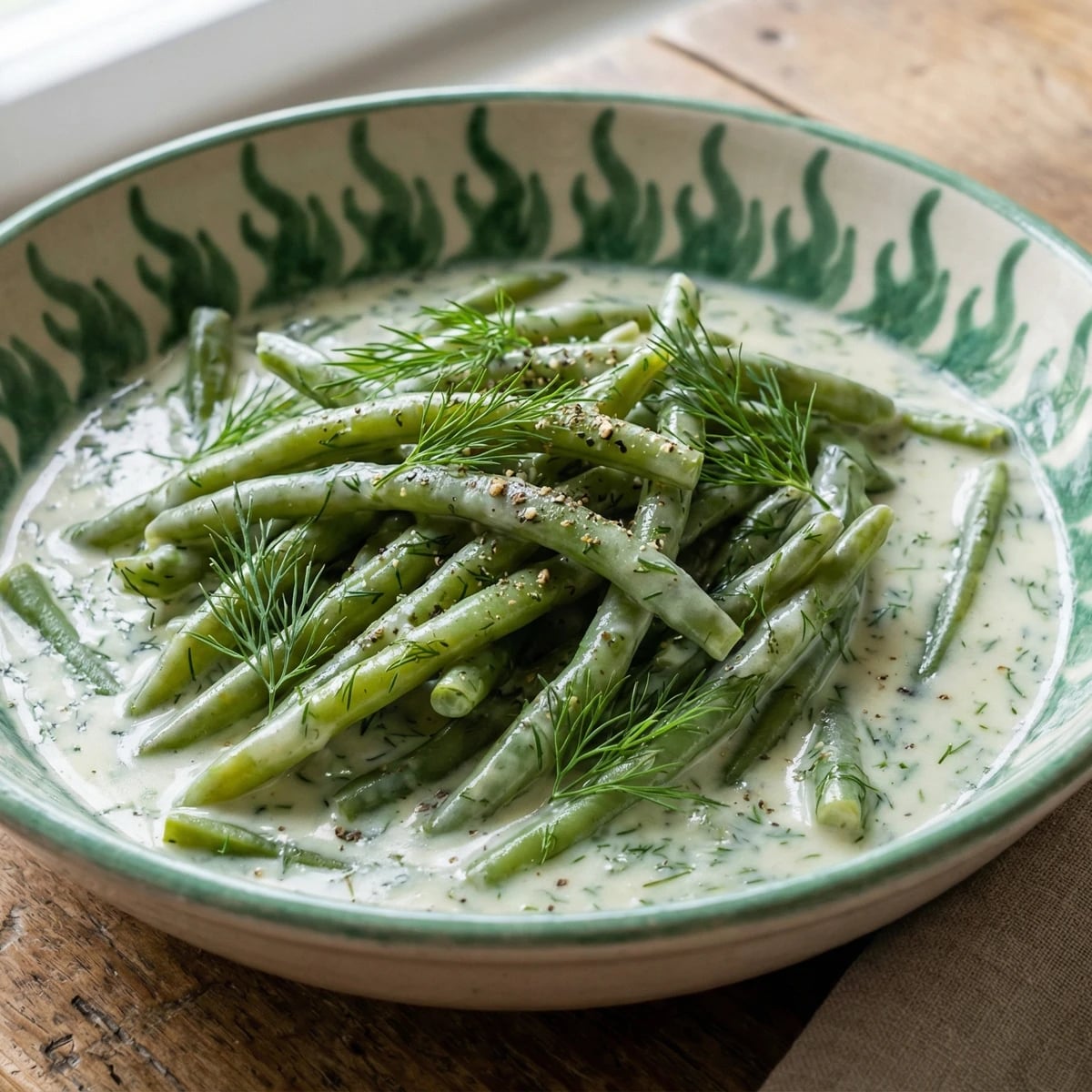
Tender Austrian green beans folded into a silky, dill-bright cream sauce built on a proper Einbrenn. The Gasthaus side dish that quietly steals the whole meal.

Side Dishes
Austrian
Weeknight
Dinner Party
15 min
Active Time
20 min cook35 min total
Yield4 servings

Fisolen is the Austrian word for green beans, and if you say 'Bohnen' instead, you'll get a polite correction in most kitchens south of Passau. Gretel always said that Austrians care about their vegetables more than they get credit for. People think of Schnitzel and Strudel, but the Beilagen, the side dishes, are where you see a cook's real instincts. Dillfisolen is proof of that.

This is one of those dishes I watched my grandmother Eva make so often in her kitchen in Kent that I could describe it from memory before I could cook it myself. She'd top and tail the beans at the table while talking, snap them in half without looking, and have the whole thing finished before you realized she'd started. The sauce is a light Einbrenn, flour cooked in butter just long enough to lose its raw taste, loosened with a splash of broth and finished with sour cream and a generous handful of fresh dill. That's it. Five ingredients doing the work of twenty because each one is right.

The technique matters here. You cook the beans until they're tender but still have a little resistance when you bite through. Austrians don't do al dente the way Italians do, but they don't boil vegetables into submission either. The sauce should coat each bean lightly, creamy and loose, not thick like a paste. And the dill goes in at the end, off the heat, so it stays bright green and fragrant instead of turning muddy. This is good Austrian home cooking at its most honest: seasonal, simple, and deeply satisfying when you get it right.

Fisolen entered Austrian kitchens through the same cultural crossroads that shaped much of the cuisine. The word itself likely traces to the Italian fagioli, a reminder that Habsburg Vienna absorbed ingredients and vocabulary from across its empire. The tradition of serving vegetables in cream sauces thickened with an Einbrenn (a cooked flour-and-butter roux) is a cornerstone of Austrian Hausmannskost, the hearty home cooking that defined middle-class Viennese tables in the 19th and early 20th centuries. Dillfisolen became a classic pairing with Tafelspitz and boiled beef, where the bright anise edge of dill cuts through the richness of the broth-soaked meat.

The technique, the tradition, and the story behind every dish.

Discover Culinary Explorer

Ingredients

fresh green beans

Quantity

500g

topped, tailed, and snapped in half

unsalted butter

Quantity

1 tablespoon

plain flour

Quantity

1 tablespoon

beef or vegetable broth

Quantity

150ml

warm

sour cream (Sauerrahm)

Quantity

150ml

shallot

Quantity

1 small

finely diced

white wine vinegar

Quantity

1 teaspoon

granulated sugar

Quantity

1/2 teaspoon

salt

Quantity

to taste

white pepper

Quantity

to taste

freshly ground

fresh dill

Quantity

3 tablespoons

finely chopped

Equipment Needed

  • Largepot for boiling the beans
  • Wide saucepan (24cm)
  • Whisk

Instructions

  1. 1

    Cook the beans

    Bring a large pot of well-salted water to a rolling boil. Add the green beans and cook for six to eight minutes, depending on their thickness. You want them tender enough that they yield when you bite through, but not so soft they bend limply when you lift one with a fork. Austrian cooks don't serve crunchy green beans, but they don't serve mush either. Test one at six minutes and trust your teeth. Drain the beans and set them aside. Don't rinse them with cold water. You want them warm when they meet the sauce.

    Salt the water generously, like pasta water. This is your only chance to season the beans from the inside. The sauce seasons the outside.
  2. 2

    Build the Einbrenn

    Melt the butter in a wide saucepan over medium heat. When it foams, add the diced shallot and cook for two minutes, stirring, until it turns translucent and soft. Don't let it color. Sprinkle the flour over the shallot and stir constantly for about one minute. The flour needs to cook out its raw, pasty taste, but you don't want it to brown. It should smell nutty and clean. This is your Einbrenn, the cooked roux that gives the sauce its body without making it heavy.

    White pepper, not black, is traditional here. It keeps the sauce looking clean and the flavor is gentler. Viennese cooks reach for white pepper more often than you'd expect.
  3. 3

    Add the broth

    Pour in the warm broth gradually, whisking as you go. Add it in three or four additions, whisking smooth between each one. If you dump it all in at once, you'll get lumps and you'll spend the next five minutes chasing them with a whisk. The sauce will thicken quickly. Let it simmer gently for two minutes, stirring, until it's smooth and lightly coats the back of a spoon.

  4. 4

    Finish the cream sauce

    Remove the pan from the heat. Stir in the sour cream until the sauce turns silky and even. Add the vinegar and sugar. The vinegar is not about making the sauce sour. It's there to sharpen everything, to give the cream a little edge that keeps the dish from tasting flat. The sugar balances it. Season with salt and white pepper, then taste. The sauce should be creamy, bright, and just barely tangy. If it tastes like it needs something, it probably needs another pinch of salt.

    Take the pan off the heat before adding the sour cream. If it boils after the Sauerrahm goes in, the cream can split and your sauce will turn grainy instead of smooth.
  5. 5

    Combine and add the dill

    Fold the warm beans into the sauce, turning them gently until each one is coated. Place the pan back over low heat for one minute, just long enough to warm everything through. Remove from the heat and scatter the chopped dill over the top, folding it in with a few gentle turns. The dill goes in last because heat destroys its flavor and its color. You want it bright and fragrant, not dull and khaki. Taste once more for salt.

  6. 6

    Serve immediately

    Spoon the Dillfisolen into a warm serving bowl or directly alongside the main course. This belongs next to Tafelspitz, roast pork, or a simple breaded Schnitzel. A final pinch of fresh dill on top if you have it. Mahlzeit!

Chef Tips

  • Use the freshest beans you can find. Dillfisolen is a summer dish, and it's at its best when the Fisolen come from the market the same morning. If the beans are thick, woody, and dull green, wait for better ones or make something else.
  • Don't substitute dried dill. I know it's in your spice drawer and it's convenient, but dried dill tastes like hay compared to fresh. Fresh dill is what makes this dish sing. If you can't find it, hold off on making Dillfisolen until you can.
  • Gretel always said a little vinegar is the secret to any Austrian cream sauce. Not enough that you taste acid, just enough that the sauce wakes up. Start with half a teaspoon and add more if it needs it.
  • Leftover Dillfisolen reheats gently on the stove with a splash of broth to loosen the sauce. It won't be quite as bright as the first day, but it's still good. Honest food doesn't have to be precious.

Advance Preparation

  • The beans can be boiled up to a day ahead and stored in the fridge. Bring them to room temperature before folding into the sauce.
  • The Einbrenn and cream sauce can be made an hour ahead and kept warm on very low heat. Add the dill only when you're about to serve.

Frequently Asked Questions

Nutrition Information

1 serving (about 215g)

Calories
155 calories
Total Fat
10 g
Saturated Fat
6 g
Trans Fat
0 g
Unsaturated Fat
4 g
Cholesterol
30 mg
Sodium
390 mg
Total Carbohydrates
14 g
Dietary Fiber
4 g
Sugars
5 g
Protein
4 g

Note: Chef personas and recipes are created with AI assistance. Cook with care: follow safe food-handling practices, check doneness with a thermometer when needed, and adapt for allergies and your kitchen.

Where cooking meets culture.

Culinary guides, cultural storytelling, and the editorial depth that makes cooking meaningful.

Discover Culinary Explorer

More from Austrian Side Dishes & Knödel

Browse the full collection