
Chef Lupita
Acambaritas de Acámbaro
Guanajuato's daily bread from Acámbaro, a small glazed roll built on pata, enriched with manteca de cerdo, and baked until the top shines lightly for merienda.
A cooking platform built around craft, culture, and the stories behind what we eat.
Created by
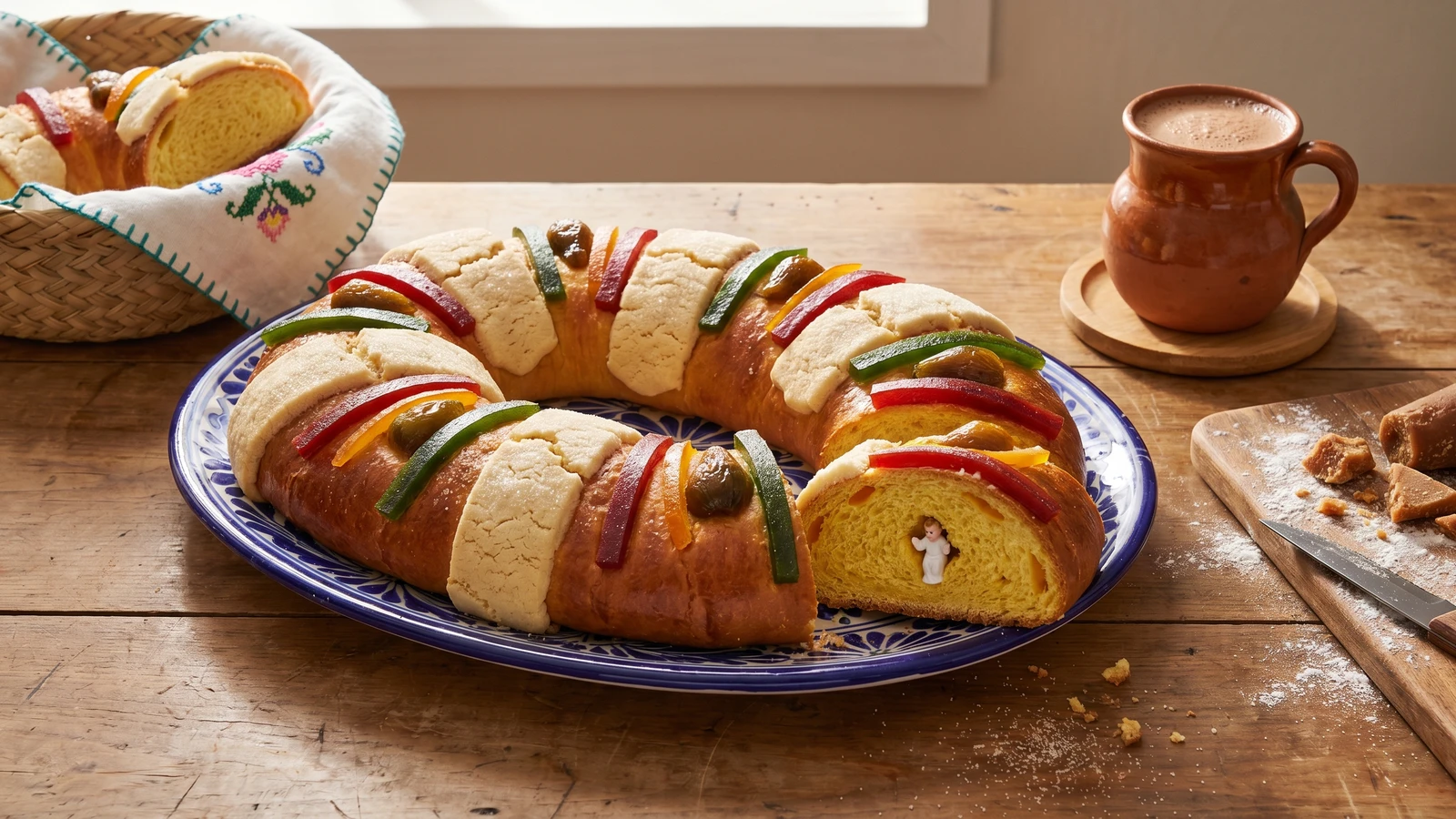
Central Mexico's Epiphany bread, orange-scented and enriched with butter, crowned with ate, candied fig, and sugar paste, then cut at the table to decide who hosts the tamales.
Ciudad de Mexico and Puebla, in the central highlands, are where the rosca most Mexican families recognize took its bakery shape: a soft oval ring, perfumed with orange, dressed with ate de guayaba, ate de membrillo, candied fig, and those pale sugar bands that crack under the knife.
This is panaderia work, not cake work. The dough has eggs, milk, sugar, and butter, so the yeast moves slowly. Let it. A rushed rosca is dense in the wrong way, heavy instead of tender. The orange zest and agua de azahar carry the perfume. The ate brings the fruit of Mexican convent kitchens and market stalls. In Puebla, put it on Talavera. In the Valle de Mexico, set it in the middle of the table and let everyone pretend they are not nervous about finding the nino.
I learned to judge rosca from panaderos who watched the oven like it owed them money. They knew by the color at the edge of the sugar paste, by the way the ring rose in the center, by the smell of butter and orange when the oven door opened. This is not comida de un solo Mexico, but the central highland panaderia gave it the form that travels across the country every January. Cada estado, su propia cocina, and every family its own argument about who must bring the tamales.
My mother used to slice slowly and smile when someone hit the figurine with the knife. Then she would say, February 2 is coming. Saber cocinar es saber vivir.
Rosca de Reyes descends from European Epiphany breads associated with January 6, brought to New Spain during the colonial period and adapted through Mexican panaderia traditions. By the 19th and early 20th centuries, urban bakeries in Ciudad de Mexico and Puebla had established the oval enriched bread decorated with candied fruit as the form now recognized nationally. The hidden nino links the January 6 celebration to Dia de la Candelaria on February 2, when the person who finds the figurine traditionally provides tamales.
Quantity
4 1/2 cups, plus more for dusting
Quantity
2 1/4 teaspoons
Quantity
3/4 cup
warm but not hot
Quantity
2/3 cup
Quantity
4
room temperature
Quantity
2 teaspoons
finely grated
Quantity
1 tablespoon
Quantity
1 teaspoon
Quantity
10 tablespoons
softened
Quantity
1 tablespoon
for the bowl
Quantity
1 egg beaten with 1 tablespoon milk
Quantity
3/4 cup
for the sugar paste
Quantity
1/2 cup
for the sugar paste
Quantity
6 tablespoons
softened, for the sugar paste
Quantity
1
for the sugar paste
Quantity
1 teaspoon
for the sugar paste
Quantity
1/2 cup
cut into strips
Quantity
1/2 cup
cut into strips
Quantity
6
halved or sliced
Quantity
1/4 cup
cut into strips
Quantity
2 tablespoons
for sprinkling
Quantity
2 to 4
washed and dried
| Ingredient | Quantity |
|---|---|
| bread flour | 4 1/2 cups, plus more for dusting |
| active dry yeast | 2 1/4 teaspoons |
| whole milkwarm but not hot | 3/4 cup |
| granulated sugar | 2/3 cup |
| large eggsroom temperature | 4 |
| orange zestfinely grated | 2 teaspoons |
| orange blossom water | 1 tablespoon |
| kosher salt | 1 teaspoon |
| unsalted buttersoftened | 10 tablespoons |
| vegetable oilfor the bowl | 1 tablespoon |
| egg wash | 1 egg beaten with 1 tablespoon milk |
| all-purpose flourfor the sugar paste | 3/4 cup |
| powdered sugarfor the sugar paste | 1/2 cup |
| unsalted buttersoftened, for the sugar paste | 6 tablespoons |
| large egg yolkfor the sugar paste | 1 |
| vanilla extractfor the sugar paste | 1 teaspoon |
| ate de guayabacut into strips | 1/2 cup |
| ate de membrillocut into strips | 1/2 cup |
| candied figshalved or sliced | 6 |
| candied orange peelcut into strips | 1/4 cup |
| granulated sugarfor sprinkling | 2 tablespoons |
| heatproof plastic or porcelain baby figurineswashed and dried | 2 to 4 |
Stir the yeast into the warm milk with 1 tablespoon of the sugar. Let it stand for 10 minutes, until the surface looks foamy. If it stays flat, your yeast is dead. Start again. Bread does not forgive sleepy yeast.
In the bowl of a stand mixer, combine the bread flour, remaining sugar, eggs, orange zest, orange blossom water, salt, and foamy yeast mixture. Mix with the dough hook on low until the flour is hydrated, then knead on medium for 6 minutes. The dough will be firm at first. Let it work.
Add the softened butter one tablespoon at a time, waiting until each piece disappears into the dough before adding the next. This is enriched bread, not a quick cake. The dough should turn glossy, elastic, and slightly sticky, pulling away from the sides while still clinging to the bottom of the bowl.
Scrape the dough into a lightly oiled bowl. Cover and let it rise in a warm spot for 1 1/2 to 2 hours, until doubled. Press it gently with one finger. If the dent fills back slowly, it is ready.
While the dough rises, beat the all-purpose flour, powdered sugar, butter, egg yolk, and vanilla into a soft paste. Divide it into 6 pieces and pat each into a flat strip. This is the white band that cracks slightly in the oven. It should be tender, not dry.
Turn the dough onto a lightly floured board. Press out the air and roll it into a thick rope, about 30 inches long. Join the ends firmly to make an oval ring. Transfer to a parchment-lined sheet pan. Open the center wider than you think; the dough will swell. Hide the baby figurines from the underside, pushing them into the dough and sealing the openings well.
Brush the rosca with egg wash. Lay the sugar paste strips across the ring like bands, leaving space between them. Set the ate de guayaba, ate de membrillo, candied figs, and candied orange peel between the bands. Sprinkle the sugar paste lightly with granulated sugar. Do not bury the bread under decoration. The fruit marks the crown; the bread is still the work.
Let the shaped rosca rise for 45 to 60 minutes, until puffy and light. Heat the oven to 350F during the last 20 minutes. If the kitchen is cold, give it time. No me vengas con atajos. Enriched dough moves slowly because butter, eggs, and sugar make yeast work harder.
Bake for 25 to 30 minutes, rotating the pan once, until the bread is deep golden and the underside sounds hollow when tapped. The sugar paste should be pale and set, the fruit glossy at the edges, and the kitchen should smell of orange, butter, and bakery ovens.
Cool the rosca on the pan for 15 minutes, then move it to a rack. Serve the same day, sliced at the table on January 6 with chocolate caliente. Whoever finds the nino brings the tamales for Dia de la Candelaria on February 2. That obligation is not decoration. It is the point.
1 serving (about 135g)
Culinary guides, cultural storytelling, and the editorial depth that makes cooking meaningful.
Discover Culinary ExplorerChef Lupita
Guanajuato's daily bread from Acámbaro, a small glazed roll built on pata, enriched with manteca de cerdo, and baked until the top shines lightly for merienda.

Chef Lupita
Michoacan's Tinguindin aguacatas are flat, leaf-scored sweet breads made with harina de trigo, piloncillo, anise, and manteca de cerdo, shaped by hand for the wood oven.

Chef Lupita
From Ajijic on Lake Chapala, Pan Tachihual is a lightly sweet wedding loaf built with harina de trigo, harina de maiz, piloncillo, manteca, anise, and the old Guadalajara pata.

Chef Lupita
Comitán's pan de yema shaped into little pigs, birds, and rabbits, a Chiapas bakery bread rich with egg yolks, manteca de cerdo, and anís, baked golden on hoja de plátano.