Culinary Explorer

A cooking platform built around craft, culture, and the stories behind what we eat.
Discover Culinary Explorer
Root Vegetable Kinpira (根菜のきんぴら, Konsai no Kinpira)

Root Vegetable Kinpira (根菜のきんぴら, Konsai no Kinpira)

Created by

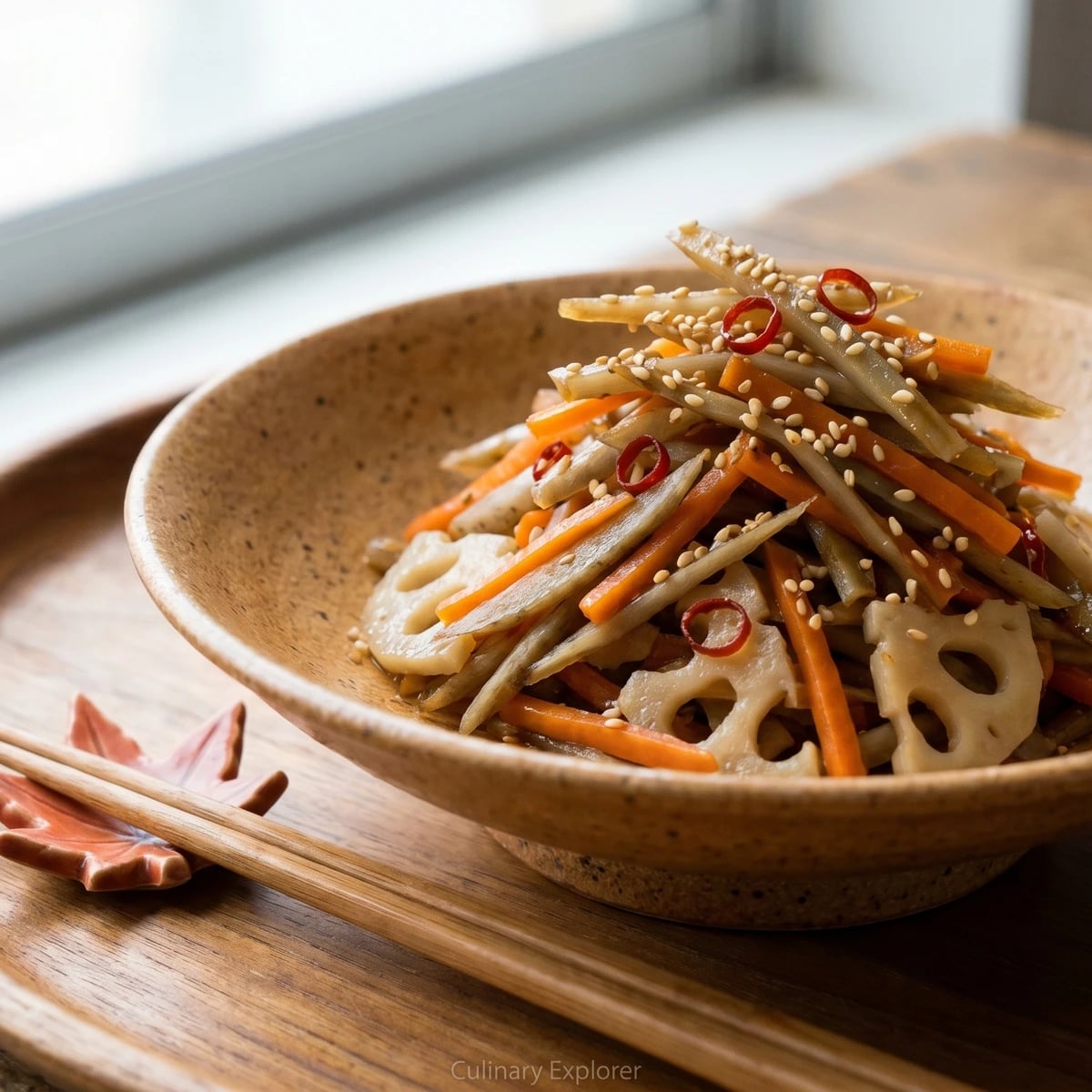
Kinpira is autumn earth cut thin, moved quickly in sesame oil, then seasoned until the roots shine. The whole dish turns on the cut, not the difficulty.

Side Dishes
Japanese
Weeknight
Comfort Food
Make Ahead
20 min
Active Time
15 min cook35 min total
Yield4 servings

Root vegetables ask for a knife before they ask for a pan. Gobō, carrot, and renkon are firm, plain-looking things, not much interested in flattering you. Cut them thin and evenly, though, and they become quick food: crisp-tender, glossy, and full of the quiet sweetness that belongs to autumn.

Kinpira is one of those dishes people make sound busier than it is. Sauté the roots in sesame oil, add soy, mirin, sake, and a little chili, then cook until the liquid is nearly gone. That's the method. The reason is just as simple: the first oil wakes up the earthy aroma, and the final reduction leaves the seasoning clinging to the vegetables instead of drowning them. Nothing hidden, nothing heavy.

The one detail that decides it is the thickness. If the pieces are fat, the outside over-seasons before the center softens. If they're thin and even, they cook quickly and keep their bite, the way we want them beside rice, soup, and one softer dish. Leave a little crunch. Root vegetables should still remember the field.

Kinpira takes its name from Sakata no Kinpira, a strong warrior figure popular in Edo-period puppet theater, and the name came to suggest dishes with a sturdy, spicy character. Gobō kinpira became especially common in Edo, where burdock's earthy flavor and firm texture suited the urban appetite for soy-simmered side dishes. The method later expanded naturally to other roots, including carrot and renkon, while keeping the same brisk sauté and reduction.

The technique, the tradition, and the story behind every dish.

Discover Culinary Explorer

Ingredients

gobō (burdock root)

Quantity

1 medium (about 150g)

scrubbed and cut into thin matchsticks

carrot

Quantity

1 medium (about 120g)

peeled if needed and cut into thin matchsticks

renkon (lotus root)

Quantity

1 small section (about 150g)

peeled, quartered lengthwise, and thinly sliced

rice vinegar

Quantity

1 tablespoon

for soaking the renkon

toasted sesame oil

Quantity

1 tablespoon

neutral oil

Quantity

1 teaspoon

soy sauce

Quantity

2 tablespoons

mirin

Quantity

1 1/2 tablespoons

sake

Quantity

1 tablespoon

sugar

Quantity

1 teaspoon

dried red chili

Quantity

1 small

seeds removed and sliced into thin rounds

toasted white sesame seeds

Quantity

1 tablespoon

Equipment Needed

  • Sharp knife or kinpira peeler
  • Wide frying pan or sauté pan
  • Bowl for brief soaking
  • Fine-mesh strainer

Instructions

  1. 1

    Cut the roots

    Scrub the gobō well, then scrape it lightly with the back of your knife if the skin is rough. Cut the gobō and carrot into thin matchsticks, about 3mm thick. Peel the renkon, quarter it lengthwise, and slice it thinly. Even cutting is not decoration here. It lets the roots cook at the same pace, so the dish stays crisp-tender instead of half raw and half tired.

    Don't peel the gobō too aggressively. Much of its good earthy aroma sits close to the skin, and washing away character is a very tidy way to make a dull dish.
  2. 2

    Soak briefly

    Put the sliced renkon in a bowl of cold water with the rice vinegar for five minutes, then drain well. Put the gobō in plain cold water for five minutes only, then drain and pat dry. The short soak keeps harshness and discoloration in check, but a long soak steals the very earthiness you came for.

  3. 3

    Mix the seasoning

    Stir together the soy sauce, mirin, sake, and sugar in a small bowl until the sugar loosens. Mix this before the pan is hot because kinpira moves quickly. If you start measuring over the skillet, the roots will wait for you by overcooking. They are patient in the ground, less so in oil.

  4. 4

    Sauté the vegetables

    Heat the sesame oil and neutral oil in a wide frying pan over medium-high heat. Add the chili, then the gobō, carrot, and renkon. Stir and toss for three to four minutes, until the roots smell nutty and the edges look a little glossy. The oil step matters because it coats the cut surfaces and brings out aroma before the liquid seasoning goes in.

  5. 5

    Reduce the sauce

    Pour in the seasoning mixture and keep the vegetables moving. Cook for four to six minutes, until the liquid has almost disappeared and the roots are shiny, not wet. This is the kinpira finish: the seasoning should cling in a thin glaze. If the pan goes dry before the roots are tender, add a spoonful of water and keep cooking.

  6. 6

    Finish and rest

    Turn off the heat and fold in the toasted sesame seeds. Let the kinpira rest five minutes before serving. It settles as it cools, and the flavor becomes rounder. Serve warm, at room temperature, or tucked into a bento the next day.

Chef Tips

  • Choose gobō that is firm, slender, and not hollow at the center if the cut end is visible. Limp burdock tastes tired, and no amount of soy will make it glistening fresh.
  • Use a wide pan, not a deep pot. Kinpira needs quick evaporation so the seasoning reduces into a glaze instead of turning the roots into a simmered stew.
  • A kinpira peeler or julienne slicer is useful, but a sharp knife is better if it gives you even pieces. The tool is only there to make the cut honest.
  • This is a make-ahead side by nature. It tastes good warm, but often better after it has cooled and the soy-mirin glaze has settled into the cuts.

Advance Preparation

  • Cut the vegetables up to two hours ahead and keep the gobō and renkon in their soaking water until ready to cook. Drain and dry them well before they meet the oil.
  • Finished kinpira keeps three days refrigerated in a covered container. Serve it cool or let it return to room temperature, since hard reheating softens the crunch.
  • Toast the sesame seeds ahead and keep them in a sealed jar. Add them at the end so their aroma stays clear.

Frequently Asked Questions

Nutrition Information

1 serving (about 110g)

Calories
150 calories
Total Fat
6 g
Saturated Fat
1 g
Trans Fat
0 g
Unsaturated Fat
5 g
Cholesterol
0 mg
Sodium
500 mg
Total Carbohydrates
21 g
Dietary Fiber
4 g
Sugars
6 g
Protein
3 g

Note: Chef personas and recipes are created with AI assistance. Cook with care: follow safe food-handling practices, check doneness with a thermometer when needed, and adapt for allergies and your kitchen.

Where cooking meets culture.

Culinary guides, cultural storytelling, and the editorial depth that makes cooking meaningful.

Discover Culinary Explorer

More from Vegetable Nimono & Kinpira

Browse the full collection