Chef Joost
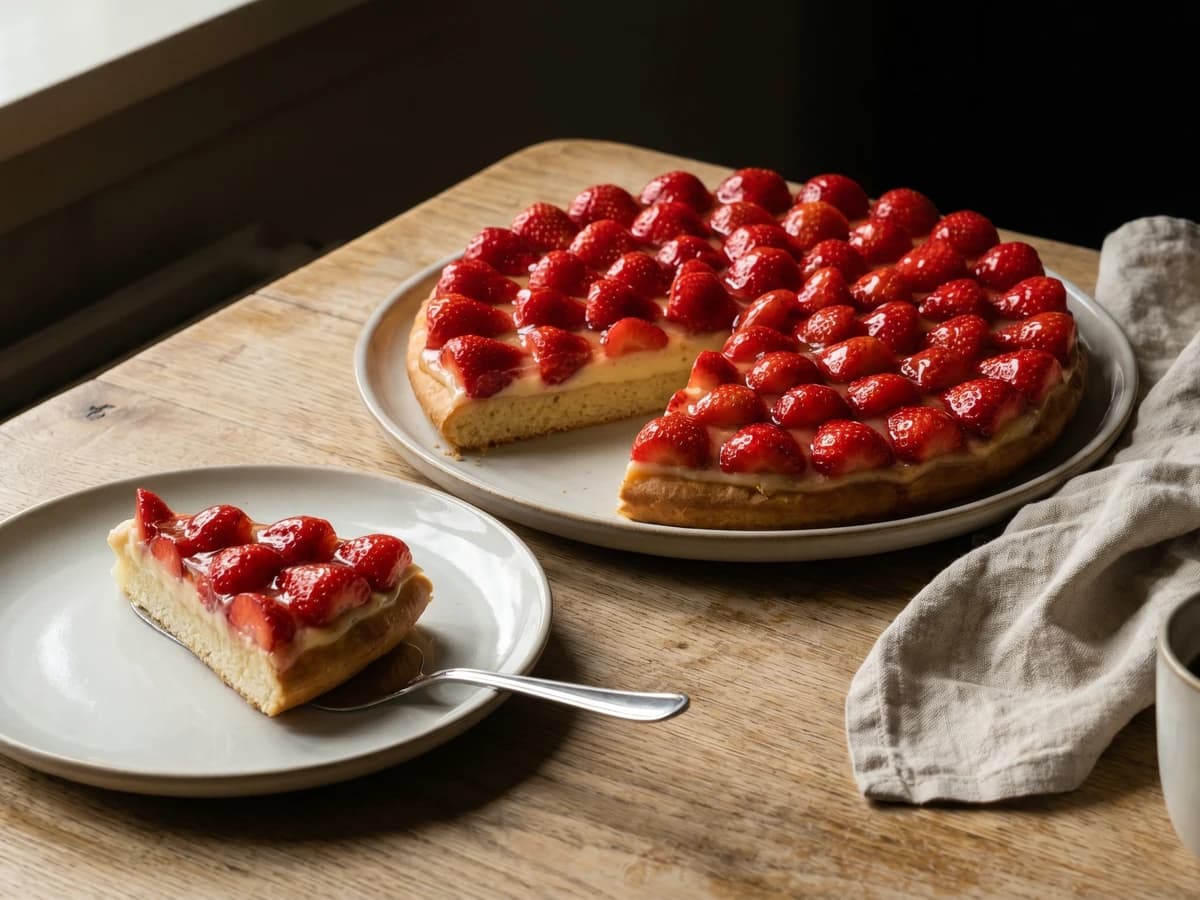
Aardbeienvlaai (Limburg Strawberry Vlaai)
The summer vlaai that politely breaks Limburg's baked-fruit rule: soft gistdeeg, cool pastry cream, and strawberries left fresh because June knows better than the oven.
A cooking platform built around craft, culture, and the stories behind what we eat.

Created by
Roomboterkoek is the Dutch coffee-table argument won by butter: flat, dense, golden-cracked, and simple enough that the ingredient list has nowhere to hide.
The name already tells you the law of the dish. Room means cream, boter is butter, and koek sits in that useful Dutch borderland between cake and cookie where half our best baking lives. Roomboterkoek is not a sponge, not a tart, not a polite little biscuit. It is a flat round of butter held together by just enough flour and sugar to make it sliceable.
In my grandmother's second notebook, boterkoek appears on the birthday pages, beside coffee quantities and the names of aunts who took sugar. That is where it belongs: not on a pastry-school cart, but on the table after someone has cut it into narrow wedges because every Dutch cook knows a large slice is bravado. But let me tell you a secret: the whole recipe is a test of honesty. Use margarine and you have made something flat and sweet. Use real roomboter, cream butter, and the cake becomes what it promised to be.
There is almost no technique here, for obvious reasons: the butter has already done most of the thinking. Still, hou het altijd simpel, always keep it simple, is not permission to be careless. Cream the butter and sugar until soft, press the dough evenly into the tin, brush it with egg, and score the top with a fork so the golden surface catches in little ridges. Then stop baking while the centre still feels tender. A dry boterkoek is a sad legal document. A proper one is smeuig, moist and dense, and it cuts like butter's own confession.
Boterkoek belongs to the Dutch coffee-table tradition documented in household cookbooks of the nineteenth and twentieth centuries, where small rich slices were served with koffie at birthdays, Sunday visits, and family gatherings. The word roomboter, cream butter, became especially meaningful after margarine entered Dutch kitchens through the large Brabant firms of Jurgens and Van den Bergh in the late nineteenth century; naming real butter was a way of drawing the line. The dish's plainness is the point: it records a Dutch baking habit in which richness comes from one good ingredient, not from decoration.
Quantity
250g
softened, plus extra for the tin
Quantity
200g
Quantity
1/4 teaspoon
Quantity
1 teaspoon or 1 sachet
Quantity
1/2 teaspoon
finely grated
Quantity
250g
Quantity
1
beaten and divided
Quantity
20g
| Ingredient | Quantity |
|---|---|
| unsalted roombotersoftened, plus extra for the tin | 250g |
| fine caster sugar | 200g |
| fine sea salt | 1/4 teaspoon |
| vanilla extract or vanilla sugar | 1 teaspoon or 1 sachet |
| lemon zest (optional)finely grated | 1/2 teaspoon |
| plain flour | 250g |
| eggbeaten and divided | 1 |
| blanched almonds (optional) | 20g |
Heat the oven to 175C. Butter a 24cm round boterkoek tin or a shallow tart tin and line the base with baking paper. A low tin matters here; boterkoek should bake as a flat golden round, not climb like cake pretending to be better bred.
Beat the softened roomboter with the sugar, salt, vanilla, and lemon zest if using, until pale and soft, about two minutes. Add half the beaten egg and beat again. The mixture should look creamy, not airy; this is a dense koek, and too much enthusiasm with the mixer gives it ideas above its station.
Add the flour and mix just until no dry streaks remain. The dough will be thick, soft, and slightly sticky. Do not knead it; flour worked too hard makes a tough boterkoek, and toughness is not a virtue at the coffee table.
Press the dough evenly into the prepared tin with damp fingers or the back of a spoon, smoothing it right to the edges. Brush the top with the remaining beaten egg, then drag a fork lightly across the surface in a diamond pattern. Press almonds around the edge if you like. The scoring is not decoration only; those shallow ridges brown first and give each slice its little golden map.
Bake for 22 to 27 minutes, until the top is deep golden at the edges and set in the centre, but still tender when pressed lightly. Do not wait for it to feel firm in the oven. It sets as it cools, and if you bake until certainty, you have already gone too far.
Let the boterkoek cool in the tin for at least one hour before lifting it out and cutting it into narrow wedges. This is the hardest instruction in the recipe, because warm butter and sugar smell persuasive. Resist. Cut too early and it smears; wait, and it slices cleanly while staying soft within.
1 serving (about 60g)
Culinary guides, cultural storytelling, and the editorial depth that makes cooking meaningful.
Discover Culinary ExplorerChef Joost
The summer vlaai that politely breaks Limburg's baked-fruit rule: soft gistdeeg, cool pastry cream, and strawberries left fresh because June knows better than the oven.

Chef Joost
A Limburg vlaai is not a pie trying to be grand. It is a thin yeast-dough round, fruit-bright and generous, made for birthdays, coffee, and second slices.

Chef Joost
The December bakery counter made small: cold leafed pastry wrapped around lemon-scented amandelspijs, brushed gold, and scattered with almonds so one person gets the whole holiday in both hands.
Chef Joost
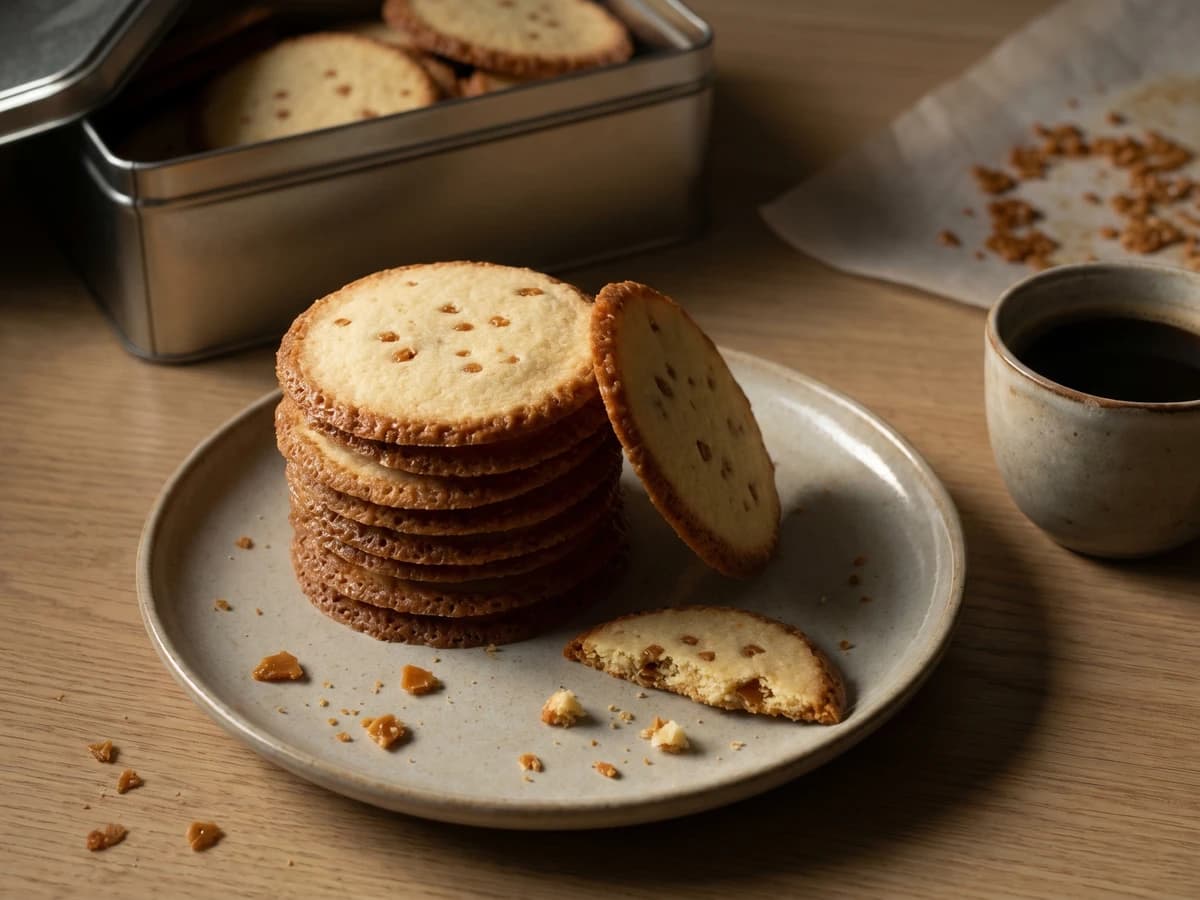
A thin Amsterdam cookie carrying a cog ship in its name: caramelized butter dough, almond nougatine, and a 1934 contest that turned municipal pride into something for coffee.