Chef Joost
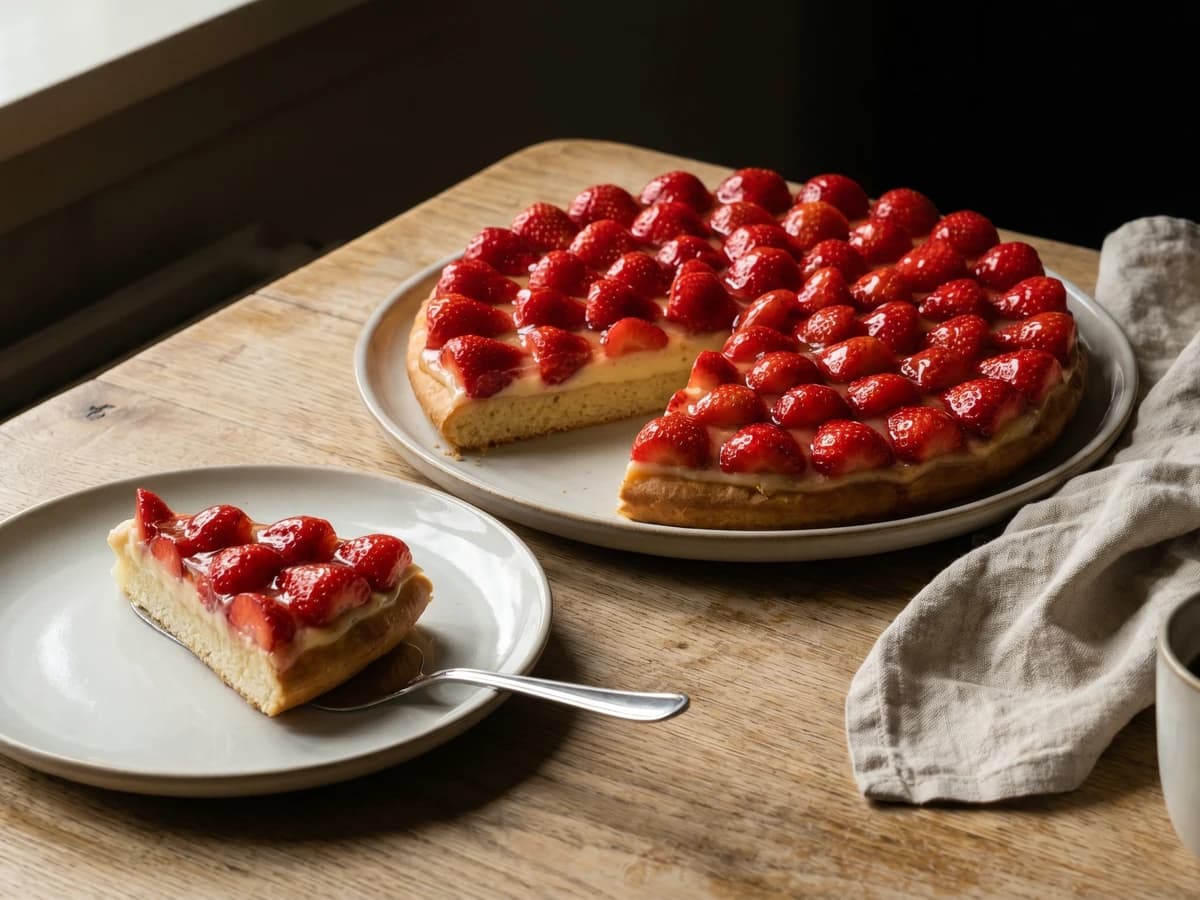
Aardbeienvlaai (Limburg Strawberry Vlaai)
The summer vlaai that politely breaks Limburg's baked-fruit rule: soft gistdeeg, cool pastry cream, and strawberries left fresh because June knows better than the oven.
A cooking platform built around craft, culture, and the stories behind what we eat.

Created by
The little Dutch almond cookie whose name tells the truth: bitter at the edge, sweet at the centre, and old enough to sit beside coffee without asking permission.
In my grandmother's second notebook, bitterkoekjes had no grand heading. They sat between apple compote and a note about starching linen, as if chewy almond cookies were household infrastructure. On visits, they appeared on a small plate beside the sugar cubes, never announced, never decorated, and always counted by the children before the adults had finished pouring coffee.
The name already tells you what matters. Bitterkoekje means little bitter cookie, and the bitterness is not a flaw to be corrected but the whole point: the almond's shadow, the marzipan smell with a dry little bite behind it. But let me tell you a secret: Dutch baking has always understood restraint better than spectacle. A bitterkoekje is only ground almonds, sugar, egg white, and bitter almond aroma, yet it carries the same old European family resemblance as the French macaron and the Italian amaretto biscuit. The Dutch version, for obvious reasons, chose the plain coat and kept the chew.
What I want from you is not technique worship. Hou het altijd simpel, always keep it simple. Grind the almonds fine with the sugar, use just enough egg white to make a sticky paste, and let the piped rounds stand until their surfaces dull before baking. That short rest gives you the crackled top and the soft middle. A dish without its story is half a meal, but a bitterkoekje without its chew is just a missed appointment.
Bitterkoekjes belong to the wider European almond macaroon family that spread through early modern baking from Italy and France into the Low Countries, where almonds were a prized import long before they became supermarket ordinary. Dutch household books from the nineteenth and early twentieth centuries regularly include bitter almond biscuits and puddings made with broken bitterkoekjes, a useful thrift practice because stale cookies soften beautifully in custard. Their bitter note traditionally came from bitter almonds, but modern home bakers usually use regulated bitter almond extract or almond extract for safety and consistency.
Quantity
200g
Quantity
200g
Quantity
2 large, about 65g
at room temperature
Quantity
1/4 teaspoon
Quantity
1/2 teaspoon bitter almond extract or 1 teaspoon almond extract
Quantity
1 tablespoon
for a slightly drier shell
| Ingredient | Quantity |
|---|---|
| blanched almonds or fine almond flour | 200g |
| caster sugar | 200g |
| egg whitesat room temperature | 2 large, about 65g |
| fine salt | 1/4 teaspoon |
| bitter almond extract or almond extract | 1/2 teaspoon bitter almond extract or 1 teaspoon almond extract |
| rice flour or cornstarch (optional)for a slightly drier shell | 1 tablespoon |
Line two baking trays with parchment and heat the oven to 170C. Bitterkoekjes spread a little, not wildly, but they need space to settle into round, low domes. Give each one room and the oven will do the tidying for you.
If using whole blanched almonds, pulse them with half the sugar until very fine, stopping before the mixture turns oily. If using almond flour, rub it together with the sugar in a bowl to break up lumps. The sugar keeps the almond from becoming paste too early, which is the small piece of kitchen sense the recipe depends on.
Stir in the remaining sugar, salt, bitter almond extract, and one egg white. Add the second egg white gradually until you have a thick, sticky paste that drops slowly from a spoon. You may not need every last teaspoon. Almonds drink differently from bag to bag, like old sailors, and the bowl tells you when to stop.
Spoon the paste into a piping bag fitted with a plain round tip, or use two teaspoons if you prefer a more grandmotherly cookie. Pipe or drop rounds about 3 centimetres wide, then let them stand uncovered for 25 to 30 minutes, until the surface looks dull rather than wet. This is where the crackle begins.
Bake for 12 to 14 minutes, rotating the tray once, until the tops are lightly golden, crackled, and set at the edges while the centres still feel a little soft if nudged. Do not chase deep colour. Almond goes from toasted to sulking faster than politeness allows.
Let the cookies cool on the tray for 10 minutes before lifting them to a rack. They firm as they cool, but the middle should stay chewy. Store them in a tin once fully cool; the Dutch word trommel, tin, is doing useful work here, because a jar lets them dry too quickly.
1 serving (about 18g)
Culinary guides, cultural storytelling, and the editorial depth that makes cooking meaningful.
Discover Culinary ExplorerChef Joost
The summer vlaai that politely breaks Limburg's baked-fruit rule: soft gistdeeg, cool pastry cream, and strawberries left fresh because June knows better than the oven.

Chef Joost
A Limburg vlaai is not a pie trying to be grand. It is a thin yeast-dough round, fruit-bright and generous, made for birthdays, coffee, and second slices.

Chef Joost
The December bakery counter made small: cold leafed pastry wrapped around lemon-scented amandelspijs, brushed gold, and scattered with almonds so one person gets the whole holiday in both hands.
Chef Joost
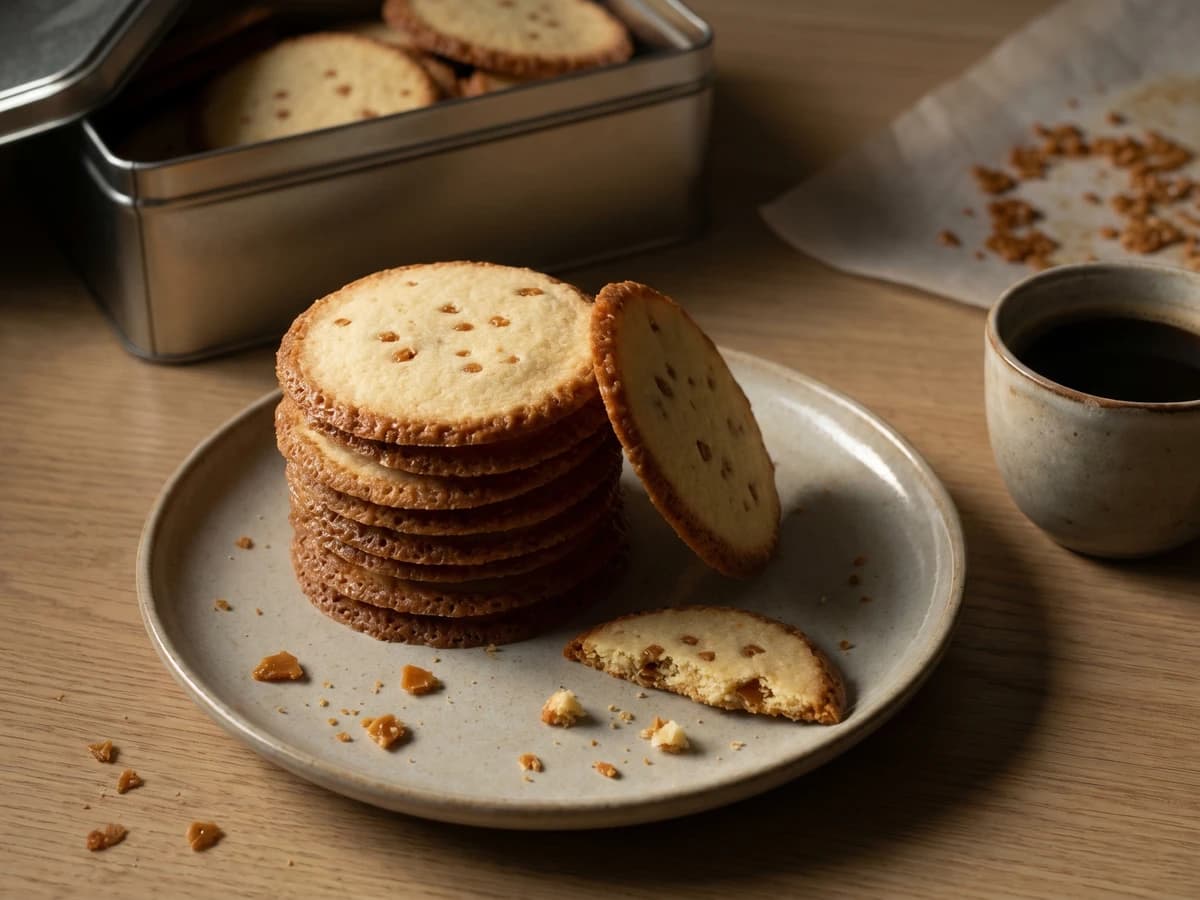
A thin Amsterdam cookie carrying a cog ship in its name: caramelized butter dough, almond nougatine, and a 1934 contest that turned municipal pride into something for coffee.