
Chef Juliana
Ambrosia Baiana
You think curdled milk means you ruined dessert. Good. Tonight you'll do it on purpose, with lemon, yolks, cravo, and sugar, until the pot turns into golden gruminhos.
A cooking platform built around craft, culture, and the stories behind what we eat.
Created by
You think this is too simple to teach, or too Brazilian to get right. Good. Two real ingredients, equal slices, and the dessert after a pê-efe is solved.
You, with the quiet isso não é pra mim, may look at a dessert this simple and still tense up. I know that look. I had it over pots far more dramatic than this, and over onions I managed to ruin as a grown woman. Cozinhar não é dom, é um aprendizado. Here the lesson is almost rude in its simplicity: choose good goiabada, choose good queijo Minas, cut them so neither one bullies the other.
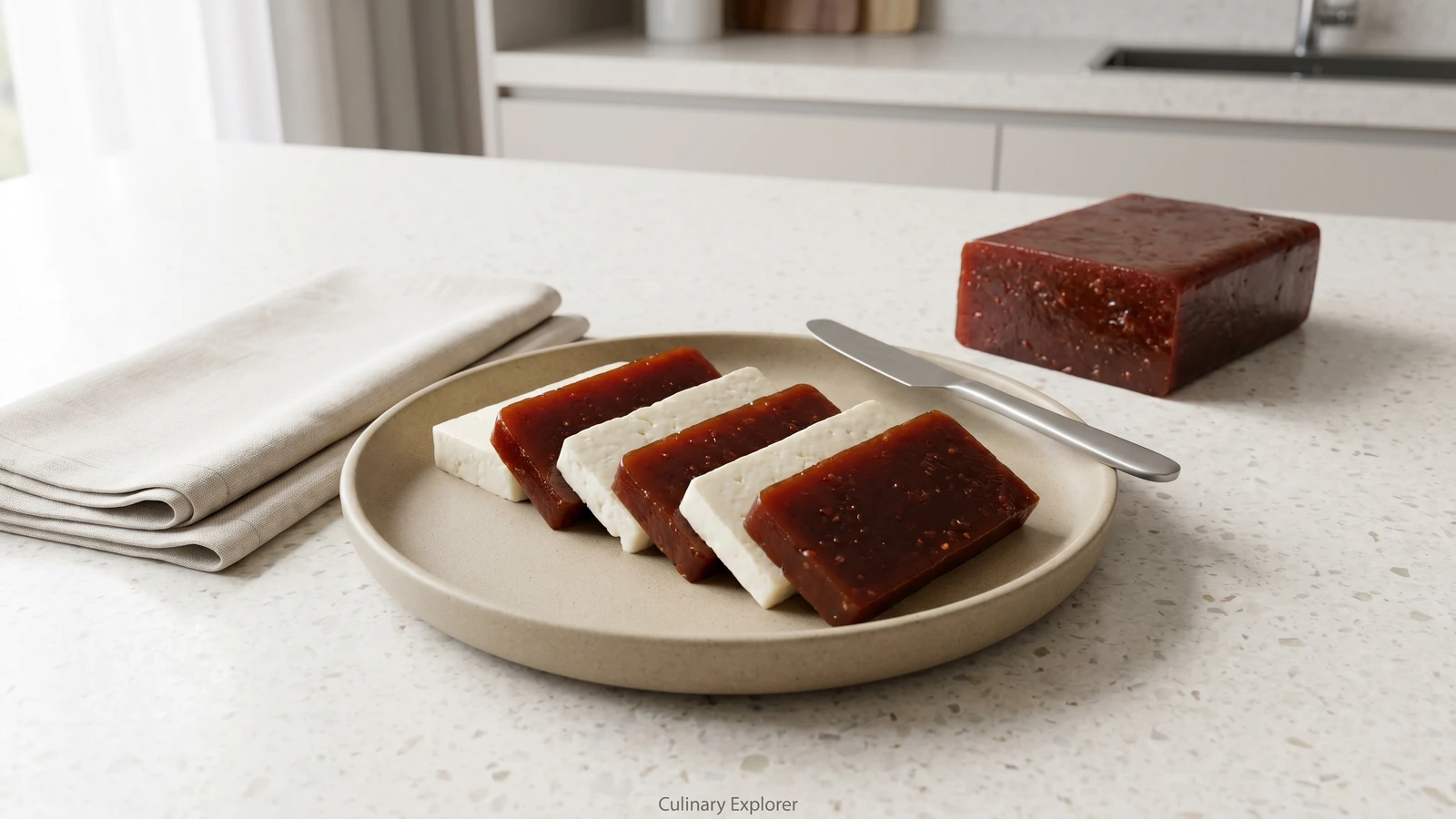
Romeu e Julieta sits at the end of the same table as the pê-efe. First a gente resolves dinner: arroz soltinho, feijão from scratch, a piece of meat or an egg, something green. Then dessert doesn't need a performance. It needs comida de verdade, guava cooked down with sugar until it holds its shape, and a fresh Minas cheese with soft milkiness and a little salt.
The method is the why. Same thickness means the sweet guava and the salty cheese meet in the same bite. Bring the cheese out of the fridge for a few minutes so it stops tasting cold and sleepy. Use a clean, slightly warm knife so the goiabada cuts instead of smearing. Anota aí: if the label reads like a factory trick, buy another block. This is preserve, not a powdered fantasy.
Pairing cheese with fruit preserves is an old habit in Minas Gerais, where colonial gold-rush farm pantries turned guava, quince, fig, orange, and milk into sweets that could last beyond the harvest. The nickname Romeu e Julieta, comparing the salty white cheese and the red goiabada to Shakespeare's lovers, spread in twentieth-century Brazil, but the kitchen logic is older than the name. São Bartolomeu and Sabará are known for doceiras who keep preserve traditions alive, while Serra da Canastra and Araxá carry some of the cheese identity that makes the pairing feel Mineiro before it feels literary.
Quantity
200 g (about 7 oz)
firm block, cut into slices about 1 cm or 1/2 inch thick
Quantity
200 g (about 7 oz)
cut into slices about 1 cm or 1/2 inch thick
| Ingredient | Quantity |
|---|---|
| goiabada cascãofirm block, cut into slices about 1 cm or 1/2 inch thick | 200 g (about 7 oz) |
| queijo Minas frescalcut into slices about 1 cm or 1/2 inch thick | 200 g (about 7 oz) |
Pick a dark, glossy goiabada cascão and a queijo Minas frescal that smells clean and milky. Read the label on the goiabada. Guava and sugar should be doing the work, not a parade of flavorings pretending to be fruit. This dessert has nowhere to hide, which is the point.
Take the queijo Minas out of the fridge 10 minutes before serving. It should feel cool, not icy, and the surface should look dry, not sweaty. Fridge-cold cheese tastes sleepy beside the goiabada; leave it out for hours and it weeps. A gente wants milkiness, not a puddle.
Cut the goiabada and the cheese into slices the same thickness, about 1 cm or 1/2 inch. Dip the knife in hot water and wipe it dry between cuts if the goiabada sticks. Equal thickness is not fuss, it's balance: too much guava bullies the cheese, too much cheese dulls the sweet.
Set one slice of queijo Minas beside one slice of goiabada, or stack them slightly offset so both are easy to grab. Keep the portions small enough for one bite. The whole dish works because the red guava and the pale cheese arrive together, sweet, salty, soft, firm. Separate them and you've made a snack plate, not Romeu e Julieta.
Serve right away on a plain plate, with no syrup, no sprinkle, no little tower trying to impress the furniture. This is desgourmetizar in the best sense: comida de verdade, cut cleanly, put on the table, eaten after rice, beans, a piece of meat or an egg, and something green.
1 serving (about 67g)
Culinary guides, cultural storytelling, and the editorial depth that makes cooking meaningful.
Discover Culinary ExplorerChef Juliana
You think curdled milk means you ruined dessert. Good. Tonight you'll do it on purpose, with lemon, yolks, cravo, and sugar, until the pot turns into golden gruminhos.

Chef Juliana
You are not ruining the milk. You're curdling it on purpose, slowly, until sugar, eggs, cinnamon, and patience turn cheap ingredients into dessert.

Chef Juliana
You think curdled milk means failure. Not here. Milk, yolks, sugar, and lemon cook into golden curds in amber whey, a Minas sweet where the ponto teaches the whole recipe.

Chef Juliana
You already trust rice for dinner. Trust it for dessert: cook it gently with milk, coconut, and canela until each grain turns soft, creamy, and impossible to blame on lack of talent.