Chef Juliana
Chimia de Fruta
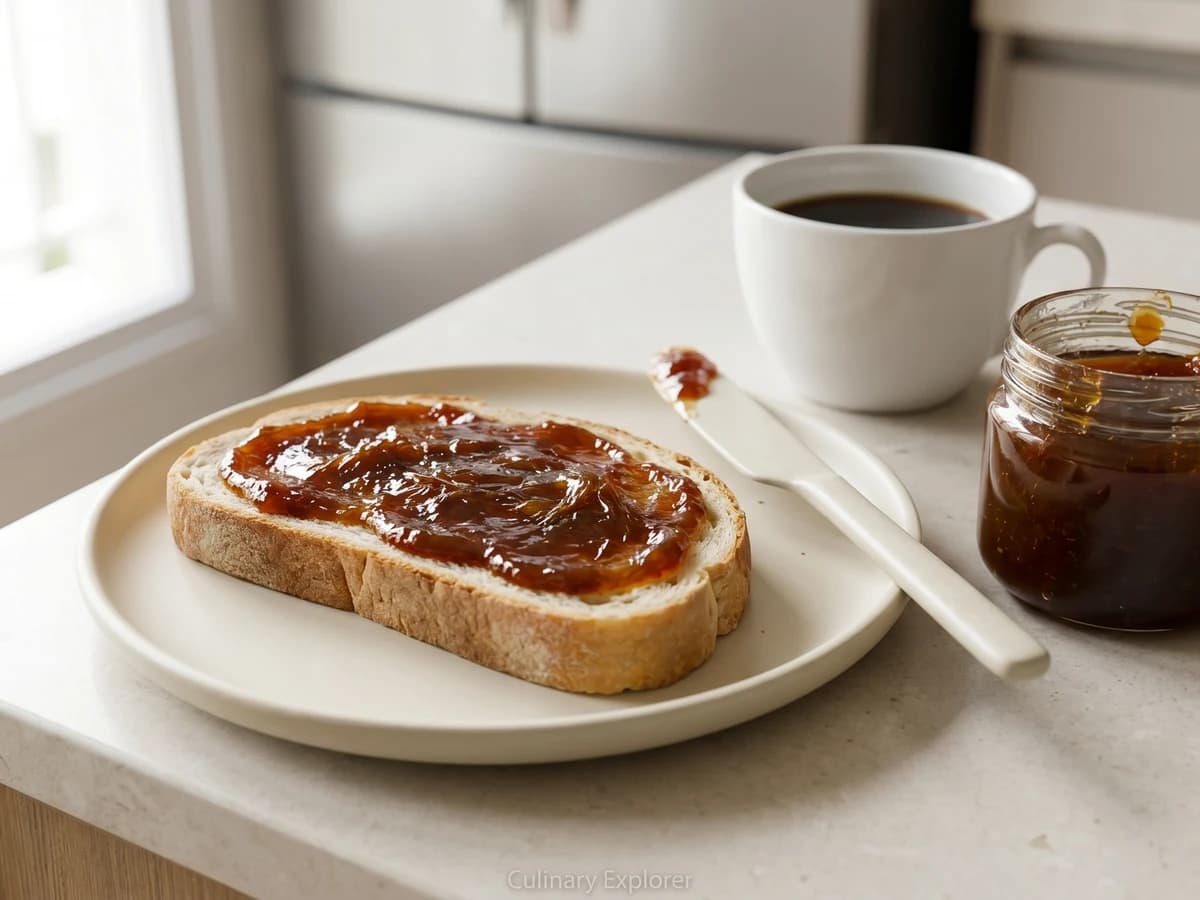
You don't need a factory jar to put something good on bread. Fruit, sugar, lemon, and patience turn into chimia, the kind of comida de verdade that makes breakfast behave.
A cooking platform built around craft, culture, and the stories behind what we eat.
Created by
You don't need a copper pot or a grandmother watching over your shoulder. You need ripe jabuticabas, a heavy pan, and the patience to learn the ponto.
You look at a pile of jabuticabas and hear that little voice: isso não é pra mim. Preserve-making sounds like something from another century, done by women with enormous copper pots and secrets they won't share. Nonsense. Cozinhar não é dom, é um aprendizado, and doce is just fruit, sugar, heat, and attention.
I learned this kind of thing late, writing every step in my caderno because I didn't trust my memory, and the page for ponto was stained before I understood it. That's the whole game here. You cook the berries until they burst and give up their dark juice, then press and strain so the skins and seeds don't boss the texture around. Sugar goes in after, because sugar firms fruit and syrup, and if it goes too early you make the berries work harder than they need to.
This is comida de verdade from the pantry, not a packet, not a purple powder pretending to be fruit. In Minas, doces, compotas, marmeladas, goiabadas, figos em calda, were a farm pantry's way of turning the harvest into months of sweets. A gente can do the home version in a heavy pot on a gas stove. No tacho de cobre required, nobody is grading your romance.
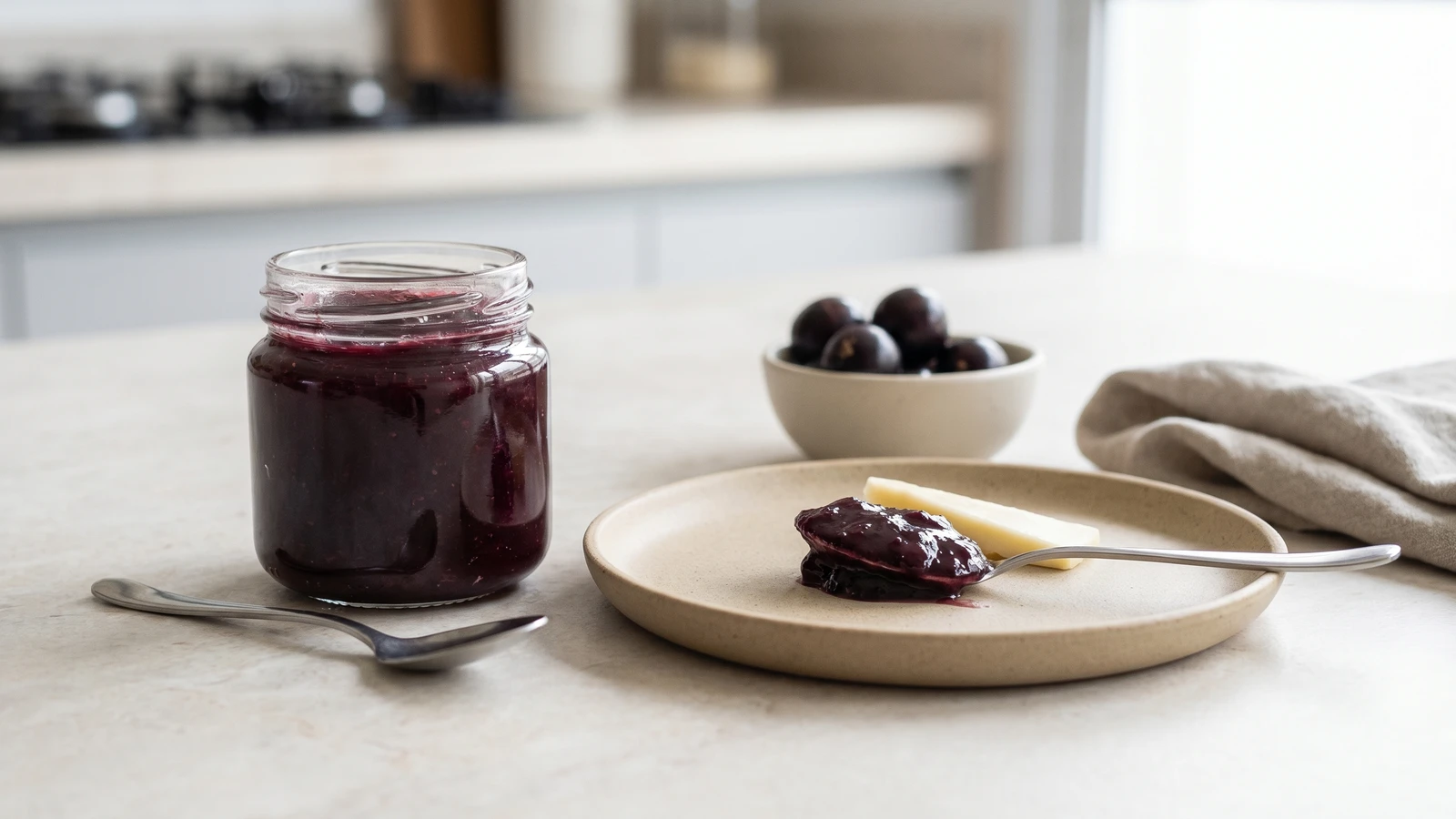
And yes, this belongs near the everyday plate too. The pê-efe solves dinner: rice, beans, an egg or meat, something green. Then a spoon of doce with a slice of queijo Minas solves the sweet at the end without making a production of it. Cook, jar, chill, eat. Anota aí.
Jabuticaba is native to Brazil, and the Sabará variety is named for Sabará, a historic town in Minas Gerais that became famous for the fruit and still celebrates it in local festivals. Mineira doceiras, especially in places such as São Bartolomeu, Sabará, Serra da Canastra, and Araxá, carry a preserve-and-compote tradition tied to colonial farm pantries, where sugar and slow cooking stretched seasonal fruit into the year. The home version uses the same logic in a smaller pot: fruit cooked to ponto, not industrial jelly pretending to be the thing.
Quantity
6 cups
rinsed and drained
Quantity
1 cup
Quantity
2 cups, plus more only if needed
Quantity
2 tablespoons
freshly squeezed
Quantity
1 small pinch
| Ingredient | Quantity |
|---|---|
| fresh jabuticabasrinsed and drained | 6 cups |
| water | 1 cup |
| granulated sugar | 2 cups, plus more only if needed |
| lemon juicefreshly squeezed | 2 tablespoons |
| salt | 1 small pinch |
Choose jabuticabas that are plump, dark purple-black, and shiny, with no sour smell or wrinkled skins. This fruit is best when it's cheap, local, and in season, because jabuticaba does not love a long trip. If the berries are tired, cook something else today and don't blame the recipe.
Put the jabuticabas and water in a heavy 4-liter pot over medium heat. Stir and press them with a wooden spoon as they warm, until the skins split and the pot turns deep purple, about 12 to 15 minutes. You want the fruit to give up its juice before the sugar arrives, because sugar tightens things and makes stubborn fruit even more stubborn.
Lower the heat and simmer until the skins look collapsed and the pale pulp loosens from the seeds, about 10 minutes more. Press a berry against the side of the pot: if the seed slips out easily, you're ready. This little check saves you from fighting the strainer like it's your enemy.
Set a fine strainer over a bowl and pour in the cooked fruit. Press firmly with a spoon to push through the purple juice and soft pulp, scraping the underside of the strainer as you go. Stop when the strainer holds mostly skins and seeds. Press hard, but don't grind the seeds, because crushed seeds can bring bitterness into a doce that did nothing to deserve it.
Measure the strained pulp and juice. For every 2 cups of pulp, use about 1 cup of sugar. Return it to the clean pot with the sugar, lemon juice, and pinch of salt. The lemon wakes up the fruit and helps the set; the salt doesn't make it salty, it makes the berry taste more like itself.
Cook over medium-low heat, stirring often with a wooden spoon, until the doce darkens, thickens, and bubbles slowly, about 25 to 35 minutes. Drag the spoon across the bottom of the pot. When the trail opens and you can see the pan for 1 or 2 seconds before the doce flows back, it's cremoso. Stop there. Too soon and it runs like syrup; too long and you get a stiff paste wondering what happened to its charm.
Spoon the hot doce into clean jars, leaving a little space at the top. Let it cool uncovered until warm, then close and refrigerate. It will thicken as it chills, so don't keep cooking just because it looks a little loose in the pot. Hot sugar lies to anxious cooks. I know. I believed it many times.
Serve a spoonful with queijo Minas, spread it on pão de queijo, swirl it into plain yogurt, or put it beside a simple bolo de fubá. Keep it simple enough that you still taste jabuticaba. That's the point.
1 serving (about 40g)
Culinary guides, cultural storytelling, and the editorial depth that makes cooking meaningful.
Discover Culinary ExplorerChef Juliana
You don't need a factory jar to put something good on bread. Fruit, sugar, lemon, and patience turn into chimia, the kind of comida de verdade that makes breakfast behave.

Chef Juliana
You think preserves belong to grandmothers and copper pots. Wrong. A heavy pot, ripe pumpkin, sugar, coconut, and attention to the ponto get you there.

Chef Juliana
You don't need a copper pan or a grandmother watching your elbow. Green figs, sugar, cloves, and patience make a glossy preserve that waits in the fridge for the next pê-efe.

Chef Juliana
You think this is old-lady magic. It isn't. It's fruit, water, sugar, patience, and the ponto you can see with your own eyes.