
Chef Juliana
Ambrosia Baiana
You think curdled milk means you ruined dessert. Good. Tonight you'll do it on purpose, with lemon, yolks, cravo, and sugar, until the pot turns into golden gruminhos.
A cooking platform built around craft, culture, and the stories behind what we eat.
Created by
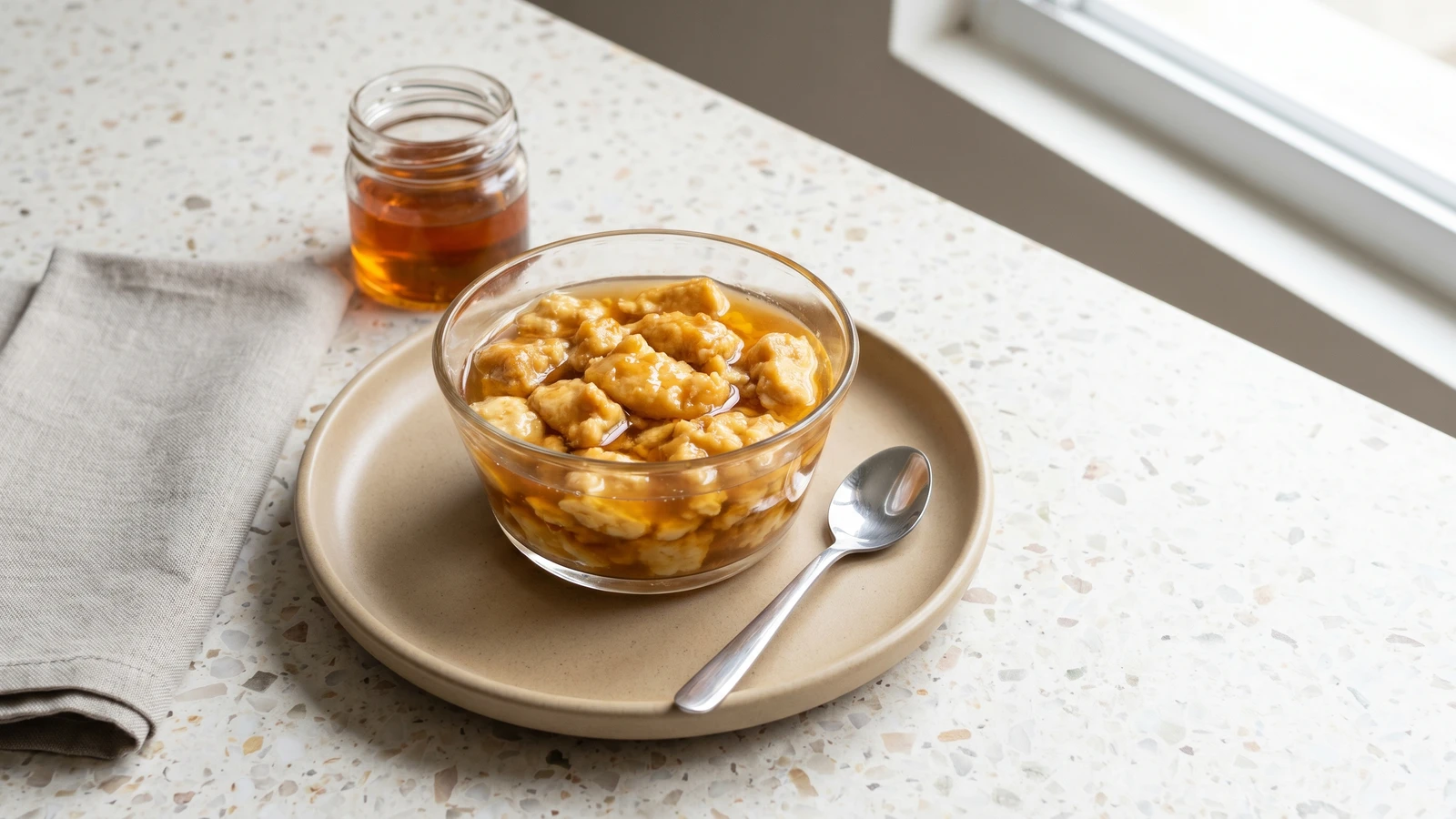
You think curdled milk means failure. Not here. Milk, yolks, sugar, and lemon cook into golden curds in amber whey, a Minas sweet where the ponto teaches the whole recipe.
You look at milk curdled on purpose and your little isso não é pra mim starts clearing its throat. I know that voice. Mine used to be loud enough to ruin onions from across the room. But cozinhar não é dom, é um aprendizado, and ambrosia is proof in a pot: milk, eggs, sugar, lemon, heat, and attention.
This is not the everyday pê-efe, of course. Rice, beans, one simple main, something green, that plate is what resolves dinner and quietly keeps a country itself. But the sweet that comes after it should speak the same language: comida de verdade, ordinary ingredients, no packet, no powdered imitation doing a bad impression of care.
The method is strange only until you understand it. The lemon curdles the milk because a gente wants curds. The low flame keeps them tender instead of rubbery. The long simmer turns the whey amber because sugar and milk need time to darken and deepen. You don't need a copper cauldron or a farm kitchen. You need a heavy pot, a gas flame you can keep low, and the patience to watch the color change.
By the end, you'll have soft golden curds in syrupy whey, the kind of vó dessert people pretend is mysterious because nobody wrote the ponto down. Here it is written. Receita que funciona.
Ambrosia reached Brazil through Portuguese egg-and-sugar sweetmaking, then settled hard in Minas Gerais because colonial farm kitchens had milk, cane sugar, eggs, and time at the stove. In the eighteenth and nineteenth centuries, the gold-rush farm pantry turned harvests into a year of sweets: goiabada cascão in São Bartolomeu, jabuticaba sweets in Sabará, cheese around Serra da Canastra, and doce de leite associated with Araxá. The tacho de cobre is part of many doceiras' work, but this home version follows the same ponto in a heavy pot: golden curds and amber whey, no industrial shortcut pretending to be dessert.
Quantity
4 cups
divided
Quantity
1 1/2 cups
divided
Quantity
2 tablespoons
Quantity
2 large
Quantity
6 large
Quantity
2 tablespoons
strained
Quantity
1
Quantity
3
Quantity
1/8 teaspoon
| Ingredient | Quantity |
|---|---|
| whole milkdivided | 4 cups |
| granulated sugardivided | 1 1/2 cups |
| water | 2 tablespoons |
| eggs | 2 large |
| egg yolks | 6 large |
| fresh lemon juicestrained | 2 tablespoons |
| cinnamon stick | 1 |
| whole cloves (optional) | 3 |
| fine salt | 1/8 teaspoon |
In a bowl, whisk the whole eggs, yolks, 1 cup of the milk, and the salt just until the whites disappear. Stop there. Foam breaks into tiny ragged curds later, and a gente wants soft golden pieces, not sweet scrambled crumbs. Strain the mixture through a fine sieve and keep the lemon juice measured beside it.
Put 1/2 cup of the sugar and the water in a heavy 4-liter pot over medium heat. Cook without stirring until the syrup turns the color of light honey, swirling the pot only if one side colors faster. Turn the heat low and slowly add the remaining 3 cups milk, standing back because it will bubble hard and the caramel may seize. Add the remaining 1 cup sugar, cinnamon, and cloves, then stir until the caramel melts back into the milk. This early caramel gives the ambrosia its gold color and deep milk-sugar flavor; take it too dark and the whole pot goes bitter.
Bring the caramel milk to a gentle simmer, with small bubbles at the edge, not a rolling boil. Stir the lemon juice into the egg mixture and pour it into the pot in a wide spiral. Do not stir for 10 minutes. The acid and gentle heat set the milk and yolks into soft yellow rafts while the whey around them turns clearer and amber. Stir now and you'll break the curds before they learn who they are.
Keep the pot uncovered over a low flame for 45 to 60 minutes. Every 10 minutes, slide a spoon gently around the edge and baste some syrup over the curds, but don't beat the pot into submission. On a gas stove, rotate the pot now and then so one hot spot doesn't scorch the bottom. The curds should firm up, turn golden at the edges, and sit in whey that looks glossy and amber. Low heat lets the sugar reduce and caramelize; high heat gives you rubbery curds and a sad burnt floor.
Drag the spoon through the syrup at the edge of the pot. It should open a clean path for one second before flowing back, thinner than doce de leite but no longer watery. Tilt the pot and watch the curds: they should move slowly and hold together. Stop a little before it looks fully thick, because the syrup tightens as it cools. Ponto is the whole game, anota aí.
Turn off the heat, discard the cinnamon and cloves, and let the ambrosia rest in the pot for 20 minutes. Spoon it into a glass dish, cover, and chill for at least 4 hours, preferably overnight. Resting matters because the curds drink some of the syrup and the flavor settles. Serve cold or at room temperature, with plenty of amber whey spooned over the top.
1 serving (about 150g)
Culinary guides, cultural storytelling, and the editorial depth that makes cooking meaningful.
Discover Culinary ExplorerChef Juliana
You think curdled milk means you ruined dessert. Good. Tonight you'll do it on purpose, with lemon, yolks, cravo, and sugar, until the pot turns into golden gruminhos.

Chef Juliana
You are not ruining the milk. You're curdling it on purpose, slowly, until sugar, eggs, cinnamon, and patience turn cheap ingredients into dessert.

Chef Juliana
You already trust rice for dinner. Trust it for dessert: cook it gently with milk, coconut, and canela until each grain turns soft, creamy, and impossible to blame on lack of talent.

Chef Juliana
You already know how to cook rice. Now let it go sweet, creamy, and soft, with milk, cinnamon, and the good sense to stop before it turns stiff.