
Chef Ally
Beurre Blanc
The Loire Valley's gift to home cooks: cold butter whisked into wine and shallots until it transforms into something silky, bright, and impossibly rich. Perfect simplicity.
A cooking platform built around craft, culture, and the stories behind what we eat.
Created by
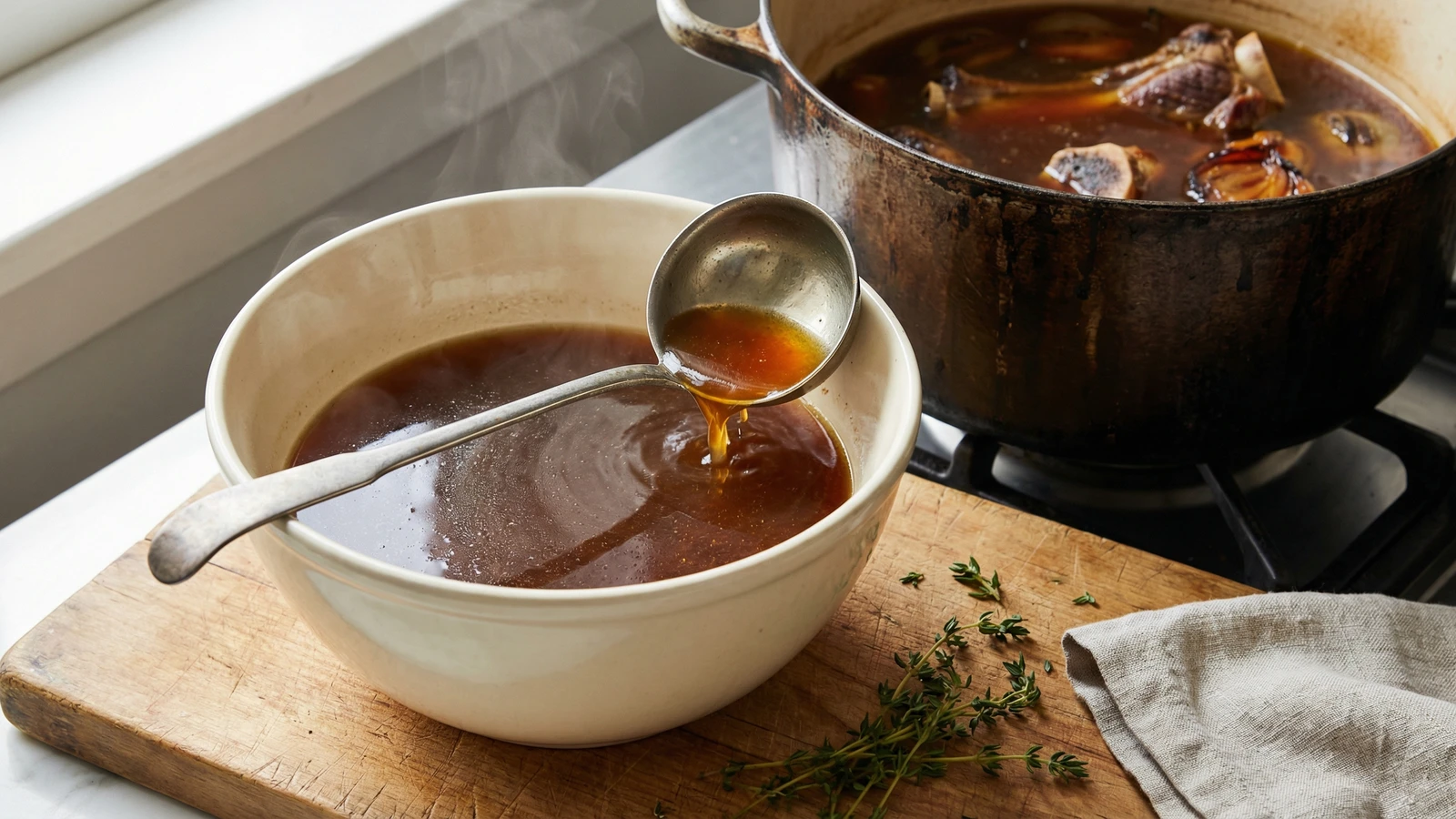
A mahogany elixir of roasted bones and patient simmering that transforms every sauce, braise, and soup it touches. This is the foundation upon which great cooking is built.
Escoffier called stock the foundation of cooking. He was not speaking metaphorically. Without proper stock, your sauces lack body, your braises taste thin, your soups leave something unnamed but missing on the palate. That something is gelatin, the protein released from bones and connective tissue through hours of gentle simmering.
Brown stock differs from white stock in one critical respect: the bones are roasted first. This Maillard browning creates hundreds of flavor compounds that would never exist otherwise. The color deepens to mahogany. The taste gains complexity that speaks of campfires and winter kitchens and Sunday suppers that took all day to prepare.
I won't pretend this is quick work. You'll spend twelve hours simmering, though nearly all of it requires nothing from you except occasional glances. What you receive in return is transformation: the power to turn a simple pan sauce into something that makes guests fall silent mid-bite. A proper stock is an investment that pays dividends across dozens of future meals.
Make this on a weekend when you'll be home anyway. Read a book. Do your laundry. Let the stock burble quietly on the back burner while life continues around it. By evening, you'll have something no store can sell you: the honest foundation of real cooking.
Quantity
8 pounds
Quantity
2 pounds
Quantity
2 tablespoons
Quantity
3 medium
quartered, skin on
Quantity
4 medium
scrubbed and cut into 3-inch pieces
Quantity
4
cut into 3-inch pieces
Quantity
3 tablespoons
Quantity
2 cups
Quantity
1
halved crosswise
Quantity
6 sprigs
Quantity
4 sprigs
Quantity
2
Quantity
1 teaspoon
Quantity
6 quarts, plus more as needed
| Ingredient | Quantity |
|---|---|
| beef bones (mix of marrow, knuckles, neck) | 8 pounds |
| oxtail or beef shank (optional) | 2 pounds |
| vegetable oil | 2 tablespoons |
| yellow onionsquartered, skin on | 3 medium |
| carrotsscrubbed and cut into 3-inch pieces | 4 medium |
| celery stalkscut into 3-inch pieces | 4 |
| tomato paste | 3 tablespoons |
| dry red wine | 2 cups |
| head of garlichalved crosswise | 1 |
| fresh thyme | 6 sprigs |
| fresh parsley | 4 sprigs |
| bay leaves | 2 |
| whole black peppercorns | 1 teaspoon |
| cold water | 6 quarts, plus more as needed |
Preheat your oven to 425°F. Spread the beef bones and oxtail in a single layer across two large rimmed baking sheets. Don't crowd them. Bones touching each other will steam instead of brown, and browning is everything here. Roast for 45 minutes to an hour, turning once halfway through, until deeply bronzed on all sides. You're looking for the color of strong coffee, not pale tan.
While bones roast, toss onions, carrots, and celery with the vegetable oil in a large bowl. When bones have twenty minutes remaining, scatter vegetables around them on the baking sheets. Continue roasting until vegetables char at the edges and the onion layers separate and blacken slightly. This caramelization builds complexity you cannot achieve any other way.
Push bones and vegetables aside to create a clear spot on each baking sheet. Dollop the tomato paste directly onto the hot metal. Spread it thin with the back of a spoon. Return to the oven for ten minutes until the paste darkens from bright red to brick brown. This brief roasting removes the raw, tinny taste and concentrates the tomato's natural sugars.
Transfer bones and vegetables to your largest stockpot. Set the baking sheets across two burners over medium heat. Pour one cup of wine into each pan. As the wine hits the hot metal, use a wooden spoon to scrape up every particle of caramelized fond clinging to the surface. This brown residue is pure concentrated flavor. Pour this precious liquid into your stockpot. Don't leave a drop behind.
Add the halved garlic head, thyme, parsley, bay leaves, and peppercorns to the pot. Cover everything with the cold water. The liquid should rise at least two inches above the bones. Cold water is essential: it extracts proteins gradually, allowing impurities to coagulate and rise as skimmable foam rather than dispersing into cloudy broth.
Set the pot over medium-high heat. Watch closely as it approaches a simmer. Gray foam will bloom on the surface. Skim it away with a ladle or large spoon, working patiently until the foam turns white and diminishes. This takes fifteen to twenty minutes of attention. Never let the stock reach a rolling boil. Boiling emulsifies fat into the liquid, creating permanently cloudy stock.
Reduce heat to the lowest setting that maintains a lazy simmer. You want to see a bubble rise to the surface every few seconds, no more. The surface should barely tremble. Let this continue for ten to twelve hours. Yes, hours. Great stock cannot be rushed. Check occasionally and add hot water if the level drops below the bones. The kitchen will smell increasingly of roasted meat and promises kept.
Set a fine-mesh strainer over a large clean pot or heatproof container. Ladle the stock through gently. Do not press on the solids or pour the dregs. Those last bits contain sediment that clouds your work. You should have roughly four quarts of mahogany-colored liquid. When cool, it will set like soft gelatin. That wobble is your proof of success.
Let stock cool uncovered for one hour, then refrigerate overnight. The fat will solidify into a protective cap on the surface. Lift it off in pieces and discard, or save it for cooking potatoes. Beneath lies your stock: deeply colored, intensely flavored, and rich with body. Taste it. Season with salt only when you use it in a specific recipe, never before storage.
Divide the stock into practical portions. I prefer one-cup and two-cup containers for flexibility. Leave headspace for expansion. Freeze for up to six months. For small amounts, freeze in ice cube trays, then transfer cubes to freezer bags. This liquid gold transforms pan sauces, braises, risottos, and soups from adequate to extraordinary.
1 serving (about 240g)
Culinary guides, cultural storytelling, and the editorial depth that makes cooking meaningful.
Discover Culinary ExplorerChef Ally
The Loire Valley's gift to home cooks: cold butter whisked into wine and shallots until it transforms into something silky, bright, and impossibly rich. Perfect simplicity.

Chef Ally
A quiet, refined vinaigrette built on the delicate acidity of champagne vinegar, soft enough for butter lettuces and elegant enough for your best dinner party, yet simple enough for any Tuesday.

Chef Ally
A silky white sauce of butter, flour, and milk, perfumed with nutmeg and made honest by the quality of your dairy. This is the foundation upon which a hundred dishes rest.

Chef Dean
A glossy, deeply savory pan sauce built from caramelized mushrooms and shallots, finished with cream and fresh thyme. This is the sauce that transforms a Tuesday pork chop into something worth remembering.