
Chef Lupita
Arroz a la Oaxaqueña
Oaxaca's red rice, stained with tomato and fried in lard, steamed with carrots, ejotes, black beans, and epazote. The side that anchors a Oaxacan family meal and earns its place beside the main.
A cooking platform built around craft, culture, and the stories behind what we eat.

Created by
Oaxaca's Christmas bread stuffing, built on stale bolillo, roasted poblanos, apples, prunes, and orange zest, baked in a clay cazuela until the top crisps gold and the inside drinks the broth.
This is a Oaxacan dish. Not a Mexican dish, a Oaxacan one. Relleno de pan belongs to the Christmas table in the Valles Centrales, where it sits next to the roast pavo or a chicken pulled from the wood oven of the corner panaderia, and where every household argues about how much fruit, how much chile, how much canela.
The bread is the foundation. It has to be bolillo or telera, two or three days old, the kind you buy at a real Oaxacan panaderia and forget on the counter on purpose. Stale bread is the recipe, not a problem to solve. Fresh bread turns the relleno to mush. The chile poblano is roasted and peeled, never raw, and never substituted for bell pepper. The fruit, manzana, pera, ciruela pasa, pasas, is what makes this Oaxacan and not a Thanksgiving stuffing. The fennel and orange zest are the quiet signatures. They are easy to leave out and impossible to replace.
My mother did not make this. She was from Jalisco. I learned it from Senora Aurelia in Teotitlan del Valle on a December afternoon in 2009. She had three cazuelas going at once for the family that was coming for Nochebuena. She told me: 'No es relleno si no lleva manteca, y no es de Oaxaca si no lleva el chile y la fruta.' I wrote it in the notebook that night. La cocina no es decoracion, es trabajo. Cada estado, su propia cocina, and this one belongs to Oaxaca.
Relleno de pan reflects Oaxaca's particular layering of Spanish baking traditions onto an indigenous landscape, with bolillo and telera arriving through colonial wheat cultivation and Spanish convent bakeries that established themselves in Oaxaca City in the 17th century. The combination of dried fruit, nuts, and warm spices echoes the Moorish-Andalusian sweet-and-savory tradition that the Spanish carried into New Spain, and which survives more vividly in Oaxacan and Poblano cooking than in most other Mexican states. By the late 19th century, relleno de pan had attached itself to the Christmas pavo as a holiday inheritance dish, and it remains, like chiles en nogada in Puebla, one of the few Mexican preparations that openly displays the cuisine's Iberian-Arabic genealogy.
Quantity
12 (about 2 pounds total)
2 to 3 days old
Quantity
6
Quantity
1/2 cup
Quantity
1 large
finely diced
Quantity
6
finely chopped
Quantity
2
peeled, cored, and diced
Quantity
1
peeled, cored, and diced
Quantity
1 cup
roughly chopped
Quantity
3/4 cup
Quantity
1/2 cup
roughly chopped
Quantity
1/2 cup
roughly chopped
Quantity
1 teaspoon
lightly toasted and crushed
Quantity
1 teaspoon
Quantity
1/2 teaspoon
Quantity
1/4 teaspoon
Quantity
1/4 teaspoon
Quantity
from 1 large orange
Quantity
1/4 cup
Quantity
3 cups
warm
Quantity
3
lightly beaten
Quantity
1 tablespoon, plus more to taste
Quantity
2 tablespoons
Quantity
1/4 cup
in season
Quantity
for serving
| Ingredient | Quantity |
|---|---|
| bolillos or teleras2 to 3 days old | 12 (about 2 pounds total) |
| fresh chile poblano | 6 |
| manteca de cerdo (pork lard) | 1/2 cup |
| white onionfinely diced | 1 large |
| garlic clovesfinely chopped | 6 |
| firm-tart apples (manzana panochera or Granny Smith)peeled, cored, and diced | 2 |
| ripe but firm pearpeeled, cored, and diced | 1 |
| pitted prunes (ciruelas pasas)roughly chopped | 1 cup |
| raisins (pasas) | 3/4 cup |
| blanched almondsroughly chopped | 1/2 cup |
| pecansroughly chopped | 1/2 cup |
| fennel seedslightly toasted and crushed | 1 teaspoon |
| dried Mexican oregano | 1 teaspoon |
| ground canela (Mexican cinnamon) | 1/2 teaspoon |
| ground clove | 1/4 teaspoon |
| freshly ground black pepper | 1/4 teaspoon |
| orange zest | from 1 large orange |
| fresh orange juice | 1/4 cup |
| chicken brothwarm | 3 cups |
| large eggslightly beaten | 3 |
| kosher salt | 1 tablespoon, plus more to taste |
| manteca de cerdo, for greasing the cazuela | 2 tablespoons |
| pomegranate seeds (optional)in season | 1/4 cup |
| flat-leaf parsley sprigs (optional) | for serving |
Cut the bolillos into 3/4-inch cubes. The bread must be stale. If yours is still soft, spread the cubes on two sheet pans and dry them in a 250F oven for 25 minutes, tossing once. They should feel light and sound hollow, not toasted brown. Fresh bolillo turns the relleno into a wet sponge. Stale bolillo holds its shape and drinks the broth like it should.
Set the poblanos directly on an open flame or under a hot broiler. Turn them with tongs until the skin is blistered and black on every side, about 8 to 10 minutes total. Drop them into a bowl, cover with a plate, and let them sweat for 15 minutes. The skin will slip off under your fingers. Do not rinse them under running water. You wash away the smoke and that smoke is half the flavor. Stem, seed, and cut into 1/2-inch strips.
Heat 1/2 cup of the manteca in a wide heavy skillet over medium heat. Add the onion with a pinch of salt and cook for 6 to 8 minutes, until it turns translucent and the edges go gold. Add the garlic and cook one minute more, just until fragrant. La manteca es el sabor. Use butter and you have made an American Thanksgiving stuffing. Use lard and you have made an Oaxacan relleno.
Add the diced apples and pear to the skillet. Cook for 5 minutes, stirring, until the fruit softens at the edges but still holds its shape. Add the prunes, raisins, almonds, and pecans. Stir in the crushed fennel, oregano, canela, clove, black pepper, and the orange zest. Cook two more minutes until the kitchen smells like a Oaxacan panaderia at Christmas. Pull the skillet off the heat and stir in the orange juice. Let it cool for 10 minutes.
In a very large mixing bowl, combine the dried bread cubes with the poblano strips and the warm fruit-and-nut mixture. Toss with your hands until every cube has touched the lard. Pour the warm chicken broth over the bread in three additions, tossing between each. The bread should drink it but not collapse. Stop adding broth the moment the cubes are damp through but still distinct. Season with the tablespoon of salt and taste a corner. Adjust until it tastes assertive on its own; the eggs and the oven will mellow it.
Once the mixture has cooled to just warm (not hot or you will scramble the eggs), pour the beaten eggs over the top and fold them in with a wooden spoon. The egg is what holds the relleno together when you slice it on the table.
Heat the oven to 350F. Grease a wide 12-inch clay cazuela or a 9-by-13 baking dish generously with the remaining 2 tablespoons of manteca, sides included. Pile the relleno in loosely. Do not pack it down. Pressed-in stuffing turns gummy. Dot the top with a little more lard if you have it. Bake uncovered for 45 to 55 minutes, until the top is dark gold and crisp and the inside is set when you tap the cazuela.
Let the relleno rest in the cazuela for 10 minutes before serving. Scatter pomegranate seeds and a few parsley sprigs across the top if you have them. Bring the whole cazuela to the table. This is a dish for a Christmas pavo or a roast chicken from the panaderia, and it belongs in the middle of the family, not portioned in the kitchen. Asi se hace y punto.
1 serving (about 330g)
Culinary guides, cultural storytelling, and the editorial depth that makes cooking meaningful.
Discover Culinary ExplorerChef Lupita
Oaxaca's red rice, stained with tomato and fried in lard, steamed with carrots, ejotes, black beans, and epazote. The side that anchors a Oaxacan family meal and earns its place beside the main.
Chef Lupita
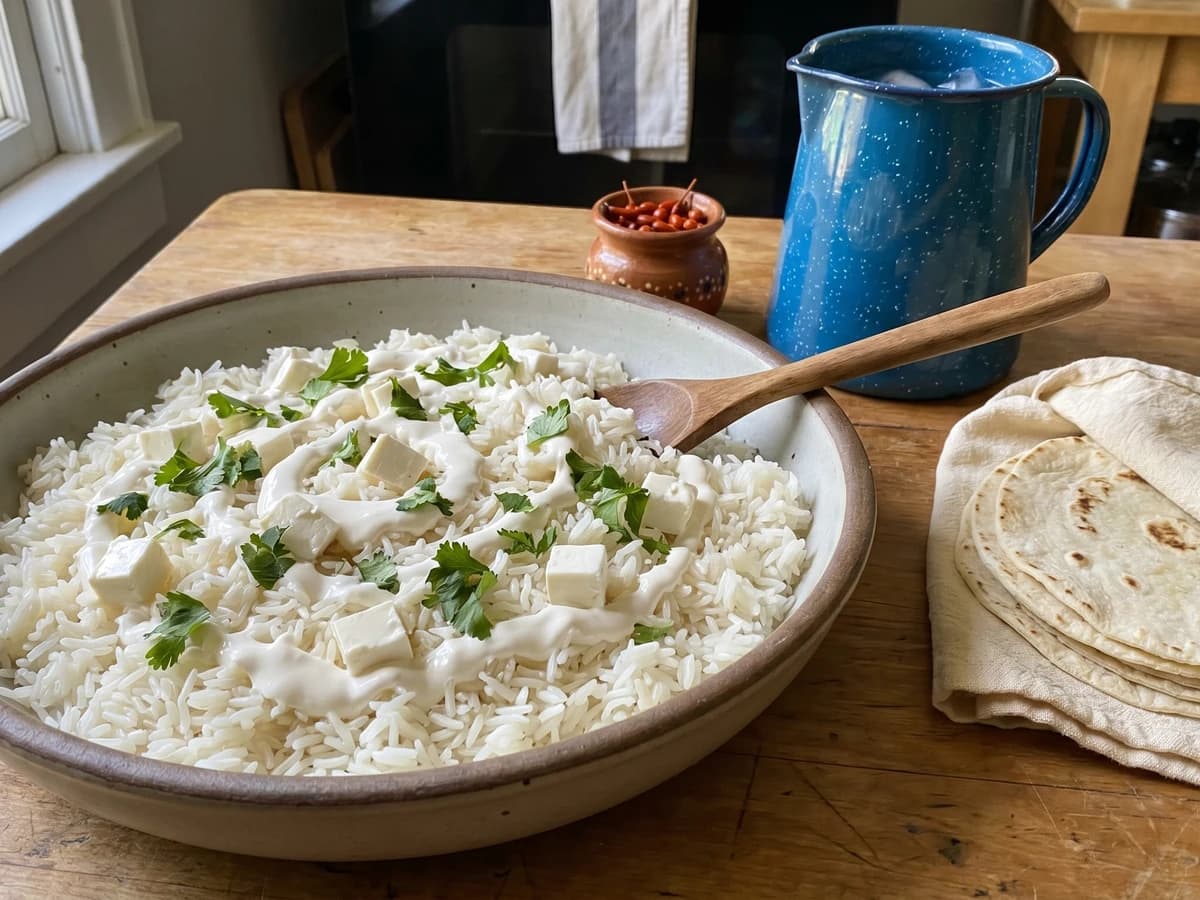
Sinaloa's home-cook white rice topped with cold cubes of cream cheese that soften into the warm grain, finished with crema and a sprinkle of chiltepin at the table. The trick that makes a side dish feel like a small luxury.
Chef Lupita
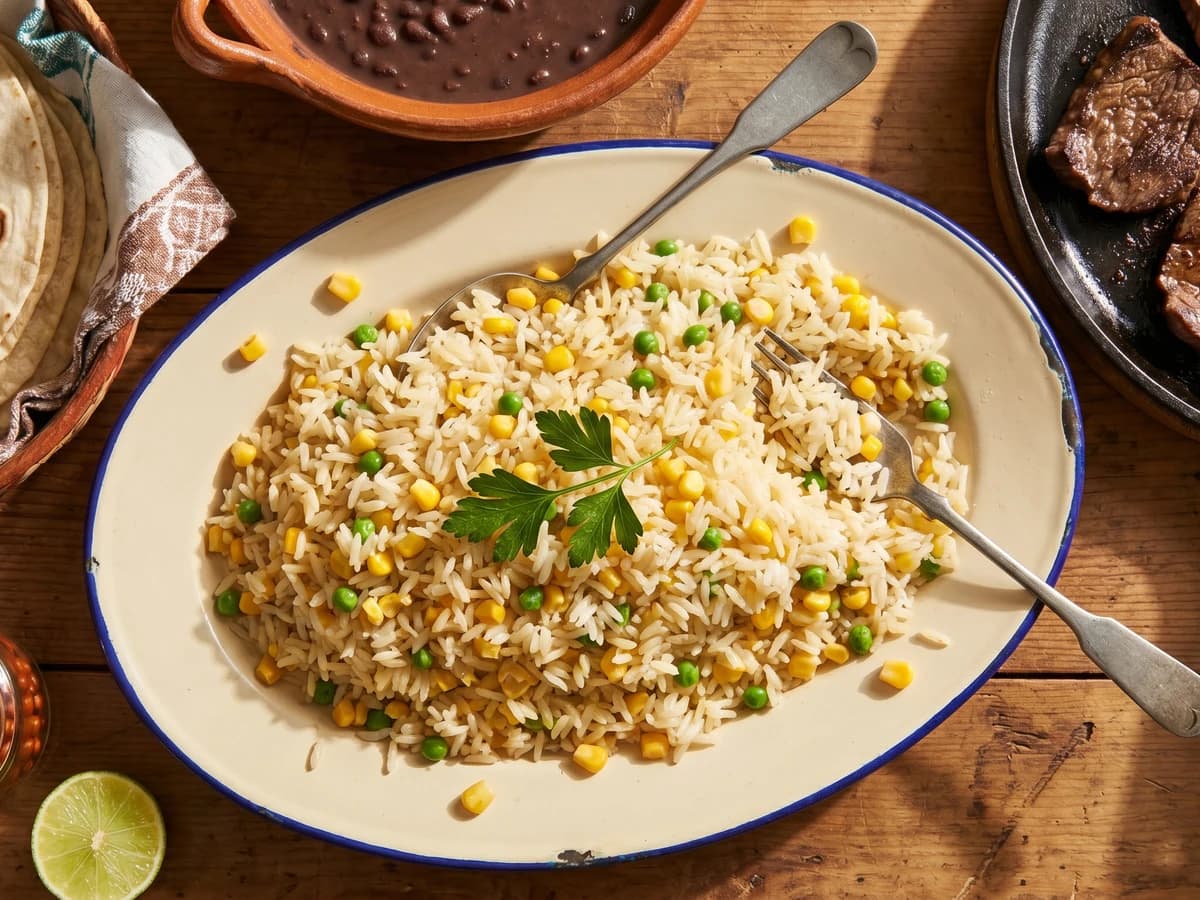
Sonora's white rice, toasted in butter and steamed with sweet corn and tender peas. The clean, quiet partner to a plate of carne asada, not the red rice of central Mexico.

Chef Lupita
Yucatán's white rice with sweet corn kernels, toasted in lard with garlic and onion. The quiet base that holds up against the peninsula's bold achiote-stained stews.