
Chef Freja
Danablu Mad med Rå Æggeblomme
Danish blue cheese layered on dark rye with a raw egg yolk nestled on top, red onion rings, and chives. The last piece at a Danish lunch, and the one that stays with you longest.
A cooking platform built around craft, culture, and the stories behind what we eat.
Created by Chef Freja
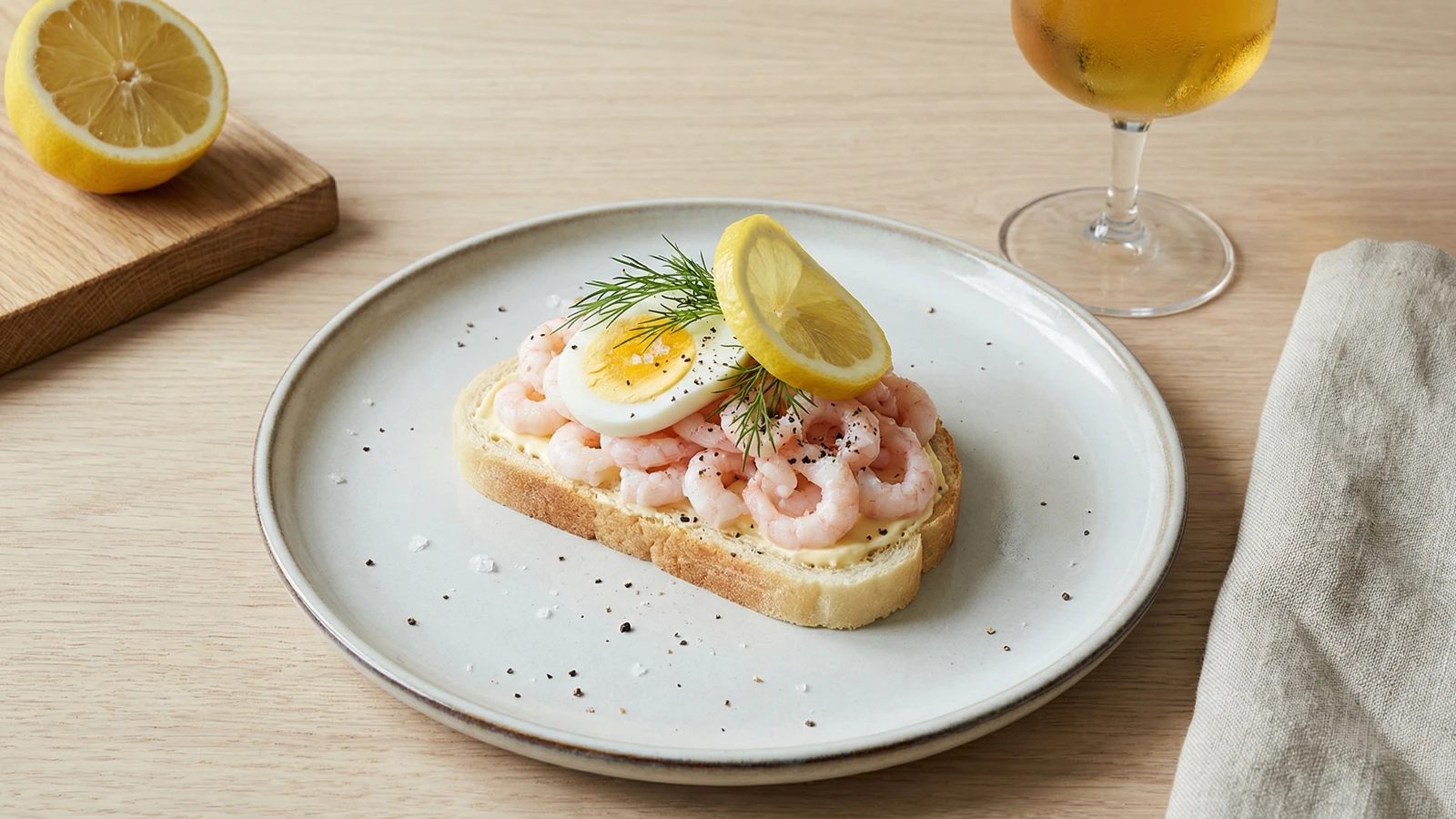
The most beloved piece of smorrebrod in Denmark, a generous mound of small cold-water shrimp on buttered franskbrod with a thin layer of mayonnaise, a slice of egg, a lemon twist, and fresh dill.
The first warm Saturday of the year in Copenhagen, the tables come out. Chairs dragged into courtyards, blankets spread in the King's Garden, every cafe along the water suddenly full. And somewhere on almost every one of those tables is a piece of rejemad.
Rejemad is the shrimp smorrebrod, and it's the one piece almost every Dane agrees on. Small cold-water shrimp, piled generously on a slice of buttered franskbrod (the fine-crumbed white bread that is the quiet counterpart to rugbrod in Danish baking), a thin layer of mayonnaise beneath, a slice of hard-boiled egg, a twist of lemon, and a crown of fresh dill. That's the whole dish. Its power is in its restraint.
Two things matter more than anything else: the shrimp and the bread. The shrimp should be small, sweet, cold-water, and hand-peeled if you can manage it. Pre-peeled shrimp from a tub will do, but the difference when you've picked them yourself is something you taste immediately. The bread should be franskbrod, dense and fine enough to hold the weight of the shrimp without collapsing. A rustic artisan loaf with big holes is the wrong bread, and the shrimp will fall through.
I'll walk you through every step. By the end you'll understand why this simple thing is the piece of smorrebrod the Danes love most, and why the season for it is the long bright evenings when you want lunch to stretch into the afternoon.
Rejemad is one of the few pieces of smorrebrod traditionally served on white bread rather than dark rye, a distinction codified in the late 1800s when Copenhagen's smorrebrod restaurants began writing down the grammar of the open sandwich. The shrimp themselves are typically Pandalus borealis, the small cold-water species fished from Greenlandic and North Atlantic waters, and hand-peeling them by the thousands was once a Danish household skill taught to children at the kitchen table. The sky-high tower of rejemad, sometimes built with two hundred shrimp or more on a single piece of bread, became iconic at twentieth-century Copenhagen institutions like Ida Davidsen and Schonnemann, though the home version has always been simpler, shorter, and just as loved.
Quantity
400g
cooked and peeled
Quantity
4 thick slices
Quantity
60g
softened
Quantity
4 tablespoons
Quantity
2 large
Quantity
1
Quantity
small bunch
fronds picked
Quantity
to taste
Quantity
freshly ground, to taste
| Ingredient | Quantity |
|---|---|
| small cold-water shrimpcooked and peeled | 400g |
| franskbrod (Danish white bread) | 4 thick slices |
| good unsalted buttersoftened | 60g |
| good-quality mayonnaise | 4 tablespoons |
| eggs | 2 large |
| unwaxed lemon | 1 |
| fresh dillfronds picked | small bunch |
| flaky sea salt | to taste |
| black pepper | freshly ground, to taste |
Bring a small saucepan of water to a gentle boil. Lower the eggs in on a slotted spoon and cook for exactly eight minutes. You want the yolks just set and still bright yellow, not chalky. Transfer the eggs straight into a bowl of cold water and leave them there until they are completely cool. A cold egg peels cleanly and slices without crumbling. A warm one tears and ruins the neat disc you want on top of the shrimp.
Tip the peeled shrimp onto a plate and spread them out in a single layer. Go through them with your fingers and pick out any bits of shell or the dark vein along the back. Even hand-peeled shrimp hide the occasional fragment, and a single piece of shell against the teeth ruins the whole piece of smorrebrod. This small act of attention is what separates a careful rejemad from a careless one.
Spread each slice of franskbrod with a generous layer of softened butter, going right to the edges. The butter is not decoration. It's a seal between the bread and everything that follows, and without it the moisture from the shrimp and mayonnaise will sink in and turn the bread soft within minutes. Over the butter, spread a thin, even layer of mayonnaise. Thin. You want the shrimp to taste of the sea, not of the jar.
Heap the shrimp onto each slice of bread. Be generous, more generous than feels sensible. Rejemad is a dish of abundance, and the shrimp should sit in a proud mound that rises well above the bread. Arrange them with the curl of each shrimp facing outwards if you can manage it, so the surface catches the light and looks like what it is: a hundred small pink commas laid carefully against one another. Don't press them down. They should look piled, not packed.
Slice the cold eggs into neat rounds with a sharp knife or an egg slicer. Place one slice of egg on the crown of each mound, slightly off-centre so it looks set down rather than staged. Cut four thin slices from the lemon, make one cut from the centre to the edge of each slice, and twist the two sides in opposite directions so the peel lifts into a small spiral. Balance a lemon twist on top of each piece. Scatter the dill fronds over everything, finish with a pinch of flaky salt and a turn of black pepper, and serve at once. Smorrebrod waits for no one, and rejemad least of all. You'll know when it's right because the layers stand tall and the dill looks like it just landed there.
1 serving (about 200g)
Culinary guides, cultural storytelling, and the editorial depth that makes cooking meaningful.
Discover Culinary ExplorerChef Freja
Danish blue cheese layered on dark rye with a raw egg yolk nestled on top, red onion rings, and chives. The last piece at a Danish lunch, and the one that stays with you longest.

Chef Freja
Thick-sliced Danbo on properly buttered rugbrod with sweet pepper rings and a crown of garden cress. The cheese smorrebrod that lives in every Danish lunchbox, from the first day of school to the last day at the office.

Chef Freja
Copenhagen's most storied smorrebrod: leverpostej, cold salt beef, trembling aspic, onion rings, and fresh cress on dark rugbrod. Invented at Oskar Davidsen's in the 1880s for a hungry veterinarian and still one of the great pieces of the Danish lunch table.

Chef Freja
Pungent Esrom from North Zealand on dark rye with paper-thin radish and fresh chives. The cheese course that closes a proper Danish smorrebrod spread, one of the quietest, most satisfying bites in the whole tradition.