
Chef Lupita
Aceite de Chiltepin Bajacaliforniano
Baja California's wild chiltepin steeped in olive oil with garlic, orejon, and lime peel, until the oil turns ruby-amber and carries the slow, sneaky burn of the desert coast.
A cooking platform built around craft, culture, and the stories behind what we eat.

Created by
Yucatan's burnt-chile paste, built on chiles charred to carbon on a comal, ground with toasted spices and roasted garlic. The smoky black base of relleno negro and the sixth flavor of Maya cooking.
This is from Yucatan. Not from Mexico in the general sense. From the Peninsula, where the cooking is Maya before it is anything else, where the chiles are different, the oregano is different, the citrus is different, and the recados, those ground spice and chile pastes that anchor every Yucatecan dish, are a grammar all their own. Recado negro is the darkest of them. The most demanding. The one that announces itself before you taste it.
The technique that names the paste is brutal and specific. The chiles are not toasted. They are burnt. Black, brittle, reduced to carbon on a screaming hot comal until they crumble in your hand. This is not a mistake. This is the recipe. The Maya cooks of the Peninsula identified a sixth flavor centuries before food writers invented the word umami: the deep smoky bitterness of charred chile, what they call the flavor of fire itself. You cannot fake it. You cannot get it from a toasted chile. You have to burn the chile and you have to do it right.
My mother did not cook Yucatecan food. She was from Jalisco and the Peninsula might as well have been a different country. I learned recado negro from Dona Felipa in a kitchen behind the mercado in Valladolid, where she made it in a comal blackened so thick with use that the surface looked like obsidian. She told me three things and then made me do it myself. Burn the chile until it is carbon. Burn the tortilla with it. Roast the garlic in its skin. She watched me struggle with the smoke and she laughed and said this is why we do it outside, mija.
This recado is the foundation of relleno negro, the funeral and wedding dish of the Peninsula, and of pollo en chilmole, and of a hundred other plates you have probably never eaten. Make a batch. Keep it in the refrigerator. Cook from it for a month. Cada estado, su propia cocina, and this paste is Yucatan in a jar.
Recado negro is the most dramatic of Yucatan's traditional recados, a family of ground spice and chile pastes that the Maya called xak and that survived the conquest essentially intact, absorbing Spanish-imported peppercorns, cumin, cloves, and cinnamon into a pre-Columbian grammar of achiote, charred chile, and burnt corn. The technique of reducing chile to carbon is documented in colonial-era texts including Fray Diego de Landa's 1566 Relacion de las Cosas de Yucatan, which noted the Maya practice of charring foods over open flame as a flavoring method distinct from any European cuisine. The recado is the structural base of relleno negro, traditionally prepared for funerals and weddings in towns like Mani and Tizimin, where the dish carries ceremonial weight and the recado is made in industrial quantities the week before a major event.
Quantity
20
stemmed, seeds reserved
Quantity
10
stemmed and seeded
Quantity
2
day-old
Quantity
1 tablespoon
Quantity
1 tablespoon
Quantity
1 tablespoon
Quantity
1 tablespoon
Quantity
8
Quantity
1 stick, about 2 inches
Quantity
1 teaspoon
Quantity
1
unpeeled, for roasting
Quantity
1 medium
quartered with skin on
Quantity
1/2 cup
Quantity
2 tablespoons
Quantity
2 tablespoons
| Ingredient | Quantity |
|---|---|
| dried chile chilmole (chile seco yucateco)stemmed, seeds reserved | 20 |
| dried chile anchostemmed and seeded | 10 |
| corn tortillasday-old | 2 |
| achiote seeds (annatto) | 1 tablespoon |
| black peppercorns | 1 tablespoon |
| whole allspice berries (pimienta gorda) | 1 tablespoon |
| cumin seeds | 1 tablespoon |
| whole cloves | 8 |
| Mexican cinnamon stick (canela) | 1 stick, about 2 inches |
| dried Yucatecan oregano | 1 teaspoon |
| head of garlicunpeeled, for roasting | 1 |
| white onionquartered with skin on | 1 medium |
| naranja agria (sour orange juice) | 1/2 cup |
| kosher salt | 2 tablespoons |
| lard (manteca de cerdo) | 2 tablespoons |
Before you light the comal, open every window in the kitchen and close the door to the rest of the house. Burning chiles release a vapor that will set off coughing in anyone within range. In the Yucatan they often do this step outdoors over a wood fire. There is a reason. The women of Mani and Oxkutzcab learned long ago that this is not indoor work. Do not skip the ventilation. No me vengas con atajos.
Heat a heavy cast iron comal over medium-high until it smokes. Lay the chile chilmole and chile ancho directly on the dry surface in a single layer. You are not toasting them. You are burning them. They must turn fully black and brittle, until they crumble between your fingers like burnt paper. This is the technique that names the recado: chilmole means burnt chile sauce. A gently toasted chile will give you mole. A chile burnt to carbon gives you the deep, smoky, almost bitter base that defines Yucatecan black cooking.
Lay the day-old tortillas on the comal alongside the chiles. Let them blacken completely on both sides until they are stiff and dark. The burnt tortilla deepens the color and gives the recado the carbon-black tone it is named for. Do not stop at golden. Black is the goal.
While the chiles burn, place the unpeeled garlic head and the quartered onion (skin on) directly on the comal in any open space. Turn them every few minutes until they are deeply blackened on the outside and soft within, about 15 minutes for the onion and 20 minutes for the garlic. The charred papery skins carry flavor. Do not peel before roasting. The Yucatecan technique uses fire to build the recado from the outside in.
Move the burnt chiles and tortillas off the comal. Lower the heat to medium. Add the achiote, peppercorns, allspice, cumin, cloves, and cinnamon stick to the dry comal. Toast for about a minute, shaking the pan constantly, until the cumin smells nutty and the spices start to release their oils. The achiote will not change color much. It is hard as a pebble and needs the grinding to come, not the toasting. Add the dried oregano at the end for ten seconds and pull the pan off the heat.
Once the burnt chiles and tortillas have cooled enough to handle, break them into pieces and grind them in a spice grinder or a powerful blender, in batches if needed, with the toasted spices. You want a fine black powder, not a paste. This is why the chiles must be burnt all the way through. A half-burnt chile is leathery and will not grind clean. The recado is ground, not blended into a smoothie. Pulse, scrape, pulse again. Take your time.
Squeeze the roasted garlic cloves out of their papery skins and peel the burnt outer layer off the onion. Transfer both to a molcajete or a sturdy mortar with the salt. Pound to a rough paste. Add the ground chile and spice powder a few spoonfuls at a time, working it in until you have a stiff dark paste. Drizzle in the naranja agria gradually and finish with the lard. The fat binds the paste and carries the flavor into whatever you cook with it. La manteca es el sabor.
Pack the finished recado into a clean glass jar and press a piece of parchment directly against the surface before sealing. Refrigerate at least 24 hours before using. The flavor needs the rest. The first day it tastes raw and aggressive. By the third day the spices have married with the burnt chile and the achiote and the naranja agria, and the paste tastes like what it is supposed to taste like. Asi se hace y punto.
1 serving (about 15g, ~1 tablespoon paste)
Culinary guides, cultural storytelling, and the editorial depth that makes cooking meaningful.
Discover Culinary ExplorerChef Lupita
Baja California's wild chiltepin steeped in olive oil with garlic, orejon, and lime peel, until the oil turns ruby-amber and carries the slow, sneaky burn of the desert coast.

Chef Lupita
Puebla's Lenten convent adobo, a brick-red vinegar chile paste of ancho, guajillo, garlic, oregano, and comino made to dress fish for the meatless calendar.
Chef Lupita
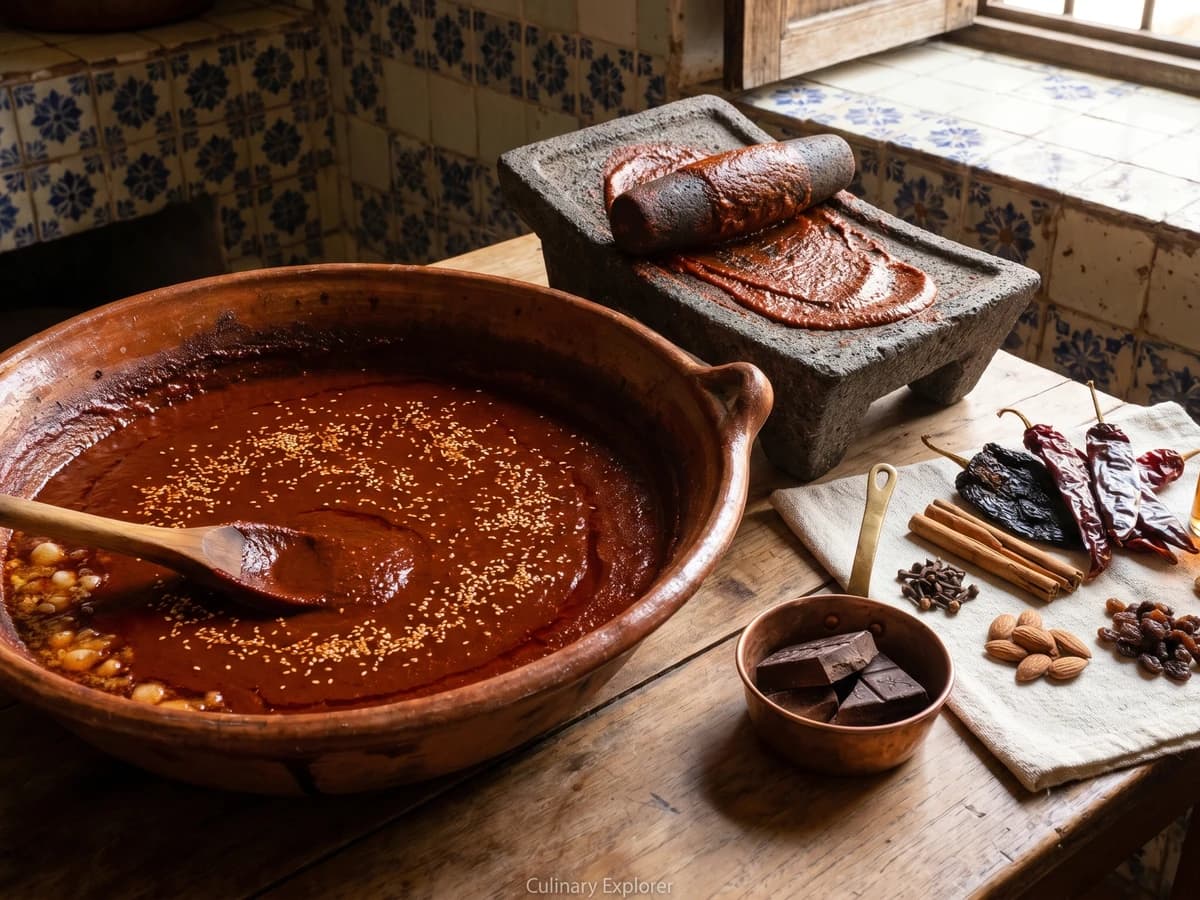
Zacatecas' wedding-table adobo, built from toasted guajillo and ancho, piloncillo, sour orange, chocolate, canela, clavo, almonds, sesame, and lard.

Chef Lupita
Puebla's convent kitchens built this adobo with ancho, guajillo, jerez, almonds, raisins, clove, and lard, a baroque marinade that stains pork loin and finishes as the sauce.