
Chef Elsa
Dillfisolen
Tender Austrian green beans folded into a silky, dill-bright cream sauce built on a proper Einbrenn. The Gasthaus side dish that quietly steals the whole meal.
A cooking platform built around craft, culture, and the stories behind what we eat.
Created by
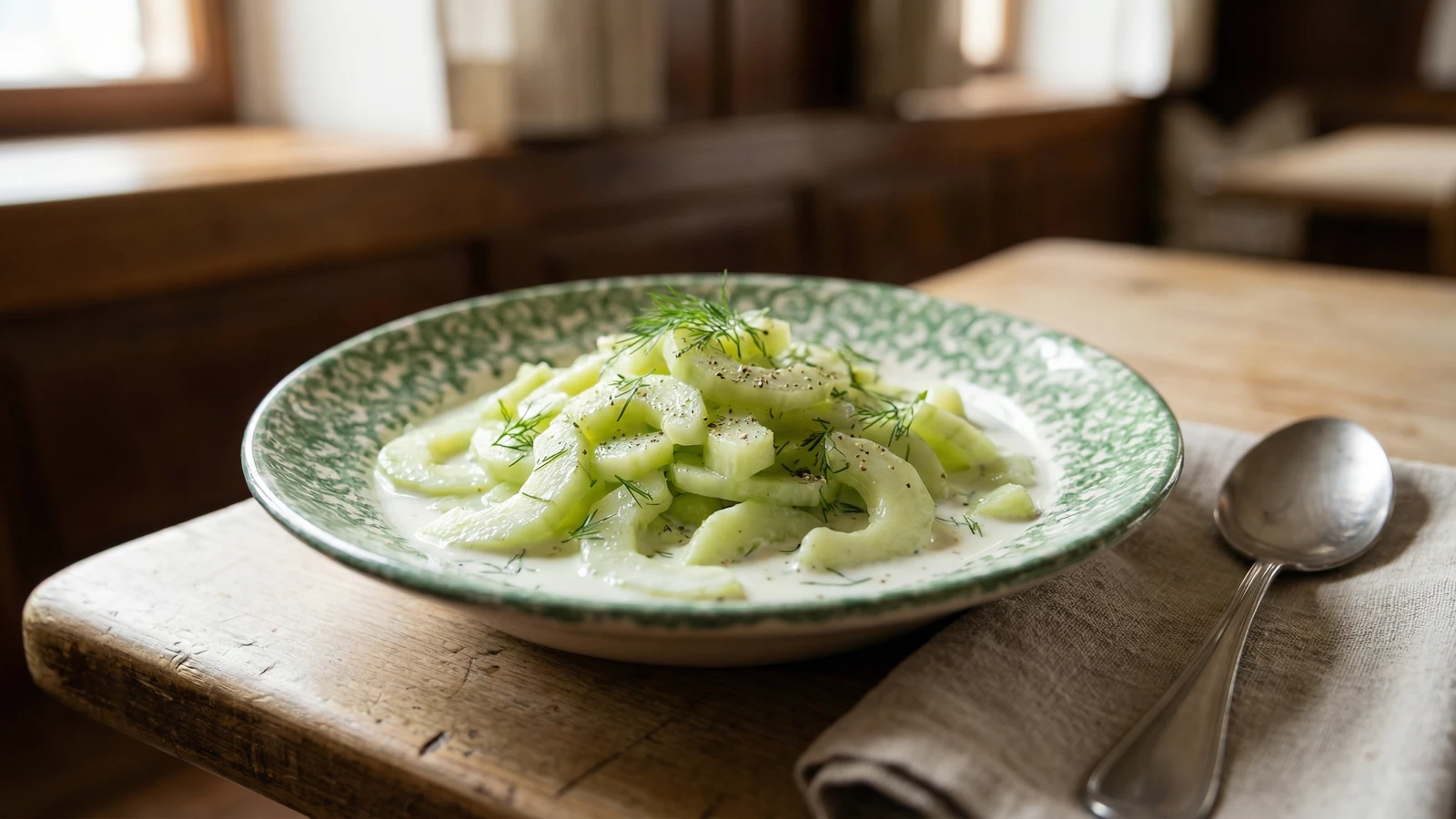
Warm creamed cucumbers in a silky dill and sour cream sauce with a bright vinegar finish, the Austrian side dish that changes how you think about cucumbers forever.
The first time I served Rahmgurken to a friend from London, she looked at the plate and said, 'You cooked the cucumbers?' As if I'd done something reckless. I told her to taste it. She went quiet for a moment, then asked for the recipe. That's how it goes with Rahmgurken. Nobody believes in it until they try it.
In my grandmother Eva's kitchen in Kent, warm cucumber was never strange. Gretel always said that the Austrian kitchen doesn't waste good vegetables on salads alone. Cucumbers have a delicate sweetness that comes alive when you cook them gently in butter and let them braise in cream. Raw, they're refreshing. Warm, they become something else entirely: tender, almost silky, with a flavor that sits somewhere between melon and summer herbs.
The technique is simple and the ingredients are plain. You peel and salt the cucumbers to draw out excess water, then braise them in a sauce built from butter, a whisper of flour, sour cream, and good white wine vinegar. Fresh dill goes in at the end so it stays bright. The vinegar matters more than you think. Without it, the dish is flat. With it, everything lifts.
Rahmgurken belongs next to Tafelspitz or a plain roasted chicken or a piece of poached fish. It's a Beilage, a side dish, and like all good Austrian Beilagen, it doesn't shout. It sits on the plate quietly and then steals the whole meal. This is good Austrian home cooking at its most honest.
Cooked cucumber dishes appear throughout Central European cookery, a tradition rooted in the practical reality that field cucumbers were abundant in summer and needed to be used quickly before they turned bitter or soft. Austrian Rahmgurken belongs to the broader family of Gemüsebeilagen, the vegetable side dishes that form the backbone of Hausmannskost (home cooking). Gretel Beer included creamed cucumber variations in her writing as one of the preparations that distinguished Austrian vegetable cookery from its neighbors: the combination of sour cream, vinegar, and dill in a warm sauce reflects the same sweet-sour sensibility that runs through so much of the cuisine, from Krautsalat to Tafelspitz garnishes.
Quantity
1 kg (about 3 large)
firm with small seeds
Quantity
1 tablespoon
Quantity
1 medium
finely diced
Quantity
30g
Quantity
1 tablespoon
Quantity
150ml
Quantity
100ml
Quantity
2 tablespoons
Quantity
1 teaspoon
Quantity
3 tablespoons
finely chopped
Quantity
to taste
Quantity
to taste
| Ingredient | Quantity |
|---|---|
| cucumbersfirm with small seeds | 1 kg (about 3 large) |
| fine salt (for drawing moisture) | 1 tablespoon |
| onionfinely diced | 1 medium |
| unsalted butter | 30g |
| plain flour | 1 tablespoon |
| sour cream (Sauerrahm) | 150ml |
| beef or vegetable broth | 100ml |
| white wine vinegar | 2 tablespoons |
| granulated sugar | 1 teaspoon |
| fresh dillfinely chopped | 3 tablespoons |
| white pepper | to taste |
| salt | to taste |
Peel the cucumbers, halve them lengthways, and scrape out the seeds with a teaspoon. You want firm cucumbers with small seeds. If the seeds are large and watery, the cucumber is too mature for this dish and will turn to mush. Slice the halves into crescents about half a centimeter thick. Toss them in a colander with a tablespoon of fine salt and let them sit for fifteen to twenty minutes over a bowl. You'll be surprised how much water comes out. This is the most important step in the whole recipe. If you skip the salting, the cucumbers release all that liquid into your sauce and drown it.
After the cucumbers have released their water, rinse them briefly under cold water to remove excess salt. Squeeze them gently in a clean kitchen towel, pressing out as much liquid as you can without crushing them. They should feel slightly wilted and pliable now, not crisp. That's exactly right. They've given up the water that would have ruined the sauce.
Melt the butter in a wide pan or shallow saucepan over medium heat. When it foams, add the diced onion and cook gently until soft and translucent, about four minutes. You don't want any color on the onion. This is a pale, delicate sauce and browned onion would push it in the wrong direction. Stir in the flour and cook for one minute, stirring constantly. This tiny amount of flour gives the sauce just enough body to coat the cucumbers without turning it heavy or gluey.
Pour in the broth and stir until smooth. Let it come to a gentle simmer, then stir in the sour cream. Reduce the heat to low. The sauce should be creamy and thin enough to pour easily. If it looks thick, add a splash more broth. Austrians use Sauerrahm for this, which has a tangier, lighter quality than French crème fraîche. Regular sour cream is the closest equivalent and works well.
Add the salted and dried cucumber slices to the sauce. Stir gently to coat them. Let them simmer on low heat for eight to ten minutes, stirring once or twice. The cucumbers will soften but should still have a slight resistance when you bite into one. If they've gone completely limp, you've cooked them too long. Pull them off the heat while they still have a whisper of texture.
Stir in the white wine vinegar and sugar. Taste. The vinegar should brighten everything without making the sauce sour. The sugar isn't there to sweeten, it's there to balance the acid so the cream doesn't curdle and the flavors sit in harmony. Add the chopped dill, reserving a pinch for the top. Season with white pepper and salt as needed. The dill goes in at the end because heat kills its freshness. Scatter the reserved dill over the dish and serve warm. Mahlzeit!
1 serving (about 280g)
Culinary guides, cultural storytelling, and the editorial depth that makes cooking meaningful.
Discover Culinary ExplorerChef Elsa
Tender Austrian green beans folded into a silky, dill-bright cream sauce built on a proper Einbrenn. The Gasthaus side dish that quietly steals the whole meal.

Chef Elsa
Thin-sliced waxy potatoes layered with garlic-steeped cream and baked low and slow until the top turns golden brown and the kitchen smells like the kind of cooking that makes people wander in from the next room.

Chef Elsa
Silky Viennese mashed potatoes pressed through a ricer, enriched with cold butter and warm milk, finished with a whisper of nutmeg. The quiet side dish that makes the whole plate work.

Chef Elsa
Yesterday's boiled potatoes, coarsely grated and torn in a hot pan with too much butter until the edges go golden and crisp. Farmhouse cooking at its most honest, served straight from the skillet.