Culinary Explorer

A cooking platform built around craft, culture, and the stories behind what we eat.
Discover Culinary Explorer
Rabarbersaft

Rabarbersaft

Created by Chef Freja

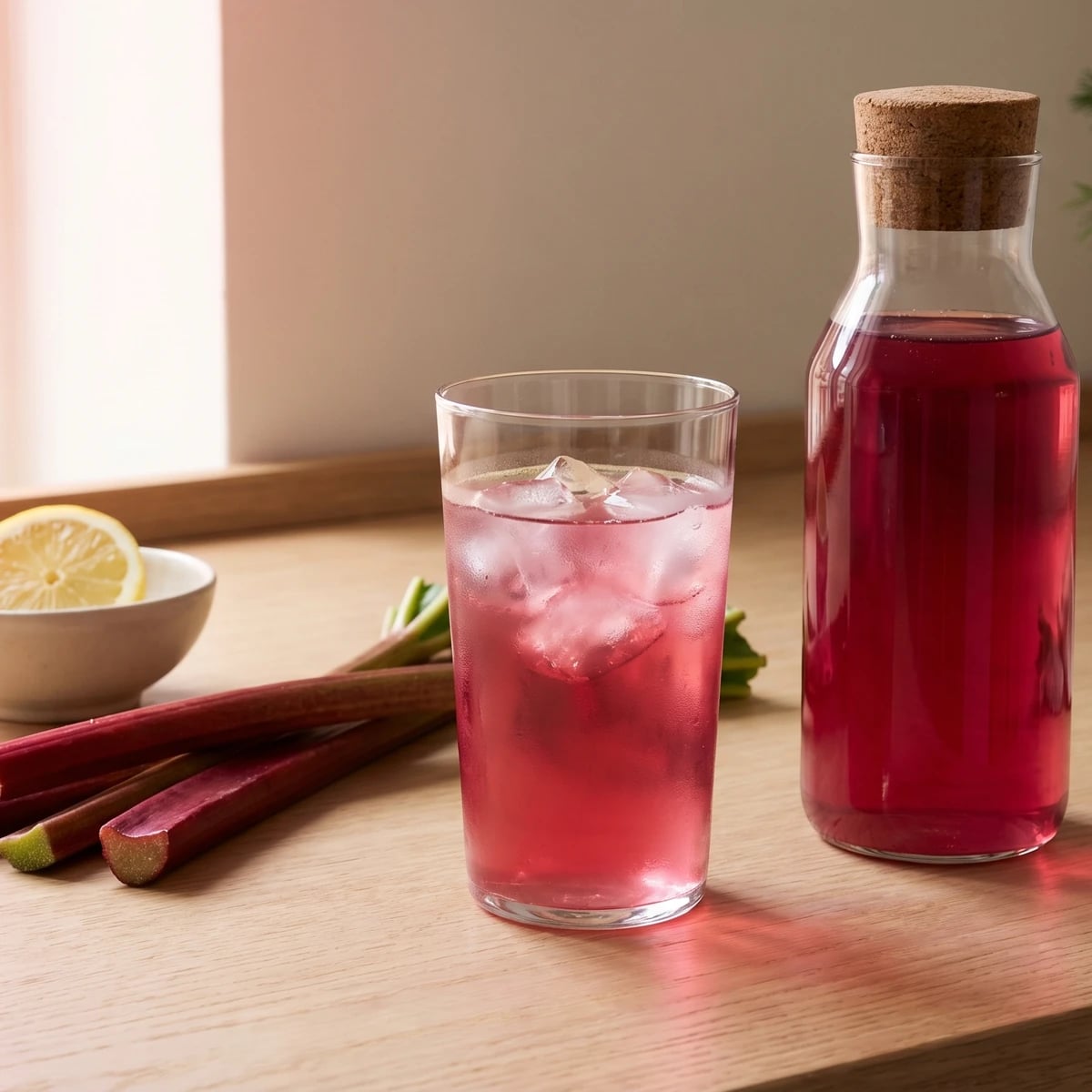
Spring's first cordial, made when the rhubarb stalks blush red in Danish gardens. Simmered gently with sugar and lemon, strained until it runs clear as stained glass, then poured over ice whenever summer calls for it.

Beverages
Danish
Make Ahead
Batch Cooking
Comfort Food
15 min
Active Time
30 min cook3 hr total
YieldAbout 1 litre cordial

The rhubarb appears before anything else. Late April in Denmark, when the soil is still cold and the garden looks like it hasn't decided whether to wake up, the rhubarb pushes through. Fat red stalks with crumpled leaves, unstoppable, the first real sign that the kitchen is about to change seasons. And the first thing you do with it, before the cakes and the compotes and the tarts, is make saft.

Rabarbersaft is the cordial that fills Danish refrigerators from May onward. Every household has a version. Some add vanilla. Some add ginger or elderflower. The one I'm giving you is the clean, classic recipe: rhubarb, sugar, lemon, water, and time. It's the version that lets the rhubarb speak for itself, tart and floral and so pink it stops you when you hold the glass up to the light.

The technique is gentle. You simmer, you don't boil. You steep, you don't rush. And when you strain, you let gravity work without your help. That patience is the whole secret. The result is a concentrate you keep in the fridge all summer, pouring a few centimetres into a glass over ice and topping it with cold water whenever someone walks through the door. This is how we greet each other when the days get long. You'll make it once and then you'll make it every spring.

Rhubarb arrived in Danish gardens in the late 1700s, originally grown as a medicinal plant before cooks recognized its potential in the kitchen. By the mid-1800s it had become the first harvest of the Danish growing season, prized precisely because it appeared weeks before any fruit. The tradition of making saft, concentrated fruit cordials diluted with water at the table, dates from an era before refrigeration, when sugar-preserved syrups were the practical way to keep seasonal flavours through the summer months. Rabarbersaft remains the most common homemade cordial in Denmark today, with recipes passed between generations as casually as garden cuttings.

The technique, the tradition, and the story behind every dish.

Discover Culinary Explorer

Ingredients

rhubarb stalks

Quantity

1kg

washed and cut into 3cm pieces

granulated sugar

Quantity

400g

water

Quantity

1 litre

organic lemon

Quantity

1

zest and juice

vanilla pod (optional)

Quantity

1

split lengthwise

Equipment Needed

  • Large pot, 4 litre
  • Fine-mesh sieve
  • Muslin cloth or thin cotton tea towel
  • Glass bottles with tight-fitting lids
  • Funnel

Instructions

  1. 1

    Cut the rhubarb

    Wash the stalks and cut them into rough 3cm pieces. Don't peel them. The skin is where the colour lives, and this cordial should be the deep pink of a Danish May evening. If your stalks are very thick, split them lengthwise first so they break down evenly in the pot. Discard any leaves entirely. Rhubarb leaves contain oxalic acid in concentrations that are not safe to eat or drink.

    Choose the reddest stalks you can find. Green rhubarb makes fine cordial but it will be pale and straw-coloured. The red stalks give you that jewel-bright rose that looks so beautiful in a glass.
  2. 2

    Simmer gently

    Put the rhubarb pieces into a large pot with the water. Add the lemon zest (use a vegetable peeler, taking only the yellow skin and none of the white pith, which is bitter) and the split vanilla pod if using. Bring everything to a gentle simmer over medium heat. Then turn the heat down low and let it cook for twenty to twenty-five minutes. The rhubarb should collapse completely into soft, pale threads swimming in a deeply coloured liquid. Do not boil it hard. A rolling boil breaks the rhubarb into a pulp that clouds the cordial and makes straining slow. A gentle simmer extracts the flavour and the colour while keeping the liquid cleaner.

    You'll know the simmer is right when the surface barely moves. A single lazy bubble rising every few seconds. That's the pace this cordial wants.
  3. 3

    Add sugar and lemon

    Remove the pot from the heat. Add the sugar and stir until it dissolves completely. The residual heat is more than enough. Adding sugar off the heat means it dissolves into the liquid without cooking further, and you preserve the bright, fresh taste of the rhubarb rather than pushing it toward something jammy. Squeeze in the lemon juice and stir once. Taste it now. The cordial should be noticeably sweet and tart at the same time, because you'll dilute it later. If it tastes balanced now, it will taste flat when you add water. Adjust with a little more sugar or lemon until it hits that slightly-too-much note.

    Think of it as a concentrate, not a finished drink. It should taste a little intense. When you pour it over ice and top it with cold water, the balance will land exactly where it should.
  4. 4

    Cool and steep

    Cover the pot and let the whole mixture cool to room temperature. This takes at least an hour, and two is better. The cooling time is not idle time. While the liquid sits, it continues to draw colour and flavour from the softened rhubarb, like a tea steeping long after the heat is gone. The longer you leave it (within reason), the deeper the colour and the rounder the taste. This is the joy of waiting.

  5. 5

    Strain clear

    Set a fine-mesh sieve over a large bowl and line it with a clean muslin cloth or a thin cotton tea towel. Pour the cooled mixture through in batches. Let gravity do the work. Do not press the pulp, do not squeeze the cloth, do not push it through with a spoon. Pressing forces the cloudy solids through and the cordial loses its clarity. You want the liquid to drip through slowly on its own, clear and jewel-bright. This is the step that separates a good cordial from a great one, and it asks only patience.

    If you're tempted to press the cloth, walk away. Make coffee. Come back in thirty minutes. The liquid will have found its own way through, and it will be beautiful.
  6. 6

    Bottle and store

    Pour the strained cordial into clean glass bottles using a funnel. Seal tightly and refrigerate immediately. To serve, pour two or three centimetres of cordial into a tall glass filled with ice and top with very cold still or sparkling water. The ratio is yours to find, but start with one part cordial to four parts water, then adjust. You'll know when it's right.

Chef Tips

  • The colour of your cordial depends entirely on the colour of your stalks. Seek out the deepest red rhubarb you can find. Forced rhubarb, the kind grown in darkness with slender scarlet stalks, gives the most vivid cordial of all. If you can only find green stalks, the taste will still be good, but the colour will be pale gold instead of rose.
  • Rabarbersaft keeps in the fridge for two to three weeks. For longer storage, pour the hot cordial into sterilized bottles and seal them immediately. Processed this way, unopened bottles will keep in a cool, dark cupboard for up to a year. Once opened, refrigerate and use within two weeks.
  • Try it with sparkling water and a sprig of fresh mint over ice. Or stir a spoonful into a glass of cold white wine for a simple Danish summer aperitif. The cordial also makes a beautiful base for cocktails, though I usually just drink it with water and think that's enough.
  • Don't throw away the strained rhubarb pulp. It's soft and sweet and still full of flavour. Stir it into yoghurt or porridge, or spread it on toast. It's a cook's reward for the patience of straining.

Advance Preparation

  • Rabarbersaft is by nature a make-ahead recipe. The cordial improves after a day in the fridge as the flavour settles and rounds out. Make it on a Saturday and it will taste its best by Monday.
  • For gifts or pantry storage, sterilize glass bottles with boiling water, pour in the hot strained cordial, and seal immediately. The sugar concentration is high enough to preserve the cordial for months in a cool, dark place.

Frequently Asked Questions

Nutrition Information

1 serving (about 115g)

Calories
155 calories
Total Fat
0 g
Saturated Fat
0 g
Trans Fat
0 g
Unsaturated Fat
0 g
Cholesterol
0 mg
Sodium
2 mg
Total Carbohydrates
41 g
Dietary Fiber
0 g
Sugars
41 g
Protein
0 g

Note: Chef personas and recipes are created with AI assistance. Cook with care: follow safe food-handling practices, check doneness with a thermometer when needed, and adapt for allergies and your kitchen.

Where cooking meets culture.

Culinary guides, cultural storytelling, and the editorial depth that makes cooking meaningful.

Discover Culinary Explorer

More from Danish Drinks, Cordials & Snaps

Browse the full collection