Culinary Explorer

A cooking platform built around craft, culture, and the stories behind what we eat.
Discover Culinary Explorer
Dildsnaps

Dildsnaps

Created by Chef Freja

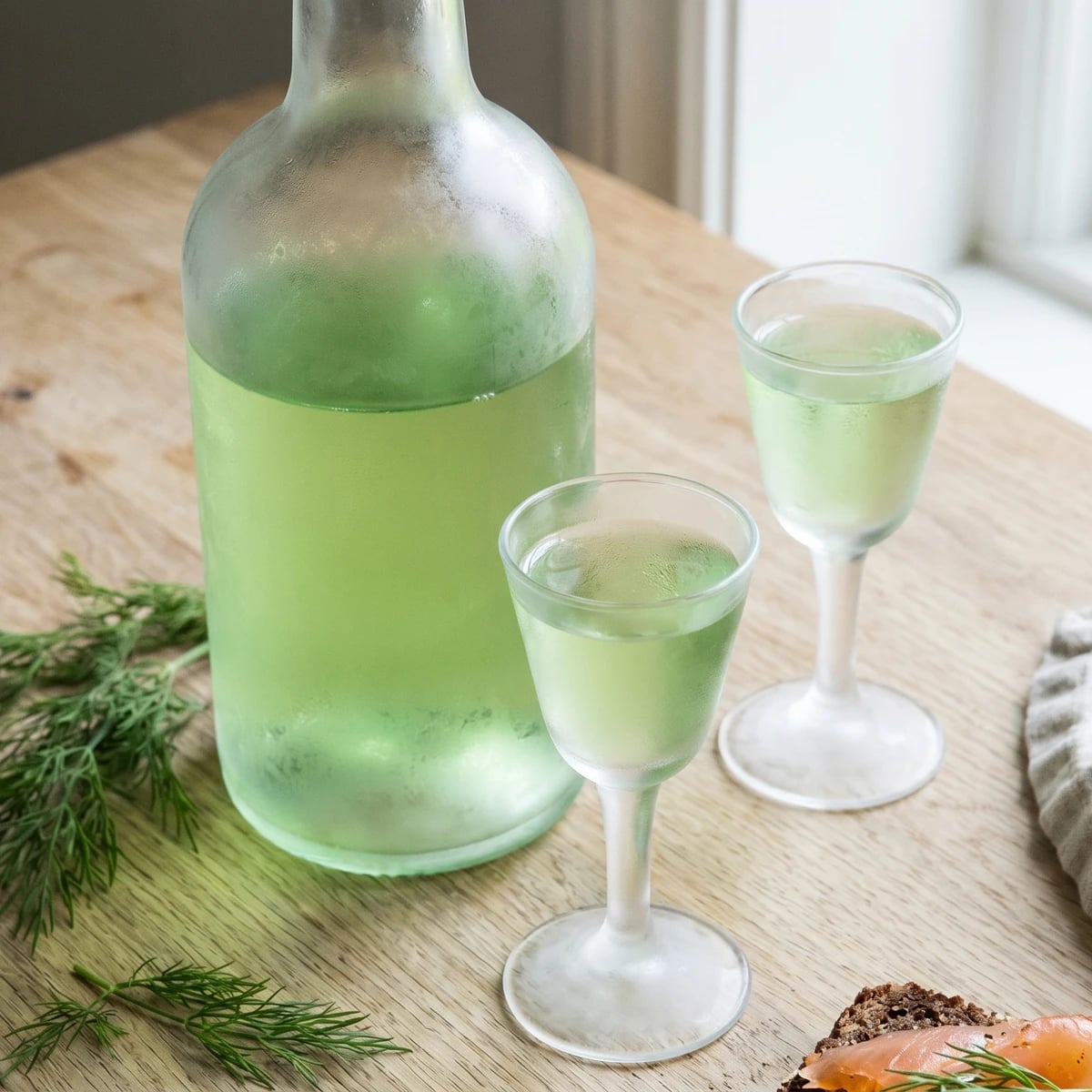
Fresh dill steeped in aquavit for three days until the spirit turns pale green and luminous. Poured from the freezer into small glasses at the Danish lunch table, it belongs beside gravlax and herring, the herb in the glass meeting the fish on the plate.

Beverages
Danish
Dinner Party
Special Occasion
Make Ahead
10 min
Active Time
0 min cookP3DT10M total
Yield1 bottle, about 700ml

Midsummer in Denmark, and the dill is everywhere. It grows faster than you can use it, tall and feathery and electric with fragrance, filling every garden and market stall from late June through August. This is when you make dildsnaps.

The process could hardly be simpler. You take fresh dill, steep it in a bottle of clear aquavit, and wait. Three days. In that time the spirit pulls everything it needs from the herb: color, fragrance, a grassy warmth that sits somewhere between anise and fresh-cut hay. When you strain it and hold the bottle up to the window, the liquid is pale green and luminous. That color is real. It comes from the dill and from nothing else.

What matters here is the quality of your dill and your patience with the steeping. Use dill that smells like something when you crush a frond between your fingers. Give it three full days, no more, no fewer. And serve it so cold that frost forms on the glass the moment it leaves the freezer. At a Danish frokost, the long celebratory lunch, snaps is poured in small measures and drunk in one, always with a skål, always with eye contact across the table. The dill in the glass meets the fish on the plate, and for a moment the whole meal makes a kind of sense that's hard to explain and impossible to forget. You'll know when it's right.

The Danish tradition of infusing aquavit with herbs and spices dates to at least the 1700s, when apothecaries sold flavored spirits as medicinal tonics and household cooks adopted the same techniques for the table. Dill, which grows abundantly across Scandinavia and was already central to the pickled and cured preparations of the Danish kitchen, became one of the most popular infusions. The ritual of the snaps at the frokost, complete with sung snapsviser (short drinking songs) before each glass, crystallized in the 19th century as the Danish celebratory lunch became a formalized social occasion, and homemade dildsnaps remains one of the simplest ways to mark a summer gathering as something worth remembering.

The technique, the tradition, and the story behind every dish.

Discover Culinary Explorer

Ingredients

clear aquavit or good Danish vodka

Quantity

1 bottle (700ml)

fresh dill

Quantity

1 large bunch, about 50g

thick stems removed

whole black peppercorns (optional)

Quantity

1 teaspoon

lemon zest (optional)

Quantity

1 strip, about 5cm

pith removed

Equipment Needed

  • Clean glass jar with a tight-fitting lid, 1 litre capacity
  • Fine-mesh sieve
  • Coffee filter or muslin cloth for fine straining
  • Clean glass bottle for storing and serving

Instructions

  1. 1

    Prepare the dill

    Wash the dill and shake it dry. You want the feathery fronds and the thinner stems, but strip away the thick woody stalks at the base. Those carry bitterness that the spirit will extract over three days, and by then it's too late to fix. The fronds are where the flavor lives: bright, grassy, faintly anise-scented. Bruise them gently between your fingers before they go in. This breaks the cell walls and lets the essential oils release into the aquavit faster and more completely.

    Smell the dill before you use it. Fresh summer dill has an almost electric fragrance. If it smells like nothing, it's been sitting too long and the snaps won't develop the color or depth you want. Walk away and find better dill.
  2. 2

    Steep in aquavit

    Place the dill fronds in a clean glass jar and pour the aquavit over them. If you're using peppercorns and lemon zest, add them now. The peppercorns give a faint warmth at the back of the throat that rounds out the herbal brightness. The lemon zest lifts the top notes without making it taste of citrus; use only the outermost layer and strip every trace of white pith, which turns bitter in alcohol. Both are optional. Dill on its own is enough. Seal the jar tightly and give it one gentle turn to settle the dill into the spirit.

    A wide-mouthed glass jar works far better than trying to force dill through a narrow bottle neck. Steeping in the jar and transferring later keeps the process clean and easy.
  3. 3

    Wait three days

    Place the jar in a cool, dark spot and leave it for three days. Not in the fridge yet, just away from direct sunlight. The spirit begins to change within hours, pulling color and fragrance from the dill. By the first morning it will be pale gold-green. By the third day it will have turned a soft, luminous green, like early light through birch leaves. This is the joy of waiting. You'll know it's ready by the color and by the smell when you open the lid: clean dill, unmistakable and alive.

    Don't leave the dill in longer than five days. After that the flavor turns grassy and faintly bitter as the stems release compounds you don't want. Three days is the sweet spot for brightness and balance.
  4. 4

    Strain and bottle

    Strain the snaps through a fine-mesh sieve into a clean bottle or jug, pressing the dill gently with the back of a spoon to release the last of the infused spirit. Discard the spent dill. If you want the snaps perfectly clear, strain it a second time through a coffee filter or a piece of muslin laid in the sieve. This takes patience; the liquid drips slowly. But the result is translucent and pale green, nothing cloudy, nothing murky. Seal the bottle and place it straight in the freezer.

    Don't skip the second straining if clarity matters to you. A cloudy snaps tastes the same but loses the visual beauty that is half the pleasure of bringing it to the table.
  5. 5

    Serve from the freezer

    Dildsnaps is served so cold that frost forms on the bottle the moment you bring it to the table. The alcohol prevents it from freezing solid, but the viscosity thickens just slightly, giving each pour a silky weight. Fill small snaps glasses to the brim, no more than a generous mouthful in each. Raise your glass. Make eye contact around the table. Say skål. Drink. This is how we greet each other at the Danish table. Serve alongside gravlax, pickled herring, smorrebrod, or any piece of the frokost where dill and fish already belong together.

Chef Tips

  • Use a clear, unflavored aquavit for the base, not one already infused with caraway or dill seed. Aalborg Jubilaeums is the classic Danish choice, but a good clean vodka works if you prefer a more neutral canvas. The dill should be the only voice in the bottle.
  • Summer dill is best. The fronds are more aromatic and the essential oils more concentrated than winter greenhouse dill. The season decides, and this is a recipe that belongs to June, July, August.
  • Make it in small batches and give bottles away. Dildsnaps with a handwritten label is one of the best things you can bring to someone's table. Cooked with love, even when no cooking is involved.
  • If you're serving snaps at a frokost, remember the order. Pour the first glass before the herring is served. The host raises the glass first. Eye contact, skål, drink. Then eat. The ritual is the hospitality.

Advance Preparation

  • Start the snaps three days before you plan to serve it. The steeping cannot be rushed, and the flavor needs every one of those days.
  • Once strained, dildsnaps keeps in the freezer for up to three months. The color fades gradually from green toward pale gold, but the flavor holds. For the brightest, most vivid green, serve within the first few weeks.
  • If you're making this for a dinner party or a frokost, prepare it the weekend before. By the time your guests sit down, it will be at its peak.

Frequently Asked Questions

Nutrition Information

1 serving (about 42g)

Calories
100 calories
Total Fat
0 g
Saturated Fat
0 g
Trans Fat
0 g
Unsaturated Fat
0 g
Cholesterol
0 mg
Sodium
0 mg
Total Carbohydrates
0 g
Dietary Fiber
0 g
Sugars
0 g
Protein
0 g

Note: Chef personas and recipes are created with AI assistance. Cook with care: follow safe food-handling practices, check doneness with a thermometer when needed, and adapt for allergies and your kitchen.

Where cooking meets culture.

Culinary guides, cultural storytelling, and the editorial depth that makes cooking meaningful.

Discover Culinary Explorer

More from Danish Drinks, Cordials & Snaps

Browse the full collection