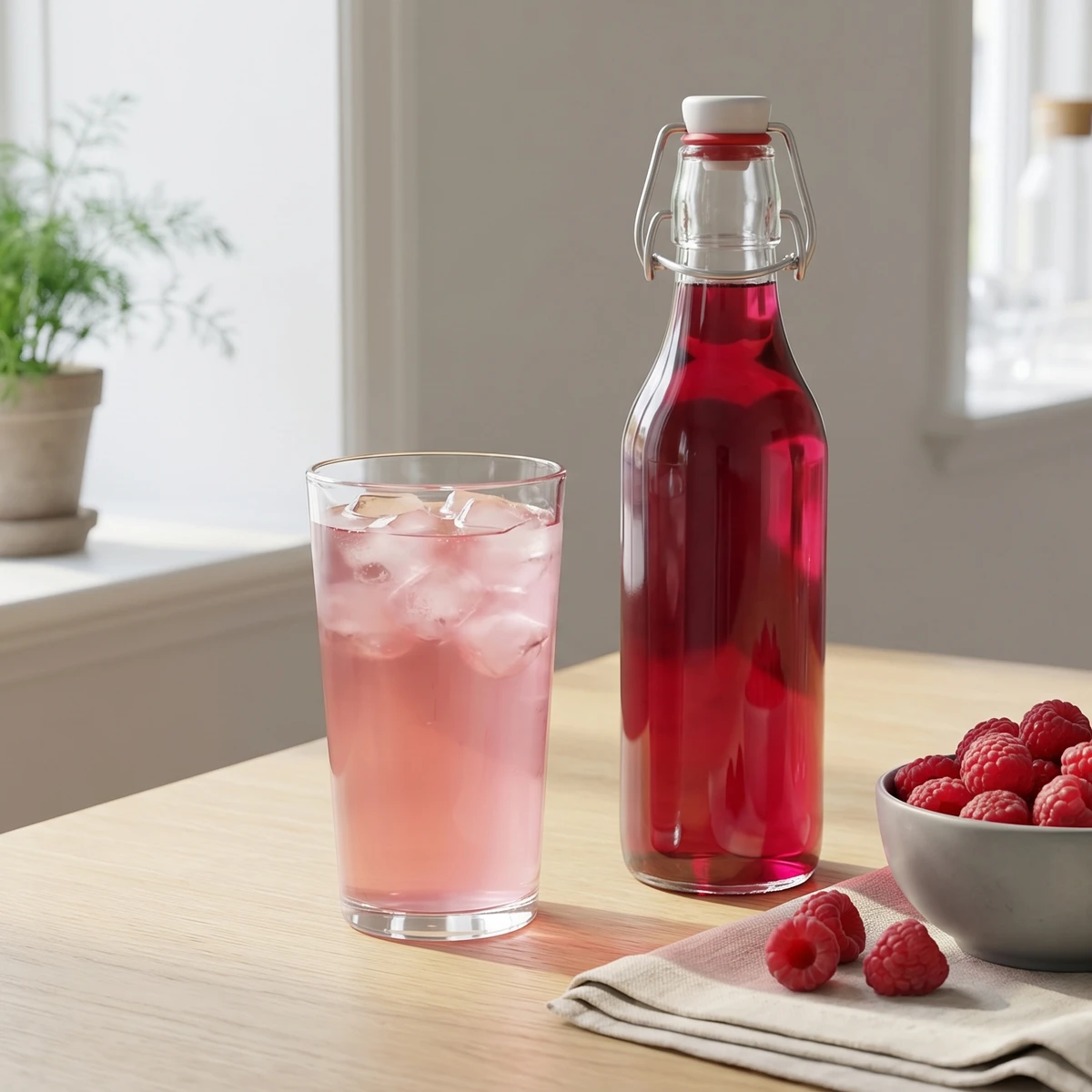
High summer raspberries cooked slowly and strained through cloth into a jewel-bright cordial you bottle in July and drink until the light comes back. The taste of a Danish summer, concentrated.
Beverages
Danish
Make Ahead
Picnic
Batch Cooking
15 min
Active Time
30 min cook•4 hr total
Yieldapproximately 1.5 litres cordial
July in Denmark is raspberry season. The bushes in allotment gardens and along country hedgerows go heavy all at once, and for about three weeks the fruit is so ripe it stains your fingers just picking it. This is the window. If you're going to make hindbaersaft, this is when. The season decides.
Hindbaersaft is raspberry cordial, the concentrated syrup that Danish families have been putting up every summer for generations. You cook the berries gently with water, strain the juice through cloth until it runs clear and bright pink, dissolve sugar into it, and bottle the result. One bottle lasts months. A few tablespoons stirred into a tall glass of cold water becomes the drink of every Danish summer afternoon, and the bottles you put away in July will still be there in November, a small, bright reminder of warmth when you need one. It's the kind of thing you make for people you love, cooked with love, and it shows.
The technique is simple, but there are two things I want you to understand before you start. First: don't boil the berries hard. A gentle simmer draws the juice out without cooking the fruit into a cloudy mush. The color will be cleaner, the flavor fresher. Second: don't press the cloth when you strain. Let gravity do the work. The cordial should be clear and jewel-bright, not hazy. Patience here is everything, and the joy of waiting is part of what makes hindbaersaft worth making. You'll know when it's right because the juice coming through the cloth will glow like stained glass held up to the light.
Saft-making is one of the oldest preservation traditions in Scandinavian home kitchens, predating commercial refrigeration by centuries. Danish households relied on fruit cordials to carry summer flavors through the long northern winter, and hindbaersaft held particular status because wild raspberries were abundant in July but gone within weeks. The tradition of giving a bottle of homemade saft as a gift, especially to someone recovering from illness or a new mother, persists in Denmark today and speaks to the drink's deep association with care, generosity, and the quiet pride of having made something by hand.
The technique, the tradition, and the story behind every dish.
•Glass bottles with tight-fitting lids, 500ml or 750ml
•Funnel
•Wooden spoon
Instructions
1
Prepare the berries
Put the raspberries in a large heavy-bottomed pot with the water. Don't wash them unless they're visibly dirty, and if you do, be gentle. Raspberries are fragile, and waterlogged fruit dilutes the cordial. You want the juice that's already in the berry, not tap water pretending to be flavor.
Slightly overripe raspberries are perfect here. If some are soft and leaking, even better. That means they're full of juice and sugar, which is exactly what you want for saft.
2
Simmer gently
Set the pot over medium-low heat and bring it to a very gentle simmer. You want small bubbles breaking the surface, nothing more. Let the berries cook for fifteen to twenty minutes, pressing them occasionally with the back of a wooden spoon to help them release their juice. The fruit will collapse, the liquid will turn deep ruby, and the kitchen will smell like a July afternoon distilled into steam. If you boil it hard, the juice turns muddy and you lose that clean, bright raspberry flavor. Gentle heat is what keeps the color vivid and the taste honest.
3
Strain through cloth
Set a fine-mesh sieve over a large bowl and line it with a double layer of muslin or cheesecloth. Pour the berry mixture into the cloth and let the juice drip through on its own. This takes two to three hours, sometimes longer. Do not press, squeeze, or push the pulp. Every time you force the fruit, tiny particles come through and the cordial turns cloudy. Walk away. Read a book. Come back when the dripping has stopped and the cloth holds nothing but dry, pale pulp. The juice in the bowl should be clear, intensely pink, and beautiful.
If you have the patience, strain overnight. Tie the cloth to the handles of an upturned stool and set the bowl beneath it. By morning you'll have every drop, and the clarity will be remarkable.
4
Dissolve the sugar
Pour the strained juice into a clean pot. Add the sugar and the lemon juice. Set it over low heat and stir until the sugar has dissolved completely. You'll feel the resistance on the spoon disappear when it's done. The lemon juice isn't just for flavor, though it brightens the raspberry beautifully. The acidity helps preserve the cordial and keeps the color from fading during storage. Once the sugar has dissolved, bring the syrup to a gentle simmer and let it cook for five minutes. No longer. You're not making jam. You're concentrating the flavor just enough to hold.
5
Sterilize and bottle
While the syrup simmers, sterilize your bottles by washing them in very hot soapy water and placing them upside down in an oven at 120C for ten minutes. Use a funnel to pour the hot cordial into the hot bottles. Fill them right to the top and seal immediately. The heat and the sugar create a seal that keeps the saft good for months. Let the bottles cool on the counter, then store them somewhere dark and cool.
Hot liquid into hot glass. That's the rule. Cold glass and hot syrup will crack the bottle. Warm everything together and you'll have no trouble.
6
Serve diluted
To serve, pour two to three tablespoons of cordial into a tall glass and fill with very cold water. Stir once. The color will bloom from the bottom of the glass, turning the water pale pink, then deeper, like watercolor dropped into a glass jar. Taste and adjust. Some like it stronger, some lighter. Add ice if you wish, or a sprig of fresh mint in high summer. In winter, try it stirred into hot water for something warming and gentle. You'll know when it's right.
Chef Tips
•The best hindbaersaft is made from berries picked that day. If you can get to an allotment garden or a farm stand in July, that's the place. Supermarket raspberries work, but the cordial won't have the same depth. You'll taste the difference, and so will anyone you share it with.
•Don't be tempted to reduce the sugar. It isn't just sweetness. Sugar is what preserves the cordial and gives it the syrupy body that disperses so well in water. Too little and the saft spoils within weeks. The right amount, and it lasts through winter.
•Once opened, keep the bottle in the fridge and use it within two to three weeks. Unopened bottles stored in a dark cupboard will last six months easily, sometimes longer. If the seal holds and the color stays bright, the saft is good.
•You can mix raspberries with a handful of redcurrants for a slightly tarter cordial. Some Danish families have been doing this for generations. The currants add a sharpness that makes the raspberry flavor even more vivid.
Advance Preparation
•Hindbaersaft is, by nature, a make-ahead recipe. The whole point is to bottle it in July and drink it for months. Sealed bottles keep for six months in a cool, dark place.
•You can freeze the strained juice before adding sugar if you want to bottle in smaller batches later. Thaw, add sugar and lemon, simmer briefly, and bottle as usual.
•If you're making this for a picnic, mix a bottle's worth with cold water and ice in a large jug the morning you go. It travels beautifully and looks stunning on a blanket.
Frequently Asked Questions
Nutrition Information
1 serving (about 103g)
Calories
145 calories
Total Fat
0 g
Saturated Fat
0 g
Trans Fat
0 g
Unsaturated Fat
0 g
Cholesterol
0 mg
Sodium
1 mg
Total Carbohydrates
36 g
Dietary Fiber
0 g
Sugars
36 g
Protein
0 g
Where cooking meets culture.
Culinary guides, cultural storytelling, and the editorial depth that makes cooking meaningful.