Culinary Explorer

A cooking platform built around craft, culture, and the stories behind what we eat.
Discover Culinary Explorer
Quiote de Maguey Asado

Quiote de Maguey Asado

Created by

Guanajuato's northeastern desert gives this Chichimeca Jonaz dish its strength: young maguey flower stalk roasted whole over coals, peeled, sliced, and eaten with lime and salt.

Appetizers & Snacks
Mexican
Special Occasion
20 min
Active Time
1 hr 15 min cook1 hr 35 min total
Yield6 to 8 servings

Guanajuato, the dry northeastern part, around San Luis de la Paz and Misión de Chichimecas, is where this dish lives. Not in the tourist version of Guanajuato with alleys and postcards. In the semidesert, where maguey grows because the land is hard and the people know how to read it.

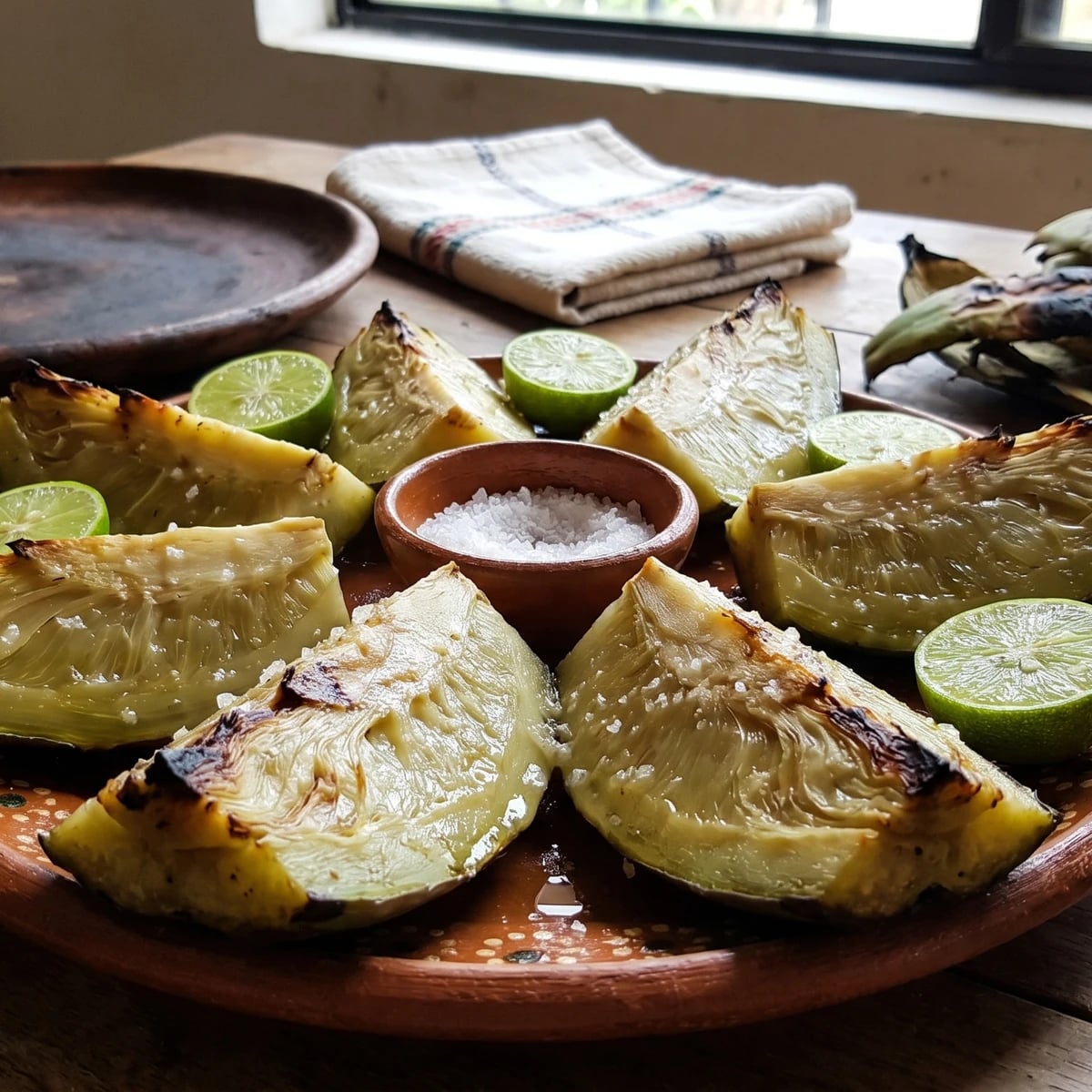
Quiote is the flower stalk of the maguey, cut young before it turns woody. The Chichimeca Jonaz cooks who still prepare it roast it whole over coals until the outside blackens and the inside softens into something between asparagus, artichoke heart, and roasted sugarcane. You peel away the burned skin, slice the tender center, and eat it with sal de grano and lime. That's it. If you want a pile of sauces and cheese, you are standing in the wrong kitchen.

I learned this from women who did not measure the fire by temperature. They measured it by coal, smell, and patience. The point is not to hide the quiote. The point is to taste the maguey before it becomes mezcal, before it becomes syrup, before it becomes decoration in somebody's courtyard. Cada estado, su propia cocina.

The Chichimeca Jonaz people of northeastern Guanajuato have used maguey for food, fiber, medicine, drink, and fuel since long before Spanish colonization reached the Bajio frontier in the 16th century. Quiote de maguey asado survives as a seasonal preparation tied to the plant's flowering cycle, because once the stalk matures it becomes fibrous and no longer suitable for eating. In San Luis de la Paz, the dish is now considered vanishing knowledge, kept mostly by older cooks in Chichimeca Jonaz households rather than by restaurants.

The technique, the tradition, and the story behind every dish.

Discover Culinary Explorer

Ingredients

young quiote de maguey

Quantity

1 stalk, about 2 to 3 pounds

cut before the center turns woody

sal de grano or coarse sea salt

Quantity

2 tablespoons

Mexican limes

Quantity

6

halved

toasted chile de arbol (optional)

Quantity

1 teaspoon

crushed into the salt

hand-pressed corn tortillas (optional)

Quantity

for serving

warmed

Equipment Needed

  • Charcoal grill, brasero, or fire pit with hardwood coals
  • Long metal tongs
  • Heavy wooden cutting board
  • Small sharp knife
  • Hand-thrown clay platter from the Bajio or plain terracotta plate

Instructions

  1. 1

    Choose the quiote

    Use a young quiote from maguey before the flower stalk has hardened. It should feel heavy for its size and the cut end should look moist, pale, and tight, not dry or stringy. If the vendor cannot tell you when it was cut, ask someone else. Si no conoces el mercado, no conoces la cocina.

    A mature quiote is good for fiber and fuel, not for this dish. Once the center turns tough, no cooking method will make it tender.
  2. 2

    Prepare the fire

    Build a medium bed of hardwood coals or natural charcoal. You want steady heat, not tall flames. Flames burn the outside before the center softens. Coals roast slowly and evenly. This is a desert technique, practical and exact, even if nobody wrote it on a thermometer.

  3. 3

    Clean the stalk

    Trim away dry ends and any loose outer fibers. Do not peel the quiote before roasting. The outer skin protects the tender center from drying out while the coals do their work. Wipe off dust with a damp cloth if needed, but do not soak it.

  4. 4

    Roast over coals

    Lay the whole quiote directly over the coals. Turn it every 10 to 12 minutes with tongs until the outside is deeply charred in patches and the stalk gives slightly when pressed. This takes 60 to 75 minutes, depending on thickness. The smell should be green, sweet, and smoky, like roasted agave and fresh-cut cane.

  5. 5

    Rest and peel

    Move the roasted quiote to a wooden board and let it rest for 10 minutes. The center finishes softening as it sits. Peel away the blackened outer skin with your fingers or a small knife. Keep the pale roasted flesh. Throw away the fibrous burned shell.

  6. 6

    Slice the center

    Cut the peeled quiote into pieces about the length of your finger, then split thick pieces lengthwise. The texture should be tender but still hold its shape, like thick asparagus. If the knife drags through fibers, slice thinner and serve only the tender sections.

  7. 7

    Season at the table

    Pile the warm slices on a clay plate. Set sal de grano, lime halves, and the optional chile de arbol salt beside it. Each person seasons their own piece. Salt first, lime second. No me vengas con atajos. The restraint is the dish.

Chef Tips

  • The hard part is sourcing, not cooking. Ask at mercados in Guanajuato, especially around San Luis de la Paz, Dolores Hidalgo, and rural stalls where people still sell seasonal field foods. A supermarket will not help you here.
  • Do not replace quiote with asparagus and call it the same dish. Asparagus is a useful reference for texture, not a substitute. A substitution is a compromise, not an upgrade.
  • Use Mexican limes, the small green ones, because their acidity cuts the sweetness of the roasted maguey. Persian lime works if that is all you have, but the flavor is softer.
  • If the quiote is unavailable, wait for the season. Mexican grandmothers cook with what the land gives today, not what a calendar app demands.
  • The optional chile de arbol salt is only a table seasoning. The traditional center of the dish is quiote, salt, and lime. Do not bury a rare ingredient under salsa.

Advance Preparation

  • The quiote must be roasted the day it is served. Once peeled and refrigerated, it loses the clean roasted sweetness that makes the dish worth eating.
  • You can prepare the sal de chile up to one week ahead by crushing toasted chile de arbol with sal de grano and storing it dry in a small jar.
  • If cooking for a gathering, roast the quiote first, then keep it loosely covered at room temperature for up to one hour before peeling and slicing.

Frequently Asked Questions

Nutrition Information

1 serving (about 110g)

Calories
125 calories
Total Fat
0 g
Saturated Fat
0 g
Trans Fat
0 g
Unsaturated Fat
0 g
Cholesterol
0 mg
Sodium
2000 mg
Total Carbohydrates
30 g
Dietary Fiber
8 g
Sugars
19 g
Protein
1 g

Note: Chef personas and recipes are created with AI assistance. Cook with care: follow safe food-handling practices, check doneness with a thermometer when needed, and adapt for allergies and your kitchen.

Where cooking meets culture.

Culinary guides, cultural storytelling, and the editorial depth that makes cooking meaningful.

Discover Culinary Explorer

More from Bajío Appetizers & Snacks

Browse the full collection