Culinary Explorer

A cooking platform built around craft, culture, and the stories behind what we eat.
Discover Culinary Explorer
Quindim

Quindim

Created by

You don't need confectionery courage. You need yolks, coconut, a calm syrup, and an oven that behaves. Quindim looks fancy, but the method is plain enough for tonight.

Desserts
Brazilian
Celebration
Make Ahead
Special Occasion
25 min
Active Time
45 min cook1 hr 10 min total
Yield10 individual quindins

You look at that shiny little gold custard and think, isso não é pra mim. Too delicate, too yellow, too much like something guarded by an aunt who measures with her eyes and says, "you'll know." No. A gente is writing it down. Cooking isn't a gift, it's something you learn, and sweets are no exception.

Quindim belongs to the Brazilian table the way brigadeiro belongs to a birthday: small, sweet, unmistakable. It isn't the pê-efe, of course. Rice, beans, a meat or egg, something green, that's what solves dinner. But a country isn't made only by the plate that feeds you at noon. It's also made by the doce passed around after lunch, the yellow one from the bakery window, the one somebody's grandmother used to unmold with a little prayer and a lot of butter.

The method is kinder than the shine suggests. You take sugar to ponto de fio so it gives structure, then you let it cool before the gemas go in, because hot syrup scrambles eggs and nobody came here to make sweet omelet. The coconut milk must be room temperature for the same reason: cold shocks, hot cooks, room temperature behaves. Then the oven stays gentle in a banho-maria, because quindim baked too hot weeps water, and baked too long turns rubbery. Anota aí: low, steady, glossy.

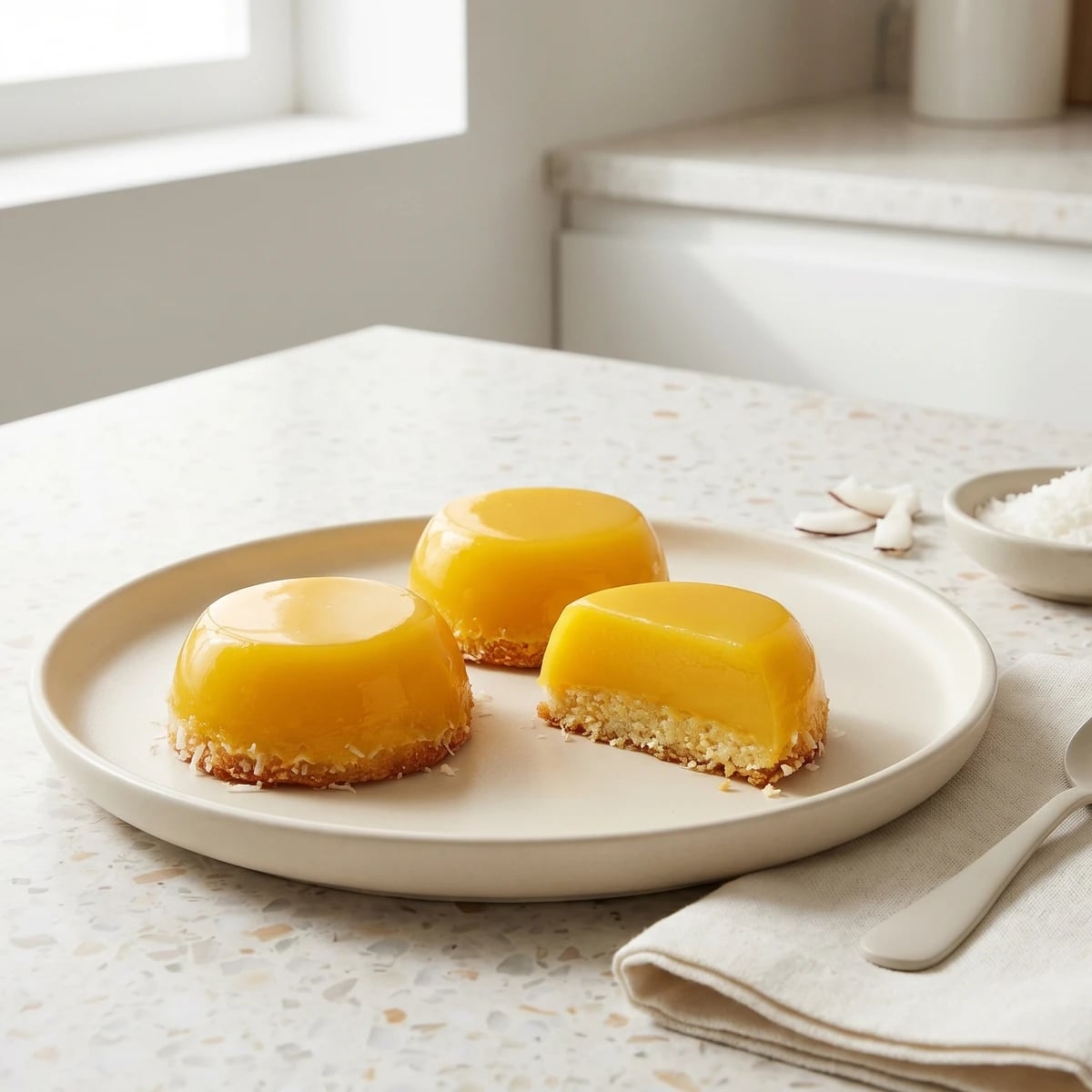
Use fresh yolks, real coconut if you can, and butter the molds like you mean it. No powder pretending to be flavor. By the end you'll have a custard that separates itself in the oven, gold custard above, coconut below, like the recipe had manners all along.

Brazil inherited much of its egg-yolk-and-sugar sweet grammar from Portuguese convent baking, where egg whites were used to starch habits and clarify wine, leaving yolks for doces. In Brazil, especially in Bahia and Pernambuco, African cooks working in colonial kitchens transformed that grammar with local coconut, giving sweets like quindim their signature texture and flavor. The name is often linked to Kimbundu, an Angolan language, another reminder that the sweet's history is not only Portuguese, even when the yolks and sugar are.

The technique, the tradition, and the story behind every dish.

Discover Culinary Explorer

Ingredients

large egg yolks

Quantity

12

fresh and at room temperature

granulated sugar

Quantity

1 cup

water

Quantity

1/2 cup

unsweetened finely grated fresh coconut

Quantity

1 cup

or unsweetened dried grated coconut, hydrated

full-fat coconut milk

Quantity

3/4 cup

at room temperature

unsalted butter

Quantity

2 tablespoons

melted and cooled

vanilla extract (optional)

Quantity

1 teaspoon

fine salt

Quantity

1/4 teaspoon

unsalted butter

Quantity

2 tablespoons

softened, for greasing molds

granulated sugar

Quantity

3 tablespoons

for coating molds

Equipment Needed

  • 10 individual 1/2-cup quindim molds or ramekins
  • Small heavy saucepan
  • Fine-mesh sieve
  • Medium mixing bowl
  • Roasting pan for banho-maria
  • Instant-read thermometer, optional

Instructions

  1. 1

    Prepare the molds

    Heat the oven to 160°C (325°F). Butter ten 1/2-cup quindim molds or ramekins generously, then coat them with sugar and tap out the excess. Be shameless with the butter. Quindim unmolds from the bottom up, and that glossy top depends on fat and sugar making a clean path.

  2. 2

    Hydrate the coconut

    If you're using dried coconut, stir it with 2 tablespoons of the coconut milk and let it sit for 10 minutes, until it feels moist and springy. Dry coconut steals liquid from the custard and leaves the bottom layer gritty. Fresh grated coconut is better when you can get it, but a Tuesday is a Tuesday. Use unsweetened dried coconut and name the cost: a little less perfume.

  3. 3

    Make the syrup

    Put the sugar and water in a small pan and bring it to a boil over medium heat, swirling the pan instead of stirring. Cook until the syrup reaches ponto de fio, about 103°C to 105°C (217°F to 221°F), or until a drop between your thumb and finger pulls into a thin thread once cooled slightly. This point gives the quindim structure. Stop before caramel color. We want gold from yolks, not burnt sugar showing off.

  4. 4

    Cool the syrup

    Pour the syrup into a mixing bowl and let it cool until warm, not hot, about 10 to 15 minutes. Touch the outside of the bowl: it should feel comfortable, not sharp with heat. Hot syrup hitting yolks makes scrambled eggs, and then the recipe didn't fail, you rushed the meeting.

  5. 5

    Strain the yolks

    Pass the yolks through a fine sieve into a bowl, letting them drip through without pressing hard on the membrane. This removes the strong eggy bits and keeps the custard smooth. Don't beat air into them. Quindim wants silk, not foam.

  6. 6

    Mix the custard

    Whisk the cooled syrup gently with the strained yolks, then add the room-temperature coconut milk, melted butter, salt, vanilla if using, and coconut. Stir until even and glossy. The coconut milk must be room temperature because cold tightens the fat and hot cooks the eggs. Room temperature is boring, and boring is exactly why it works.

  7. 7

    Fill and rest

    Divide the mixture among the prepared molds, filling each about three-quarters full. Let them rest for 10 minutes before baking, so the coconut can begin to settle. That's how quindim makes its two textures: custard on top after unmolding, coconut at the base, no trick, just gravity behaving.

  8. 8

    Bake gently

    Set the molds in a roasting pan and pour hot water into the pan until it comes halfway up the sides of the molds. Cover the pan loosely with foil and bake for 35 to 45 minutes, until the edges are set and the center jiggles softly like firm gelatin. Too hot and the custard weeps water. Too long and it turns rubbery. Gentle heat is the whole lesson here.

    If your oven runs fierce, drop it to 150°C (300°F). A pale, tender quindim is better than a tough one with ambition.
  9. 9

    Cool and unmold

    Lift the molds from the water bath and cool to room temperature, then chill for at least 2 hours. To unmold, run a thin knife around the edge, dip the bottom of each mold in warm water for 10 seconds, and turn it onto a plate. The top should land glossy and deep yellow, with coconut sitting underneath like it knew where to go.

Chef Tips

  • Use the freshest eggs you can get and bring the yolks to room temperature before mixing. Cold yolks resist blending and can make the custard uneven.
  • Fresh coconut gives the best perfume and chew. Unsweetened dried coconut is the honest shortcut, but hydrate it first. Sweetened coconut makes the custard cloying and throws off the sugar.
  • Don't use powdered coconut dessert mix, boxed custard powder, or anything promising quindim without yolks. That's not a shortcut, that's somebody selling you the costume of food.
  • Strain the yolks, but don't scrape the sieve aggressively. The membrane is where that heavy egg smell hides, and forcing it through puts it right back in.
  • Chill before unmolding. Warm quindim is fragile and dramatic, two qualities we don't need in dessert.

Advance Preparation

  • Quindim is better made ahead. Chill it at least 2 hours before unmolding, or overnight for the cleanest texture.
  • Baked quindins keep covered in the refrigerator for up to 3 days. Unmold close to serving so the glossy tops stay pretty.
  • Separate the eggs up to 1 day ahead and keep the yolks covered in the refrigerator. Bring them back to room temperature before using.

Frequently Asked Questions

Nutrition Information

1 serving (about 80g)

Calories
270 calories
Total Fat
16 g
Saturated Fat
11 g
Trans Fat
0 g
Unsaturated Fat
5 g
Cholesterol
235 mg
Sodium
75 mg
Total Carbohydrates
26 g
Dietary Fiber
1 g
Sugars
24 g
Protein
4 g

Note: Chef personas and recipes are created with AI assistance. Cook with care: follow safe food-handling practices, check doneness with a thermometer when needed, and adapt for allergies and your kitchen.

Where cooking meets culture.

Culinary guides, cultural storytelling, and the editorial depth that makes cooking meaningful.

Discover Culinary Explorer

More from Nordeste Doces: Cocada, Quindim, Bolo de Rolo & Cartola

Browse the full collection