
Chef Lupita
Acitrón de Cidra Conventual
Puebla's convent-style acitrón, made from cidra peel instead of endangered biznaga, built through repeated syrup soakings until the cubes turn firm, translucent, and ready for rosca or chiles en nogada.
A cooking platform built around craft, culture, and the stories behind what we eat.
Created by
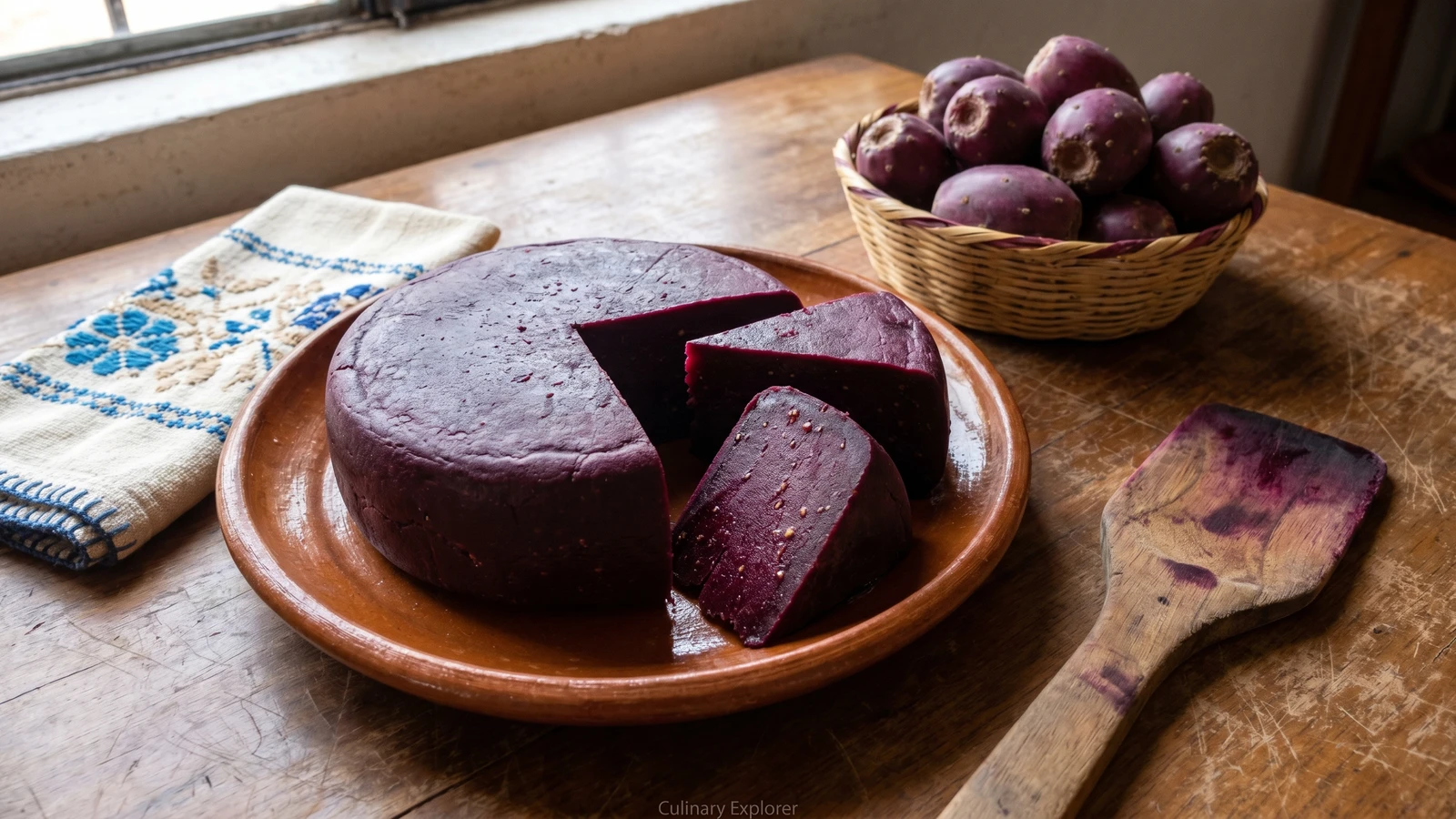
Los Altos de Jalisco turns cardona prickly pears into a firm, dark paste by boiling the strained juice slowly until it sets into a wheel you slice like queso.
Los Altos de Jalisco is where this queso de tuna belongs: the high, dry country around Tepatitlan, Arandas, San Juan de los Lagos, and the ranchos where the nopaleras hold their fruit through late summer. There is no cheese in it. The name comes from the shape and the way you slice it. If someone expects dairy, send them back to the market to look at the fruit first.
The tuna cardona is the ingredient that matters. It is small, deep red to purple, full of seeds, and stronger in color than the pale green tunas people buy for eating fresh. You peel them with respect because the tiny spines do not forgive laziness. Then you crush, strain, and boil the juice until it becomes a dark, glossy paste that pulls away from the cazo. No me vengas con atajos. This candy is patience in a pot.
I learned this from women in Los Altos who made it after the fruit harvest, not because it was fashionable, but because fruit in season must be used. They poured it into shallow clay plates or small wooden molds, let it dry, and wrapped it for later. Budget food, yes. Also intelligent food. Saber cocinar es saber vivir.
Queso de tuna belongs to the arid and semi-arid cactus regions of central and northern Mexico, especially Jalisco, San Luis Potosi, Zacatecas, Guanajuato, and Aguascalientes, where prickly pear fruit has been gathered since pre-Columbian times. The method of boiling cactus fruit juice into a firm conserve predates industrial sugar candies and reflects an older household economy: preserve the short tuna season by concentrating its own sugars. The cardona variety, valued for its dark color and intense flavor, is especially associated with the highland and Bajio belt where nopales grow hard under dry sun.
Quantity
10 pounds
scrubbed and handled with gloves
Quantity
1/2 cup
only to start the fruit cooking if needed
Quantity
2 tablespoons
Quantity
1/4 teaspoon
| Ingredient | Quantity |
|---|---|
| ripe tuna cardona prickly pearsscrubbed and handled with gloves | 10 pounds |
| wateronly to start the fruit cooking if needed | 1/2 cup |
| fresh Mexican lime juice | 2 tablespoons |
| kosher salt | 1/4 teaspoon |
Wear gloves. Rinse the tuna cardona under running water and scrub them with a stiff brush to remove any remaining tiny spines. Do not trust fruit that looks clean. Those spines hide. Trim both ends from each tuna, make one lengthwise cut through the skin, and peel the fruit away in one piece.
Put the peeled tunas in a wide heavy pot or copper cazo. Add the water only if the fruit is not releasing juice right away. Cook over medium heat for 15 to 20 minutes, crushing with a wooden paddle until the fruit collapses into a loose, seedy pulp. The color should be deep garnet. That color is Los Altos speaking.
Pour the hot pulp through a fine-mesh strainer or a clean cotton cloth set over a bowl. Press firmly to extract the juice, but do not grind the seeds into the liquid. Seed bitterness is not flavor. Measure the juice if you want discipline: 10 pounds of tunas usually gives 6 to 8 cups of juice, depending on the season.
Return the strained juice to the clean pot. Add the lime juice and salt. Bring to a steady boil over medium-high heat, then lower to medium so it bubbles firmly without climbing the sides. Stir often at first. As it thickens, stir constantly. This is where most people fail because they get bored. La cocina no es decoración, es trabajo.
Keep cooking for 3 to 4 hours, scraping the bottom and corners with a wooden paddle. The juice will darken from red to wine-purple, then almost brown-black. It is ready when the paste is very thick, glossy, pulls cleanly from the bottom of the pot, and a spoonful dropped on a cool plate holds its shape. If using a thermometer, look for 222F to 224F at sea level. At higher altitude, trust the plate test more than the number.
Lightly dampen a shallow clay plate, small wooden mold, or heatproof dish. Scrape the hot paste into it and smooth the top with the wet back of a spoon. The paste will be heavy and stubborn. Good. A thin syrup means you stopped too early.
Let the queso de tuna cool uncovered at room temperature until firm, at least 8 hours and preferably overnight. Turn it out, wrap it in parchment or wax paper, and store it in a cool place. Slice thin wedges with a lightly oiled knife. Serve it with cafe de olla or as a small sweet after the meal. Asi se hace y punto.
1 serving (about 55g)
Culinary guides, cultural storytelling, and the editorial depth that makes cooking meaningful.
Discover Culinary ExplorerChef Lupita
Puebla's convent-style acitrón, made from cidra peel instead of endangered biznaga, built through repeated syrup soakings until the cubes turn firm, translucent, and ready for rosca or chiles en nogada.

Chef Lupita
Ciudad de México's Tulyehualco alegría is popped huautli folded into piloncillo honey, pressed with peanuts, pepitas, and raisins, then cut into the rectangular bars that built a pueblo's identity.

Chef Lupita
Oaxaca's pre-Columbian amaranth bar, popped on a hot comal and bound with piloncillo, honey, and the sacred Zapotec grain that the Spanish tried, and failed, to outlaw.

Chef Lupita
Querétaro's mercado candy of popped amaranto pressed with dark piloncillo syrup, pepitas, pecans, and cacahuate, a Bajío sweet that respects the seed before it decorates the table.