
Chef Thomas
Baked Onions with Cream and Thyme
Whole onions surrendered to a low oven with cream and thyme until they collapse into something golden, sweet and yielding, the kind of side dish that quietly upstages everything else on the table.
A cooking platform built around craft, culture, and the stories behind what we eat.
Created by Chef Thomas
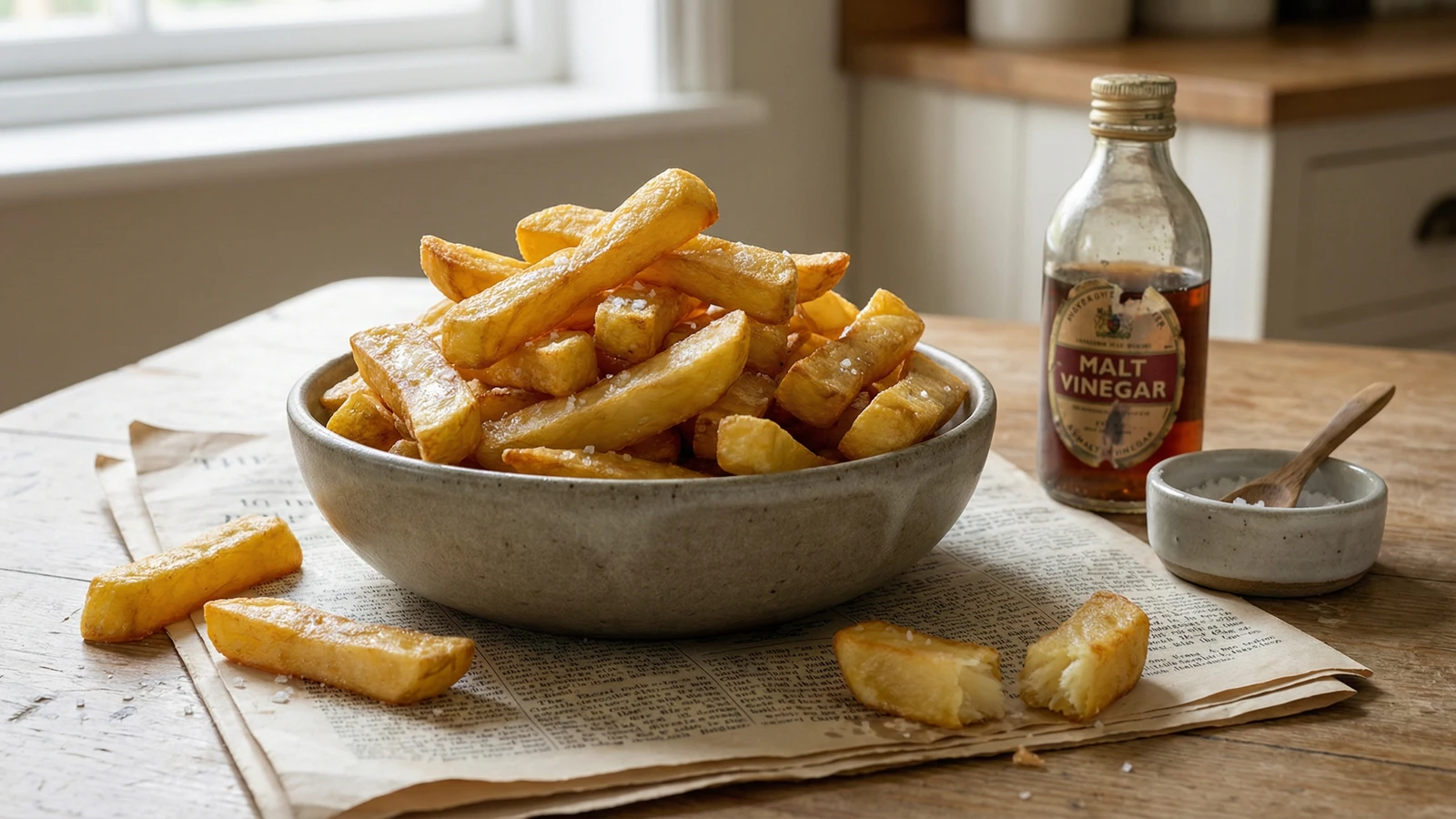
Thick-cut, twice-fried chips with a shattering golden crust and a floury, collapsing centre, cooked in beef dripping the way they ought to be, and served with nothing but salt and sharp vinegar.
The smell of hot fat is an unfashionable thing to love. But there it is. The moment the first chip hits the pan and the kitchen fills with that deep, warm, savoury haze, something in me settles. This is not sophisticated cooking. This is potatoes and hot dripping and a bit of patience, and it produces something that no restaurant chip, no oven chip, no frozen thing from a bag will ever match.
A proper chip is two things at once: a crisp, golden shell that resists the teeth for just a moment, and a floury, almost powdery interior that falls apart on the tongue. Getting both requires frying twice. Once at a lower temperature to cook the potato through, and again at a higher temperature to form the crust. It sounds like a bother, and I suppose it is, in the same way that making stock is a bother, or growing your own tomatoes. The kind of bother that repays you so generously you stop noticing the effort.
I make these on a Friday, usually. Not always, but often enough that the habit has settled into the week's rhythm. There's a bottle of malt vinegar on the table and salt in a dish, and the kitchen window fogs up from the heat. I wrote it down in the notebook once: "Chips. Friday. Dripping. Vinegar on the newsprint." Some meals don't need a recipe. They need a ritual.
The potato matters. Maris Piper, if your greengrocer has them, or King Edwards if you're buying in season. Something floury, something that will break apart inside that crisp shell. A waxy potato will give you something firm and dense, which has its merits elsewhere, but not here. Here you want collapse. You want the inside to almost dissolve when you bite through the outside. That contrast is the whole point.
Quantity
1kg
Maris Piper or King Edward, peeled and cut into thick chips
Quantity
enough to fill your pan to a depth of about 8cm
Quantity
to taste
Quantity
to serve
| Ingredient | Quantity |
|---|---|
| floury potatoesMaris Piper or King Edward, peeled and cut into thick chips | 1kg |
| beef dripping or groundnut oil | enough to fill your pan to a depth of about 8cm |
| fine sea salt | to taste |
| malt vinegar (optional) | to serve |
Peel the potatoes and cut them into chips about the width of your index finger. Not matchsticks. Not wedges. Chips. Somewhere between one and two centimetres thick, though I've never measured one in my life and neither should you. Some will be fatter than others. That's fine. They'll cook at slightly different rates and you'll end up with a mix of textures, which is better than uniform anyway.
Put the cut chips into a bowl of cold water and swirl them around. The water will go cloudy with starch. Drain, refill, and repeat until the water runs more or less clear. Two or three rinses usually does it. Then spread them out on a clean tea towel and pat them thoroughly dry. This matters. Wet chips in hot fat spit, and they won't crisp properly. Take the time.
Heat your fat in a deep, heavy pan to around 130C. If you don't have a thermometer, drop in a single chip: it should sink gently and produce a lazy stream of small bubbles. No violence. No drama. Lower the chips in carefully, in batches if your pan is small, and let them cook for seven to eight minutes. They should be soft all the way through but still pale, no colour at all. Lift them out with a slotted spoon and spread them on a wire rack. Leave them to cool and dry. You can wait ten minutes or you can wait two hours. Either is fine.
Bring the fat back up, this time to around 190C. Hotter. A chip dropped in should immediately fizz with conviction, the surface bubbling aggressively. This is where the shell forms. Fry the chips in batches, giving them four to five minutes, until they are golden and crisp on the outside. The colour you want is a deep, honest gold, not pale and not dark. Your eyes will tell you. Lift them out and let them drain briefly on kitchen paper.
Tip the chips into a warm bowl and scatter over a generous amount of sea salt while they're still glistening. Toss them gently. The salt needs to hit the fat while it's still on the surface or it won't stick. Serve immediately with malt vinegar on the table for those who want it. Don't wait. Don't let them sit. Chips are a five-minute pleasure, and the clock starts the moment they leave the pan.
1 serving (about 165g)
Culinary guides, cultural storytelling, and the editorial depth that makes cooking meaningful.
Discover Culinary ExplorerChef Thomas
Whole onions surrendered to a low oven with cream and thyme until they collapse into something golden, sweet and yielding, the kind of side dish that quietly upstages everything else on the table.

Chef Thomas
Celery braised long and slow in butter and good stock until it turns soft, silky, and almost sweet, the kind of quiet side dish that makes people ask what you did to it.

Chef Thomas
Leeks surrendered to butter and cream until they turn silky, sweet and yielding, the kind of side dish that quietly becomes the reason you sat down to dinner in the first place.

Chef Thomas
Peas braised in butter with wilted lettuce and spring onions, a dish that is entirely French in spirit and entirely at home on an English table in late May when the garden finally delivers.