Chef Margarida
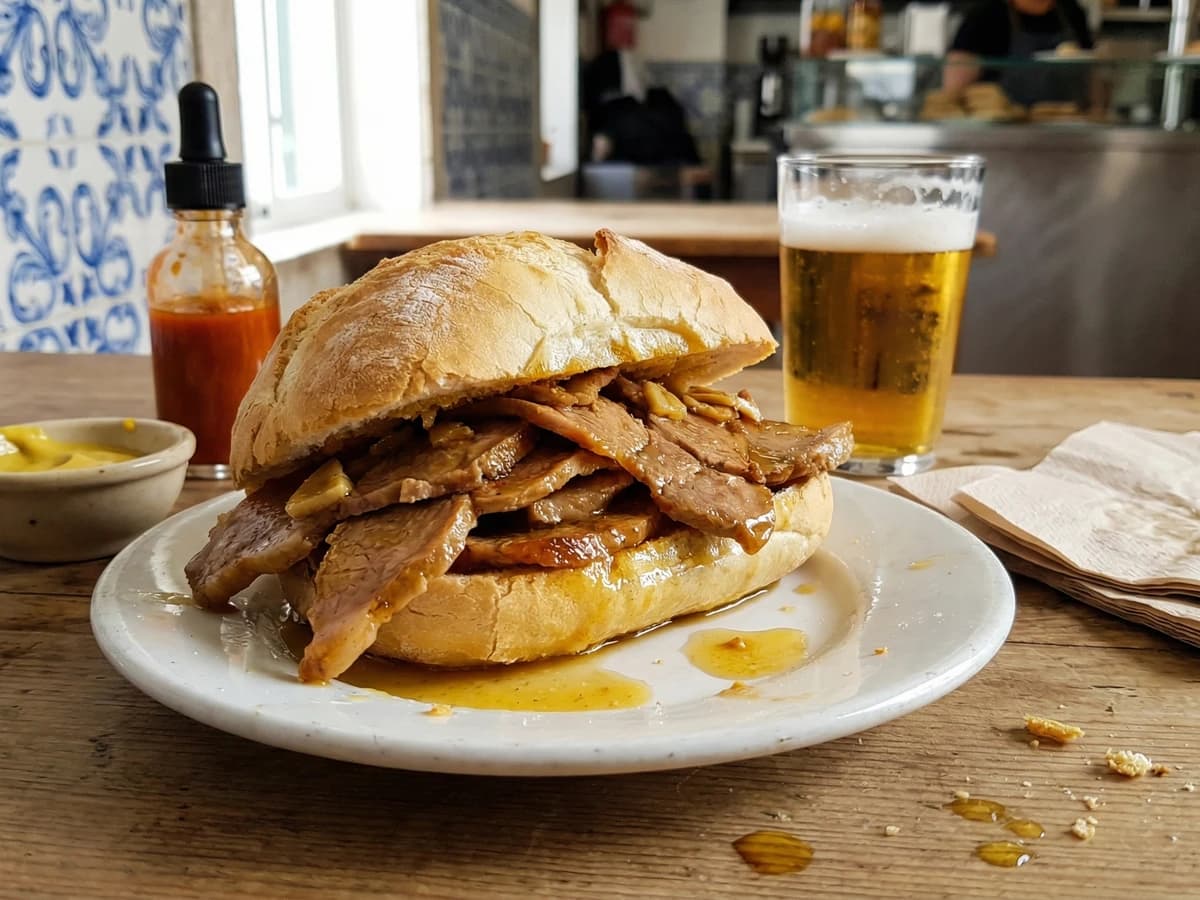
Bifana
Alentejo's gift to late nights and hungry workers: thin pork bathed in garlic and white wine, stuffed into a crusty roll. Mustard or piri-piri, that's the only question.
A cooking platform built around craft, culture, and the stories behind what we eat.
Created by
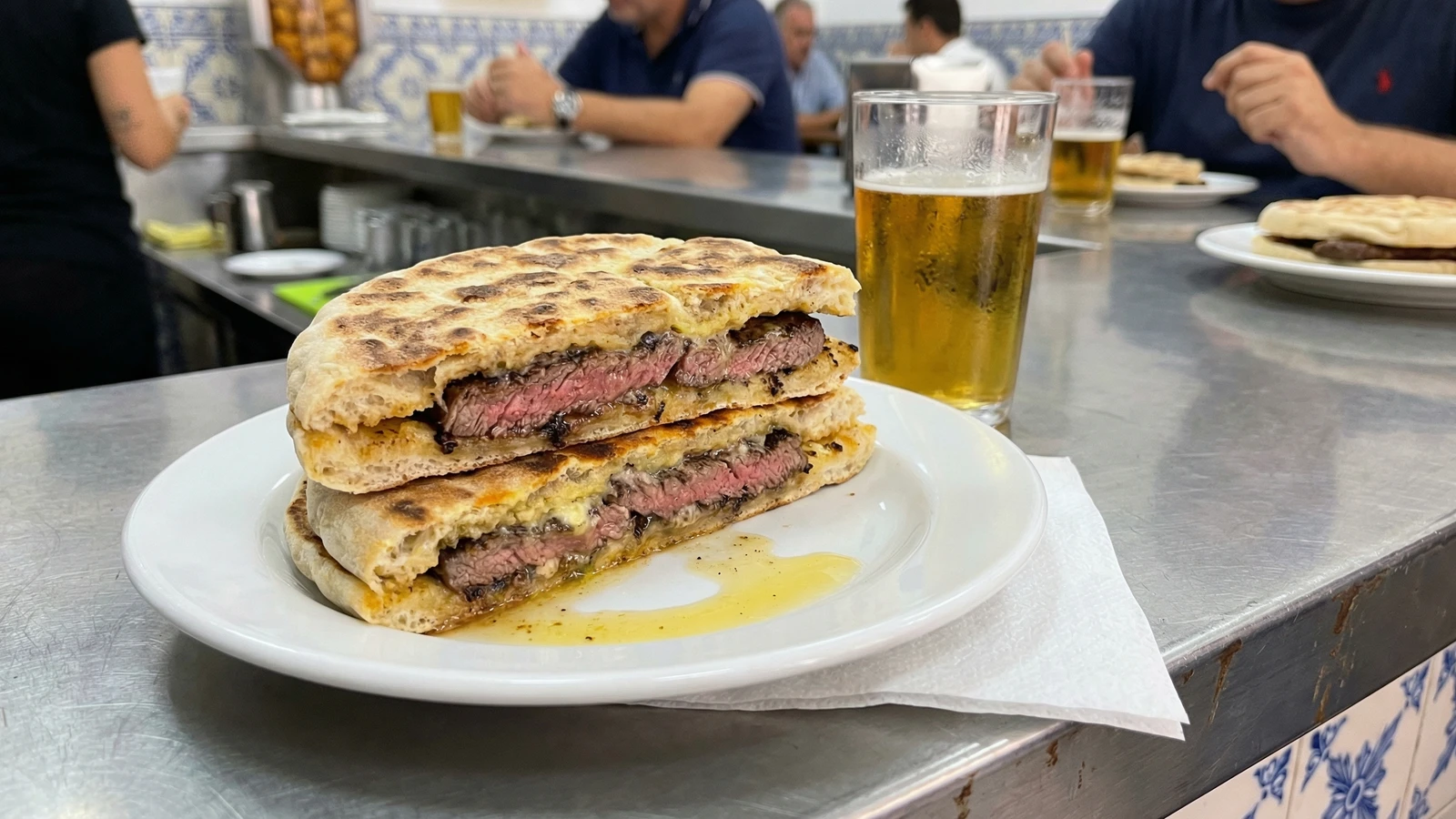
The steak sandwich of Madeira, where garlic-soaked beef meets the island's legendary sweet potato flatbread. Prego means 'nail it to the grill.' That's exactly what you do.
Ididn't grow up with bolo do caco. That's a Madeiran thing, and my roots are Alentejo. But the first time I tasted prego em bolo do caco in Funchal, standing at a kiosk near the Mercado dos Lavradores with grease running down my wrist, I understood why the Madeirans guard this recipe so fiercely.
The bread is everything. Bolo do caco isn't quite bread, isn't quite flatbread, isn't quite anything you've had before. Sweet potato in the dough gives it that slight sweetness, that tender crumb that tears instead of crumbles. Traditionally it's cooked on a caco, a flat basalt stone heated over wood fire. You can smell them cooking from streets away.
The prego itself is simple. Thin beef, pounded tender, marinated in garlic and wine and bay leaf. Seared hard and fast until the edges char but the center stays pink. Then it goes straight into the bolo do caco that's been split and slathered with garlic butter. The butter melts. The meat juices soak into the bread. You eat it standing up because sitting down would waste precious seconds.
At Mesa da Avó, I've served this as a late-night dish, after the main courses, when everyone's had wine and the formality has melted away. People fight over who gets to make the next one. This is what Portuguese street food is supposed to be: fast, satisfying, and absolutely non-negotiable in its simplicity.
Bolo do caco arrived in Madeira with the island's agricultural transformation after Portuguese settlement in the 15th century. The sweet potato, brought from the Americas, became a staple crop in Madeira's volcanic soil and found its way into the flatbread that was already being made on heated stones. The name 'caco' refers to the basalt cooking stone, a tradition with Moorish roots that spread throughout the Portuguese Atlantic islands.
Quantity
300g (about 1 medium)
peeled and cubed
Quantity
500g, plus more for dusting
Quantity
7g (1 packet)
Quantity
1 teaspoon
Quantity
1 teaspoon
Quantity
100ml
Quantity
4 (about 150g each)
pounded to 1cm thick
Quantity
6 cloves
minced
Quantity
100ml
Quantity
2
Quantity
2 tablespoons
Quantity
1 teaspoon
Quantity
freshly ground, to taste
Quantity
100g
softened
Quantity
4 cloves
finely minced
Quantity
2 tablespoons
finely chopped
Quantity
pinch
| Ingredient | Quantity |
|---|---|
| sweet potatopeeled and cubed | 300g (about 1 medium) |
| all-purpose flour | 500g, plus more for dusting |
| instant yeast | 7g (1 packet) |
| salt | 1 teaspoon |
| sugar | 1 teaspoon |
| warm water | 100ml |
| beef steaks (rump or sirloin)pounded to 1cm thick | 4 (about 150g each) |
| garlicminced | 6 cloves |
| dry white wine | 100ml |
| bay leaves | 2 |
| extra virgin olive oil | 2 tablespoons |
| sea salt | 1 teaspoon |
| black pepper | freshly ground, to taste |
| unsalted buttersoftened | 100g |
| garlic for butterfinely minced | 4 cloves |
| fresh parsleyfinely chopped | 2 tablespoons |
| salt for butter | pinch |
Boil the sweet potato cubes in salted water until completely tender, about 15 minutes. Drain well and mash while still hot until completely smooth. No lumps. The sweet potato needs to disappear into the dough. Let it cool to warm, not hot.
In a large bowl, combine the flour, yeast, salt, and sugar. Add the warm mashed sweet potato and the warm water. Mix until a shaggy dough forms, then turn out onto a floured surface and knead for 8 to 10 minutes until smooth and elastic. The dough should be soft but not sticky. Add flour sparingly if needed. Shape into a ball, place in an oiled bowl, cover with a damp cloth, and let rise in a warm spot for 1 hour until doubled.
While the dough rises, prepare the prego. Place the pounded steaks in a shallow dish. Scatter the minced garlic over them, add the bay leaves, pour the wine and olive oil over everything. Season with salt and pepper. Turn the steaks to coat. Cover and let marinate at room temperature for at least 30 minutes, or refrigerate for up to 4 hours.
Combine the softened butter with the minced garlic, parsley, and a pinch of salt. Mix until everything is evenly distributed. This is what transforms good into extraordinary. Set aside at room temperature.
Divide the risen dough into 4 equal pieces. Shape each into a ball, then flatten into discs about 15cm across and 1.5cm thick. Heat a large cast iron skillet or griddle over medium heat. No oil. Cook each bolo for 4 to 5 minutes per side until golden brown spots appear and the bread sounds hollow when tapped. The surface should have that characteristic mottled look. Keep warm wrapped in a clean cloth.
Heat a heavy skillet or grill pan over high heat until smoking. Remove the steaks from the marinade and shake off excess. Sear for 1 to 2 minutes per side for medium-rare, depending on thickness. The edges should char while the center stays pink. Remove and rest for 1 minute only. You want these juices going into the bread, not onto a cutting board.
Split each bolo do caco horizontally. Don't cut all the way through. Spread the garlic butter generously on both cut sides. The residual heat will melt it immediately. Place a steak inside, close the bread, press down gently. The butter melts, the meat juices soak in, and everything becomes one. Serve immediately. This is not a sandwich that waits. Eat it standing up if you have to. That's how it's done in Funchal.
1 serving (about 350g)
Culinary guides, cultural storytelling, and the editorial depth that makes cooking meaningful.
Discover Culinary ExplorerChef Margarida
Alentejo's gift to late nights and hungry workers: thin pork bathed in garlic and white wine, stuffed into a crusty roll. Mustard or piri-piri, that's the only question.

Chef Margarida
The northern answer to Portugal's beloved pork sandwich, where beer replaces wine and the sauce runs down your arms. This is late-night Porto food, tasca food, the kind you eat standing at zinc counters with an imperial in the other hand.
Chef Margarida
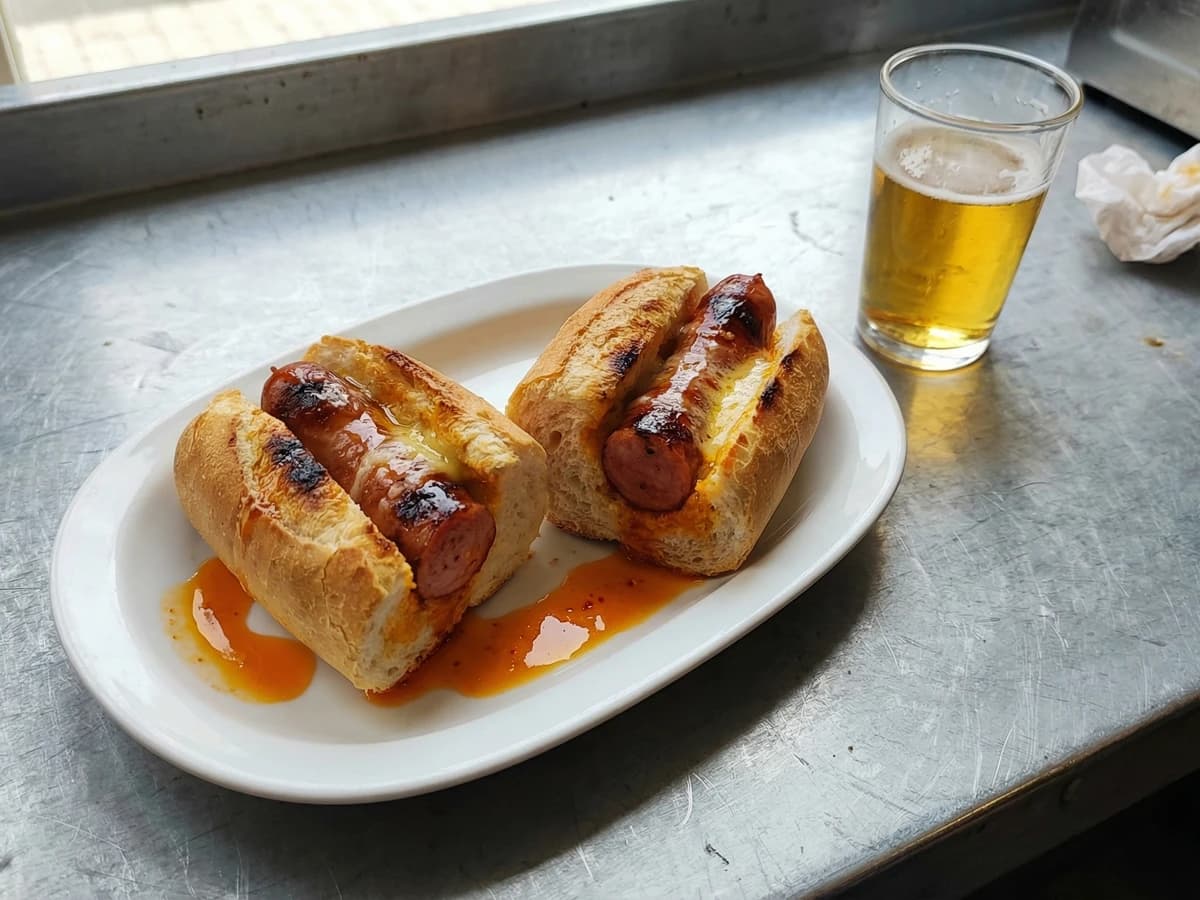
The late-night sandwich of Porto, where fresh sausage meets crusty bread and a generous slap of piri piri butter. This is what you eat standing at the counter with a cold imperial, surrounded by strangers who feel like friends.

Chef Margarida
Porto's answer to the hot dog: grilled chouriço in a crusty roll, smothered in melted cheese with a runny fried egg on top. This is what you eat at 2am and remember forever.