Chef Margarida
Bifana
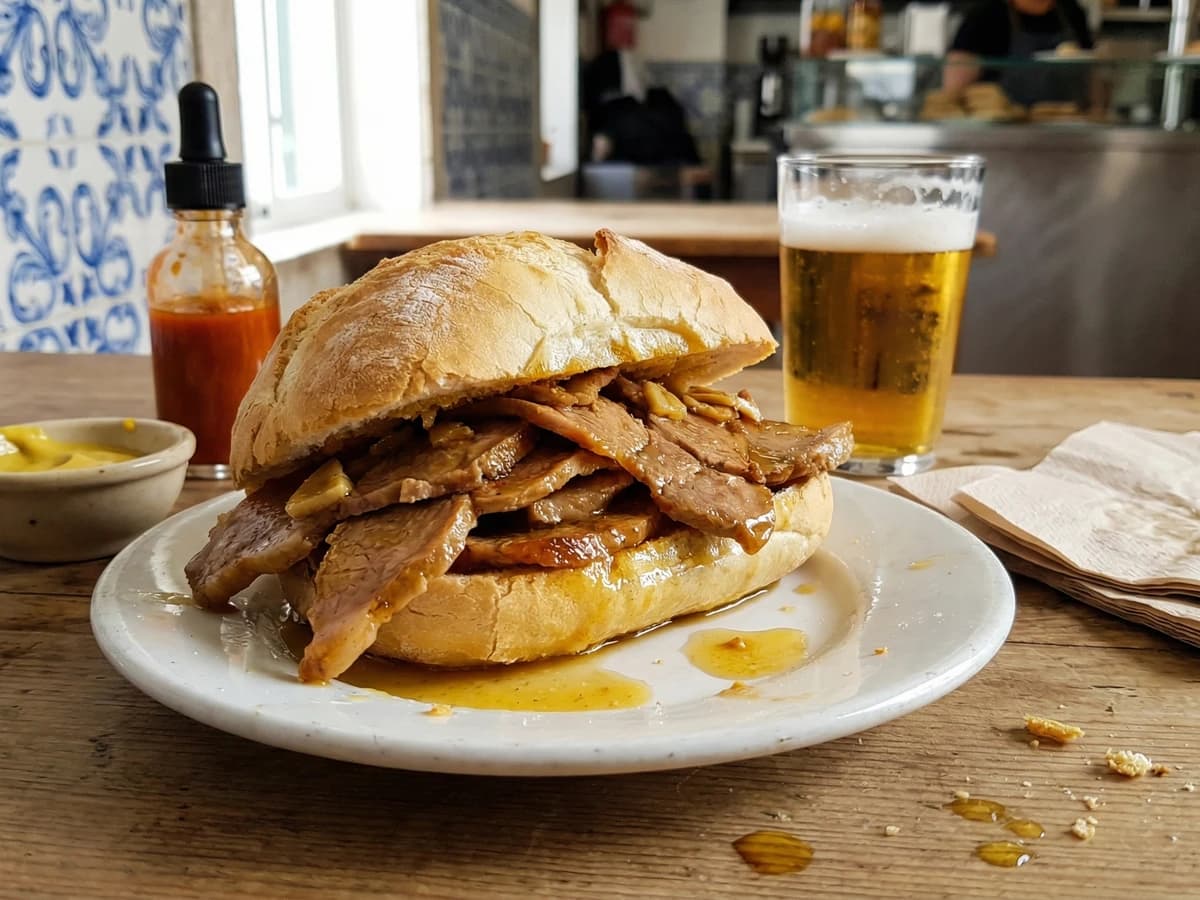
Alentejo's gift to late nights and hungry workers: thin pork bathed in garlic and white wine, stuffed into a crusty roll. Mustard or piri-piri, that's the only question.
A cooking platform built around craft, culture, and the stories behind what we eat.
Created by
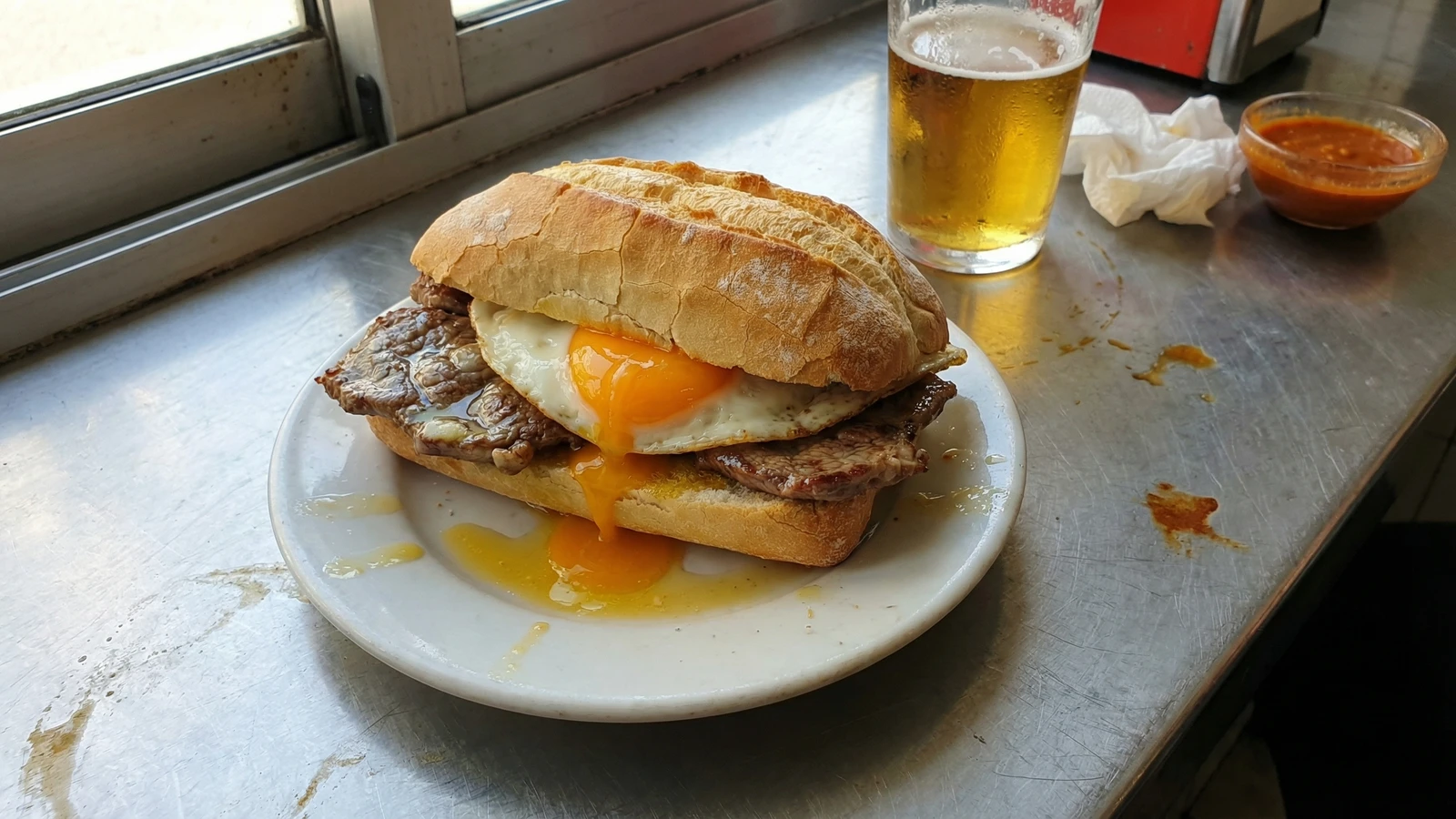
The sandwich that waits for you at 3am, garlic-kissed beef seared fast and hot, a fried egg with its yolk still running, all of it caught in crusty bread. This is what Portuguese nights out are made of.
There's a moment in every Portuguese night out. It's 3am. You've been dancing or drinking or both. And suddenly you need a prego. Not want. Need. Your body knows what it requires and it requires garlic, beef, and bread.
The tascas know this. The little snack bars near the nightclubs know this. They've been doing this for decades, generations, slapping thin steaks onto screaming hot pans, crushing garlic into sizzling butter, sliding runny eggs on top because someone brilliant decided the prego needed a crown.
I can't count how many pregos I've eaten standing at zinc counters at impossible hours. The bread crusty, the steak thin and fast-cooked, the egg yolk breaking and running into everything. Paper napkins piling up. Cold imperial in hand. That moment of perfect satisfaction.
This is Portugal's street food. Not fancy. Not trying to be anything other than exactly what it is. Pão, carne, alho, ovo. The four pillars of a proper night out. At Mesa da Avó, I don't serve pregos because they belong to the tascas, to the night, to those zinc counters worn smooth by elbows. But I'll teach you to make one at home for when that 3am feeling hits and you're too far from Lisbon.
The prego emerged in Lisbon's tascas and cervejarias in the early 20th century, a quick meal for workers and night owls alike. The name comes from 'pregar,' meaning to nail or strike, likely referencing how the steak is pounded thin or slapped onto the hot pan. The egg addition came later, transforming a simple steak sandwich into the ultimate late-night indulgence.
Quantity
2 (about 120g each)
pounded to 1cm thickness
Quantity
2
split horizontally
Quantity
4 cloves
minced
Quantity
3 tablespoons
Quantity
2 tablespoons
Quantity
2 large
Quantity
1 tablespoon
Quantity
to taste
Quantity
to taste
freshly ground
Quantity
for serving
| Ingredient | Quantity |
|---|---|
| beef steaks (alcatra or lombo)pounded to 1cm thickness | 2 (about 120g each) |
| papo seco rollssplit horizontally | 2 |
| garlicminced | 4 cloves |
| butter | 3 tablespoons |
| olive oil | 2 tablespoons |
| eggs | 2 large |
| white wine (optional) | 1 tablespoon |
| flaky sea salt | to taste |
| black pepperfreshly ground | to taste |
| piri-piri sauce (optional) | for serving |
If your steaks aren't already thin, place them between two sheets of cling film and pound with a meat mallet or the bottom of a heavy pan until about 1cm thick. Season generously with salt and pepper on both sides. Let them come to room temperature for 10 minutes. Cold meat hitting a hot pan is how you get grey, sad steaks.
Set a heavy skillet or cast iron pan over high heat. Let it get properly hot, at least 2 minutes. Add half the butter and 1 tablespoon of the olive oil. The moment the butter foam subsides and it starts to brown, you're ready. If you're timid with heat, you'll never make a proper prego.
Lay the steaks in the pan. Don't touch them. Let them sear hard for 90 seconds until a deep brown crust forms. Flip once and cook another 60 to 90 seconds for medium-rare. In the last 30 seconds, add half the minced garlic to the pan, letting it sizzle in the butter without burning. If using wine, splash it in now and let it evaporate. Transfer the steaks to a plate and pour all the garlicky pan juices over them. Let rest for 2 minutes.
Without cleaning the pan (you want that flavor), add the remaining butter and olive oil over medium-high heat. Crack in the eggs and fry until the whites are set but the yolks are still completely runny, about 2 minutes. Baste the tops with the hot butter if you like. Season with a pinch of salt. The yolk must run. A solid yolk is a tragedy.
While the eggs finish, open the papo seco rolls and toast them cut-side down in a dry pan or under the grill for 30 seconds. You want them warm and slightly crisp, not hard. The bread needs to be able to drink the juices.
Place each steak on the bottom half of a roll. Pour any accumulated juices from the resting plate over the meat. Crown with a fried egg. Close the sandwich (loosely, so it doesn't crush). Eat immediately. The yolk should break when you bite in, running down into the bread and mixing with the garlic butter. Have napkins ready. Have piri-piri on the side if you want heat. Don't wait for it to cool. A prego waits for no one.
1 serving (about 240g)
Culinary guides, cultural storytelling, and the editorial depth that makes cooking meaningful.
Discover Culinary ExplorerChef Margarida
Alentejo's gift to late nights and hungry workers: thin pork bathed in garlic and white wine, stuffed into a crusty roll. Mustard or piri-piri, that's the only question.

Chef Margarida
The northern answer to Portugal's beloved pork sandwich, where beer replaces wine and the sauce runs down your arms. This is late-night Porto food, tasca food, the kind you eat standing at zinc counters with an imperial in the other hand.
Chef Margarida
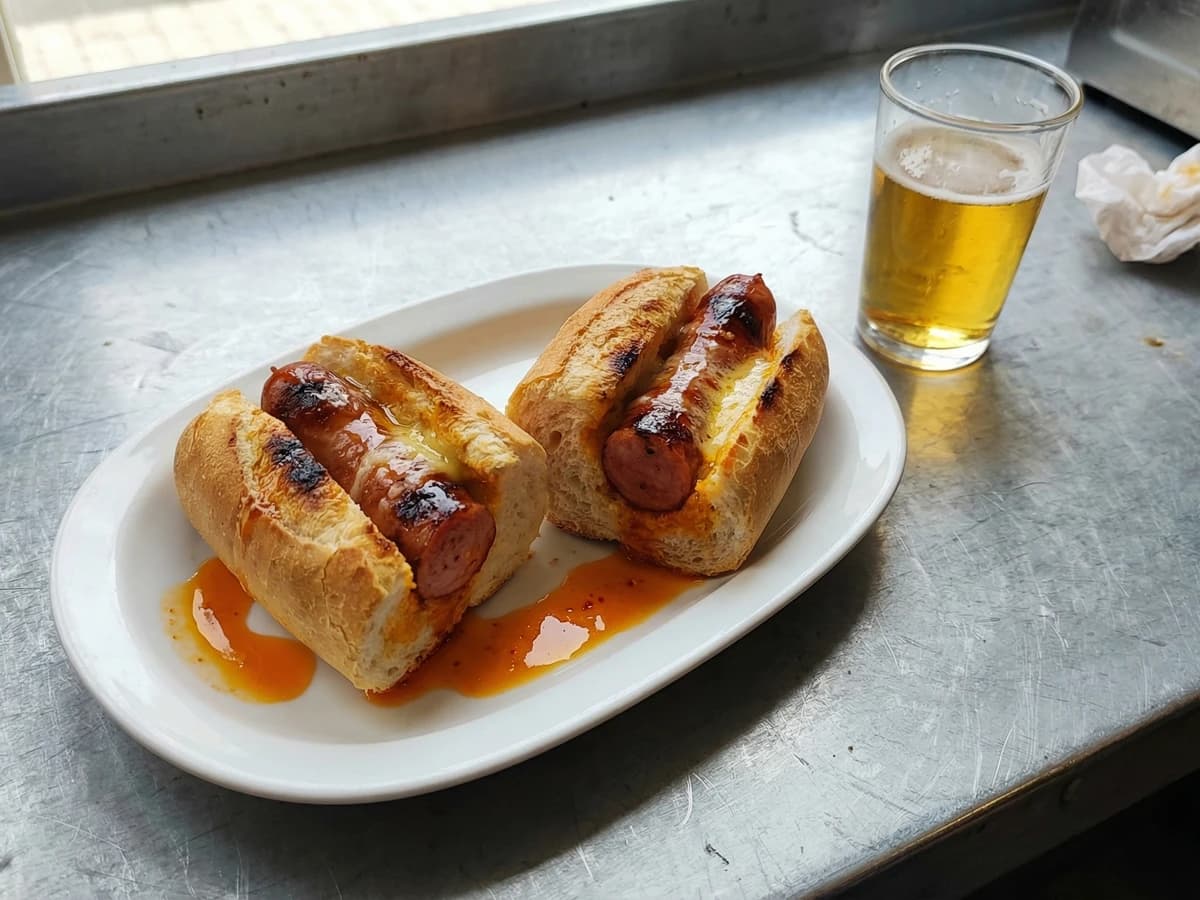
The late-night sandwich of Porto, where fresh sausage meets crusty bread and a generous slap of piri piri butter. This is what you eat standing at the counter with a cold imperial, surrounded by strangers who feel like friends.

Chef Margarida
Porto's answer to the hot dog: grilled chouriço in a crusty roll, smothered in melted cheese with a runny fried egg on top. This is what you eat at 2am and remember forever.