Chef Makoa
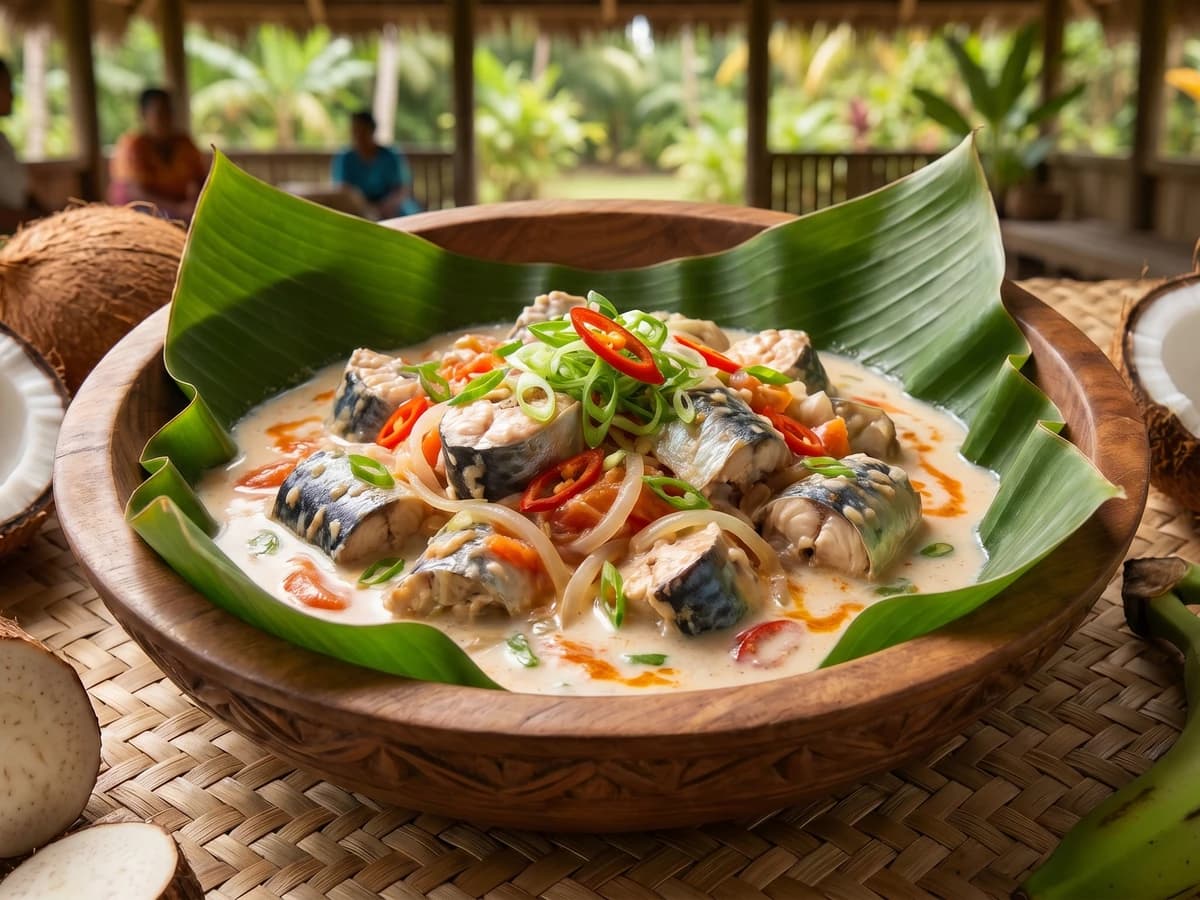
Faiʻai Eleni (Sāmoan Mackerel in Coconut Cream)
Sāmoa's faiʻai eleni turns tinned mackerel, onion, and coconut cream into a quick, generous supper, the pantry fish that feeds the whole ʻaiga beside talo, ʻulu, green banana, or rice.
A cooking platform built around craft, culture, and the stories behind what we eat.

Created by
Sāmoa’s povi masima is hard-cured beef boiled soft, salt tamed by water and time, then finished with cabbage for the Sunday toʻonaʻi table.
The first thing a Sāmoan auntie will teach you is not the beef. It’s the share. Povi masima, salted beef, belongs to Sāmoa’s table now, especially the toʻonaʻi, the big Sunday meal after church, where the whole aiga, the family, eats from one spread and nobody watches the pot like it’s only for them.
This isn’t deep food in the canoe-crop way. Talo, ʻulu, banana, coconut, those are the old relatives that came by canoe. Beef came later, through ships and trade and hard history, but Sāmoa took that salted brisket and made it sit beside the old foods until it became comfort, feast food, make-ahead food, the salty piece that asks for plain talo under it.
The work is humble. Soak if it’s too salty. Boil it slow until the fat goes soft and glossy. Change the water if it bites too hard. Add cabbage near the end so it drinks the beef but doesn’t disappear. Eat what you have, yeah? If the table has talo, good. If it has rice, good. The point is the aiga fed.
Across the Triangle, the cousins know this turn too: Tonga folds corned beef into lū pulu and kapisi pulu, Sāmoa has palusami fai pisupo with tinned beef, Hawaiʻi eats corned beef and cabbage in the local plate-lunch world. Same ocean family, different history in each bowl. Name the hand. This one is Sāmoan.
Povi masima is a post-contact Sāmoan food, born from nineteenth-century trade, mission, and colonial supply lines that brought cattle, salt beef, and later tinned meats into Pacific kitchens. It sits on the other side of the deep-food doorway from canoe crops like talo and ʻulu, but Sāmoan families made it their own at the toʻonaʻi table, where salted beef, cabbage, and taro became a Sunday comfort. Its cousins across Polynesia show the same pattern: Tonga’s lū pulu and kapisi pulu, Sāmoa’s palusami fai pisupo, and Hawaiʻi’s local corned beef plates carry later history beside older foodways.
Quantity
4 pounds
rinsed
Quantity
as needed
for soaking and simmering
Quantity
1 large
quartered
Quantity
4
lightly smashed
Quantity
1 teaspoon
Quantity
2
Quantity
1 large head
cut into 8 wedges
Quantity
2 pounds
for serving
| Ingredient | Quantity |
|---|---|
| povi masima, salted beef brisket or salt-cured beefrinsed | 4 pounds |
| cold waterfor soaking and simmering | as needed |
| yellow onionquartered | 1 large |
| garlic cloveslightly smashed | 4 |
| black peppercorns | 1 teaspoon |
| bay leaves (optional) | 2 |
| green cabbagecut into 8 wedges | 1 large head |
| talo (taro), ʻulu (breadfruit), green banana, or ricefor serving | 2 pounds |
Rinse the povi masima well, then cut a tiny piece from an edge and simmer it in a little water for 5 minutes. Taste that water and meat. If it is salty but friendly, keep going. If it grabs your tongue hard, soak the beef in cold water for 2 to 4 hours, changing the water once.
Put the beef in a heavy pot and cover it with fresh cold water by 2 inches. Add the onion, garlic, peppercorns, and bay leaves if using. Bring it up slowly, then lower to a gentle simmer. Skim the gray foam from the top so the broth stays clean.
Simmer 2 1/2 to 3 hours, partly covered, until a fork slides into the thickest part with almost no fight and the fat looks soft and glossy. Keep the water just moving, not rolling angry. If the broth tastes too salty halfway through, pour off half and replace it with fresh hot water. No shame in that. Salt beef needs correcting by hand.
Lift the beef to a board and keep it warm. Add the cabbage wedges to the pot liquor and simmer 10 to 15 minutes, just until the leaves slump, shine, and hold together when lifted. You want cabbage that drank the beef, not cabbage that gave up and vanished.
Slice the povi masima across the grain into thick pieces, or pull it into soft chunks if the brisket is very tender. Lay it with the cabbage in a wide bowl, spoon a little pot liquor over the top for gloss, and serve with talo, ʻulu, green banana, or rice. The starch is not decoration. It is the steady hand that carries the salt.
1 serving (about 390g)
Culinary guides, cultural storytelling, and the editorial depth that makes cooking meaningful.
Discover Culinary ExplorerChef Makoa
Sāmoa's faiʻai eleni turns tinned mackerel, onion, and coconut cream into a quick, generous supper, the pantry fish that feeds the whole ʻaiga beside talo, ʻulu, green banana, or rice.
Chef Makoa
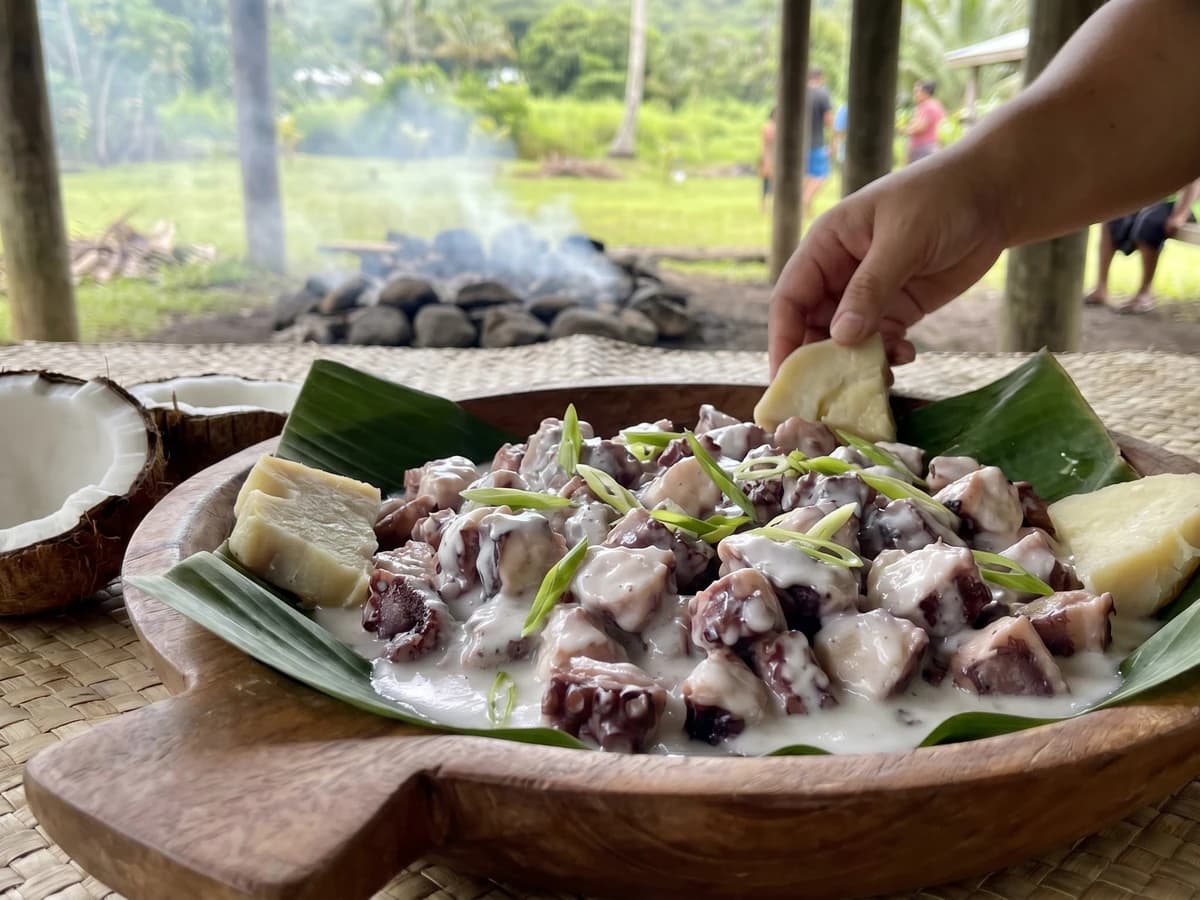
Sāmoa's faiʻai feʻe is reef octopus simmered patient in fresh coconut cream, rich and glossy enough to eat beside talo at toʻonaʻi, with the ocean feeding the whole aiga.
Chef Makoa
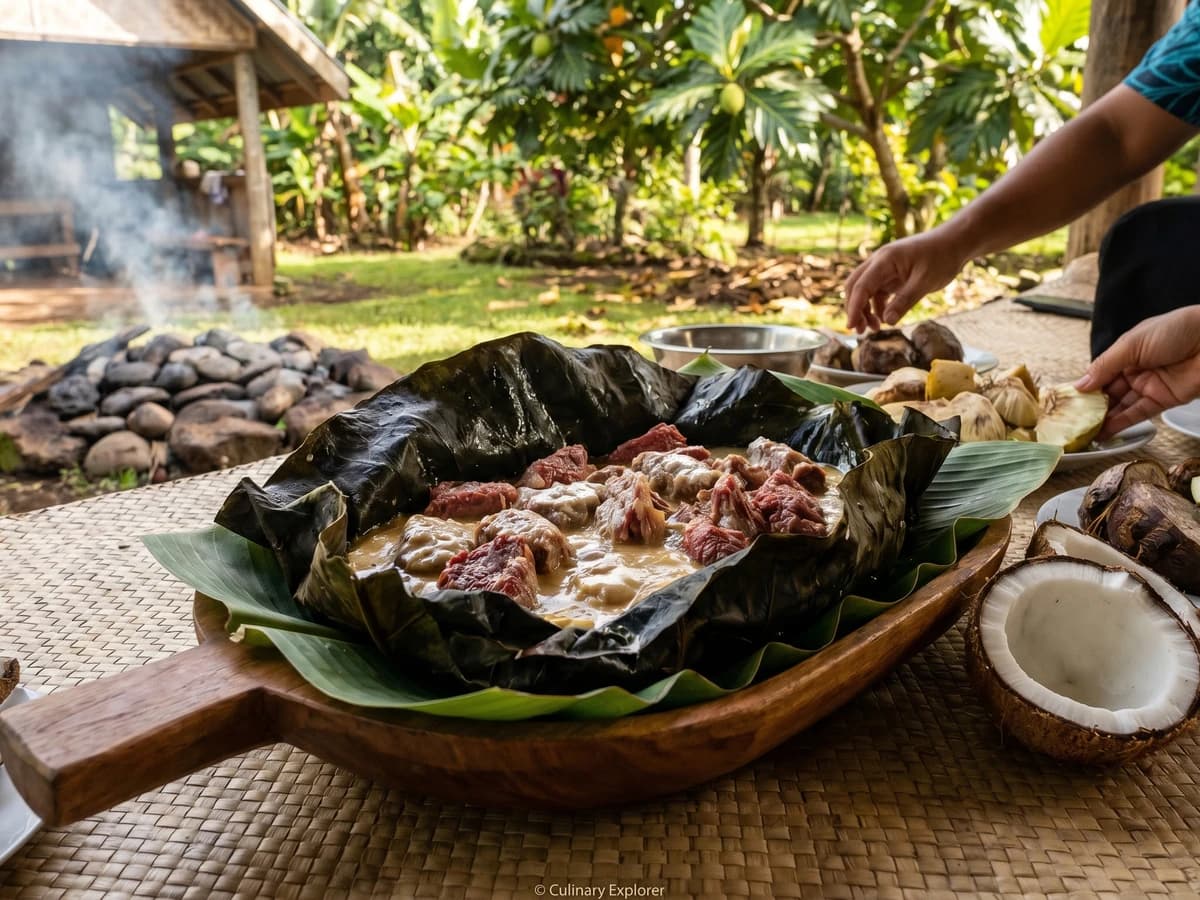
Sāmoa's taro-leaf parcel made generous with pisupo, coconut cream, and time: a toʻonaʻi kind of comfort, with Tonga's lū pulu and Hawaiʻi's laulau sitting close as cousins.
Chef Makoa
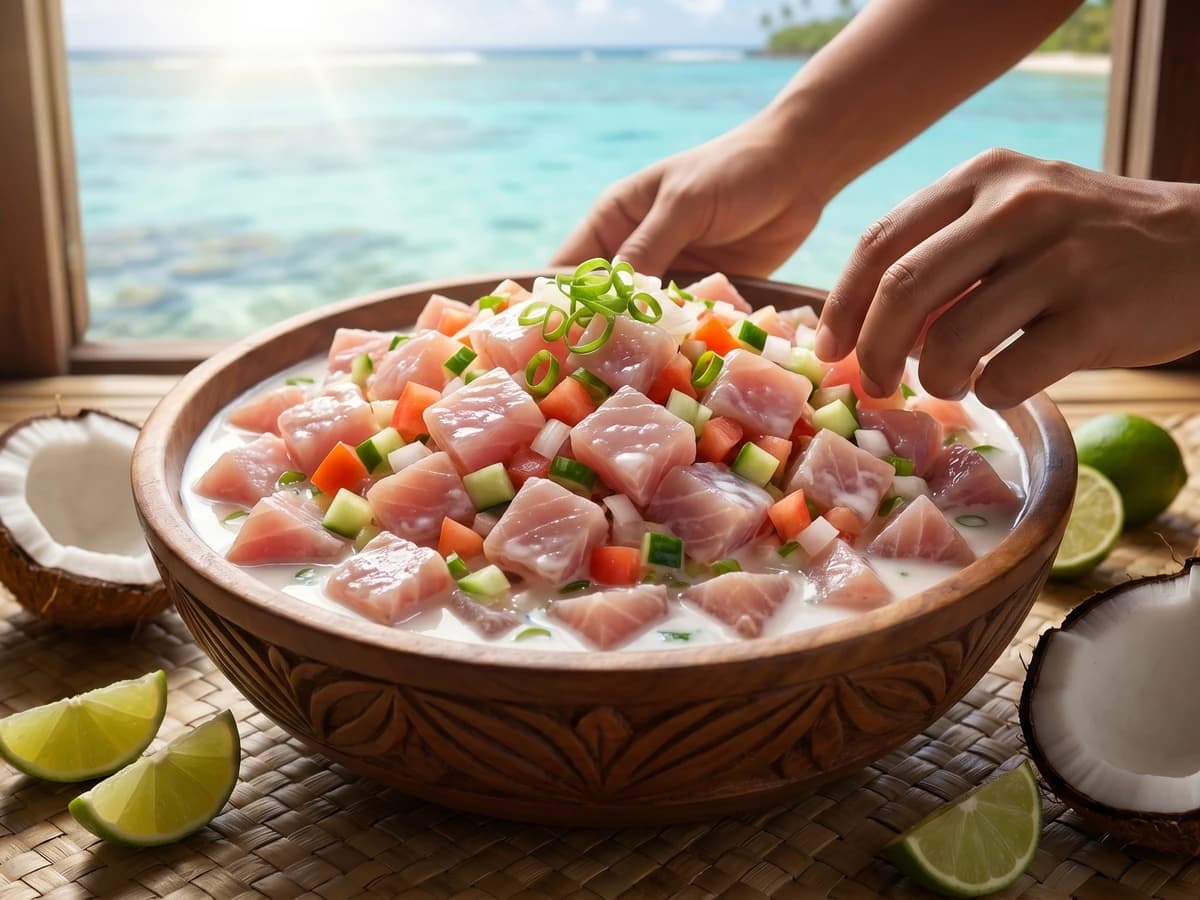
Sāmoa’s oka iʻa bathes fresh fish in citrus and peʻepeʻe, fresh coconut cream, then runs tomato, cucumber, and onion through it cold. Same fish as Tahiti’s ʻia ota, different bowl.