
Chef Makoa
Ahimaʻa Puaʻa (Tahitian Earth-Oven Pork)
Tahitian puaʻa cooked in the spirit of the ahimaʻa, the earth oven of maʻa Tahiti, wrapped in banana leaf and held low and slow until the meat gives in two fingers.
A cooking platform built around craft, culture, and the stories behind what we eat.
Created by
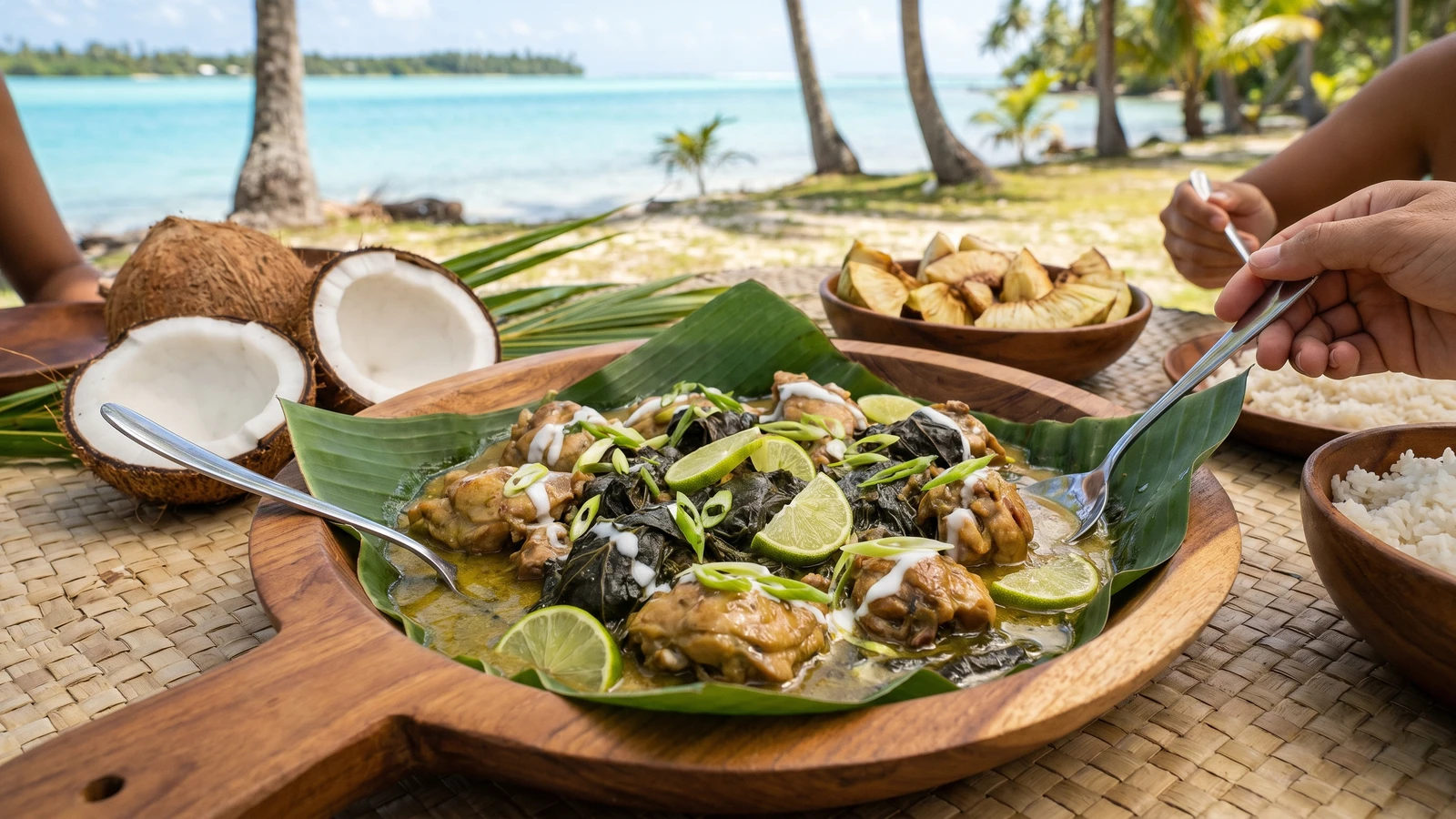
Tahiti's Sunday chicken, poulet fāfā, brings tender bird and young taro leaves together in coconut milk until the leaf turns silky, the sauce turns rich, and the whole table leans in.
The canoe carried more than people. It carried the root, the leaf, the bird, the memory of how to feed a family when the ocean spreads you far apart. In Tahiti, fāfā, the young taro leaves, meet chicken and coconut milk in poulet fāfā, a dish that carries old plant knowledge inside a name shaped by the French-speaking table of today.
This is Tahiti's hand, not Hawaiʻi's, and I cook it open-handed. Back home we know the same leaf as lūʻau leaf, wrapped into laulau or cooked down with coconut. In Sāmoa the cousins fold palusami, in Tonga they make lū, in the Cook Islands rukau. Same elder brother under many tongues. One ocean, one canoe, one root.
The why is simple and not small: taro leaf has to be cooked all the way down. Raw or rushed, it bites the throat. Given time, it softens to dark silk and takes the coconut into itself until the sauce tastes like land, rain, and somebody's patient hands. No blame the taro. If it bites, you hurried it.
Most of us are cooking this in a pot on a stove, not beside a Tahitian ahimaʻa, the earth oven. That's all right. Eat what you have. Use good chicken, fresh coconut milk if you can press it, canned if tonight is a weeknight, and let the leaf and the bird come tender together.
Poulet fāfā belongs to Tahiti and French Polynesia, where fāfā, young taro leaves, sits inside the older canoe-crop world while the word poulet shows the later French overlay on the table. Taro was carried by Polynesian voyagers across the Triangle long before mission and colonial kitchens changed the language of many dishes, which is why this Tahitian pot has cousins in Sāmoan palusami, Tongan lū, Cook Islands rukau, and Hawaiian laulau. The dish is living food, not a museum piece: Sunday family cooking, coconut milk, a practical stove pot, and the deep leaf knowledge still doing its work.
Quantity
3 pounds
or 2 1/2 pounds boneless chicken thighs
Quantity
24 to 30
thick stems and ribs removed, or 1 1/2 pounds frozen taro leaves, thawed
Quantity
2 tablespoons
Quantity
1 large
thinly sliced
Quantity
4
minced
Quantity
1 tablespoon
grated
Quantity
1 1/2 teaspoons
plus more to taste
Quantity
1/2 teaspoon
Quantity
1 1/2 cups
Quantity
2 cups
or 1 can full-fat coconut milk plus 1/2 cup water
Quantity
1/2 cup
for finishing
Quantity
1
juiced, plus wedges for serving
Quantity
for serving
| Ingredient | Quantity |
|---|---|
| bone-in chicken thighs and drumsticksor 2 1/2 pounds boneless chicken thighs | 3 pounds |
| young taro leaves (fāfā)thick stems and ribs removed, or 1 1/2 pounds frozen taro leaves, thawed | 24 to 30 |
| neutral oil | 2 tablespoons |
| yellow onionthinly sliced | 1 large |
| garlic clovesminced | 4 |
| fresh gingergrated | 1 tablespoon |
| sea saltplus more to taste | 1 1/2 teaspoons |
| freshly ground black pepper | 1/2 teaspoon |
| chicken stock or water | 1 1/2 cups |
| fresh coconut milkor 1 can full-fat coconut milk plus 1/2 cup water | 2 cups |
| thick coconut creamfor finishing | 1/2 cup |
| limejuiced, plus wedges for serving | 1 |
| cooked rice, boiled taro, or roasted breadfruit | for serving |
Strip the thick stems and heavy ribs from the fāfā, the young taro leaves, and rinse them well. Bring a large pot of water to a boil, add the leaves, and cook 15 to 20 minutes, until they darken and slump fully. Drain, rinse, squeeze out the extra water, and chop rough. That first cook matters. Raw taro leaf can bite the throat, but time turns it gentle.
Pat the chicken dry and season it with the salt and pepper. Warm the oil in a heavy pot over medium heat, then brown the chicken in batches until the skin or outside takes on a golden edge, 4 to 5 minutes per side. It does not need to cook through yet. You are building the bottom of the pot.
Pour off all but a spoonful of fat. Add the onion and cook until it softens and turns sweet at the edges, about 6 minutes. Stir in the garlic and ginger for one minute, just until the smell lifts clean and warm from the pot.
Return the chicken and its juices to the pot. Add the stock or water, scrape up the browned bits, cover, and simmer gently for 25 minutes. Keep the heat low enough that the liquid moves easy, not angry. Tough boiling makes tough chicken.
Fold in the chopped fāfā and pour in the coconut milk. Cover again and simmer 25 to 35 minutes, stirring now and then, until the leaf is dark, silky, and fully tender, and the chicken pulls clean from the bone. The sauce should look rich and green-gold, with a coconut sheen clinging to the spoon.
Stir in the coconut cream and simmer uncovered 5 to 8 minutes, until the sauce thickens lightly. Taste for salt, then turn off the heat and squeeze in the lime. The lime should wake the coconut, not make the pot sharp.
Rest the pot 10 minutes so the sauce settles back into the chicken and leaf. Serve family-style with rice, boiled taro, or roasted breadfruit. Spoon plenty of the coconut-fāfā sauce over each bowl. Always enough for one more.
1 serving (about 590g)
Culinary guides, cultural storytelling, and the editorial depth that makes cooking meaningful.
Discover Culinary ExplorerChef Makoa
Tahitian puaʻa cooked in the spirit of the ahimaʻa, the earth oven of maʻa Tahiti, wrapped in banana leaf and held low and slow until the meat gives in two fingers.
Chef Makoa
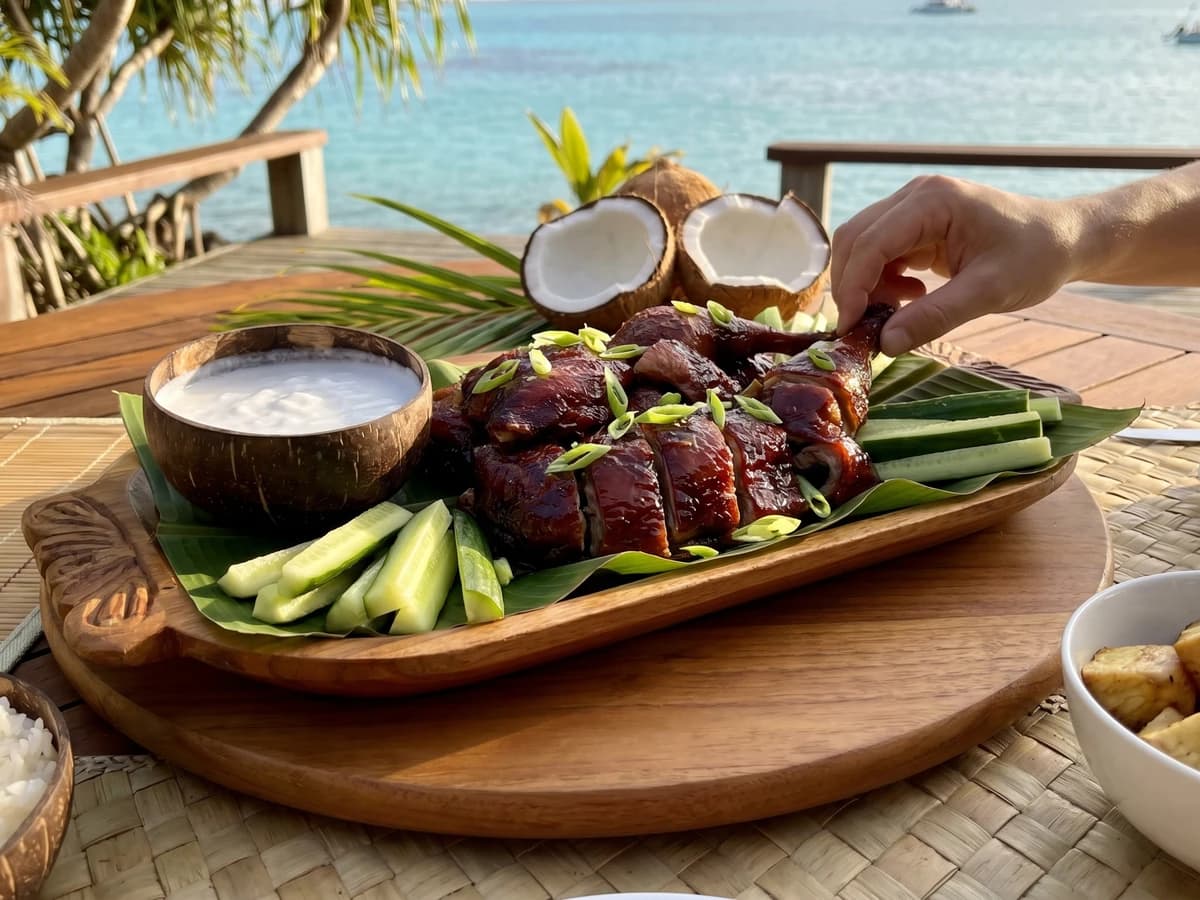
Glossy Chinese-Tahitian roast duck from Papeʻete, lacquered with soy, honey, and five-spice, carved for the lazy Susan, then dipped into thick fresh coconut milk beside rice, ʻuru, and a crowded table.
Chef Makoa
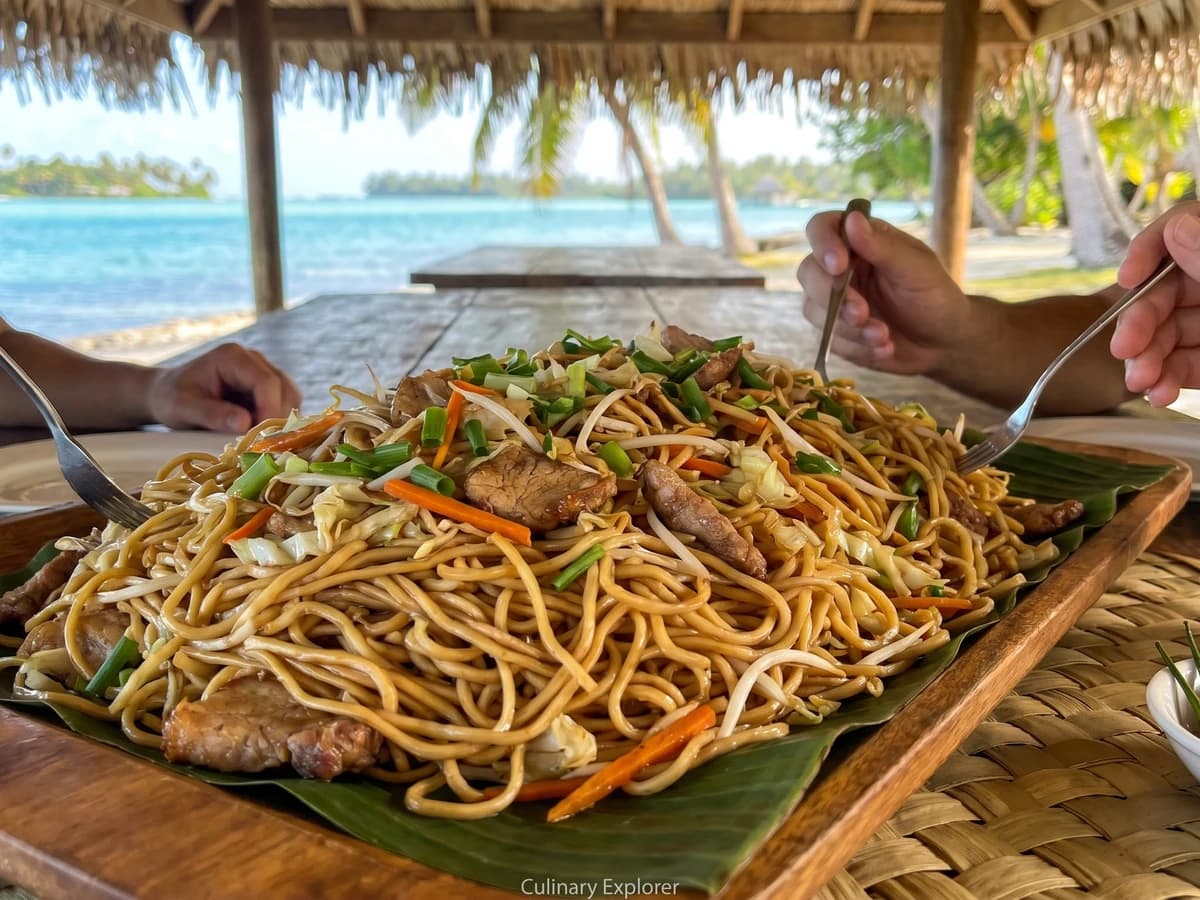
Tahiti's chao men is Hakka chow mein made fully local: glossy egg noodles, pork, cabbage, carrot, and green onion, fast from the wok and generous enough for the table.

Chef Makoa
Tahiti's fāfaru takes raw ʻahi into miti fāfaru, a pungent fermented seawater brine, then brings it back to the table with mitihue, breadfruit, and the lesson that good funk is food kept alive.