
Chef Isabel
Caldo de Millo Canario
Caldo de Millo is the Canary Islands' clear corn-cob broth: piñas de millo, papas, calabaza, and cilantro simmered gently until the cobs sweeten the water and the bowl stays light.
A cooking platform built around craft, culture, and the stories behind what we eat.
Created by
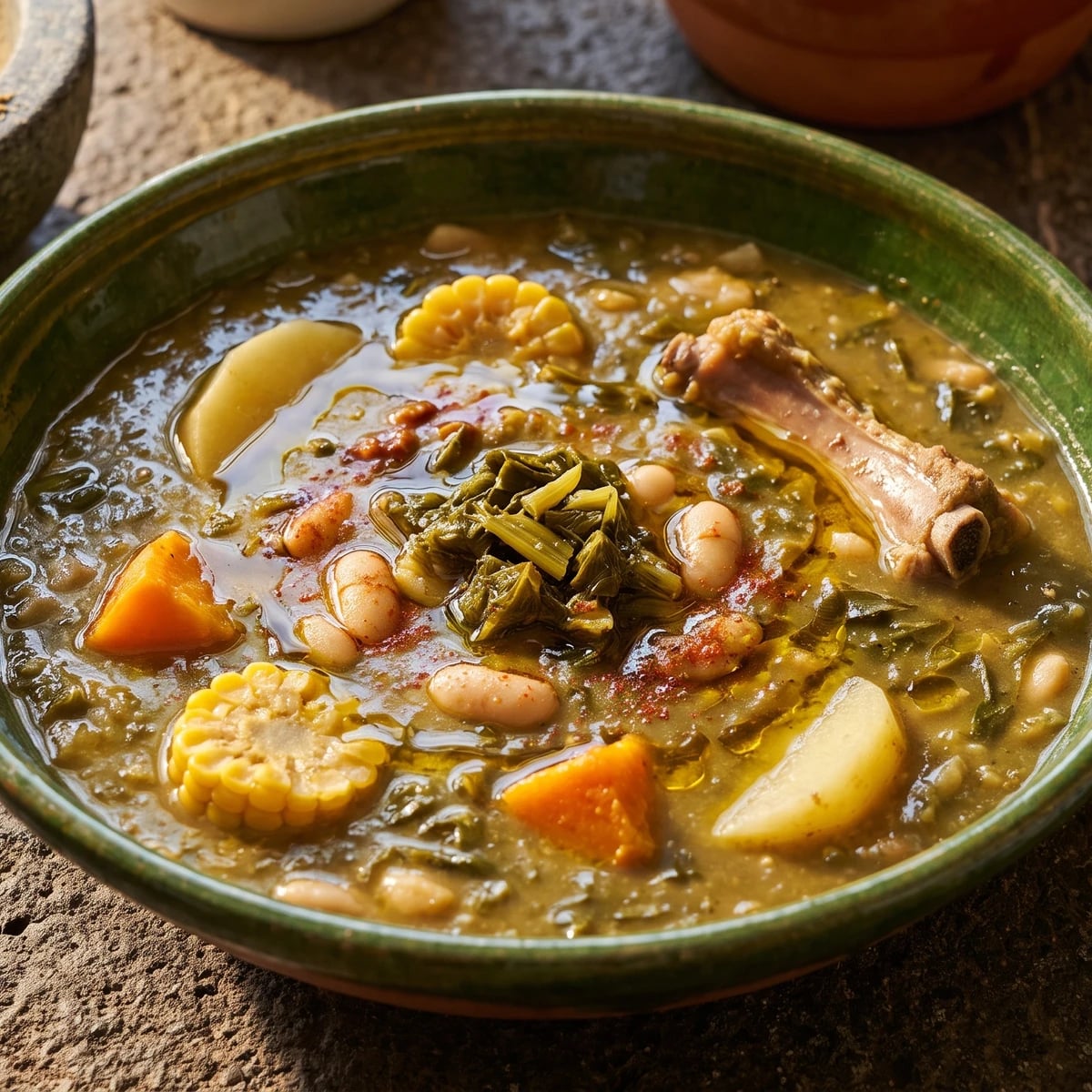
Potaje de jaramagos is Canary Island cocina de cuchara, spoon food, built like a berros potaje but marked by the clean bitterness of wild mustard greens gathered after the rains.
Potaje de jaramagos is Canarian, from the islands where the winter rains bring up wild mustard greens and a household pot knows what to do with them. It shares the bones of a potaje de berros: beans, potato, pumpkin, corn, a little pork if the larder allows, and a majado of garlic and cumin. But jaramagos are sharper, more bitter, and that is the point. This is not watercress stew with another name.
The method that decides it is the green. Pick young jaramagos before they flower, strip away the tough stems, wash them hard, and chop them small enough to soften into the pot. If you throw in old, stringy greens, no sofrito will save you. Cook the onion, pepper, tomato, and pimentón slowly first, until the base turns dark and sweet, because that sweetness is what holds the bitterness in balance.
If you're far from the Canaries, no hace falta haber pisado España. Use young mustard greens if you can find them, or a mix of rapini and turnip greens. The stew will be a little less wild and a little greener in flavor, but it will still stand in the right place if you keep the cumin, garlic, pumpkin, potato, and corn. Siempre sale, si lo sigues.
Potaje de jaramagos belongs to the rural Canary Islands, where edible wild greens came into the kitchen after the first good rains and stretched the family pot through lean months. The dish sits beside potaje de berros, but jaramagos give a firmer bitterness and a more field-gathered character than watercress. Like many Canarian spoon dishes, it carries the island larder plainly: potatoes, pumpkin, beans, maize, cumin, garlic, and whatever bit of salted or fresh pork the household had.
Quantity
250g
soaked overnight
Quantity
350g
washed well, tough stems removed, chopped
Quantity
250g
cut into pieces
Quantity
1 large
finely chopped
Quantity
1
finely chopped
Quantity
2
grated
Quantity
4 tablespoons
Quantity
1 teaspoon
Quantity
1.5 litres, plus more as needed
Quantity
300g
peeled and cut into chunks
Quantity
250g
peeled and cut into chunks
Quantity
150g
peeled and cut into chunks
Quantity
1
cut into 4 rounds
Quantity
3 cloves
Quantity
1 teaspoon
Quantity
8 sprigs
chopped
Quantity
to taste
| Ingredient | Quantity |
|---|---|
| dried white beans or pinto beanssoaked overnight | 250g |
| young jaramagos, wild mustard greens, or young mustard greenswashed well, tough stems removed, chopped | 350g |
| pork ribs or salted pork ribscut into pieces | 250g |
| onionfinely chopped | 1 large |
| green pepperfinely chopped | 1 |
| ripe tomatoesgrated | 2 |
| olive oil | 4 tablespoons |
| sweet pimentón | 1 teaspoon |
| water | 1.5 litres, plus more as needed |
| potatoespeeled and cut into chunks | 300g |
| pumpkin or winter squashpeeled and cut into chunks | 250g |
| sweet potatopeeled and cut into chunks | 150g |
| corn cobcut into 4 rounds | 1 |
| garlic | 3 cloves |
| ground cumin | 1 teaspoon |
| cilantrochopped | 8 sprigs |
| salt | to taste |
The night before, cover the beans with plenty of cold water and leave them to soak. If using salted pork ribs, soak them separately in cold water and change the water once. Drain both before cooking. Pésalo, no lo adivines; beans that soak evenly cook evenly.
Wash the jaramagos in several changes of water, because field greens carry grit. Strip away tough stems and any flowering tops, then chop the leaves and tender stems small. Young greens give the stew its good bitterness; old stems give you string and regret.
Warm the olive oil in a heavy pot and cook the onion and green pepper with a pinch of salt over low heat for 12 to 15 minutes, until soft and sweet. Add the grated tomato and cook another 8 minutes, until the liquid is gone and the base looks dark and jammy. Stir in the pimentón off the heat for a few seconds so it perfumes the oil without burning.
Add the drained beans, pork ribs, and 1.5 litres water to the sofrito. Bring it slowly to a simmer, skim the foam from the top, then lower the heat. Cook gently for about 45 minutes, until the beans are beginning to soften but are not done.
Add the potatoes, pumpkin, sweet potato, corn rounds, and chopped jaramagos. Keep the pot at a steady simmer, not a hard boil, for 35 to 45 minutes more. The pumpkin should soften into the broth a little, the potatoes should hold their edges, and the greens should lose their raw bite while keeping their bitter backbone.
Pound the garlic, cumin, cilantro, and a pinch of salt in a mortar until you have a rough paste. This is the majado, the little pounded seasoning that makes the pot taste Canarian instead of just boiled. Stir it into the stew during the last 10 minutes.
Taste for salt only after the pork has given what it has to the broth. If you want a thicker potaje, mash a few pieces of potato and pumpkin against the side of the pot and stir them back in. Rest the stew off the heat for 10 minutes before serving, so the broth settles around the beans and greens.
1 serving (about 520g)
Culinary guides, cultural storytelling, and the editorial depth that makes cooking meaningful.
Discover Culinary Explorer
Chef Isabel
Caldo de Millo is the Canary Islands' clear corn-cob broth: piñas de millo, papas, calabaza, and cilantro simmered gently until the cobs sweeten the water and the bowl stays light.

Chef Isabel
Caldo de Papas Canario is the Canary Islands' plain potato broth with garlic, onion, tomato, green pepper, plenty of cilantro, and an egg poached right at the end.

Chef Isabel
Caldo de Pescado Canario is the Canary Islands' clean fish broth: fresh white fish, papas, a small sofrito, saffron, and the old island habit of finishing the bowl with mojo verde and gofio.

Chef Isabel
Garbanzas compuestas are Canary Islands spoon food: large chickpeas, a dark tomato and pimentón sofrito, potatoes, and a little pork cooked until the broth clings to every spoonful.