
Chef Margarida
Alheira de Mirandela
The sausage that saved lives during the Inquisition, grilled until the casing splits and served with a runny fried egg and golden potatoes. History you eat with your hands.
A cooking platform built around craft, culture, and the stories behind what we eat.

Created by
The legendary steak of Trás-os-Montes, cut thick from cattle that graze the granite highlands, grilled over blazing coals and seasoned with nothing but coarse salt. This is beef that needs no help.
There's a reason people drive three hours from Porto just to eat this steak. Posta Mirandesa isn't about technique. It isn't about sauce or marinade or any of the tricks chefs use to make mediocre meat taste good. This is about an animal, a place, and the wisdom to leave both alone.
The Mirandesa is an ancient breed, raised in the harsh granite highlands of Trás-os-Montes where winters are brutal and summers are short. These cattle have grazed that land for centuries. The meat is dark, marbled, intensely flavored. It tastes like the place it comes from. When you have beef this good, your job is simple: don't ruin it.
I traveled to Miranda do Douro to document this dish from the grandmothers who've been cooking it forever. They all told me the same thing. Thick cut. Hot fire. Coarse salt. That's it. One woman, Dona Emília, laughed when I asked about seasoning. "Seasoning? The cow did the seasoning. She ate the herbs. She drank the water. What more do you want?"
At Mesa da Avó, I serve this with batatas a murro and grelos, exactly as they do in the north. The potatoes get punched to crack them open, doused in olive oil and garlic. The grelos are bitter and green, the perfect contrast to the rich meat. Pão, azeite, vinho, sempre. This is a meal for people who understand that the best cooking is often the cooking that gets out of the way.
Mirandesa cattle have been raised in the Trás-os-Montes highlands since at least the 12th century, making them one of Portugal's oldest native breeds. The beef earned DOP (Protected Designation of Origin) status in 1994, recognizing the unique terroir of the Miranda do Douro plateau. The traditional posta cut, always at least four fingers thick, developed because thin steaks couldn't survive the intense heat of the region's wood-fired grills.
Quantity
2 steaks, 4-5 cm thick (about 500g each)
bone-in ribeye or sirloin, at room temperature
Quantity
generous amount
Quantity
1 kg
unpeeled
Quantity
6 tablespoons
Quantity
4 cloves
smashed
Quantity
1 bunch (about 400g)
tough stems removed
Quantity
2 tablespoons
Quantity
freshly ground, to taste
| Ingredient | Quantity |
|---|---|
| Mirandesa beef steaksbone-in ribeye or sirloin, at room temperature | 2 steaks, 4-5 cm thick (about 500g each) |
| coarse sea salt (sal grosso) | generous amount |
| small waxy potatoesunpeeled | 1 kg |
| extra virgin olive oil (azeite) | 6 tablespoons |
| garlicsmashed | 4 cloves |
| grelos or broccoli rabetough stems removed | 1 bunch (about 400g) |
| olive oil for greens | 2 tablespoons |
| black pepper | freshly ground, to taste |
Remove the steaks from the refrigerator at least one hour before cooking. Two hours is better. Cold meat on a hot grill seizes up and cooks unevenly. The steaks should feel like room temperature when you press them. This is not optional.
If using charcoal, light it and let it burn until the coals are white-hot with no visible flame, about 30 minutes. You want intense, direct heat. If using a gas grill, preheat to maximum for at least 15 minutes with the lid closed. The grates should be scorching. Hold your hand five centimeters above the grill. If you can't keep it there for more than two seconds, you're ready.
While the fire builds, boil the potatoes in heavily salted water until a knife slides through easily, about 20 minutes. Drain them. Now comes the murro: place each potato on a cutting board and punch it firmly with your fist or the bottom of a heavy glass to crack it open without breaking it apart. Arrange on a baking sheet, drizzle generously with olive oil, tuck the smashed garlic between them, and season with salt. Keep warm in a low oven.
Just before grilling, season the steaks generously on both sides with coarse salt. Press it into the meat. The salt should be visible, a rough crust. Don't be afraid. The thickness of the cut can handle it. No pepper yet. Pepper burns over high heat and turns bitter.
Place the steaks directly over the hottest part of the fire. Don't touch them. Let them sear undisturbed for 4 to 5 minutes until a dark crust forms and they release easily from the grates. Flip once. Cook another 4 to 5 minutes for medium-rare. For a steak this thick, you want a good char on the outside while the center stays rosy pink. If you must, use a meat thermometer: 52°C for rare, 57°C for medium-rare.
Transfer the steaks to a wooden cutting board and let them rest for at least 8 minutes. This is crucial. The juices need to redistribute. Cut into a steak too soon and all that flavor runs onto the board instead of staying in the meat. Cover loosely with foil if your kitchen is cold.
While the meat rests, blanch the grelos in boiling salted water for 2 to 3 minutes until just tender. Drain well. Heat olive oil in a pan, add a smashed garlic clove, and toss the grelos until coated and slightly crispy at the edges. Season with salt.
Slice the steaks against the grain into thick strips if sharing, or serve whole if each person gets their own. The interior should be pink and juicy. Finish with freshly ground black pepper now, after cooking. Serve immediately with the batatas a murro and grelos alongside. No sauce. No butter. The meat speaks for itself.
1 serving (about 500g)
Culinary guides, cultural storytelling, and the editorial depth that makes cooking meaningful.
Discover Culinary ExplorerChef Margarida
The sausage that saved lives during the Inquisition, grilled until the casing splits and served with a runny fried egg and golden potatoes. History you eat with your hands.

Chef Margarida
The mountain feijoada of Trás-os-Montes, where every part of the pig goes into the pot with white beans and whatever the garden offers. Winter survival food that became a celebration.
Chef Margarida
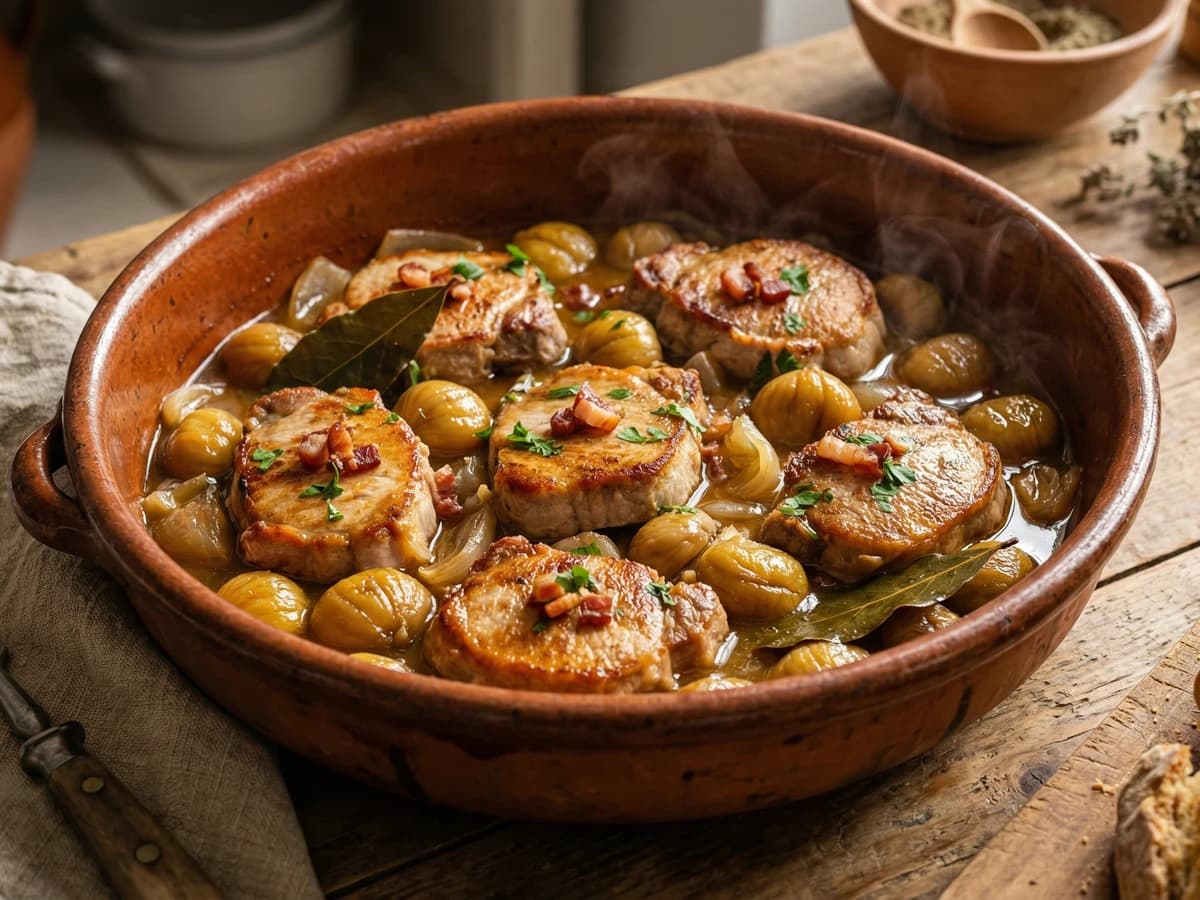
Mountain food from Trás-os-Montes, where chestnut forests blanket the hillsides and pork is king. A braise that turns autumn's harvest into a celebration worth gathering around.

Chef Juliette
John Dory has the delicacy of sole and the firmness of turbot. A light flouring, a quick butter sauté, and nut-brown beurre noisette show exactly why looks never mattered.