
Chef Dimitra
Chios Nerantzi Glyko Koutaliou (Νεράντζι Γλυκό Κουταλιού)
Chios bitter orange peel rolled into tight coils, blanched through clean waters, then preserved in a clear fragrant syrup for the spoon-sweet tray.
A cooking platform built around craft, culture, and the stories behind what we eat.
Created by
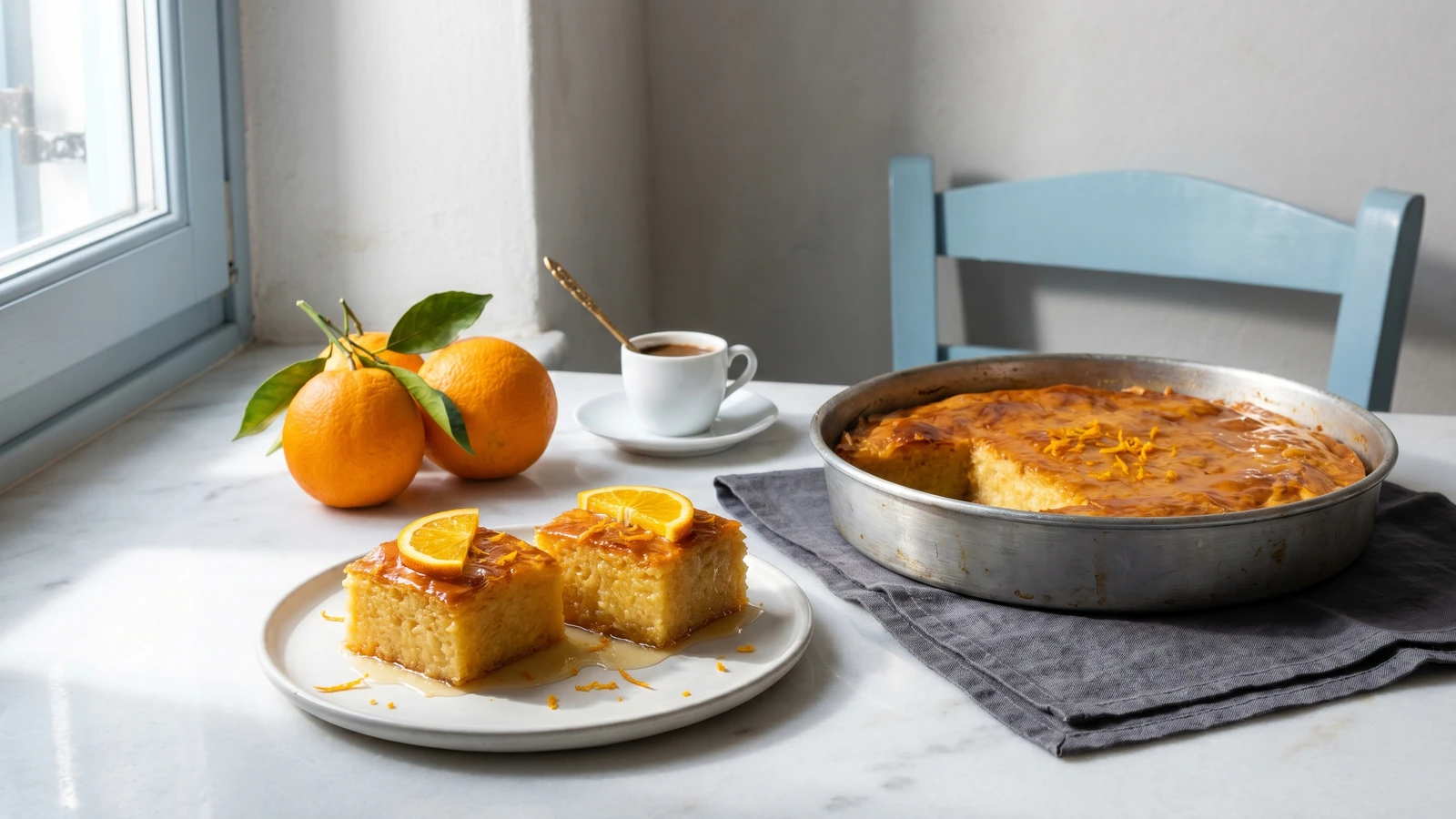
Argolida's orange cake is made from brittle phyllo, yogurt, and cold syrup over a hot tray, giving a soft citrus crumb without a spoonful of flour.
Portokalopita from Argolida is orange country in a baking pan: shredded phyllo, dried until brittle, folded through yogurt and eggs, then soaked with syrup until the crumb turns custardy and bright. It isn't a flour cake with orange perfume. The phyllo is the body of it, and the winter orange is the whole reason for making it.
The method that decides it is the drying. Spread the phyllo sheets out until they break in your hands, then crumble them into the batter in handfuls. Soft phyllo collapses into paste and makes a heavy sweet; brittle phyllo keeps small spaces for the syrup to travel. That's the difference between portokalopita and a wet pudding.
Pour cold syrup over the cake while the tray is still hot, then leave it alone. It will look like too much syrup at first. Don't panic. By the time it cools, the edges are glossy, the middle is soft, and the orange has settled into every bite. I keep this version plain because the orange groves of Argolida don't need help, just good fruit and patience.
Portokalopita is one of the newer Greek syrup sweets, a twentieth-century household and pastry-shop dessert that uses phyllo as structure instead of flour. In citrus districts such as Argolida and Laconia in the Peloponnese, Arta in Epirus, and Chania in Crete, winter oranges made the cake a natural companion to older syrup sweets. The practice of drying crumbled phyllo before mixing it into yogurt batter separates it from layered baklava and custard galaktoboureko.
Quantity
400g
for the syrup
Quantity
300ml
Quantity
250ml
for the syrup
Quantity
2 wide strips
no white pith
Quantity
1
Quantity
15ml
Quantity
1
very thinly sliced, for the syrup and top
Quantity
450g
thawed if frozen
Quantity
10ml
for the pan
Quantity
4
at room temperature
Quantity
200g
for the cake
Quantity
250g
Quantity
180ml
Quantity
120ml
for the cake
Quantity
zest of 2 oranges
finely grated
Quantity
16g
Quantity
5ml or 1 x 5g sachet
Quantity
2g
| Ingredient | Quantity |
|---|---|
| granulated sugarfor the syrup | 400g |
| water | 300ml |
| fresh orange juicefor the syrup | 250ml |
| orange peelno white pith | 2 wide strips |
| cinnamon stick | 1 |
| lemon juice | 15ml |
| small orange (optional)very thinly sliced, for the syrup and top | 1 |
| thin phyllo pastrythawed if frozen | 450g |
| mild olive oil or sunflower oilfor the pan | 10ml |
| large eggsat room temperature | 4 |
| granulated sugarfor the cake | 200g |
| full-fat strained Greek yogurt | 250g |
| mild Greek olive oil or sunflower oil | 180ml |
| fresh orange juicefor the cake | 120ml |
| unwaxed orange zestfinely grated | zest of 2 oranges |
| baking powder | 16g |
| vanilla extract or Greek vanilla powder | 5ml or 1 x 5g sachet |
| fine sea salt | 2g |
Put 400g sugar, the water, 250ml orange juice, orange peel, cinnamon, and the thin orange slices if using into a saucepan. Bring to a boil, then simmer 7 minutes, just until the syrup is clear and lightly coats a spoon. Stir in the lemon juice and leave it to cool completely.
Separate the phyllo sheets and spread them over the table, a clean counter, or two trays. Leave 1 to 2 hours, turning once, until they feel dry and papery, or dry them in a 100°C oven for 20 to 25 minutes. When cool, crush them into rough pieces, not powder.
Heat the oven to 170°C. Oil a 23 x 33cm metal tapsi or baking pan with 10ml oil, paying attention to the corners. Keep the crushed phyllo close to the bowl so it can go in quickly once the batter is ready.
In a large bowl, whisk the eggs and 200g sugar for 2 minutes, until paler and slightly thick. Whisk in the yogurt, oil, 120ml orange juice, orange zest, vanilla, baking powder, and salt. The batter should look loose and speckled with zest.
Add the dry phyllo a handful at a time, lifting and folding so every piece is coated before the next handful goes in. Don't dump it all at once. Let the mixture stand 10 minutes, then fold once more and spread it evenly in the prepared pan.
Bake 45 to 50 minutes, until the top is deep golden, the center springs back lightly, and a skewer comes out without raw batter. If the top browns too quickly after 35 minutes, cover it loosely with foil.
As soon as the cake comes out, pierce it all over with a skewer and ladle the cold syrup over it slowly, corner to corner. Add the syruped orange slices on top if you used them. Stop fiddling now; the tray needs time to drink.
Leave the portokalopita at room temperature for at least 2 hours before cutting. Serve in squares, plain, with a spoonful of strained yogurt if you like the contrast. Refrigerate leftovers after the first day and bring pieces back to room temperature before serving.
1 serving (about 190g)
Culinary guides, cultural storytelling, and the editorial depth that makes cooking meaningful.
Discover Culinary ExplorerChef Dimitra
Chios bitter orange peel rolled into tight coils, blanched through clean waters, then preserved in a clear fragrant syrup for the spoon-sweet tray.

Chef Dimitra
Chios gives vanilla submarine its mastic breath: a pearly spoon sweet stirred stiff, served cold in water, and offered as the simplest kerasma.
Chef Dimitra
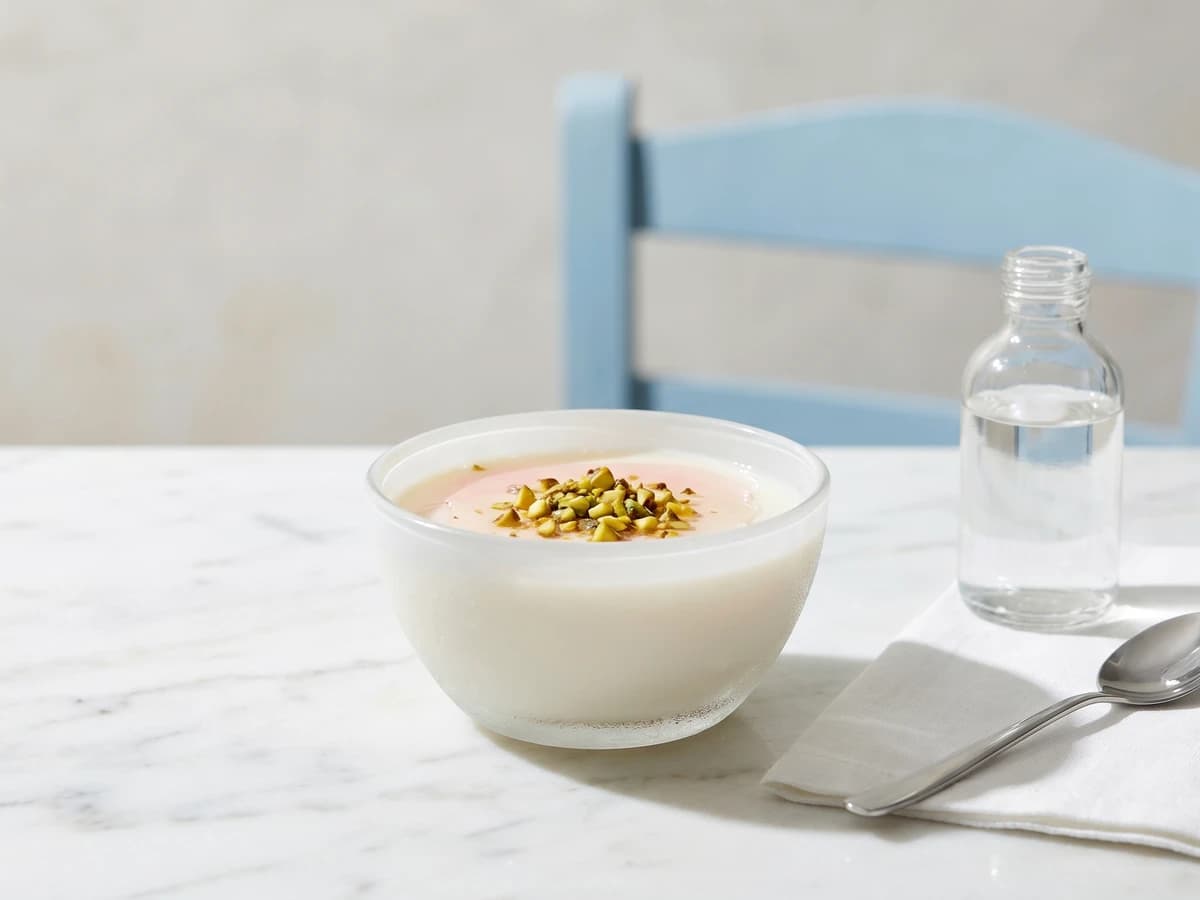
Mahalepi is the cooling milk pudding of Cyprus and the Politiki table: pale, trembling, and loosened at the spoon with cold rosewater syrup.
Chef Dimitra
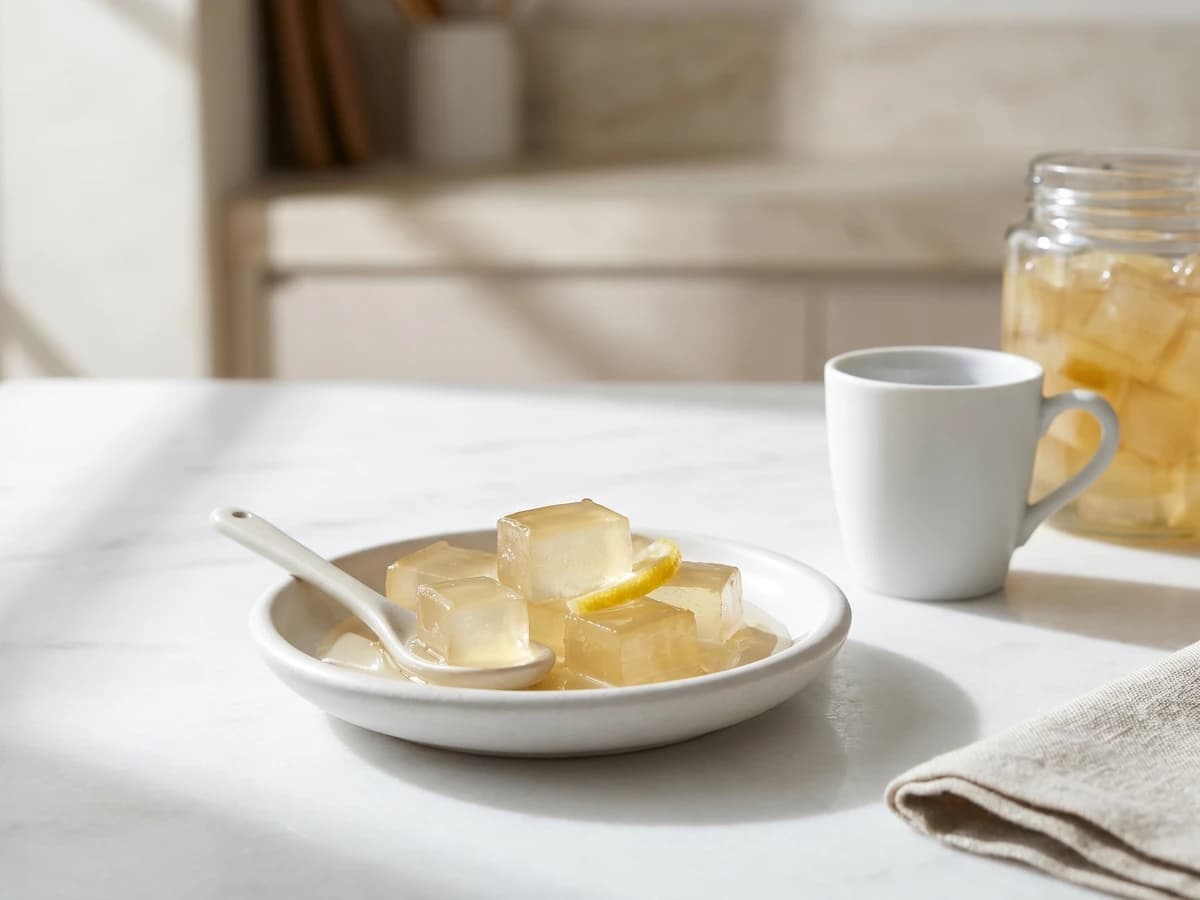
Cyprus keeps the watermelon after the red flesh is gone: firm white rind, lime-soaked for snap, simmered slowly in lemon syrup until each piece shines on the spoon.