
Chef Dimitra
Chios Nerantzi Glyko Koutaliou (Νεράντζι Γλυκό Κουταλιού)
Chios bitter orange peel rolled into tight coils, blanched through clean waters, then preserved in a clear fragrant syrup for the spoon-sweet tray.
A cooking platform built around craft, culture, and the stories behind what we eat.
Created by
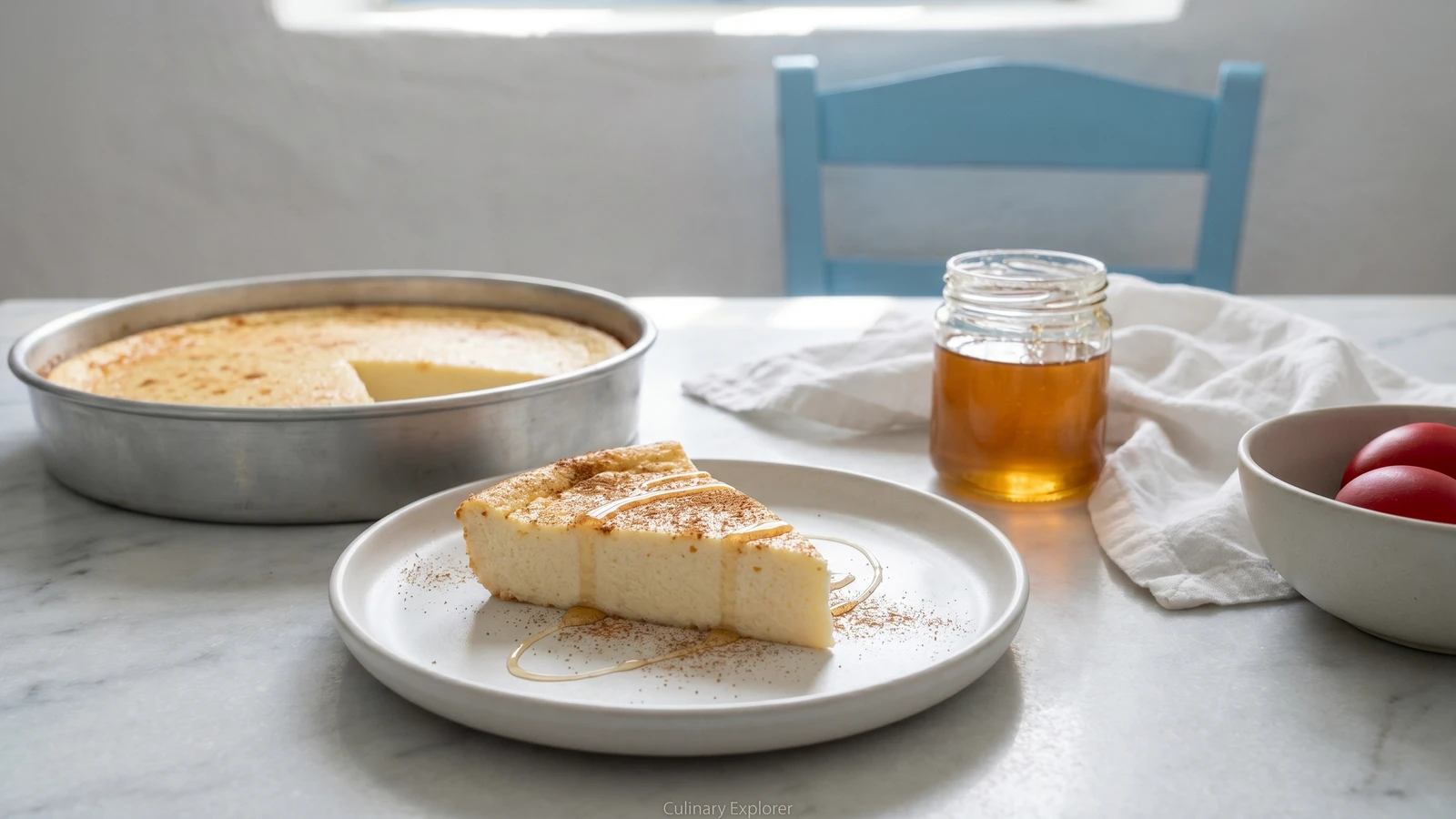
Sifnos gives Easter its own cheesecake: fresh mizithra, thyme honey, eggs, and cinnamon baked without a crust until the center trembles and the top freckles gold.
Melopita Sifnou is Sifnos's Easter cheesecake, a crustless honey pie of fresh mizithra, eggs, thyme honey, and cinnamon. It is pale, quiet, and barely set, not a tall city cheesecake and not a pastry shell. The region is the dish's surname: Sifnos gives it the spring cheese and the honey that make it itself.
The whole dish depends on the mizithra and the bake. Use fresh, unsalted mizithra, the kind that still smells of milk, and pull the pan when the center trembles as you nudge it. Old or salted cheese turns sharp and gritty; ten extra minutes in the oven tightens what should stay creamy. Λίγα και καλά (liga kai kala): a few things, and good ones.
I write it this way because a dish this spare leaves no place to hide. Beat the cheese smooth, fold in the eggs and honey, and trust the cooling time. By the time you dust it with cinnamon and cut the first wedge, you'll understand why Sifnos keeps this one for Easter and celebration.
Melopita belongs to Sifnos in the Cyclades, where Easter comes after a long Lenten fast and fresh spring mizithra is sweetened with local thyme honey. The island is better known outside Greece for its clay pots and slow oven cooking, but this sweet is domestic, made in a low pan and served in small wedges after the feast. Its name is plain Greek, meli for honey and pita for pie, though the Sifnian version is often baked without a crust.
Quantity
600g
drained if wet and brought to room temperature
Quantity
180g + 25g
25g held back for finishing
Quantity
3
room temperature
Quantity
20g
Quantity
3g
2g in the filling, 1g for finishing
Quantity
10g
softened, for the pan
| Ingredient | Quantity |
|---|---|
| fresh unsalted mizithra (μυζήθρα)drained if wet and brought to room temperature | 600g |
| Greek thyme honey25g held back for finishing | 180g + 25g |
| large eggsroom temperature | 3 |
| all-purpose flour | 20g |
| ground cinnamon2g in the filling, 1g for finishing | 3g |
| unsalted buttersoftened, for the pan | 10g |
Heat the oven to 170C, or 160C with fan. Butter a 24cm shallow round tapsi or cake pan, then line the base with a parchment circle and butter the parchment. Keep the sides uncoated with flour; this pie wants a clean, soft edge, not a crust pretending to be one.
Put the mizithra in a fine sieve for 30 minutes if it looks wet, then press it through the sieve into a bowl, or beat it on low speed until smooth. It should look thick and creamy with a few tiny curds, not dry or crumbly. Taste it before you go on; if it is salty or sour-sharp, it is the wrong cheese for this dish.
If the honey is stiff, set the jar in a bowl of warm water for a few minutes so it flows. Whisk the eggs in a second bowl until loosened, then whisk in 180g honey, 2g cinnamon, and the flour until no dry pockets remain. Fold this into the mizithra with a spatula. Don't whip it full of air; melopita should set close and tender.
Scrape the mixture into the prepared pan and level it gently. Bake on the middle rack for 35 to 42 minutes, until the edges are set, the top is lightly freckled, and the center moves as one soft piece when you nudge the pan. This is the moment that decides the pie: carryover heat will finish the set, while baking until the center is firm gives you grains instead of cream.
Cool the melopita in the pan for 1 hour, then refrigerate it for at least 2 hours for clean slices. Run a thin knife around the edge, lift it out if you used parchment, and dust with the remaining cinnamon. Drizzle the 25g honey over the top just before serving, cool or at room temperature.
1 serving (about 115g)
Culinary guides, cultural storytelling, and the editorial depth that makes cooking meaningful.
Discover Culinary ExplorerChef Dimitra
Chios bitter orange peel rolled into tight coils, blanched through clean waters, then preserved in a clear fragrant syrup for the spoon-sweet tray.

Chef Dimitra
Chios gives vanilla submarine its mastic breath: a pearly spoon sweet stirred stiff, served cold in water, and offered as the simplest kerasma.
Chef Dimitra
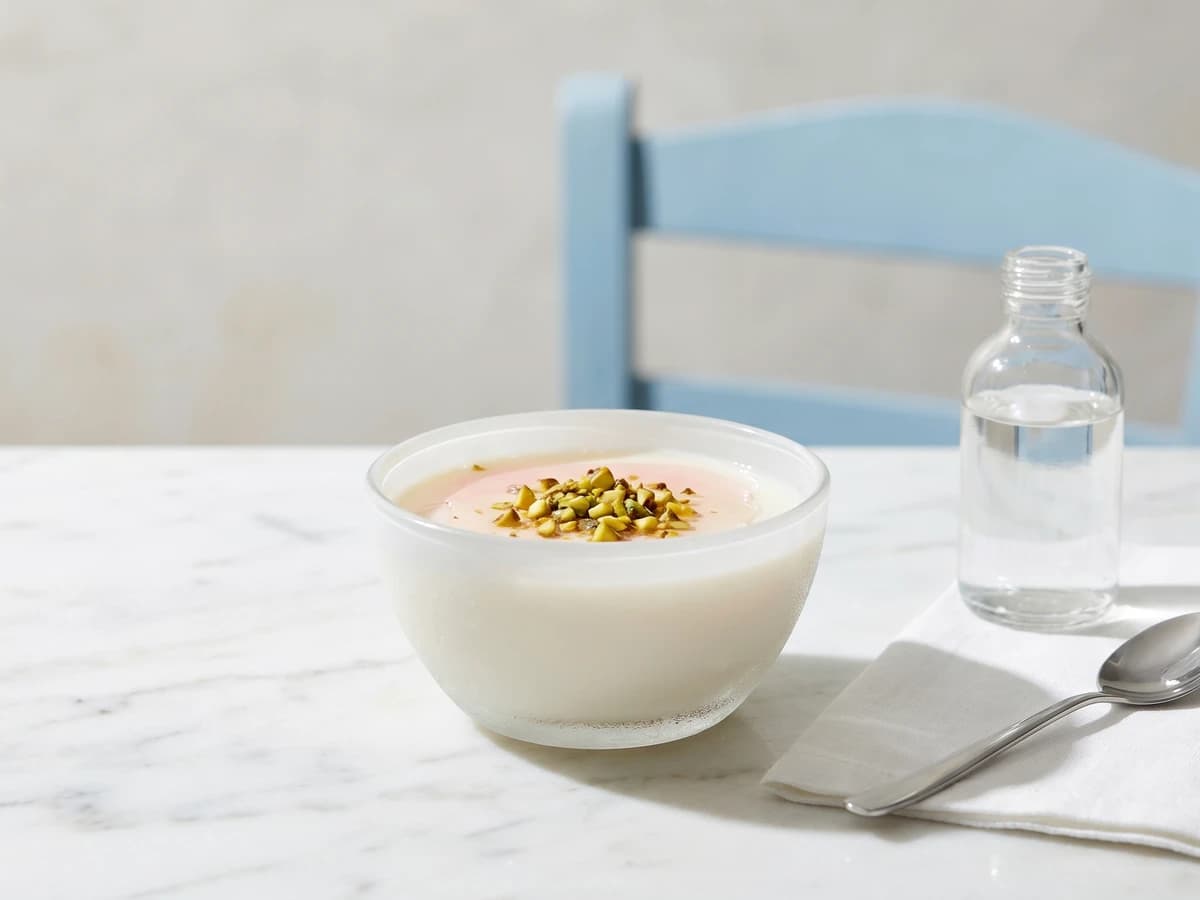
Mahalepi is the cooling milk pudding of Cyprus and the Politiki table: pale, trembling, and loosened at the spoon with cold rosewater syrup.
Chef Dimitra
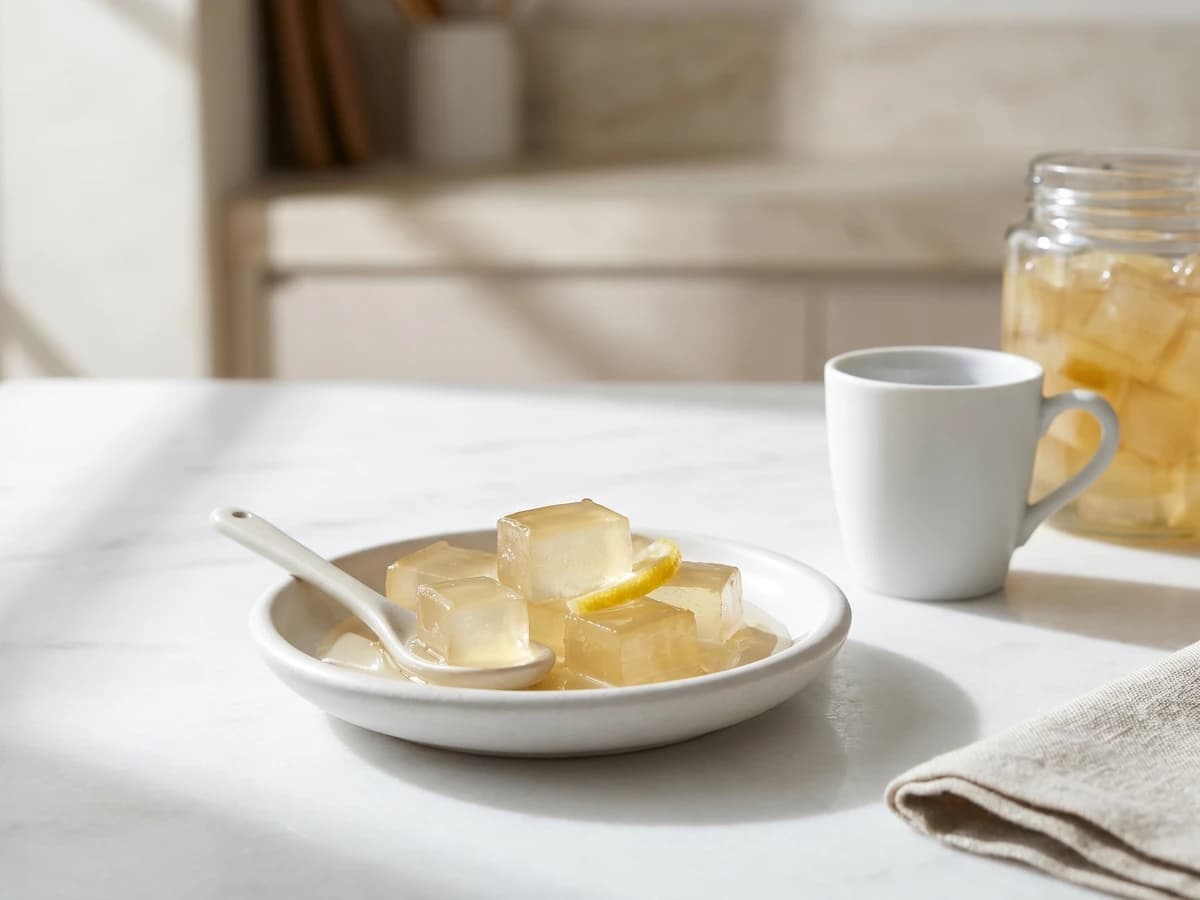
Cyprus keeps the watermelon after the red flesh is gone: firm white rind, lime-soaked for snap, simmered slowly in lemon syrup until each piece shines on the spoon.